Troubleshooting Marcasite Drop Earrings: Repairs & Care
Learn how to fix loose stones, prevent tarnish, and safely clean your marcasite drop earrings with our expert troubleshooting and repair guide.

The Mineralogy Misconception: Pyrite vs. Marcasite
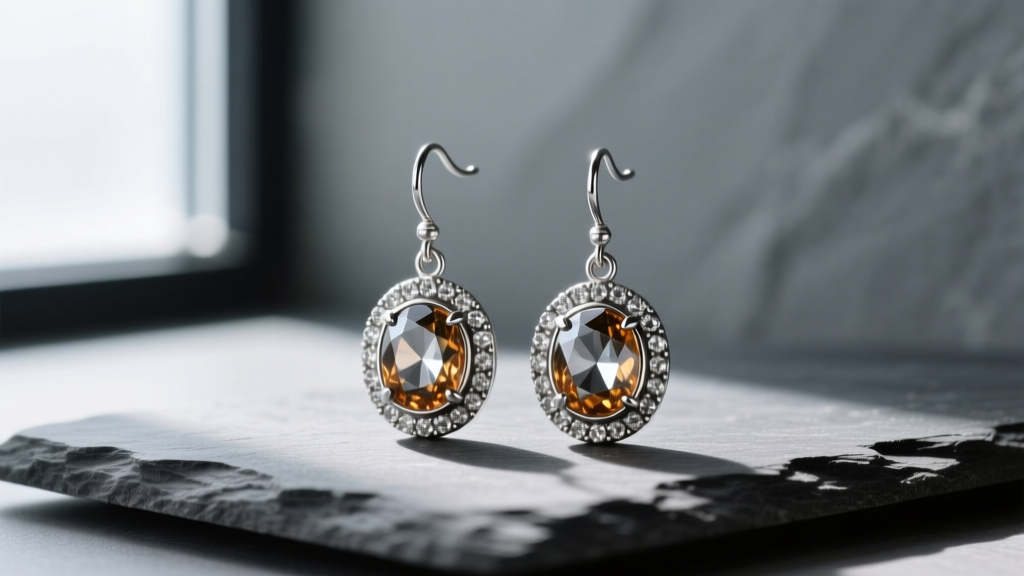
Before troubleshooting the mechanical and chemical failures of your jewelry, it is crucial to understand the material itself. In the jewelry industry, what is universally marketed as "marcasite" is actually pyrite (iron sulfide, FeS2). True marcasite is a polymorph of pyrite that is highly unstable, prone to rapid oxidation, and will literally crumble into a white, acidic powder when exposed to humidity. According to the Gemological Institute of America (GIA), pyrite is the only viable iron sulfide mineral used in gemstone settings due to its relative structural integrity and metallic luster.
However, pyrite is still inherently brittle. It lacks a true cleavage plane but fractures conchoidally, meaning it chips easily upon impact. When this brittle material is set into the swinging, kinetic environment of drop earrings, the failure rate increases exponentially compared to static studs or rings.
Troubleshooting Loose Stones in Kinetic Drop Styles
Why Drop Earrings Fail Faster Than Studs
Drop earrings are subject to continuous kinetic stress. Every time you turn your head, walk, or brush your hair, the drop component acts as a pendulum. This creates micro-impacts against your neck, jawline, and clothing. Over time, these repetitive shocks compromise the adhesive bonds holding the rose-cut pyrite stones in their sterling silver bezels.
- Shear Stress: The lateral swinging motion applies shear force to the glue line beneath the flat base of the pyrite stone.
- Thermal Expansion: Body heat and environmental temperature changes cause the sterling silver (925) setting to expand and contract at a different rate than the pyrite, breaking rigid adhesive bonds.
- Solvent Degradation: Hairspray, perfumes, and natural skin oils act as mild solvents that degrade inferior adhesives over months of wear.
The Adhesive Protocol: What to Use and What to Avoid
If you are repairing a loose marcasite stone at home, your choice of adhesive dictates the longevity of the repair. The American Institute for Conservation emphasizes using reversible, non-damaging adhesives for historical and delicate artifacts, a principle that applies to vintage-style marcasite jewelry.
Avoid Cyanoacrylate (Super Glue): CA glue cures brittle and is prone to "blooming"—a chemical reaction where cyanoacrylate vapors leave a permanent, cloudy white haze on the faceted surfaces of the pyrite. It also fails under shear stress.
Use GS Hypo Cement or UV-Curing Resin: For standard 1mm to 3mm rose-cut stones, GS Hypo Cement provides a flexible, gap-filling bond that absorbs kinetic shock. For larger, heavier focal stones (4mm+), a two-part jeweler's epoxy like Epoxy 330 or a specialized UV-curing optical resin provides superior sheer strength without the risk of blooming.
The Tarnish and Oxidation Dilemma
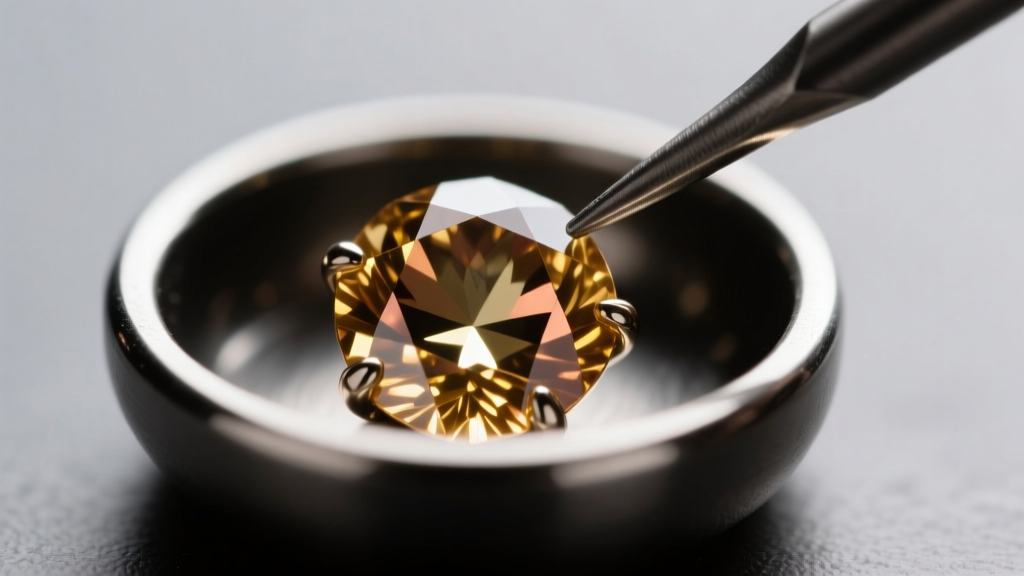
Marcasite jewelry is traditionally set in oxidized (antiqued) sterling silver to enhance the contrast between the dark metal and the sparkling pyrite. The most common troubleshooting mistake owners make is using aggressive silver cleaners that strip this intentional patina, leaving the earrings looking flat, cheap, and overly bright.
Furthermore, pyrite contains iron and sulfur. When exposed to the moisture, salts, and slight acidity of human sweat, a localized chemical reaction can occur, producing trace amounts of sulfuric acid and iron sulfates. This not only tarnishes the silver rapidly but can cause skin irritation and a greenish-black residue on the earlobe.
Cleaning Agents and Safety Profiles
| Cleaning Method | Impact on Sterling Silver | Impact on Pyrite/Marcasite | Verdict |
|---|---|---|---|
| Liquid Silver Dip | Strips all oxidized antiquing instantly | Can cause micro-pitting and dulling | NEVER USE |
| Ultrasonic Cleaner | Safe for plain silver | High-frequency vibrations shatter pyrite | NEVER USE |
| Baking Soda & Aluminum Foil | Removes tarnish but strips antiquing | Alkaline reaction can dull stone facets | AVOID |
| Mild Dish Soap & Soft Brush | Cleans surface oils safely | Safe; does not damage stone or glue | RECOMMENDED |
| Dry Silver Polishing Cloth | Polishes high spots, leaves antiquing in recesses | Safe if rubbed gently around bezels | RECOMMENDED |
For routine maintenance, use a soft boar-bristle brush or a clean, dry makeup brush to dislodge dead skin cells and cosmetic powders from the intricate silver milgrain work surrounding the stones. As noted by Jewelers of America, mechanical cleaning with soft bristles is always preferred over chemical baths for porous or brittle gemstones.
Structural Stress: Ear Wire Gauge and Jump Rings
A frequent point of catastrophic failure in marcasite drop earrings is the connection hardware. Vintage and vintage-inspired marcasite clusters are surprisingly dense. A moderately sized drop earring featuring a pavé-style cluster of pyrite can easily weigh between 6 to 10 grams per ear.
The 20-Gauge Problem: Most mass-produced drop earrings utilize 20-gauge (0.81mm) French hook ear wires to save on precious metal costs. When subjected to the 6g+ weight of a marcasite cluster, plus the kinetic pulling of hair and clothing, 20-gauge sterling silver (which is relatively soft) will slowly bend, warp, and eventually snap at the curve or the jump ring loop.
The Troubleshooting Fix: If your earrings feel heavy or the wire is visibly elongating, take them to a bench jeweler to have the ear wires upgraded to 18-gauge (1.02mm) leverbacks. Leverbacks provide a secure, closed loop that prevents the earring from falling off if the drop catches on a sweater, while the thicker 18-gauge wire resists the tensile stress of the heavy pyrite cluster. Additionally, ensure the jump ring connecting the drop to the wire is soldered closed, rather than merely butted together.
Step-by-Step Repair Guide for a Missing Stone
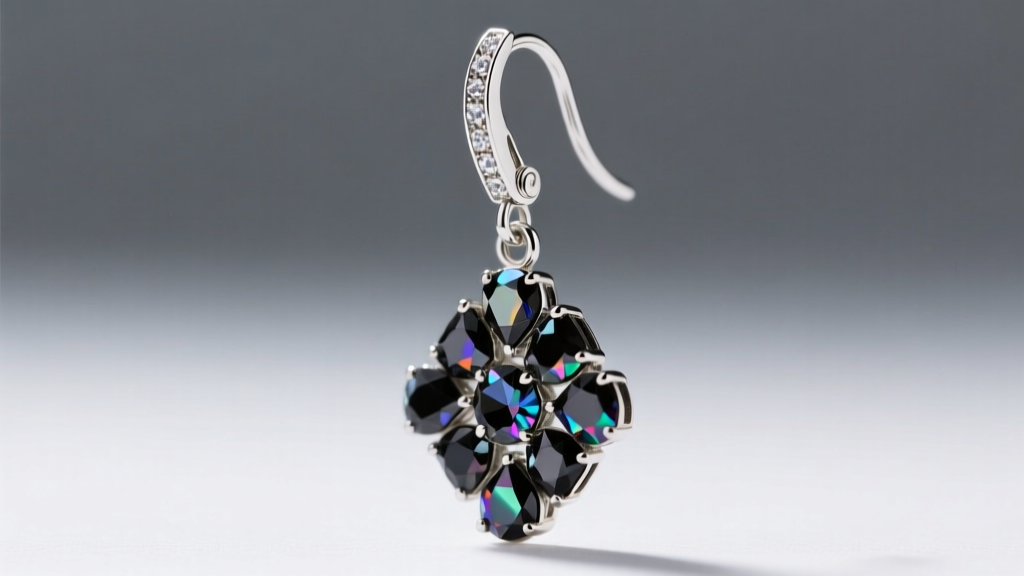
If a stone has fallen out and you have recovered it (or sourced a matching rose-cut pyrite replacement), follow this professional bench protocol to reseat it:
- Prep the Bezel: Use a wooden toothpick or a fiberglass scratch brush to meticulously remove all old, dried adhesive from the silver bezel cup. Any residual glue will prevent the new stone from sitting flush, causing it to catch on fabrics and pop out again.
- Degrease: Wipe the empty bezel and the flat back of the pyrite stone with a lint-free swab dipped in 99% isopropyl alcohol. This removes skin oils that prevent adhesive bonding.
- Apply Adhesive: Using a needle-tip applicator, place a microscopic drop of GS Hypo Cement in the exact center of the bezel. Do not overfill; the glue should not squeeze out over the top facets when the stone is seated.
- Seat the Stone: Use wax-tipped tweezers or a silicone-tipped probe to gently press the stone into the cup. Ensure the table (flat top) is perfectly parallel to the silver setting.
- Cure Time: Let the earrings rest flat on a level surface for a minimum of 24 hours in a low-humidity environment before wearing. Do not attempt to "test" the bond by picking at the stone with your fingernail.
Long-Term Storage and Preventative Conservation
"The greatest enemy of iron-bearing minerals in jewelry is trapped humidity. Storing pyrite in sealed plastic bags without desiccants accelerates the formation of destructive iron sulfates."
To prevent the "crumbling" effect and severe silver tarnish, marcasite drop earrings must be stored in a climate-controlled environment. Never leave them in a bathroom where shower humidity fluctuates daily. Store them in an airtight acrylic jewelry box or a ziplock bag equipped with a silica gel desiccant packet and a 3M anti-tarnish strip. The anti-tarnish strip absorbs airborne sulfur compounds before they can react with the sterling silver, while the silica gel neutralizes the moisture threat to the pyrite. By understanding the specific material science behind your marcasite drop earrings, you can transition from constantly repairing them to wearing them confidently for decades.


