Troubleshooting Posts Earring Issues: Bends, Breaks, and Backs
Learn how to fix common posts earring problems. Expert troubleshooting for bent posts, broken metals, slipping backs, and gauge mismatches.

Understanding Posts Earring Failures
There are few things more frustrating in jewelry maintenance than reaching for your favorite studs only to find the post bent, snapped, or stripped. When dealing with posts earring components, the intersection of metallurgy, daily wear-and-tear, and anatomical pressure creates a unique set of mechanical vulnerabilities. Whether you are wearing delicate 18-karat gold lobes or rigid titanium cartilage studs, the post is the structural anchor of the entire piece. In this comprehensive troubleshooting guide, we break down the exact failure modes of earring posts, the metallurgical reasons behind them, and the professional methods used to repair or prevent them.
The Anatomy of an Earring Post: Gauges and Metals
Before attempting any repair, you must understand the material properties and dimensions of your specific jewelry. The Association of Professional Piercers (APP) outlines strict standards for post thickness and material safety, which directly dictate how a post will behave under stress. Standard lobe earrings typically utilize 20-gauge (0.81mm) or 18-gauge (1.02mm) posts, while cartilage and helix piercings often require thicker 16-gauge (1.29mm) posts for structural integrity.
| Metal Type | Common Gauge | Vickers Hardness (Approx.) | Primary Failure Mode |
|---|---|---|---|
| Sterling Silver (925) | 20G - 18G | 60 - 90 HV | Severe bending, warping |
| 14k Yellow Gold | 18G - 16G | 120 - 140 HV | Bending, thread stripping |
| 18k White Gold | 18G - 16G | 130 - 160 HV | Snapping at the solder joint |
| Implant Grade Titanium (Ti6Al4V) | 16G - 14G | 300 - 350 HV | Thread wear, rare snapping |
Problem 1: Bent Earring Posts (And How to Straighten Them)
The most frequent issue with posts earring designs is bending. This usually occurs when sleeping in earrings, accidentally snagging them on clothing, or applying excessive pressure when forcing a tight earring back. Sterling silver and high-karat gold (22k or 24k) are particularly susceptible due to their low Vickers hardness and high malleability.
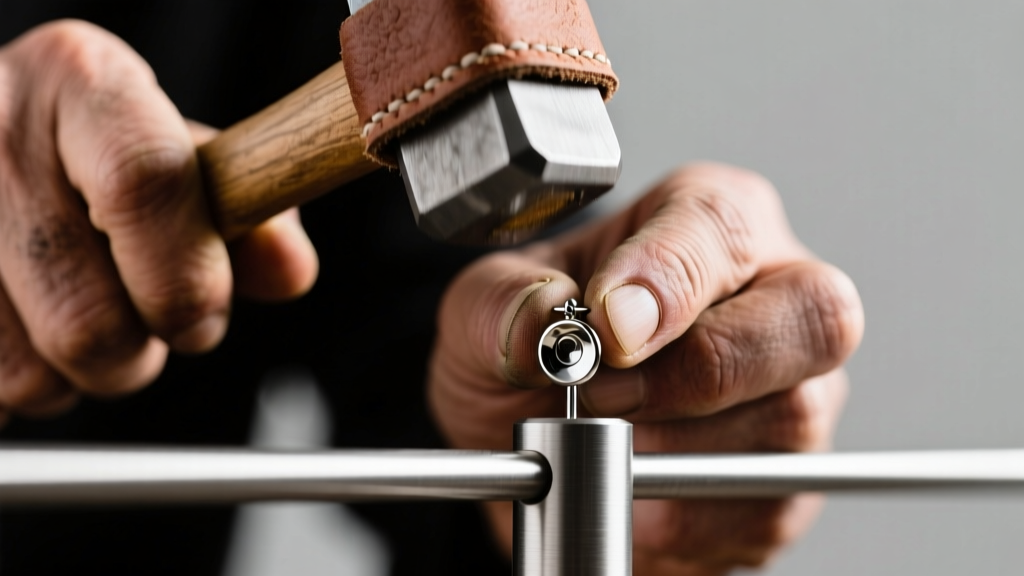
Step-by-Step Straightening Guide
Never use standard steel pliers directly on a gold or silver post; the serrated teeth will gouge the metal, creating micro-fractures that will eventually lead to a complete snap. Instead, follow this jeweler-approved method:
- Step 1: Secure the earring head (the decorative front) in a padded vise or hold it firmly with nylon-jaw pliers to protect any gemstone settings.
- Step 2: Place the bent post on a polished steel bench block or a conical steel mandrel.
- Step 3: Using a rawhide or nylon mallet, gently tap the post, rolling it along the steel surface. The rawhide transfers force without marring the precious metal.
- Step 4: Check straightness by rolling the post on a flat glass surface. If it wobbles, repeat the tapping process on the high side of the curve.
Expert Warning: Do not attempt to bend a post back and forth with your fingers to 'work harden' it. Repeated bending causes metal fatigue, rapidly leading to a clean break at the stress point.
Problem 2: Snapped or Broken Posts
While softer metals bend, harder metals and specific alloys can snap. This is especially common at the solder joint where the post meets the earring head. If you are wearing 18k white gold, the nickel or palladium alloys used to achieve the white color make the metal stiffer but more brittle than yellow gold. Furthermore, if a post is subjected to sudden sheer force (like a heavy towel snagging a cartilage stud), even titanium can fracture if the gauge is too thin for the piercing.
Repairing a Snapped Post
A snapped post cannot be glued. Superglue or epoxy will fail against the natural oils of the skin and the mechanical torque of inserting the earring. The only permanent fix is laser welding. A professional jeweler will use a laser welder to fuse a new post to the earring head without generating the widespread heat of a traditional soldering torch, which could shatter heat-sensitive gemstones like opals, emeralds, or tanzanite. Expect to pay between $35 and $75 for a basic laser weld and post replacement, depending on the metal karat and the complexity of the setting.
Problem 3: Earring Backs Slipping Off and Stripped Threads
A perfectly straight post is useless if the backing mechanism fails. Losing an earring is a costly and emotional frustration. The failure usually stems from a mismatch between the post type and the backing, or worn-out friction components.
Comparing Earring Back Mechanisms
| Back Type | Best For | Common Failure Point |
|---|---|---|
| Butterfly / Friction Clutch | Standard 20G/18G lobes | Metal loops lose tension over time, sliding off easily. |
| Screw-Back | High-value diamonds, active wear | Threads strip if cross-threaded or exposed to lotion buildup. |
| La Pousette / Locking | Heavy drops, secure daily wear | Internal spring mechanism fails if exposed to ultrasonic cleaners. |
| Silicone Bullets | Sensitive ears, temporary holds | Degrades with alcohol cleaning, becomes sticky and traps bacteria. |
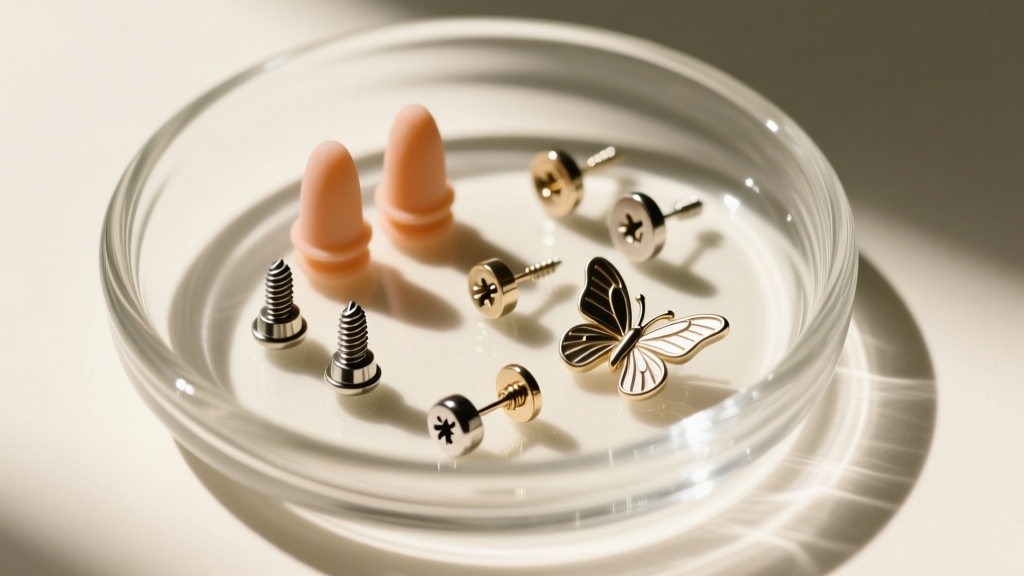
Troubleshooting Loose Friction Backs: If your standard butterfly backs are sliding off, take a pair of smooth-jaw chain-nose pliers and gently squeeze the two outer metal loops of the clutch inward by a fraction of a millimeter. This restores the tension against the post's notch. For screw-backs that feel 'gritty' or won't tighten, soak the post in warm water with a drop of dish soap and use a soft toothbrush to clear out sebum and lotion trapped in the microscopic threads.
Problem 4: Allergic Reactions and 'Green Ear'
Sometimes the problem isn't mechanical, but biological. If your earlobe becomes itchy, red, or develops a greenish tint around the post insertion point, you are likely experiencing contact dermatitis or a metallic oxidation reaction. According to the Gemological Institute of America (GIA), nickel is the most common culprit in jewelry allergies, frequently hidden in 10k and 14k white gold alloys or cheap brass base metals plated with rhodium.
The 'green ear' effect is not an allergy, but rather a chemical reaction between the copper in sterling silver or low-karat gold alloys and the acidity and salts in your sweat. To troubleshoot this:
- Switch to Implant-Grade Titanium: Specifically, look for Ti6Al4V ELI (ASTM F136). It contains zero nickel and is entirely biocompatible.
- Opt for Platinum or Niobium: Both are hypoallergenic, inert metals that will never react with skin chemistry or oxidize in the piercing channel.
- Avoid Coating 'Hacks': Painting earring posts with clear nail polish is a temporary, porous band-aid that chips quickly inside the piercing, potentially trapping bacteria and causing infections.
Preventative Maintenance for Daily Wear
The best way to troubleshoot posts earring issues is to prevent them through rigorous maintenance habits. Always remove stud earrings before showering, swimming, or sleeping. The pressure of a pillow against a mattress can easily bend an 18-gauge gold post, while chlorine in pools can degrade the structural integrity of white gold alloys over time, leading to stress corrosion cracking.
Store your earrings in a dedicated box with individual compartments or insert the posts into a soft foam pad. Tossing earrings loosely into a jewelry box guarantees that heavier pieces will crush and bend the posts of more delicate studs. Finally, inspect the solder joints where the post meets the earring head every six months using a jeweler's loupe; catching a micro-fracture early can save you from losing a valuable diamond or gemstone head entirely.
Conclusion
Troubleshooting earring posts requires a blend of material science and practical jewelry care. By understanding the gauge and hardness of your specific metals, utilizing the correct tools for straightening, and selecting the appropriate backing mechanisms, you can drastically extend the lifespan of your favorite pieces. When in doubt, or when dealing with high-value gemstones, always defer to a professional bench jeweler equipped with laser welding technology to ensure your posts remain secure, straight, and safe for daily wear.


