Tulip Earring Trends 2026: How to Style Floral Gold & Enamel Drops
Discover 2026 tulip earring trends, from vitreous enamel drops to 18k gold studs. Learn styling frameworks, gauge specs, and pricing tiers.

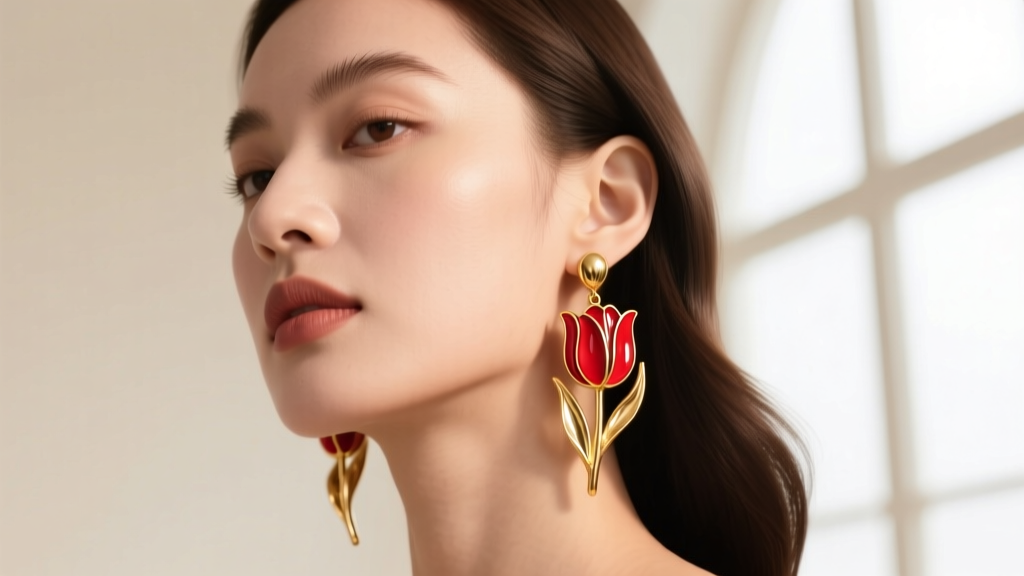
The Botanical Revival: Why the Tulip Earring Dominates 2026
The jewelry landscape of 2026 has decisively pivoted away from the stark, ultra-minimalist geometric shapes that defined the early 2020s. In their place, a romantic, nature-inspired renaissance has taken root, and at the very center of this movement is the tulip earring. According to Vogue’s fine jewelry trend reports, botanical motifs are no longer relegated to spring-only capsules; they have evolved into year-round staples that bridge the gap between vintage nostalgia and modern sculptural art. The tulip, with its elegant, cup-like calyx and sweeping petals, offers a uniquely versatile silhouette that translates beautifully across studs, huggies, and dramatic drop earrings.
Unlike the daisy or rose motifs which can sometimes skew overly juvenile or overly ornate, the tulip earring strikes a masterful balance. Its streamlined, upward-reaching geometry provides a sophisticated profile that flatters a wide variety of face shapes. Whether rendered in high-shine yellow gold, matte oxidized silver, or vibrant vitreous enamel, the tulip drop has become the definitive anchor piece for the “new romanticism” aesthetic dominating current ear curation trends.
Anatomy of a Tulip Earring: Materials & Craftsmanship
To truly appreciate the value and longevity of a tulip earring, one must look past the aesthetic and examine the metallurgy and craftsmanship. The market is currently flooded with varying quality tiers, and understanding the structural anatomy of these floral pieces is critical for making informed purchases.
Vitreous vs. Cold Enamel
The most striking tulip earrings of 2026 utilize enamel to mimic the vivid hues of actual flower petals. However, not all enamel is created equal. Cold enamel (an epoxy-based resin) is frequently used in entry-level jewelry. While it offers bright, opaque colors, it is highly susceptible to chipping, yellowing from UV exposure, and peeling away from the metal base over time.
Conversely, vitreous enamel is a glass-based powder fired at extreme temperatures (often exceeding 1,400°F) until it fuses permanently to the metal substrate. As noted by the Gemological Institute of America (GIA), vitreous enamel boasts exceptional durability, a luminous depth of color, and a scratch-resistant surface. When shopping for mid-to-high-tier tulip drops, always verify that the manufacturer uses kiln-fired vitreous enamel rather than painted resin.
Metal Bases and Gauge Specifications
The structural integrity of a floral drop relies heavily on the post and the solder joint at the calyx (the base of the flower). Standard lobe piercings typically accommodate a 20-gauge (0.81mm) post. However, if you are purchasing a heavy, solid-gold tulip drop or a cartilage-specific tulip helix stud, you should look for an 18-gauge (1.02mm) post. Thicker gauge wire prevents the dreaded “cheese-cutter effect,” where a heavy earring slowly migrates through the earlobe due to gravity and the thinness of the wire.
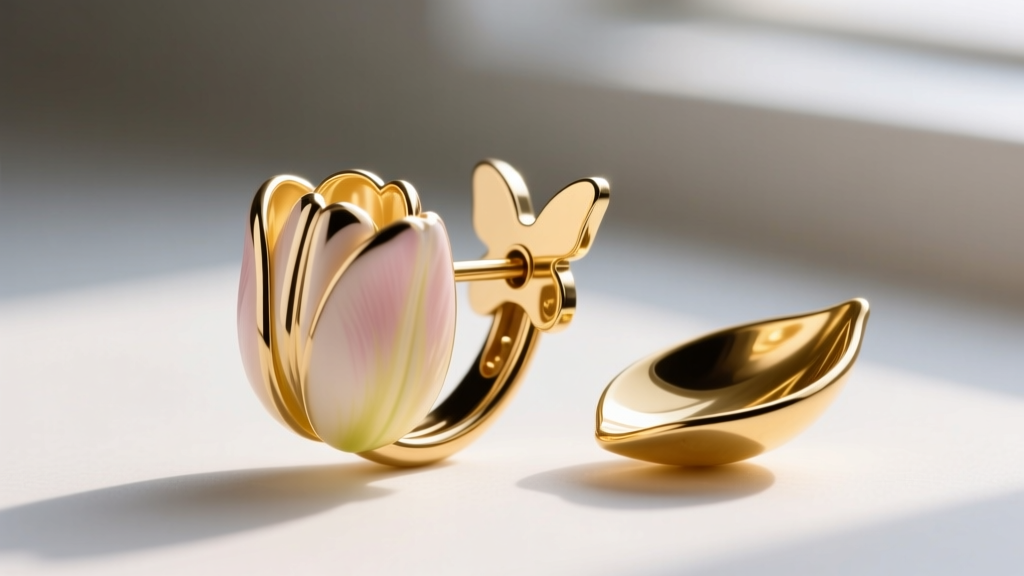
2026 Styling Frameworks: How to Wear Floral Drops
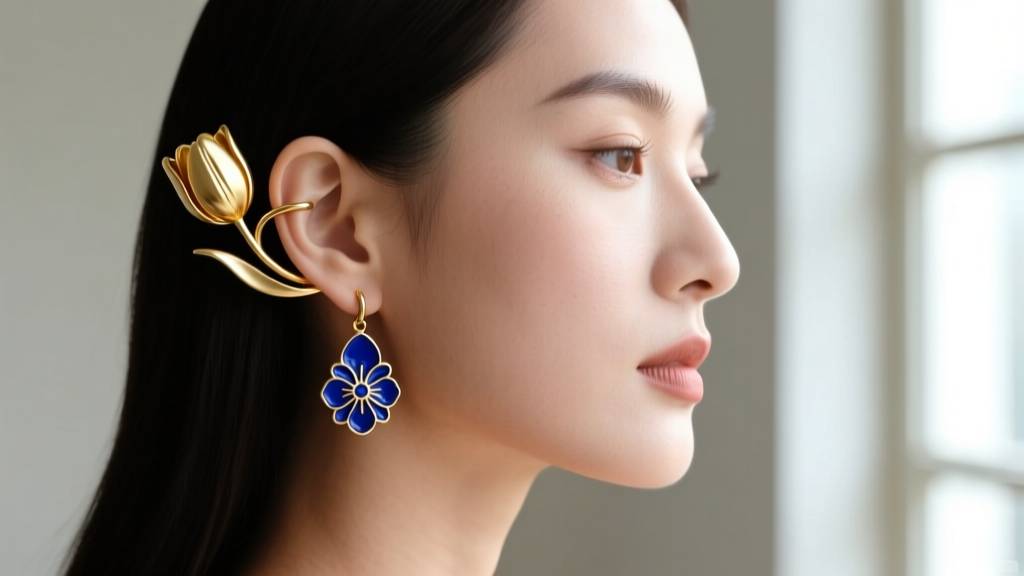
Styling the tulip earring in 2026 requires moving beyond symmetrical, matched sets. The current ethos favors intentional asymmetry and mixed textures. Here are the leading styling frameworks adopted by editorial stylists this year:
- The Asymmetrical Botanical Curation: Pair a larger, elongated tulip drop earring on one lobe with a cluster of micro-floral studs or a simple gold huggie on the opposite ear. This creates a dynamic, editorial look that feels curated rather than uniform.
- Mixed Metal Garden: Break the traditional rules of metal matching. Combine an 18k yellow gold tulip stud on your upper helix with a white gold or platinum pavé diamond tulip drop on the lobe. The contrast mimics the natural diversity of a real garden.
- Face-Shape Matching: Elongated, closed-bud tulip drops are highly recommended for round or square face shapes, as the vertical line draws the eye downward and lengthens the jawline. Conversely, wide, “blooming” tulip studs with flared petals add necessary width and balance to oblong or heart-shaped faces.
Market Analysis: Pricing Tiers & Brand Spotlight
Navigating the pricing landscape for botanical jewelry can be daunting. Below is a comprehensive breakdown of what you should expect to pay based on material composition and manufacturing techniques in the current market.
| Tier | Material Composition | Price Range | Best For | Durability Rating |
|---|---|---|---|---|
| Entry-Level | Gold-plated brass, cold enamel | $25 - $60 | Seasonal wear, trend experimentation | Low (prone to chipping/tarnish) |
| Mid-Tier | 18k gold vermeil (2.5µm), vitreous enamel | $85 - $180 | Everyday rotation, office wear | High (with proper care) |
| Fine Jewelry | Solid 14k/18k gold, pavé diamonds, guilloché enamel | $450 - $1,200+ | Heirloom pieces, formal events | Exceptional |
When investing in the mid-tier category, ensure the piece is crafted from vermeil (a thick layer of gold over sterling silver) rather than standard gold plating over brass. Vermeil provides a hypoallergenic base that is crucial for sensitive earlobes, especially when wearing heavier drop styles for extended periods.
Troubleshooting & Care: Preventing Enamel Chips and Post Bending
Floral jewelry, particularly drop styles with protruding petals, is inherently more vulnerable to physical damage than smooth hoops or studs. To protect your investment, adhere to these expert maintenance protocols:
“The structural integrity of a floral drop earring relies entirely on the solder joint at the calyx. If the post is soldered directly to the thin enamel backing without a reinforced metal pad, the earring will eventually snap under its own weight. Always inspect the backing of a drop earring before purchasing.” — Master Jeweler Benchmark
Safe Cleaning Protocols
Never place vitreous or cold enamel tulip earrings in an ultrasonic cleaner. The high-frequency vibrations can cause micro-fractures in the enamel or dislodge pavé diamonds set within the petals. Instead, use a few drops of mild, phosphate-free dish soap in lukewarm water. Gently agitate the earrings with a baby-soft toothbrush, focusing on the crevices where the petals meet the calyx, then pat dry with a microfiber cloth.
Fixing Bent Posts
Because tulip drops carry more weight at the bottom, the posts are prone to bending if dropped or slept in. If your 20-gauge post bends, do not use standard steel jewelry pliers to straighten it, as they will mar the gold finish. Instead, use nylon-jaw pliers to gently apply pressure and bend the post back to a true 90-degree angle. Always remove drop earrings before sleeping or changing clothes to prevent the petals from catching on fabric and bending the post.
Final Verdict: Is the Tulip Earring a Passing Fad?
While hyper-specific micro-trends often fade within a single season, the tulip earring has secured its place as a modern heirloom. Its architectural elegance, combined with the limitless possibilities of enamel colorways and diamond pavé accents, ensures its relevance well beyond 2026. By prioritizing high-quality materials like vitreous enamel and solid gold or thick vermeil, and by adopting modern, asymmetrical styling techniques, you can integrate this botanical masterpiece into your permanent jewelry rotation with confidence and flair.


