U Hoop Diamond Earrings: The Ultimate Beginner Guide
Discover everything about u hoop diamond earrings. Learn about closures, diamond grades, gauge sizes, and security in this complete beginner guide.

What Are U Hoop Diamond Earrings?
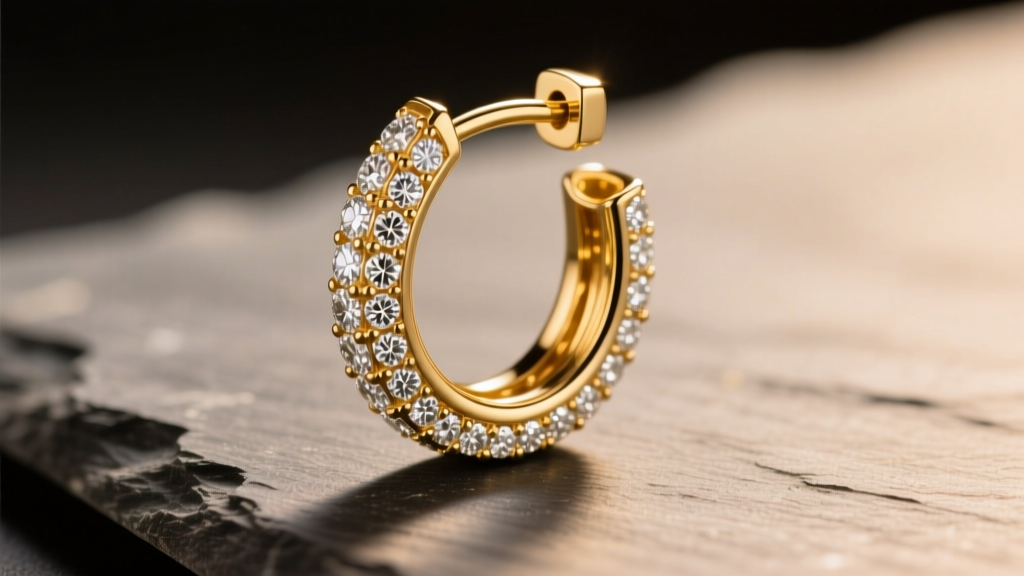
If you are transitioning from basic studs to everyday hoops, u hoop diamond earrings represent the perfect intersection of security, comfort, and elegance. Unlike traditional latch-back or hinged hoops, a U-hoop (often referred to as a continuous or sleeper hoop) features a solid, decorative front half and a thin, U-shaped wire post that snaps into a hollow receiving tube on the opposite end. This seamless design creates the illusion of an unbroken circle of gold and diamonds, making them a favorite for both lobe and cartilage piercings.
Historically, plain U-hoops were used as "sleepers" to keep fresh piercings open. Today, jewelers have elevated this functional design by adorning the visible half with micro-pave, bezel-set, or prong-set diamonds. Because there are no bulky hinges or protruding clasps, U-hoop diamond earrings sit flush against the earlobe, reducing the risk of snagging on hair or clothing—a critical factor for beginners seeking a low-maintenance luxury piece.
Decoding the U-Hoop Closure Mechanism
The defining feature of these earrings is the tension-based closure. The U-shaped wire acts as a spring. When you insert the wire into the hollow tube, the slight compression of the U-shape creates outward friction against the inner walls of the tube, locking it in place. A properly manufactured U-hoop will produce a satisfying, tactile "click" when fully seated.
Common Failure Modes & How to Avoid Them
Beginners often worry about losing their earrings due to the lack of a physical latch. Understanding the mechanical failure points of U-hoops is essential for keeping your diamonds secure:
- Tube Clogging: The most common reason a U-hoop fails to "click" is debris. Lotions, dead skin cells, and soap scum pack into the hollow receiving tube, preventing the wire from seating fully. Fix: Use a soft interdental brush or a piece of dental floss to gently clear the tube monthly.
- Wire Fatigue (Loss of Temper): Repeatedly pulling the U-wire outward to remove the earring can stretch the metal, causing it to lose its spring tension. Fix: Always remove the earring by gently pushing the wire through the tube from the back, rather than pulling it out from the front.
- Snagging and Bending: If the U-wire catches on a towel, it can bend out of shape. Fix: Gold is malleable; you can carefully bend the U-wire back into its original shape with your fingers to restore tension, but avoid using pliers which can mar the metal.
Diamond Quality: What Matters in Micro-Pave
When shopping for u hoop diamond earrings, you will mostly encounter micro-pave settings, where tiny diamonds (usually 1.0mm to 1.5mm) are set closely together. The standard "4Cs" of diamond grading apply differently at this micro-scale. According to the Gemological Institute of America (GIA), once diamonds drop below 2.0mm, color and clarity become much harder for the naked eye to distinguish, making cut quality the paramount factor for brilliance.
| Feature | Micro-Pave U-Hoops (1mm-1.5mm) | Bezel Solitaire U-Hoops (3mm+) |
|---|---|---|
| Ideal Clarity | I1 to SI2 (Inclusions hidden by small size) | VS2 to SI1 (Eye-clean required) |
| Ideal Color | G to H (Near colorless, blends well) | D to F (Colorless, stands out) |
| Setting Style | Shared prong or bead-set pave | Bezel or 4-prong basket |
| Avg. Price Range (14k) | $350 - $850 | $900 - $2,500+ |
Expert Tip: For everyday U-hoops, opt for a "bead-set" or "bright-cut" pave rather than "shared prong." Shared prongs expose more of the diamond for maximum light return, but the tiny metal prongs are notorious for catching on fine hair and sweaters. Bead-set diamonds sit lower and smoother against the metal, offering a much more beginner-friendly, snag-free experience.
Metallurgy and Gauge Sizes for Sensitive Ears
The wire that passes through your piercing dictates both the comfort and the longevity of the earring. Standard U-hoop wires are typically crafted in 20-gauge (0.81mm) or 18-gauge (1.02mm). While 22-gauge wires exist, they are generally too thin to maintain the necessary spring tension for a secure U-hoop closure and are prone to warping.
If you have sensitive ears or newly healed piercings, the metal alloy is critical. While 18k gold offers a richer yellow hue and higher purity, it is inherently softer than 14k gold. To solve this, some master jewelers employ a "mixed-karat" engineering trick: they craft the decorative diamond-set half in 18k gold for color and prestige, but manufacture the hidden U-wire post in 14k gold or even platinum to ensure the wire has the tensile strength required to maintain a tight, secure snap closure over years of daily wear.
Step-by-Step: How to Insert and Secure U-Hoops
Inserting U-hoop diamond earrings requires a slightly different technique than standard butterfly-back studs. Follow this sequence to ensure a secure fit without bending the wire:
- Prep the Ear: Ensure your earlobe is dry. Moisture or lotion can make the thin wire slippery and difficult to grip.
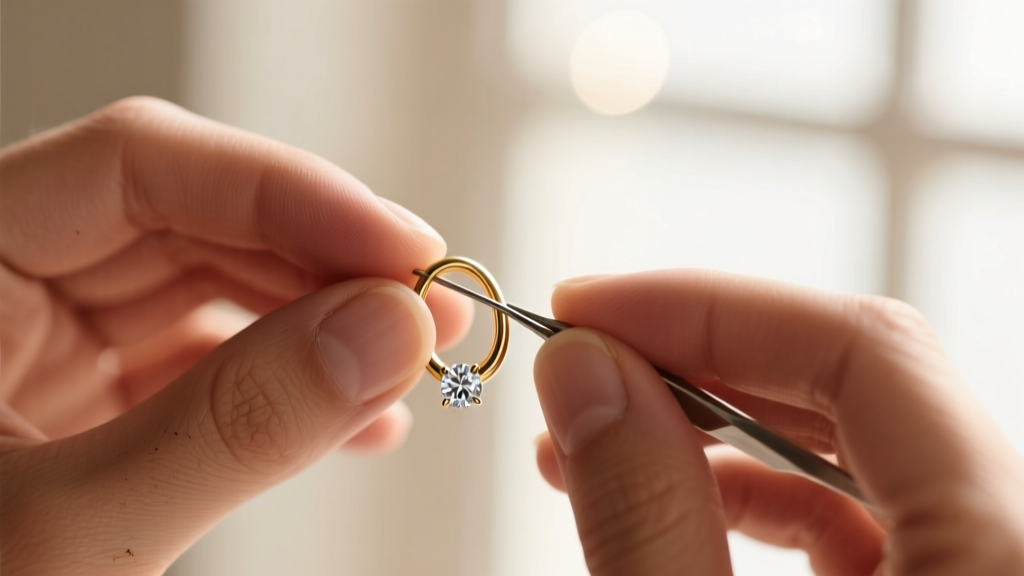
- Align the Wire: Hold the decorative front of the hoop between your thumb and index finger. Guide the U-wire through the back of your piercing.
- Find the Tube: Once the wire is through the ear, use your other hand to locate the hollow receiving tube at the opposite end of the hoop.
- The Snap: Gently guide the tip of the U-wire into the tube. You should feel a slight resistance followed by a distinct "click" as the wire seats fully. If it feels loose, the wire may need a gentle inward squeeze to restore tension.
Care and Maintenance Routine
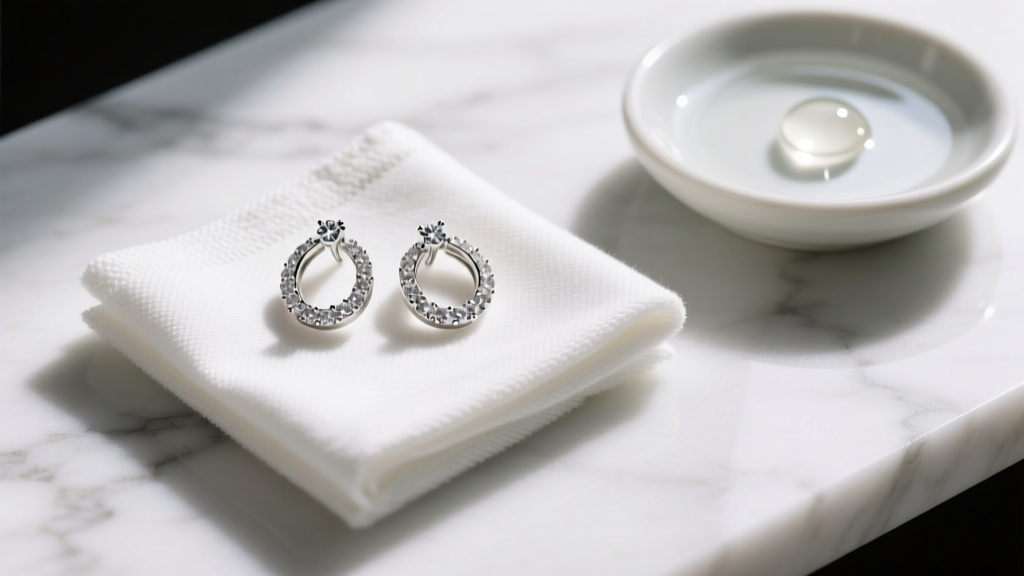
Diamonds are lipophilic, meaning they attract and hold onto oils from your skin, hair products, and lotions. This oil buildup dulls their sparkle and can accumulate inside the U-hoop's receiving tube. The Jewelers of America recommends regular, gentle cleaning to maintain both the brilliance of the stones and the mechanical integrity of the jewelry.
The Golden Rule of U-Hoop Cleaning: Never use ultrasonic cleaners on micro-pave diamond earrings more than once or twice a year. The high-frequency vibrations can shake loose the tiny beads or prongs holding the micro-diamonds in place. Instead, rely on a weekly soak in warm water with a few drops of mild dish soap, gently agitating the diamonds with a soft baby toothbrush.
By understanding the unique mechanics of the closure, selecting the right diamond setting for your lifestyle, and maintaining the tension of the wire, your u hoop diamond earrings will provide a secure, sparkling, and seamless look for years to come. Whether you are wearing them as a subtle 10mm huggie or a bold 20mm statement hoop, the U-hoop remains one of the most ingeniously designed pieces in modern fine jewelry.


