What Are 2 Gauge Earrings in mm? The Beginner Guide
Confused by body jewelry sizing? Learn exactly what 2 gauge earrings in mm means, how to measure them, and the best materials for safe wear.

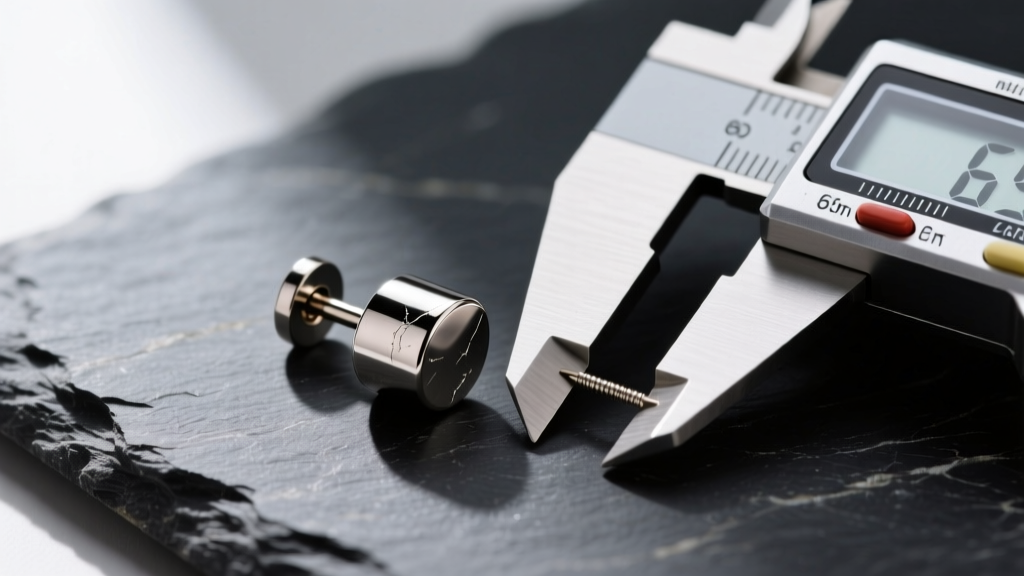
If you are just stepping into the world of stretched lobes, bold cartilage setups, or heavy ear jewelry, the sizing system can feel like a secret code. Standard earrings are usually measured in simple millimeters, but the moment you cross into thicker body jewelry, you are introduced to the gauge system. For beginners, one of the most common points of confusion is figuring out exact thickness. Specifically, understanding 2 gauge earrings in mm is a critical milestone, as this size represents the threshold between standard thick jewelry and true stretched lobe territory.
In this comprehensive guide, we will break down the exact mathematics of the 2-gauge conversion, explore the types of jewelry available in this size, and provide actionable advice on materials and safe wearing practices for 2026 and beyond.
The Math: Decoding 2 Gauge Earrings in mm
Unlike standard metric measurements where a larger number means a larger physical size, the American Wire Gauge (AWG) system works in reverse. The higher the gauge number, the thinner the wire. Therefore, a 20g earring is incredibly thin (0.81mm), while a 2g earring is substantially thick.
So, what is the exact conversion? A true 2 gauge is 6.544 millimeters.
However, when you begin shopping for 2 gauge earrings in mm, you will quickly notice a discrepancy in the market. Many commercial body jewelry brands round this number down, labeling their 2g jewelry as either 6mm or 6.5mm. Here is how to navigate this as a beginner:
- 6mm Plugs: Often sold as 2g, these are slightly smaller than a true 2g AWG wire. They are generally easier to insert into a freshly healed 2g stretch and are the most common size found in mainstream alternative jewelry stores.
- 6.5mm Plugs: This is the mathematically accurate 2g size. Custom makers, high-end glass blowers, and professional piercers usually stick to this exact measurement to ensure proper fitment for healed lobes.
Always check the millimeter sizing on the product description rather than relying solely on the gauge label, especially when buying from international sellers who may use different rounding standards.
Popular Styles for 2g (6.5mm) Ear Jewelry
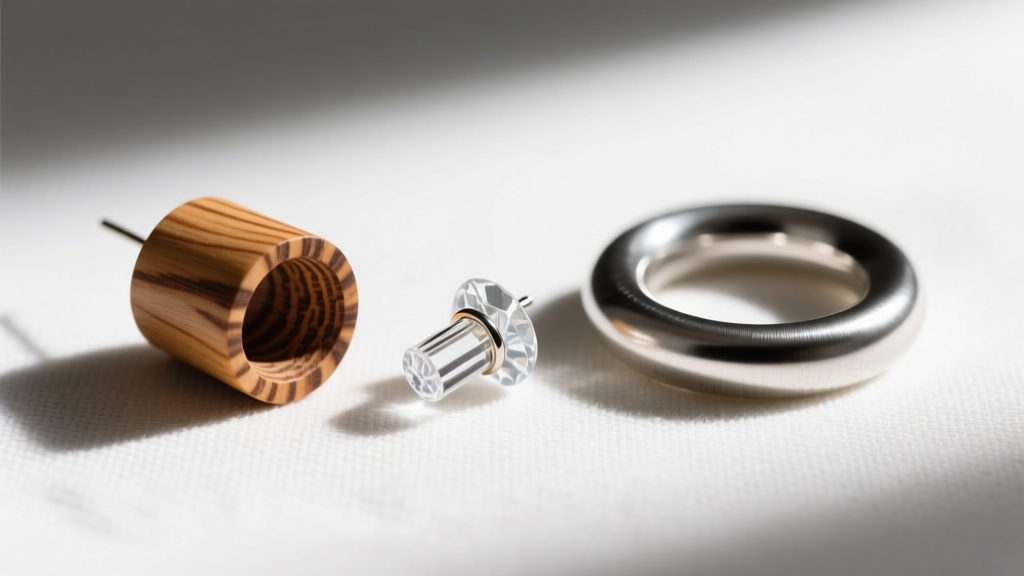
At 6.5mm thick, the jewelry transitions away from standard wire posts and into solid body jewelry. Here are the most common styles you will encounter:
1. Solid Plugs
Plugs are solid cylinders that fill the entire piercing hole. They can feature single-flare ends (held in place by a silicone or rubber O-ring) or double-flare ends (which have a wider lip on both sides and require a fully healed, elastic piercing to insert). Double-flare 6.5mm plugs are highly secure but should never be forced into a tight stretch.
2. Tunnels and Eyelets
Tunnels are hollow cylinders, allowing you to see through the earlobe. At 2g, the hole in the center of the tunnel is relatively small (usually around 3mm to 4mm in diameter), making them a great lightweight alternative to heavy stone or steel plugs. Eyelets are similar but typically feature a saddle shape that sits flush without the need for O-rings.
3. Heavy Wire Hoops and Clickers
While less common for stretched lobes, 2g wire is frequently used for heavy, statement-making cartilage hoops or conch rings. These are usually crafted with a hinged segment (clicker) or a captive bead ring (CBR) design, requiring specialized insertion tools due to the rigidity of the 6.5mm wire.
Material Grades: What Touches Your Skin Matters
Because 2g jewelry covers a significant surface area inside the piercing fistula (the skin tube of the piercing), material quality is non-negotiable. Cheap alloys can cause contact dermatitis, moisture trapping, and severe irritation bumps. According to the Association of Professional Piercers (APP), only specific materials are recommended for long-term wear in stretched or heavy-gauge piercings.
| Material | Grade / Standard | Best Use Case | Pros & Cons |
|---|---|---|---|
| Titanium | ASTM F-136 (Implant Grade) | Initial stretches, sensitive ears, daily wear | Pros: Hypoallergenic, lightweight, mirror polish. Cons: More expensive, limited color options. |
| Surgical Steel | 316L or 316LVM | Healed lobes, budget-friendly options | Pros: Affordable, widely available, heavy. Cons: Contains trace nickel, can cause reactions. |
| Glass | Borosilicate / Fused Quartz | Healed stretches, sleeping, taping methods | Pros: Non-porous, incredibly smooth, hypoallergenic. Cons: Fragile if dropped, heavy in larger sizes. |
| Organic Wood | Sealed with natural oils | Fully healed, dry ears only | Pros: Extremely lightweight, breathable, unique grain. Cons: Porous, cannot be autoclaved, warps in water. |
Expert Tip: If you are actively stretching your ears to reach 2g, always use ASTM F-136 Titanium or Borosilicate Glass. The ultra-smooth surface of glass prevents micro-tears in the fistula during the stretching process.
The Faux Gauge Hack for Beginners
What if you love the bold, stretched look of 6.5mm jewelry but have no desire to actually stretch your earlobes? Enter the faux gauge.
Faux gauges are cleverly designed earrings that mimic the appearance of a 2g plug while utilizing a standard 20g (0.8mm) or 18g (1.0mm) post. The thin metal post passes through your standard, un-stretched ear piercing, while a thick sleeve made of silicone, acrylic, or lightweight resin surrounds the post, creating the optical illusion of a 6.5mm stretched lobe. This is an incredibly popular entry point for beginners who want to test the aesthetic of heavy body jewelry in a professional or conservative environment without making permanent modifications to their body.
Safe Stretching Practices and Failure Modes
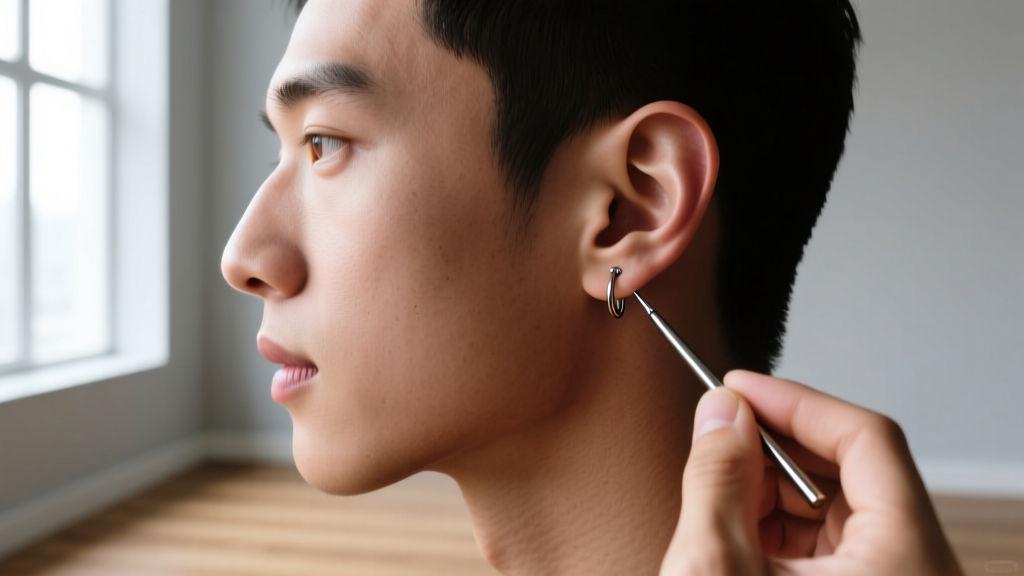
If your goal is to physically stretch your standard piercings up to 2g (6.5mm), patience is your most valuable tool. The jump from 4g (5mm) to 2g (6.5mm) is a 1.5mm leap, which is substantial for delicate earlobe tissue. Here are the critical failure modes to avoid and the correct methods to employ:
Failure Mode 1: The Blowout
A blowout occurs when you stretch too quickly, forcing the piercing hole to expand faster than the skin can generate new cells. This causes the back of the fistula to tear and push outward, creating a painful, unsightly ring of scar tissue that looks like the piercing is turning inside out. Prevention: Never skip sizes. If 4g feels tight, do not force a 2g taper.
Failure Mode 2: Lobe Thinning
Wearing excessively heavy 2g jewelry (like solid steel or thick stone plugs) immediately after stretching can cause gravity to pull the lobe downward. Over time, this thins the tissue at the bottom of the piercing, leading to permanent sagging. Prevention: Wear lightweight glass or sealed wood plugs during the first six months of a new stretch.
The Taping Method
For the jump to 2g, many professionals recommend the dead-stretching or taping method over using a metal taper. By wrapping 1 to 2 layers of PTFE (plumber's) tape around your current 4g glass plug, you can gradually increase the thickness by fractions of a millimeter. This allows the tissue to expand naturally without the blunt force trauma of a steel taper.
Quick Reference: Gauge to Millimeter Conversion Chart
To help you visualize where 2g sits in the broader spectrum of body jewelry, refer to this conversion chart. Keep in mind that the "point of no return"—the size at which a stretched earlobe is unlikely to shrink back to a standard piercing size—varies by individual, but is widely considered by professionals to be somewhere between 2g (6.5mm) and 0g (8.0mm).
| Gauge (AWG) | Millimeters (mm) | Inches (Approx) | Common Jewelry Type |
|---|---|---|---|
| 6g | 4.0mm | 0.16" | Heavy wire hoops, thick cartilage studs |
| 4g | 5.0mm | 0.20" | Small plugs, beginner stretching tapers |
| 2g | 6.5mm | 0.26" | Standard plugs, tunnels, faux gauges |
| 0g | 8.0mm | 0.31" | Large tunnels, heavy stone plugs |
| 00g | 10.0mm | 0.39" | Eyelets, large organic wood plugs |
Final Thoughts on Sizing and Comfort
Understanding the translation of 2 gauge earrings in mm is the first step toward building a comfortable, healthy, and visually striking ear jewelry collection. Whether you are opting for a lightweight 6.5mm glass plug to maintain a healthy stretch, or utilizing a clever faux gauge to achieve the look without the commitment, always prioritize implant-grade materials and listen to your body. When in doubt, consult with a professional piercer who can measure your specific anatomy and recommend the perfect 2g fit for your unique ear structure.


