The 2026 Snake Earring Cuff Buying Guide: Fit & Metals
Discover how to choose the perfect snake earring cuff in 2026. Learn about wire gauges, tension mechanisms, hypoallergenic metals, and secure fit tips.

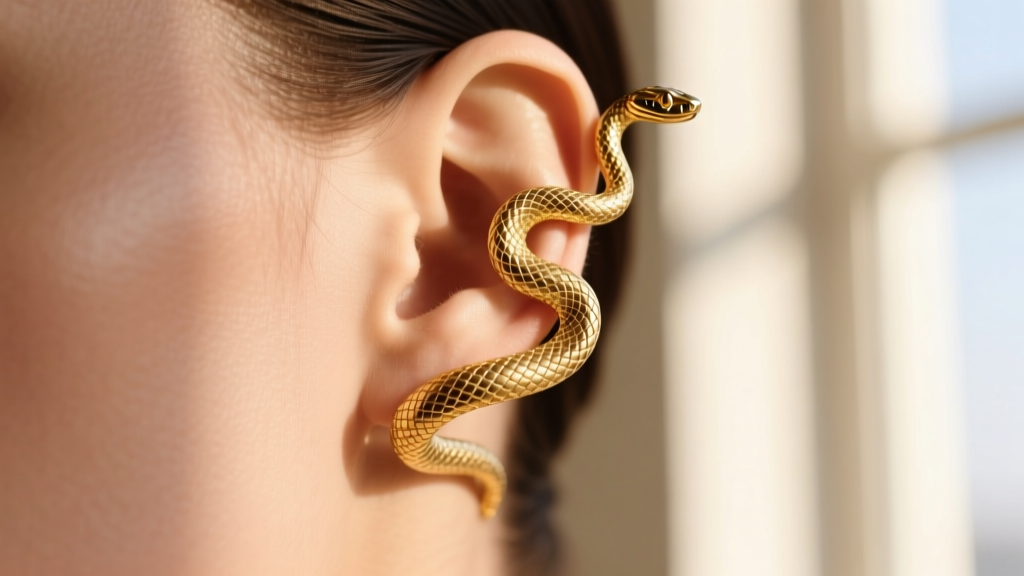
The Serpent Trend: Beyond the Lobe
The serpent has been a symbol of eternity and rebirth since ancient Egypt, but in 2026, the snake earring cuff represents something entirely different: the pinnacle of non-pierced cartilage styling. Unlike traditional clip-ons that pinch the lobe with painful screw-backs, a well-engineered ear cuff utilizes the natural anatomy of the helix or tragus to anchor itself. However, the market is flooded with cheap, mass-produced alloys that slip, tarnish, and cause contact dermatitis. This buying guide dissects the metallurgy, tension mechanics, and anatomical sizing you need to know before investing in a serpent motif cuff.
The Physics of the C-Curve: Tension and Wire Gauge
An ear cuff is essentially a specialized C-clamp. Its ability to stay on your ear without piercing relies entirely on the metallurgical memory of the wire and the precise inner diameter (ID) of the curve. The human ear is not a static mannequin; it moves when you chew, talk, and sleep. Therefore, the cuff must possess enough "springback" to absorb these micro-movements without permanently deforming.
Wire Gauge and Metal Fatigue
Most mass-market snake cuffs are stamped from thin sheets or drawn from 22-gauge (0.64mm) wire. This is a critical failure point. A wire this thin lacks the structural rigidity to maintain tension against the natural oils and friction of human skin. When shopping, look for a minimum wire thickness of 18-gauge (1.02mm) for the main body of the snake. The tail and head can taper to 20-gauge (0.81mm) for aesthetic detailing, but the core tension band must be robust to prevent the dreaded "droop" by midday.
Material Grades: Navigating the Alloy Minefield
Because ear cuffs sit on the cartilage—an area with less blood flow and thinner skin than the lobe—material biocompatibility is non-negotiable. The Association of Professional Piercers (APP) sets rigorous standards for body jewelry, and these same principles apply to high-friction non-pierced cuffs. Avoid anything labeled simply as "metal alloy" or "Tibetan silver," which are often code for nickel-heavy pot metals.
| Metal Type | Composition | Tension Retention | 2026 Price Range |
|---|---|---|---|
| Implant-Grade Titanium | ASTM F136 Ti-6Al-4V | Excellent (High springback) | $85 - $160 |
| Solid 14k Gold | 58.5% Gold, Alloyed | Good (Malleable, requires care) | $250 - $600 |
| Sterling Silver (925) | 92.5% Silver, 7.5% Copper | Poor (Soft, loses shape easily) | $40 - $90 |
| Gold Vermeil | Silver base, 2.5µm Gold | Fair (Base metal dictates tension) | $60 - $120 |
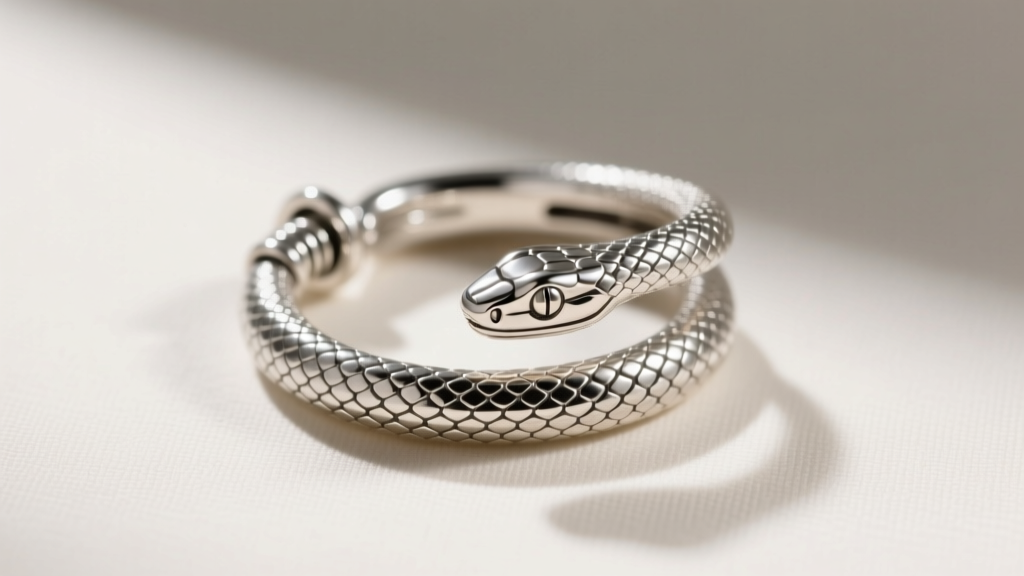
Many jewelers plate their sterling silver snake cuffs with rhodium to prevent tarnish. While this gives the piece a bright, white-gold appearance and protects against sulfur in the air, it does absolutely nothing to improve the structural integrity of the soft silver underneath. If you bend a rhodium-plated silver cuff to adjust the fit, the plating will micro-fracture, exposing the silver to the elements and creating a flaky, uneven texture along the snake's spine.
Beware of "gold-plated brass." The Federal Trade Commission (FTC) warns that flash-plated brass contains high levels of nickel and copper. When the micro-thin gold layer wears off from friction against the helix, the copper reacts with your sweat, resulting in the dreaded "green ear" and potential allergic contact dermatitis.
Sizing and Placement: Helix vs. Lobe vs. Tragus
A snake earring cuff is not one-size-fits-all. The cartilage thickness of a standard adult helix ranges from 3mm to 5mm, while the tragus can be 6mm to 8mm thick. To get a secure fit, you must match the cuff's inner diameter to your specific anatomy.
To accurately measure your cartilage for a fixed-diameter cuff, use a digital caliper. Gently pinch the target area of your helix or tragus and read the measurement in millimeters. Add 0.5mm to 1.0mm to this number to account for the natural curvature of the ear and to ensure the cuff doesn't restrict blood flow or cause pressure necrosis during long wear. If your measurement is 4.5mm, look for a cuff with a 5.0mm or 5.5mm inner diameter.
- Adjustable Cuffs: These feature a soft, pliable wire that you bend to fit. While convenient, repeated bending causes work-hardening, leading to metal fatigue and eventual snapping. Only buy adjustable cuffs if you plan to size them once and leave them alone.
- Fixed-Diameter Cuffs: Machined to a specific ID (e.g., 8mm or 10mm). These offer superior security and are often fitted with a hidden micro-spring hinge that allows the cuff to open wide for placement, then snap back to its original tension.
- The Snake Head Weight: If the snake's head is heavily cast with cubic zirconia or solid metal, it creates a pendulum effect. Ensure the cuff's grip is tight enough to counteract the top-heavy weight, otherwise, the serpent will slowly rotate downward throughout the day.
Styling the Serpent: Aesthetic Pairings
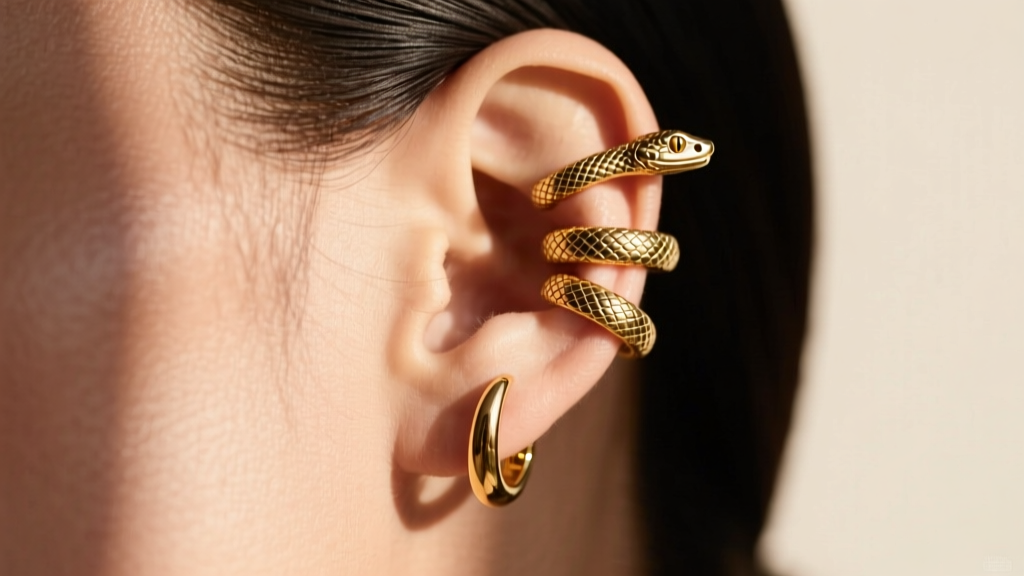
The beauty of the snake earring cuff lies in its versatility. In 2026, the maximalist "curated ear" trend heavily incorporates serpentine motifs. If you are wearing a chunky, textured snake cuff on your upper helix, balance it with minimalist, sleek jewelry elsewhere. Pair it with a simple 14k gold huggie hoop on the lobe and a tiny diamond stud on the tragus. This creates a visual hierarchy where the snake remains the undisputed focal point. Avoid pairing a highly detailed snake cuff with other ornate, vintage-style pieces, as the competing textures will make the ear look cluttered and heavy.
Common Failure Modes and Troubleshooting
"The most common reason clients lose ear cuffs isn't the size—it's the application. Sliding a cuff up from the earlobe stretches the C-curve. Always open the cuff slightly, place it directly on the target cartilage, and gently compress it into place." — Master Jeweler Bench Note
The Snag Hazard
Snake designs inherently feature scales, fangs, or tapered tails. In lower-tier manufacturing, the tail is simply cut and tumbled, leaving micro-burrs that catch on hair and knitwear. Run your fingernail over the tail of the cuff before purchasing. If it catches on your nail, it will catch on your sweater, which is the primary mechanism for losing an ear cuff in public. Look for brands that hand-polish the terminal ends to a mirror finish.
Tarnish in the Scales
If you opt for sterling silver, the textured scales of the snake will trap oxidized silver sulfide (tarnish). Standard polishing cloths cannot reach into these micro-crevices. You will need to use a specialized silver dip solution or an ultrasonic cleaner to maintain the contrast and shine of the scales. However, frequent ultrasonic cleaning can loosen any glued-in gemstone eyes, so proceed with caution.
Final Verdict: What to Buy in 2026
If you are buying a snake earring cuff for daily wear, bypass sterling silver and vermeil entirely. The friction of daily application will strip the plating and warp the soft silver within a month. Invest in an 18-gauge solid 14k gold or implant-grade titanium cuff with a spring-loaded hinge. Not only will it maintain its tension indefinitely, but the biocompatible metals ensure your cartilage remains irritation-free, allowing the serpent to coil securely in its natural habitat.


