2026 Trend Analysis: The Evolution of Artisan USA Earrings
Explore the 2026 evolution of artisan USA earrings. We analyze regional trends, metallurgical standards, and gauge specs driving American ear styling.

The 2026 Shift: Why American-Made is Dominating Ear Curations
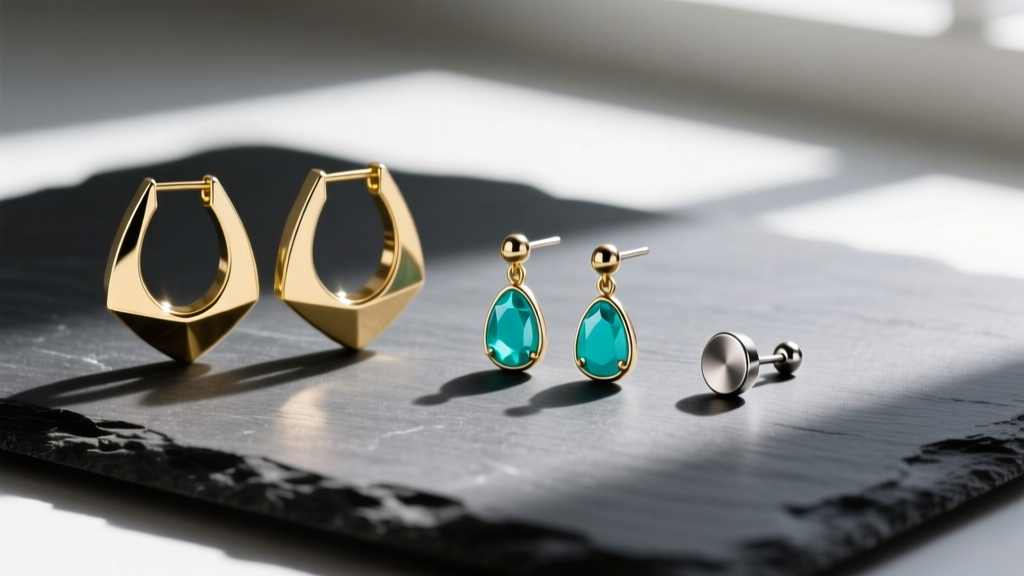
In the contemporary jewelry landscape, the search for authentic, high-quality usa earrings has evolved from a simple geographic preference into a demand for metallurgical integrity and regional design philosophies. As we navigate 2026, the American earring market is experiencing a profound renaissance. Consumers are moving away from mass-produced, imported fast-fashion jewelry, opting instead for pieces that offer verifiable origins, sustainable material sourcing, and specialized engineering for complex ear curations.
This shift is heavily driven by the 'curated ear' movement, which requires precise gauge sizing and biocompatible metals to maintain healthy piercings across multiple cartilage and lobe placements. American artisans and specialized body jewelry manufacturers are leading this charge, combining traditional metalsmithing with modern anatomical engineering. The result is a highly segmented market where regional aesthetics dictate not just the visual style, but the specific alloys and structural mechanics of the earrings produced.
Regional Aesthetics: A Deep Dive into US Micro-Trends
The United States is vast, and its regional jewelry hubs have developed distinct signatures that cater to different lifestyle needs and aesthetic preferences. Understanding these micro-trends is essential for both collectors and everyday wearers looking to invest in pieces that offer both style and structural longevity.
The Southwestern Revival: Argentium & High-Grade Turquoise
The American Southwest has long been synonymous with turquoise and silver, but the 2026 iteration of this aesthetic is defined by advanced metallurgy. Traditional sterling silver (925) is prone to tarnishing due to its copper content. Today's premier Southwestern artisans are increasingly utilizing Argentium 935 silver. By replacing a portion of the copper with germanium, Argentium offers superior tarnish resistance and eliminates firescale during the soldering process, resulting in cleaner, more durable settings for heavy stone drops.
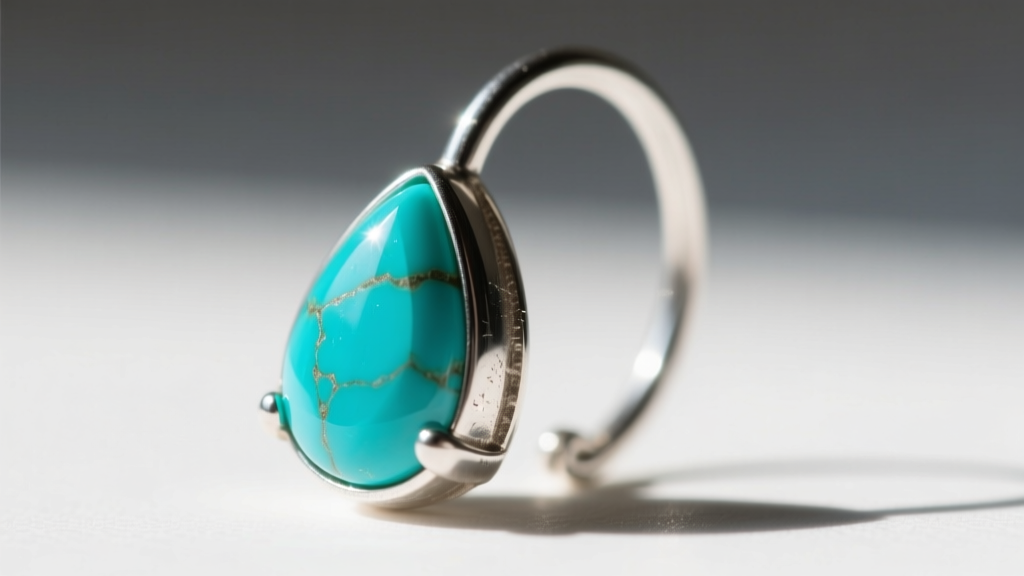
Regarding gemstones, there is a strict bifurcation in the market. Collectors are seeking out the pristine, matrix-free sky blue of Sleeping Beauty turquoise for minimalist teardrop dangles, while the bold, dark-webbed matrix of Kingman turquoise is being set into heavy, 16-gauge or 14-gauge statement hoops. The thicker wire gauges are not merely a stylistic choice; they are a structural necessity to support the weight of genuine, untreated American turquoise without warping the ear wire over time.
Northeastern Minimalism: Architectural Hoops & Niobium
In the Northeast, particularly within the design studios of New York and Boston, the focus is on architectural minimalism and urban versatility. The trend here centers on continuous, seamless hoops and geometric clickers crafted from recycled 14k and 18k gold. However, the true standout material in the Northeastern 2026 trend cycle is Niobium.
Niobium is a highly biocompatible, hypoallergenic metal that can be anodized using electricity to produce vivid, permanent colors without the use of surface platings that can flake or cause contact dermatitis. Artisans are producing 20-gauge and 18-gauge niobium clickers in deep gunmetal, midnight blue, and rose gold hues. These pieces are specifically engineered with a 3mm internal diameter for snug helix and tragus piercings, or a 10mm diameter for standard lobe hoops, offering a lightweight alternative to gold that maintains a high-end, matte finish.
West Coast Ear Stacks: Threadless Titanium & Lab-Grown
The West Coast earring market is dominated by the 'ear stack'—the practice of curating multiple coordinated piercings from the lobe to the upper helix. This requires jewelry that is secure, comfortable for sleeping, and safe for long-term wear. The undisputed king of this category is ASTM F136 implant-grade titanium paired with threadless (push-pin) mechanics.
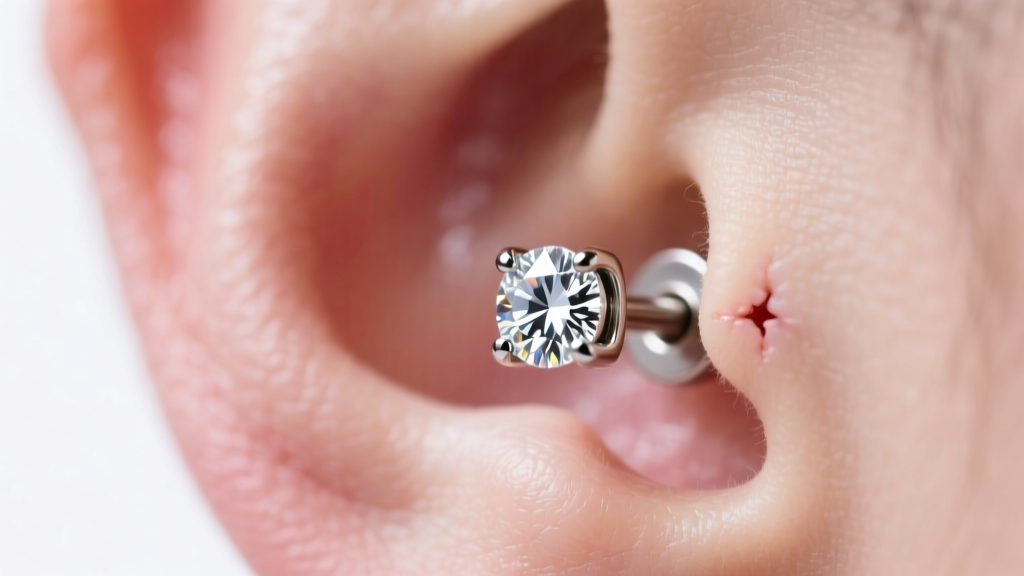
According to the Association of Professional Piercers (APP), ASTM F136 titanium is the gold standard for biocompatibility. West Coast manufacturers like Body Vision Los Angeles (BVLA) have popularized threadless ends, where a slightly bent 18-gauge or 16-gauge titanium pin is pushed into a hollow post, creating tension-based security that will not unscrew or fall out during the night. In 2026, these titanium posts are increasingly being topped with bezel-set lab-grown diamond melee and synthetic opals, catering to an eco-conscious demographic that demands luxury without the environmental toll of mined stones.
Technical Specifications: What US Artisans Are Using in 2026
To truly understand the value of domestically produced ear jewelry, one must look at the technical specifications that separate artisan pieces from commercial mall-kiosk jewelry. The table below outlines the dominant materials and structural standards defining the current market.
| Regional Hub | Signature Style | Primary Metal / Alloy | Standard Gauge Sizes | Avg. Price Range (Per Piece) |
|---|---|---|---|---|
| Southwest | Stone Drops & Heavy Hoops | Argentium 935 Silver | 16g, 14g (for weight support) | $85 - $250 |
| Northeast | Architectural Hoops & Clickers | Recycled 14k Gold & Niobium | 20g, 18g, 16g | $120 - $450 |
| West Coast | Threadless Ear Stacks | ASTM F136 Titanium & Lab-Grown | 18g, 16g, 14g (Threadless pins) | $90 - $350 |
Sourcing Authentic USA Earrings: Avoiding the 'Imported' Trap
As the premium for American-made jewelry grows, so does the prevalence of misleading marketing. The Federal Trade Commission (FTC) maintains strict guidelines regarding the 'Made in USA' label, requiring that 'all or virtually all' significant parts and processing be of US origin. When sourcing high-end earrings, look for the following indicators of authenticity:
- Hallmark Stamps & Maker's Marks: Authentic US artisans stamp their precious metals with a registered maker's mark and the alloy purity (e.g., '14K' or '935').
- APP Membership: For cartilage and threadless jewelry, verify that the manufacturer is a corporate member of the Association of Professional Piercers, ensuring their titanium meets ASTM F136 standards.
- Transparent Supply Chains: Genuine US studios will openly disclose the origin of their stones (e.g., 'Nevada Kingman Turquoise') and the location of their casting houses.
- Mechanism Quality: American-made clickers and threadless pins feature precise CNC-machined tolerances. If a push-pin slides in without any resistance or 'snap', it is likely an imported counterfeit with poor tension control.
'The modern consumer doesn't just want a beautiful earring; they want the engineering behind it to be as flawless as the aesthetic. When you buy a 16-gauge threadless titanium end machined in California, you are buying a micro-engineered medical device disguised as high jewelry.' — Lead Metallurgist, West Coast Body Jewelry Co-op
Final Thoughts on the American Earring Renaissance
The landscape of usa earrings in 2026 is a testament to the fusion of regional heritage and modern anatomical science. Whether you are drawn to the heavy, tarnish-resistant silver and turquoise of the Southwest, the anodized niobium minimalism of the Northeast, or the biocompatible threadless titanium stacks of the West Coast, the American market offers unparalleled specialization. By prioritizing exact gauge sizes, verified alloy grades, and ethical sourcing, US artisans are not just making jewelry; they are setting the global standard for safe, sustainable, and structurally superior ear adornment.


