Pricing Guide for Vintage Cameo Screw Back Earrings
Discover the true market value of vintage cameo screw back earrings. Learn to assess shell, agate, and lava materials, gold karats, and pricing tiers.

The Enduring Allure and Complex Valuation of Vintage Cameos
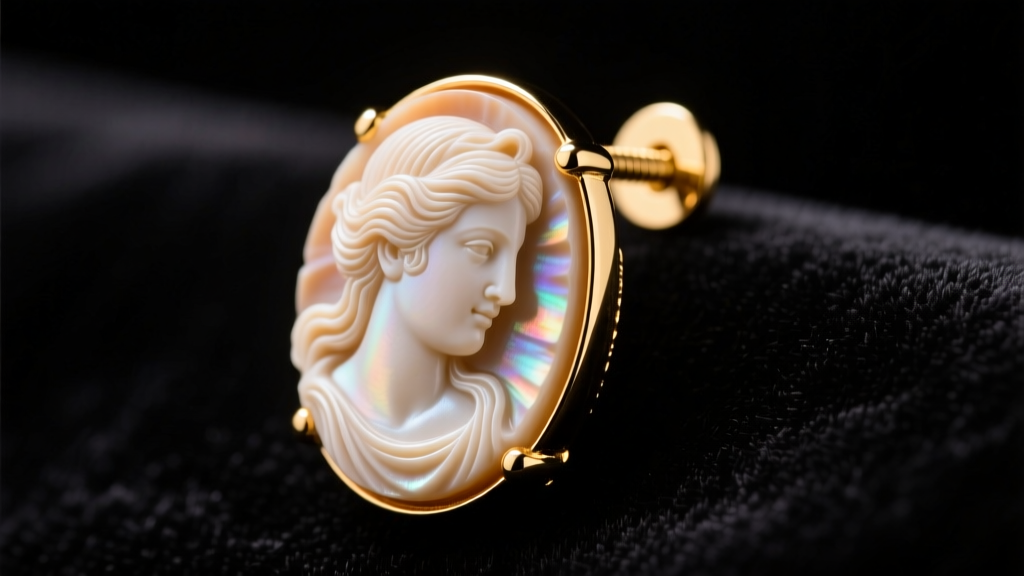
Navigating the secondary jewelry market requires a discerning eye, especially when evaluating pieces that bridge the gap between wearable art and historical artifact. For collectors and vintage enthusiasts, vintage cameo screw back earrings represent a highly specific, deeply romantic niche. Unlike modern post-and-clutch earrings, the presence of a screw back mechanism immediately anchors the piece to a specific historical window—primarily between 1894 and the late 1940s. However, the mere presence of a screw back does not guarantee immense value. The 2026 antique jewelry market is saturated with both museum-quality masterpieces and mass-produced mid-century tourist souvenirs. To accurately assess the budget and true investment value of these earrings, one must deconstruct the piece into three critical pillars: the mechanical hardware, the carving material, and the metallurgical setting.
Decoding the Screw Back: A Marker of Authenticity and Era
Before assessing the cameo itself, a rigorous value assessment begins at the earring post. The screw back mechanism was patented in 1894 by Kidney & Jenkins, revolutionizing non-pierced jewelry by providing a secure, adjustable fit that earlier clip-ons and wire-hooks lacked. According to the Lang Antiques Earring History archives, the screw back dominated the market until the mid-20th century when modern clip-ons and the resurgence of ear piercing rendered them obsolete.
Hardware Inspection and Value Impact
When evaluating vintage cameo screw back earrings, inspect the threading and the friction pad. Original Victorian and Edwardian screw backs feature finely pitched threads and a distinct, often slightly domed, friction pad that rests against the earlobe. If the threads are coarse, or if the post appears soldered onto a modern cup setting, you are likely looking at a "marriage"—a vintage cameo head mounted on a later, less valuable fitting. Marriages significantly depress the collectible value, often dropping the price by 40% to 60% compared to an intact, original piece. Furthermore, look for tension; a screw back that no longer holds tension due to stripped threads requires specialized restoration by a jeweler experienced in antique mechanisms, a cost that must be factored into your purchasing budget.
Material Matrix: What Drives the Price?
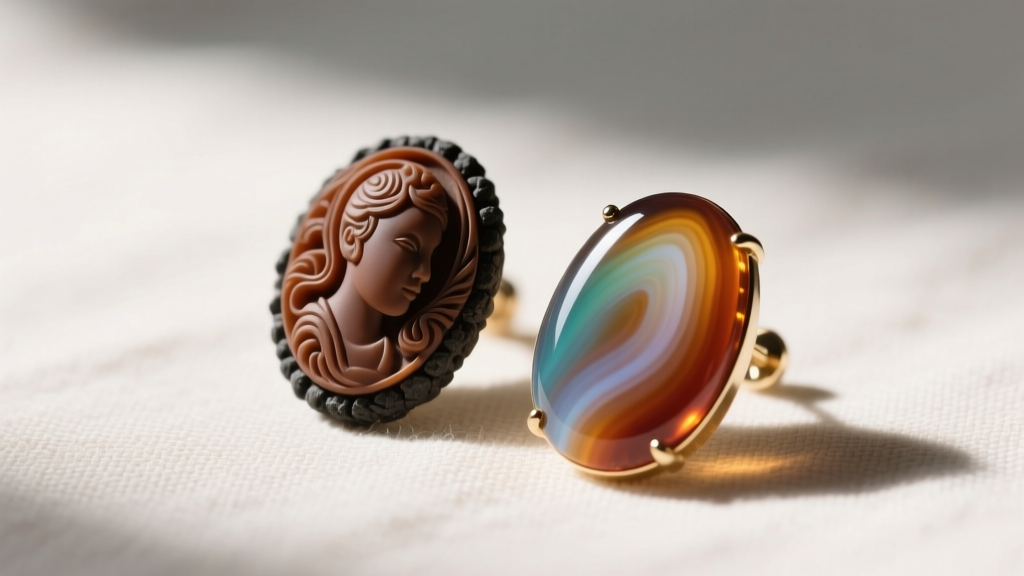
The most significant variable in the valuation of vintage cameo screw back earrings is the material from which the cameo is carved. The Gemological Institute of America (GIA) notes that the hardness, origin, and layering of the material dictate both the difficulty of the carving and the final market premium.
1. Carved Shell (Conch and Sardonyx)
Shell cameos are the most common and accessible. Conch shell cameos, originating primarily from Italy, feature a soft peach or orange background with a white foreground. Sardonyx shell features a deeper brown or reddish-brown background. Value is determined by the translucency and the "undercut" technique. High-value shell cameos feature deep undercuts where the artisan has carved the figure almost entirely free from the background, creating dramatic shadows. Flat, shallow carvings are indicative of mass production and hold minimal premium value.
2. Hardstone Agate
Agate cameos command the highest prices in the vintage market. Because agate is significantly harder than shell, carving it requires diamond-tipped tools and immense skill, often taking months to complete. These pieces are typically set in high-karat gold (15k, 18k, or 22k) and feature classical Roman or Greek profiles with intricate details like individual curls of hair and draped fabric. Agate cameos are highly durable and resist the micro-fractures that plague aging shell.
3. Lava Rock
Popular during the Grand Tour era of the 19th century, lava cameos were carved from the porous, grey-brown volcanic rock of Mount Vesuvius. While historically significant, they are fragile. A pristine lava cameo with high relief in a 15k gold setting can fetch a strong mid-range price, but any chipping or cracking severely diminishes its value.
4. Celluloid and Bakelite
Introduced in the early 20th century, molded plastics mimicked the look of carved shell. While highly collectible in specific vintage costume jewelry circles, they hold a fraction of the monetary value of carved organic or hardstone materials.
The 2026 Market Valuation Matrix
To provide a practical decision framework for buyers and sellers, the following table outlines the current market pricing tiers for vintage cameo screw back earrings based on material, setting, and condition.
| Material Type | Setting / Metal | Era / Style | Estimated Value Range (USD) |
|---|---|---|---|
| Molded Celluloid / Plastic | Gold-Filled or Pinchbeck | 1920s - 1940s | $35 - $85 |
| Carved Conch Shell (Shallow) | 9k or 10k Gold / Rolled Gold | Edwardian / Mid-Century | $120 - $250 |
| Carved Sardonyx (Deep Undercut) | 14k or 15k Yellow Gold | Victorian / Edwardian | $400 - $950 |
| Volcanic Lava Rock | 15k Gold or Gold-Filled | Victorian Grand Tour | $250 - $600 |
| Hardstone Agate (Master Carved) | 18k Gold / Signed Maker | Victorian / Renaissance Revival | $1,500 - $4,500+ |
Red Flags: Spotting Fakes and Overpriced Reproductions
As the demand for antique jewelry rises, so does the sophistication of reproductions. When conducting a budget and value assessment, be vigilant against the following common deceptions:
- The Molded Illusion: Many modern or mid-century plastic cameos are molded, not carved. Use a 10x jeweler's loupe to inspect the edges. Carved cameos will show microscopic tool marks, asymmetric curves, and sharp, distinct undercut shadows. Molded cameos will have uniformly rounded edges, pitted surfaces, and a lack of true depth.
- Laser-Cut Modern Cameos: Some contemporary manufacturers use CNC machines or lasers to cut agate and shell, then mount them on faux-vintage screw back findings. These lack the soul and subtle asymmetry of hand-carving. The profiles often look overly stiff, and the background is perfectly flat rather than gently contoured to the stone.
- False Hallmarks: Be wary of vague stamps like "14K HGE" (Heavy Gold Electroplate) or missing hallmarks on pieces that claim to be high-karat Victorian gold. According to Lang Antiques University, authentic British Victorian pieces often bear a 15k stamp (a standard discontinued in 1932), which serves as a strong indicator of age and intrinsic metal value.
Investment Strategy: Where to Allocate Your Budget
If your goal is long-term value retention and historical significance, allocate your budget toward hardstone agate or deeply undercut sardonyx shell cameos set in solid, hallmarked gold. The screw back mechanism on these higher-tier pieces is usually crafted with greater precision, featuring thicker posts and more durable threading. Conversely, if you are building a curated vintage wardrobe on a stricter budget, gold-filled settings with well-carved conch shell offer exceptional aesthetic value, provided the shell is free of the hairline cracks that frequently develop in dry environments over a century of wear.
Ultimately, the true value of vintage cameo screw back earrings lies in the intersection of mechanical integrity and sculptural mastery. By prioritizing hand-carved depth, original hardware, and verifiable metallurgical hallmarks, collectors can confidently navigate the market, securing pieces that are not only beautiful adornments but also resilient historical assets.


