Expert Guide to Authenticating Vintage Drop Earrings
Master the technical authentication of vintage drop earrings. Learn to identify era-specific findings, gemstone cuts, and structural wear patterns.

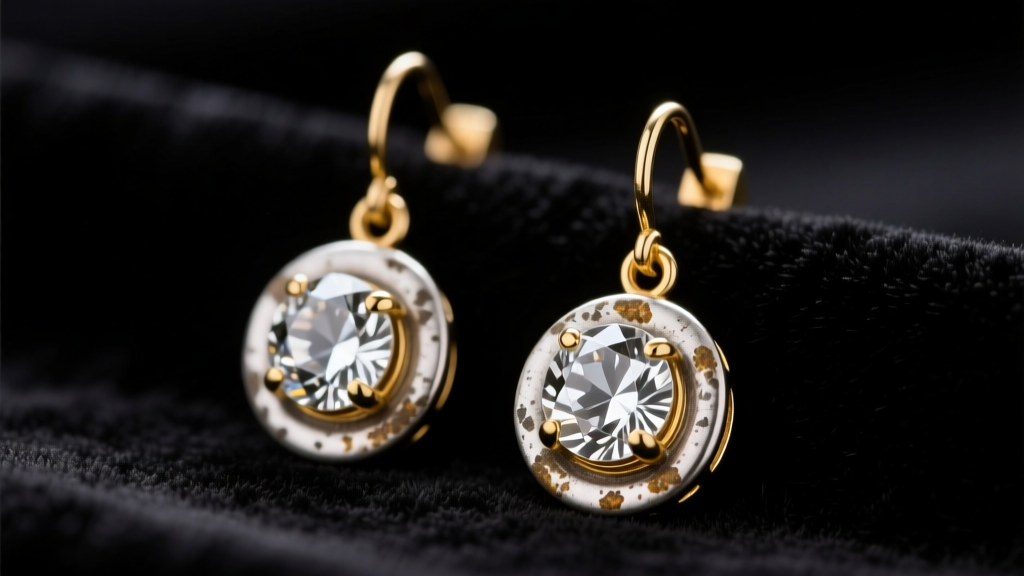
The Anatomy of Authentic Vintage Drop Earrings
In the secondary estate jewelry market, the term 'vintage' is frequently abused. True vintage drop earrings are at least 20 to 99 years old, while pieces exceeding the 100-year mark are classified as antique. When evaluating vintage drop earrings from a technical standpoint, a gemologist or senior buyer does not merely look at the overall aesthetic; they deconstruct the piece into three primary mechanical and visual zones: the surmount (the top element that secures to the ear), the body or drop (the suspended decorative element), and the finding (the clasp or wire mechanism). Understanding the metallurgical and mechanical relationship between these three zones is the first step in separating genuine period pieces from modern reproductions or 'franken-pieces'—earrings cobbled together from disparate eras by unscrupulous dealers.
Because drop earrings are subject to constant kinetic movement, the structural integrity of the connection point between the surmount and the drop is paramount. In genuine vintage pieces, this connection is typically a hand-soldered jump ring or a riveted hinge. Modern reproductions often utilize machine-stamped, seamless jump rings or cheap laser-welded connections that lack the distinct tooling marks and slight asymmetry characteristic of early 20th-century bench jewelry.
Era-Specific Findings and Clasp Mechanisms
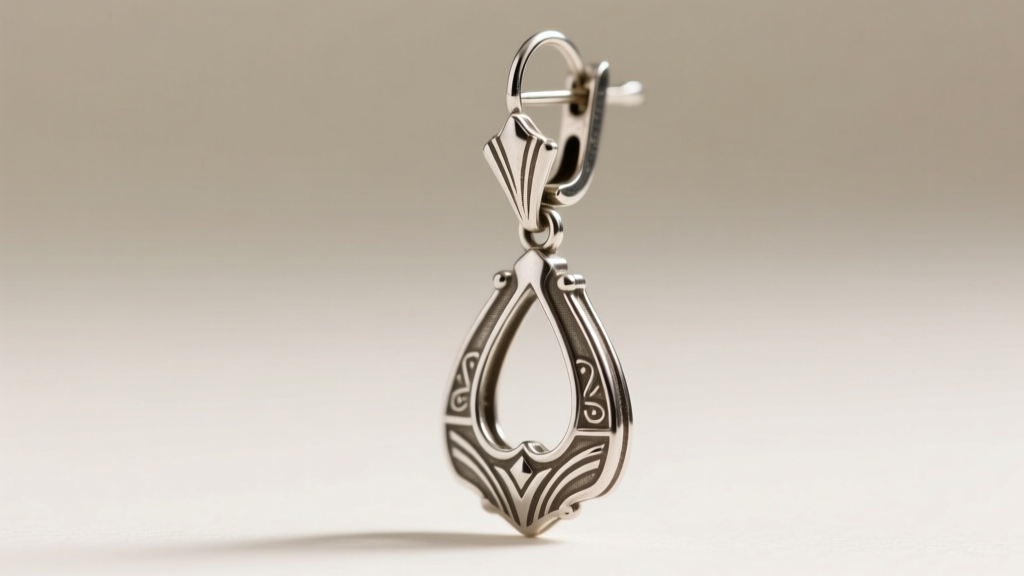
The most immediate indicator of a vintage drop earring's true age is its finding. Clasp technology evolved rapidly between 1880 and 1960. If a piece features a design indicative of the 1920s Art Deco era but is equipped with a modern friction post and butterfly clutch, it has either been aggressively altered (diminishing its historical value) or it is an outright fake.
| Era | Primary Finding Type | Wire Gauge & Metallurgy | Authentication Red Flags |
|---|---|---|---|
| Victorian (1837-1901) | Shepherd hook, front-back screw | 18g-20g yellow gold, often unmarked | Presence of modern 'La Pousette' clutches or platinum alloys |
| Edwardian (1901-1915) | Early screw back, thick shepherd hook | Platinum over 18k gold, 18g wire | White gold (not commercially viable until late 1910s) |
| Art Deco (1920-1935) | Leverback, early clip-on | Platinum, 14k/18k white gold, 19g wire | Modern butterfly posts, rhodium plating over base metals |
| Retro (1935-1950) | Clip-on with paddle back, screw back | 14k rose/yellow gold, 18g-20g wire | Lightweight casting, modern spring-ring mechanisms |
According to the Antique Jewelry University by Lang Antiques, the patent for the modern screw-back earring was not introduced until 1894, and the leverback became prominent in the 1910s. Therefore, any drop earring claiming to be mid-19th century Georgian or early Victorian featuring a screw-back mechanism is chronologically impossible and has been altered.
Gemstone Cuts: Decoding the Era of Your Drops
The lapidary techniques used to cut the gemstones suspended in vintage drop earrings provide a reliable timestamp for the piece. Because drop earrings swing and catch light dynamically, historical jewelers selected specific facet arrangements to maximize scintillation in low-light, candlelit environments.
Old Mine and Old European Cuts
If your vintage diamond drop earrings feature stones with a high crown, a small table, and a large, flat culet (the bottom facet) that is visible to the naked eye through the table, you are likely looking at Old Mine or Old European cuts. Old Mine cuts (prevalent in Georgian and early Victorian drops) are essentially cushion-shaped with asymmetrical facets. Old European cuts (late Victorian through Edwardian) are rounder but retain the chunky, geometric facet patterns that create a distinctive 'checkerboard' flash, vastly different from the sharp, splintery brilliance of modern round brilliant cuts.
The Danger of Ultrasonic Cleaning on Antique Stones
When acquiring vintage drop earrings, particularly those from the Georgian or early Victorian eras, you must assess the backing of the stones. Many early drops featured 'closed-back' settings lined with delicate silver or copper foil to reflect light and enhance the color of paste (glass) or early diamonds. Submerging these earrings in an ultrasonic cleaner or using harsh chemical dips will instantly destroy the foil backing, causing the stones to look dead, gray, and heavily included. Furthermore, ultrasonic waves can easily shatter the fragile girdles of antique rose-cut diamonds or cause oil-filled fissures in Colombian emeralds to fracture. Professional restoration of these pieces requires dry, manual cleaning with a soft brush and mild, non-ammoniated soap.
Structural Assessment: Prong Wear and Solder Joints
Drop earrings endure a unique mechanical stress known as the 'pendulum effect.' Every time the wearer turns their head, the drop swings, transferring kinetic energy directly to the jump ring, the surmount post, and the prongs holding the gemstones. Over decades, this cyclical stress causes metal fatigue.
Evaluating the Jump Ring and Solder
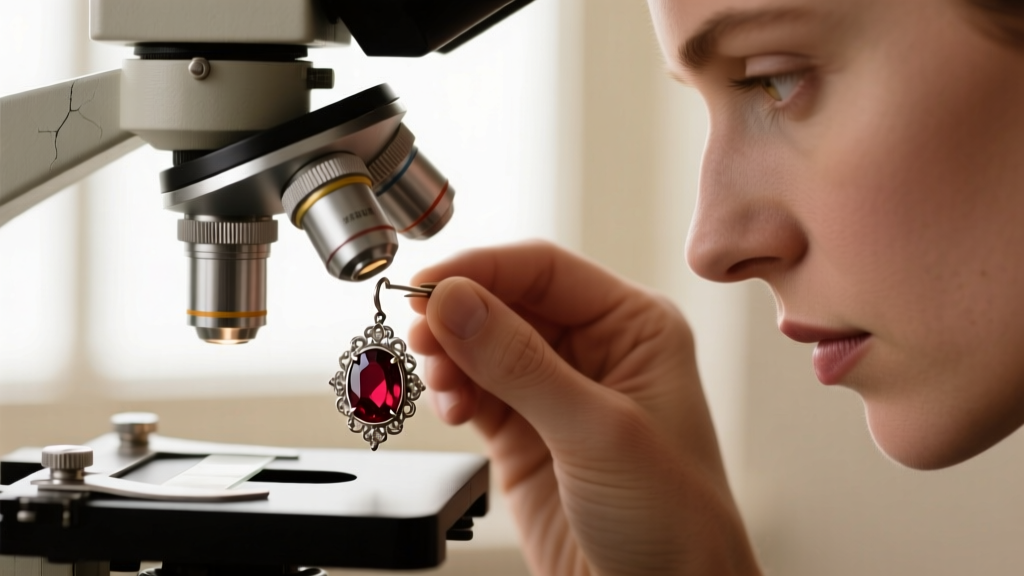
The jump ring connecting the top and bottom of the earring is the number one failure point in vintage drops. Under 10x loupe magnification, inspect the seam of the jump ring. In authentic vintage pieces, the seam was closed using hard, medium, or easy solder. Hard solder melts at a higher temperature (around 1450°F for 14k gold) and is used for the initial structural joints, while easy solder (melting around 1325°F) is used for subsequent repairs. If you see a thick, sloppy bead of easy solder pooling around the jump ring, the earring has likely been repaired multiple times due to the pendulum stress tearing it apart. Modern bench jewelers often use laser welders to fix these joints without heating the surrounding antique patina or risking thermal shock to the gemstones.
Prong Degradation in Suspended Settings
Because the drops hang freely, they are prone to snagging on textiles. This snagging pulls upward on the prongs. When inspecting vintage diamond or sapphire drops, check for 'lifted' prongs. In platinum Art Deco drops, the prongs were often hand-fabricated from square wire and folded over the girdle. Over time, these can wear down to razor-thin edges. A master jeweler will 're-tip' these prongs using matching platinum wire, but this restoration must be documented, as heavy re-tipping can alter the original geometric profile of an Art Deco setting.
Valuation Framework: What Actually Drives the Price?
Pricing vintage drop earrings requires a nuanced understanding of historical desirability, material scarcity, and condition. The Gemological Institute of America (GIA) notes that the market for antique diamond cuts has surged, as collectors increasingly prefer the romantic, chunky scintillation of Old European cuts over modern stones. However, value is not solely dictated by carat weight.
- Provenance and Maker's Marks: A pair of Edwardian platinum and diamond drop earrings bearing the hallmark of Cartier, Boucheron, or Tiffany & Co. will command a 300% to 500% premium over identical unmarked pieces. Hallmarks are typically stamped on the post or the underside of the surmount.
- Originality of the Finding: Collectors pay top dollar for 'survivors'—earrings that retain their original, unaltered shepherd hooks or early leverbacks. Earrings that have been converted from screw-backs to modern posts lose up to 20% of their historical premium.
- Metallurgical Purity: Platinum drops from the 1910s-1920s are highly prized. Early platinum was often alloyed with iridium, which gave it a slightly darker, gunmetal-gray patina that collectors love. Modern reproductions use ruthenium-alloyed platinum, which is brighter and whiter.
'When evaluating vintage drop earrings, you are not just buying gemstones and precious metals; you are acquiring a kinetic sculpture. The mechanical wear patterns, the specific alloy compositions, and the hand-cut facets tell a story of early 20th-century bench craftsmanship that cannot be replicated by modern CAD casting.' — Senior Estate Jewelry Appraiser
Ultimately, authenticating and valuing vintage drop earrings requires a disciplined, forensic approach. By closely examining the clasp mechanisms, mapping the lapidary techniques to their correct historical decades, and assessing the structural toll of the pendulum effect, you can confidently navigate the estate market and acquire pieces that are both historically significant and mechanically sound.


