Vintage Gold Tassel Earrings: A Technical & Sourcing Deep Dive
Explore the metallurgy, chain gauge mechanics, and valuation of vintage gold tassel earrings in this expert technical guide for collectors and jewelers.

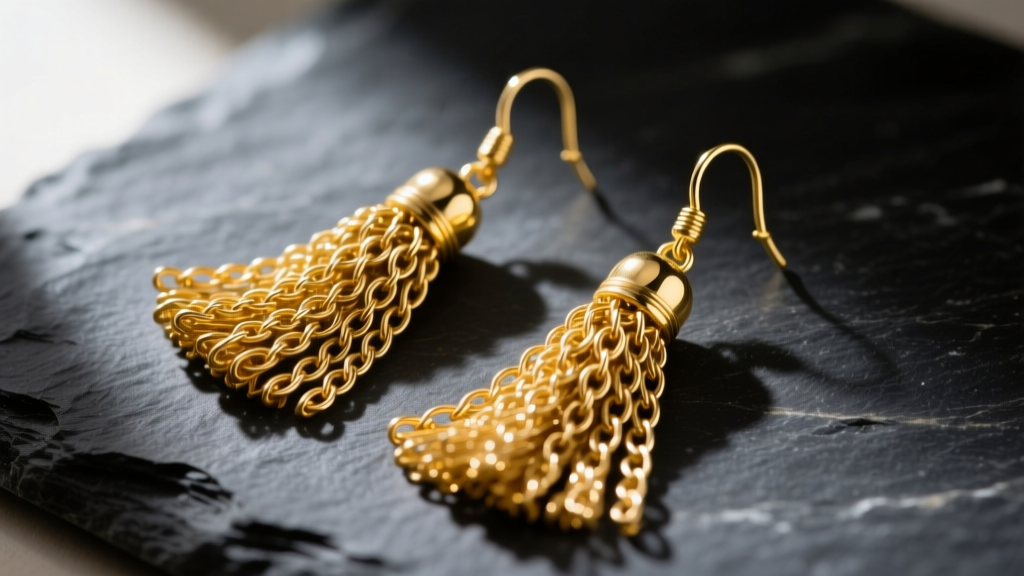
Tassel earrings represent a masterclass in kinetic jewelry design, balancing metallurgical weight with fluid movement. When evaluating vintage gold tassel earrings, serious collectors, estate buyers, and bench jewelers must look far beyond superficial aesthetic appeal. True expertise requires a rigorous scrutiny of structural integrity, alloy composition, chain gauge mechanics, and historical provenance. The tassel motif—rooted in ancient Etruscan, Middle Eastern, and Asian adornment—saw massive, highly specific revivals during the 1940s Retro period and the 1970s bohemian movement. In this 2026 technical deep dive, we deconstruct the anatomy, sourcing frameworks, and restoration protocols of these iconic kinetic pieces.
Metallurgical Breakdown: Karat Weights and Chain Alloys
The performance and drape of a vintage tassel are intrinsically linked to its gold alloy. According to the Gemological Institute of America (GIA), pure 24k gold is entirely unsuitable for the structural demands of chain fringe due to its extreme malleability. Therefore, vintage pieces rely on specific alloy mixtures to balance color saturation with tensile strength.
- 14k Yellow Gold (58.5% Pure): The standard for American mid-century and 1970s tassels. Typically alloyed with a higher copper-to-silver ratio, 14k gold provides the necessary rigidity for jump rings to resist pulling apart under the dynamic weight of swinging chains.
- 18k Yellow Gold (75% Pure): Prevalent in European vintage pieces, particularly Italian and French makers of the 1970s. The higher gold content yields a richer, warmer hue and a softer drape, but requires slightly thicker wire gauges to prevent link deformation over decades of wear.
- 22k Yellow Gold (91.6% Pure): Rare in Western vintage tassels but frequently encountered in vintage Middle Eastern and Indian kinetic jewelry. These pieces often utilize rigid, interlocking geometric links rather than fine chains to compensate for the metal's softness.
Tassel Construction and Chain Gauge Mechanics
The defining characteristic of a high-quality vintage gold tassel is its 'drape'—the ability of the fringe to move like liquid rather than swinging as a solid, rigid mass. This fluidity is dictated by the chain gauge and link style. Authentic vintage pieces from the 1970s Italian gold boom frequently utilize 22 to 26-gauge wire for the fringe chains.
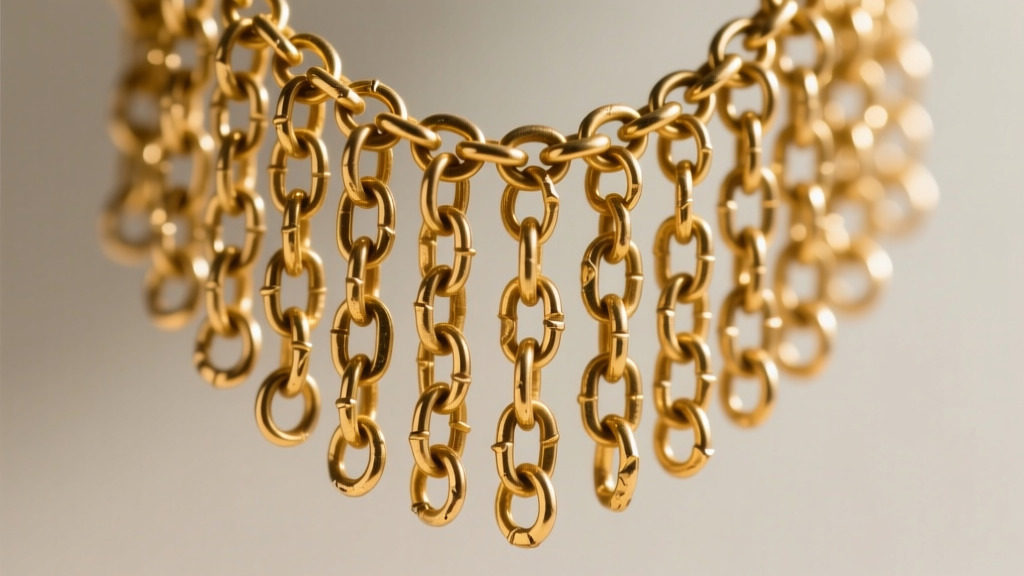
Bench jewelers note that the link profile drastically alters the kinetic behavior. Wheat chains (spiga) and fine cable chains offer the most fluid, silk-like movement, whereas curb chains tend to tangle and create a stiffer silhouette. The fringe strands are gathered and hidden beneath a 'tassel cap' or 'bell cap'—a conical or domed terminal that is either stamped from sheet metal or cast. In superior vintage examples, the interior of this cap features a soldered crossbar or heavy jump ring to which the individual chain strands are anchored, distributing the kinetic stress evenly across the terminal.
The fluidity of a vintage gold tassel is entirely dependent on the relationship between the chain's gauge and the gold's karat weight; a 24-gauge 18k chain will drape like silk, while a 20-gauge 14k chain will swing like a heavy pendulum.
— Master Jeweler's Bench Notes, Estate Jewelry Repair Manual
Weight Distribution and Ear Wire Mechanics
A major failure mode in vintage dangle earrings is lobe tearing or warping, caused by improper weight distribution. A solid gold tassel earring from the 1980s power-dressing era can easily weigh between 12 and 22 grams per ear. To support this mass without distorting the piercing, vintage makers utilized specific ear wire mechanics.
Authentic pieces typically feature 20-gauge or 18-gauge French wires. However, for tassels exceeding 15 grams, a simple fishhook wire is structurally inadequate. Expert collectors look for vintage pieces equipped with heavy-duty leverbacks or French wires augmented with a soldered figure-8 safety catch and a thicker, reinforced wire loop at the top of the tassel cap. If a vintage tassel earring features a thin, 22-gauge ear wire, it is highly likely a later replacement or a sign of a poorly engineered reproduction.
Hallmarks, Maker's Marks, and Dating Framework
Dating vintage gold tassel earrings requires a forensic approach to hallmarks. The Victoria and Albert Museum's jewelry archives emphasize that regional hallmarking laws dictate how and where gold purity is stamped. Below is a technical framework for dating and sourcing based on common vintage stamps.
| Era | Common Hallmarks | Tassel Style Characteristics | Primary Sourcing Regions |
|---|---|---|---|
| 1940s Retro | 14K, 18K, Maker's Marks | Bold, geometric caps, shorter fringe, ribbed gold textures | United States, France |
| 1970s Bohemian | 750, 585, Italian Stars | Fluid wheat chains, long drape, Florentine finish caps | Italy (Valenza, Arezzo) |
| 1980s Statement | 14K, 18K, 10K, 750 | Heavy cast caps, mixed metal accents, thicker cable chains | Global, US, UK |
When inspecting the hallmark, use a 10x triplet loupe. Vintage stamps were often struck with hand-held punches, resulting in slight misalignments or varying depths. Modern laser-engraved hallmarks on reproduction pieces will appear perfectly uniform and lack the micro-burring characteristic of vintage mechanical stamping.
Identifying Reproductions vs. Authentic Vintage
The 2026 estate market is flooded with 'vintage-style' tassels manufactured using modern CAD/CAM and laser welding. To differentiate authentic vintage gold tassel earrings from modern reproductions, examine the jump rings connecting the fringe to the tassel cap. Vintage pieces were assembled by hand; the jump rings will show microscopic file marks, slight variations in diameter, and traditional torch-soldered seams. Modern reproductions often feature machine-stamped, perfectly uniform links with seamless laser welds that lack the organic flow of hand-soldering. Additionally, vintage chains will exhibit a specific type of patina—a buildup of microscopic oxidation and skin oils in the crevices of the links that is incredibly difficult to fake without using harsh, detectable chemical antiquing agents.

Restoration and Maintenance Protocols
Cleaning and restoring vintage kinetic jewelry requires specialized protocols to avoid catastrophic damage. The most common mistake made by amateur collectors is placing vintage tassel earrings into an ultrasonic cleaner. The high-frequency acoustic cavitation creates micro-vibrations that can easily shatter degraded, 50-year-old solder joints, causing the tassel fringe to detach and scatter inside the tank.
Instead, bench jewelers recommend a manual restoration protocol:
- Submerge the earrings in a warm bath of distilled water and a mild, non-ionic surfactant (such as a diluted conservation-grade dish soap).
- Allow the piece to soak for 15 minutes to loosen decades of sebum and cosmetic buildup trapped within the chain links.
- Gently agitate the fringe using an ultra-soft baby toothbrush, brushing strictly in the direction of the chain drape to avoid bending the delicate 24-gauge links.
- Rinse with distilled water and dry using a low-pressure compressed air duster to prevent water spots on the gold alloy.
By understanding the precise metallurgical and mechanical nuances of these pieces, collectors can accurately value, authenticate, and preserve vintage gold tassel earrings, ensuring these kinetic masterpieces continue to move with their original, intended grace.