Expert Guide: Earrings to Wear with Halter Dress Necklines
Discover the technical rules for selecting earrings to wear with halter dress necklines, covering visual weight, material grades, and clasp security.
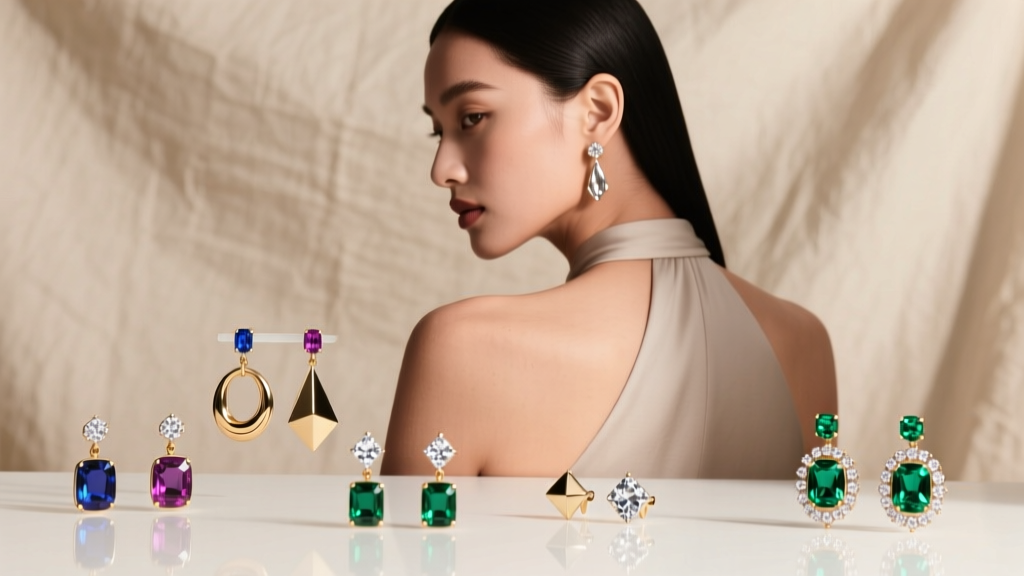
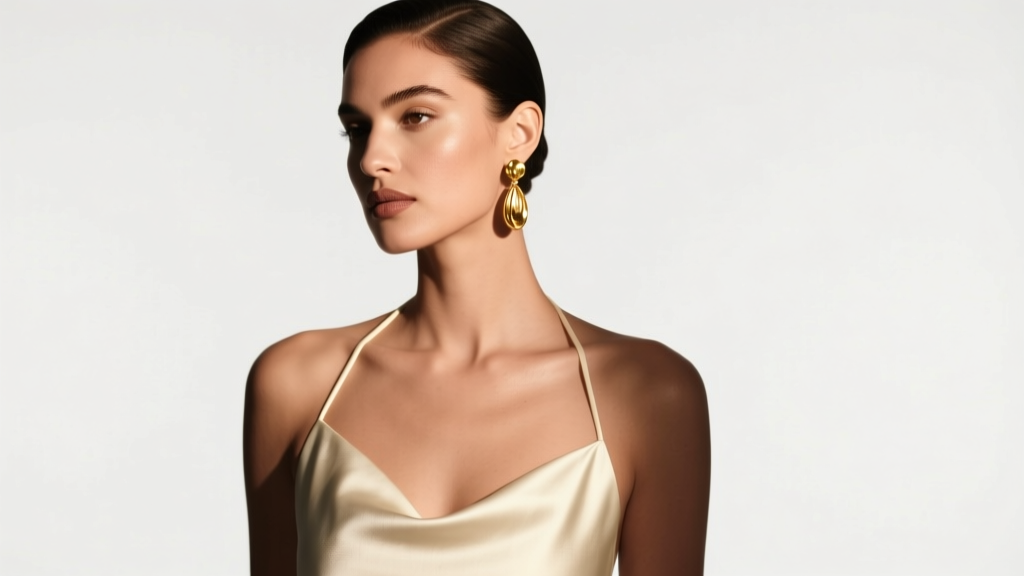
When determining the best earrings to wear with halter dress silhouettes, one must look beyond basic color matching and consider the structural geometry of the garment. A halter neckline fundamentally alters the visual baseline of the neck, shoulders, and jawline. By exposing the trapezius and clavicle while framing the face with an inverted triangle or strong vertical line, the halter dress demands a highly calculated approach to ear styling. This expert deep dive explores the biomechanics, material science, and visual weight distribution required to perfectly pair earrings with halter necklines.
The Geometry of the Halter Neckline: Visual Weight Distribution
The defining characteristic of a halter dress is the strap that wraps around the back of the neck, leaving the shoulders bare. This creates a strong central vertical axis. If you pair this with wide, voluminous chandelier earrings, you introduce competing horizontal lines that create visual clutter and shorten the appearance of the neck.
For standard halter necklines, the optimal earring architecture is the linear drop or the architectural stud. Linear drops (measuring between 2.0 and 3.5 inches in length) echo the verticality of the halter strap, elongating the neck. According to principles of visual gravity, keeping the width of the earring under 0.5 inches ensures the jewelry complements rather than competes with the collarbone hardware or fabric draping. If the halter dress features heavy embellishments at the neck, pivot to a high-impact architectural stud (such as a geometric 14k gold cuff or a bezel-set diamond cluster) measuring 8mm to 12mm to anchor the face without overwhelming the silhouette.
Material Science: Reflectivity and Sweat Resistance
Halter dresses are predominantly worn in warm-weather environments or high-activity settings like summer weddings and galas. This introduces a critical variable: perspiration. Human sweat has a pH ranging from 4.5 to 7.0, which accelerates metal oxidation and can compromise superficial plating.
When selecting white gold or silver earrings to wear with a halter dress, verify the rhodium plating thickness. Standard 'flash' plating is often a mere 0.1 to 0.2 microns thick, which will wear through to the yellow-gold alloy beneath after just a few hours of contact with acidic sweat. For event wear, demand a minimum of 0.75 to 1.0 microns of rhodium plating.
Furthermore, contact dermatitis is a severe risk during prolonged wear in humid conditions. The American Academy of Dermatology notes that nickel allergies are triggered by prolonged skin contact with leaching metals. To avoid this, ensure your earrings comply with the EU Nickel Directive, which mandates a nickel release rate of less than 0.5 µg/cm²/week. For absolute safety, opt for ASTM F136 implant-grade titanium or solid 18k gold, which are inherently hypoallergenic and immune to sweat-induced tarnishing.
Biomechanics and Clasp Security for Active Events
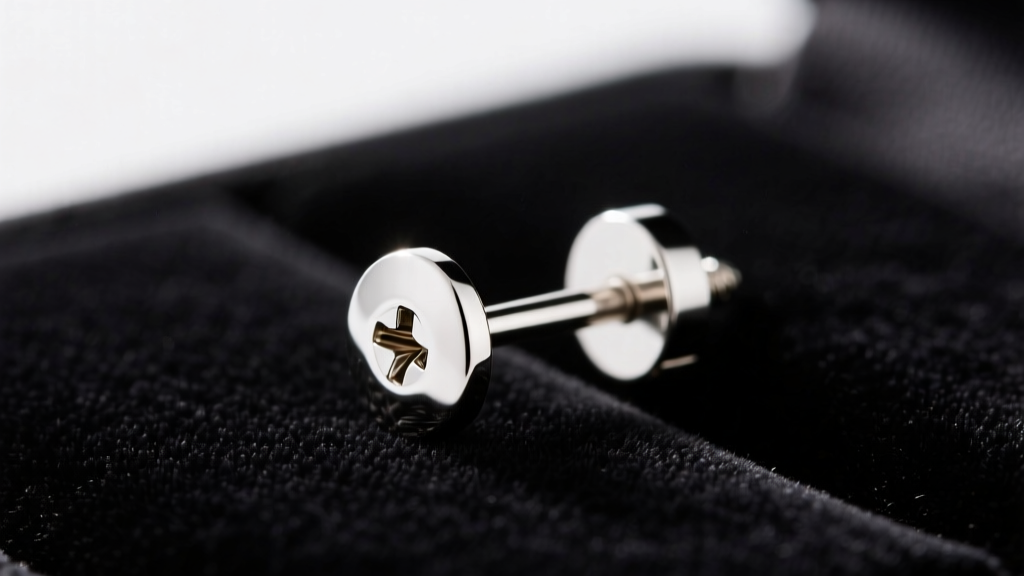
The kinetic energy generated by dancing and movement at formal events places immense shear stress on earring clasps and the earlobe tissue itself. The average human earlobe can comfortably support approximately 4 to 6 grams of static weight before experiencing fatigue, stretching, or micro-tears over a single evening. If your chosen linear drops exceed 7 grams, clasp security and lobe support become paramount.
| Clasp Type | Weight Tolerance | Security Rating | Best Halter Application |
|---|---|---|---|
| La Pousette (Butterfly) | Up to 4g | Low/Medium | Lightweight studs, low-activity events |
| Screw-Back | Up to 12g | Very High | Heavy diamond drops, active dancing |
| Leverback | Up to 8g | High | Medium-weight dangles, moderate activity |
| French Wire (with O-ring) | Up to 6g | Medium | Chandeliers (requires silicone O-ring) |
For heavy statement pieces, screw-backs are the only reliable choice. They utilize a threaded post that physically locks the backing in place, preventing the earring from backing out due to the friction of hair or dress fabric brushing against the neck.
Specific Earring Architectures for Halter Variations
Not all halter dresses are constructed equally. The specific cut of the neckline dictates the exact earring architecture required to maintain aesthetic balance.
The High-Neck Halter
A high-neck halter that sits close to the base of the throat creates a columnar effect. To prevent the wearer from looking 'stiff,' utilize articulated chandelier drops with multiple hinges. The kinetic movement of the hinges introduces fluidity, breaking up the rigid vertical lines of the high collar. Keep the gemstone profile narrow; Gemological Institute of America (GIA) cutting standards suggest that elongated marquise or briolette cuts catch the light beautifully in motion without adding horizontal bulk.
The Open-Back Halter
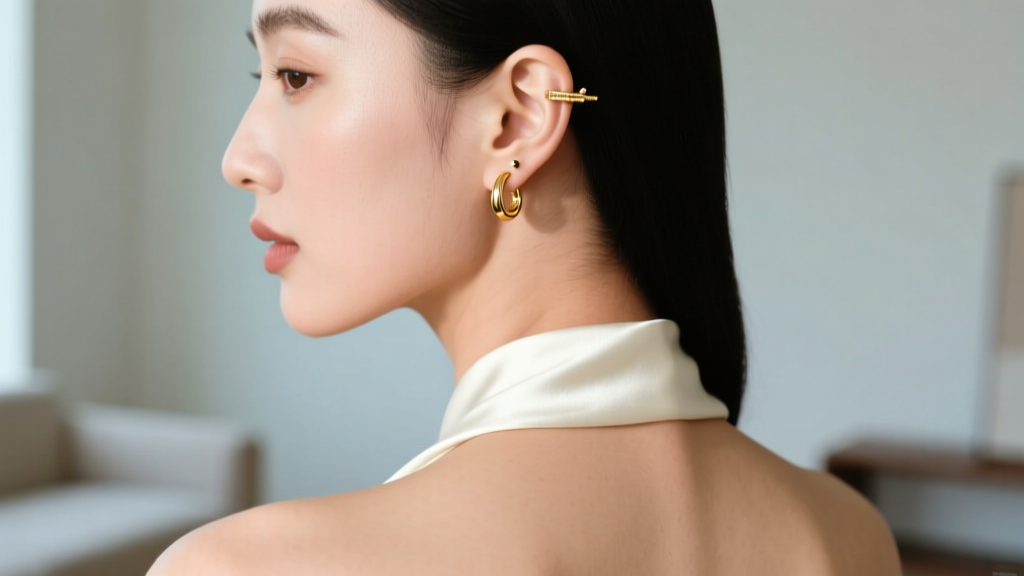
When the halter dress features a dramatic open back, the side-profile and nape of the neck become primary focal points. This is the ideal scenario for ear cuffs and cartilage climbers. A 14k or 18k gold ear climber that traces the helix of the ear draws the eye backward, complementing the exposed spine. Ensure the ear cuff utilizes a tension-fit mechanism with a silicone inner grip to prevent it from sliding down the cartilage when the wearer turns their head.
Gauge, Thickness, and Lobe Tension Management
Standard lobe piercings are typically performed at 20-gauge (0.81mm) or 18-gauge (1.02mm). However, heavy drop earrings designed for formal wear often require thicker posts for structural integrity, sometimes utilizing 16-gauge (1.29mm) wire. Forcing a 16G post into an 18G piercing can cause micro-trauma and inflammation, especially when combined with the pulling weight of the earring.
If your preferred earrings feature thick posts, utilize invisible support patches (such as Chrysmico or BlingDots). These adhesive discs distribute the weight of the earring across a 15mm surface area of the earlobe rather than concentrating it entirely on the piercing channel. This effectively increases the lobe's weight tolerance from 6 grams to over 15 grams, allowing you to wear substantial, high-carat drop earrings with a halter dress without risking tissue damage or the dreaded 'forward droop' that ruins the silhouette.
Expert Troubleshooting: Common Failure Modes
Pro-Tip: Never use standard rubber earring backs with fine jewelry. Rubber degrades, traps moisture against the skin, and creates friction that can pull on the halter strap. Always use medical-grade silicone O-rings or precision-machined metal friction backs.
- Failure Mode 1: The Forward Droop. Caused by an earring head that is heavier than the backing. Solution: Upgrade to a jumbo silicone disc back or a locking La Pousette back to provide a wider fulcrum point behind the lobe.
- Failure Mode 2: Snagging on the Halter Strap. Occurs when wearing wide hoops or intricate filigree drops that catch on the fabric tie behind the neck. Solution: Switch to seamless continuous hoops or sleek, bezel-set drops with zero exposed prongs.
- Failure Mode 3: Skin Discoloration. A green or black mark on the neck or earlobe caused by copper or brass alloys reacting to sweat. Solution: Verify the hallmark. Only wear solid 14k/18k gold, platinum, or ASTM-certified titanium. Avoid 'gold-plated' brass entirely for summer events.
By treating your jewelry selection as an exercise in structural engineering and visual geometry, you ensure that your earrings elevate your halter dress rather than detract from it. Focus on verticality, secure clasps, and sweat-resistant alloys to achieve a flawless, technically sound aesthetic.


