Vintage Hoop Earrings: A Technical Guide to Authentication and Care
Master the technical details of vintage hoop earrings. Learn to authenticate hallmarks, evaluate clasp mechanisms, and assess metallurgical integrity.

The Metallurgy of Mid-Century Hoops: Karat Alloys and Patina
When evaluating vintage hoop earrings, understanding the historical context of metallurgical alloys is paramount for accurate authentication. Modern gold jewelry is typically alloyed with predictable ratios of silver, copper, and zinc to achieve standardized colors. However, vintage pieces—particularly those from the 1930s through the 1950s—tell a different story dictated by global events and regional manufacturing preferences.
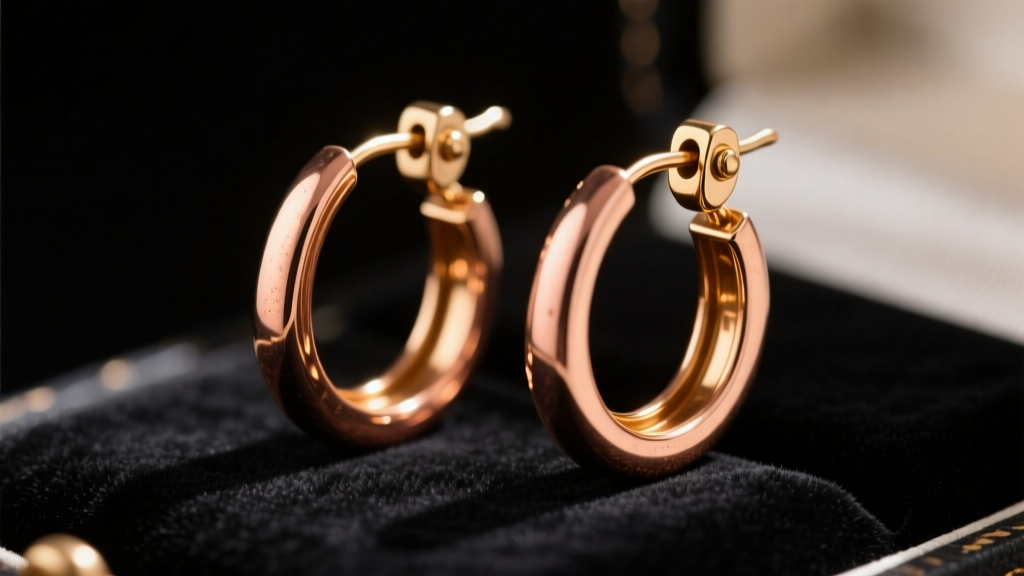
During World War II, the U.S. War Production Board strictly rationed precious metals. As a result, many authentic 1940s "Retro" era hoops were crafted in 10k or 12k gold rather than the 14k standard. If you encounter a pair of mid-century hoops that test as 10k but exhibit a heavy, substantial feel and a distinct salmon-pink hue, you are likely looking at a high-copper alloy typical of the era. Modern 14k rose gold relies on a precise 58.3% gold to 41.7% copper/silver mix, whereas vintage rose gold alloys often pushed copper content higher to maximize the warm tone while stretching limited gold reserves.
Expert Insight: The patina on vintage gold is not merely surface dirt; it is a microscopic layer of oxidation and environmental interaction. Stripping this patina via harsh polishing destroys the historical integrity and can reduce the value of collectible vintage hoop earrings by up to 30%.
Deconstructing the Clasp: Hinged, Sleeper, and Latch-Back Mechanisms
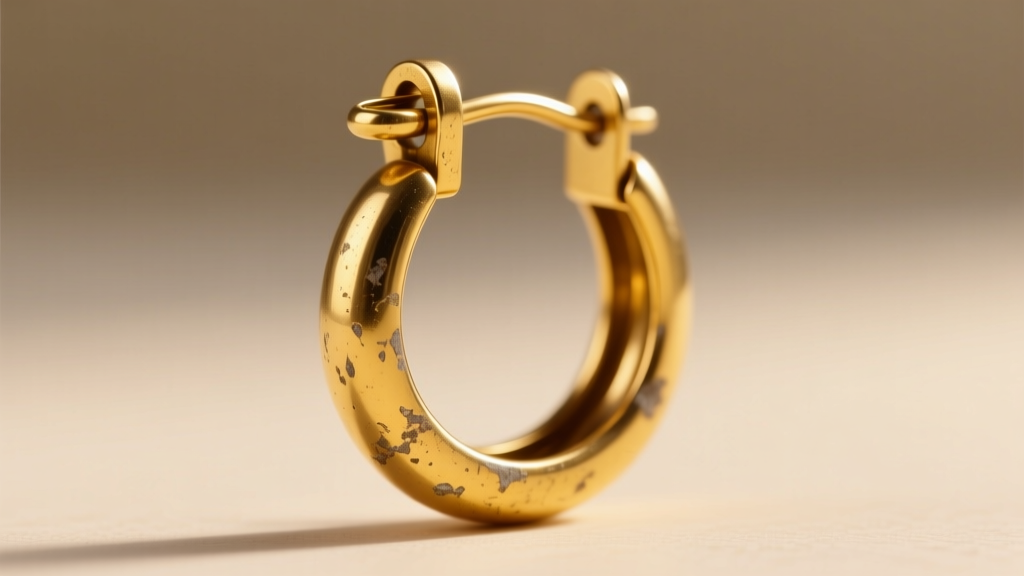
The closure mechanism of a hoop earring is one of the most reliable indicators of its age and manufacturing origin. Unlike modern laser-welded hinges, vintage clasps were hand-assembled, riveted, or soldered, leading to specific wear patterns and failure modes that experts use for dating.
Technical Breakdown of Vintage Clasp Types
| Clasp Mechanism | Primary Era | Wire Gauge / Thickness | Common Failure Mode |
|---|---|---|---|
| Continuous Sleeper | 1920s - 1940s | 14 - 16 Gauge | Metal fatigue snapping at the insertion tension point. |
| Friction Latch-Back | 1950s - 1970s | 18 - 20 Gauge | Worn friction groove causing the catch wire to slip open. |
| Hinged Snap-Back | 1980s - 1990s | Varies (often hollow) | Hinge pin degradation and solder joint separation. |
Sleeper hoops, designed to be worn continuously without removal, rely entirely on the tensile strength of the metal. Because they were forged from thicker 14- or 16-gauge wire to prevent bending, surviving examples are remarkably durable. Conversely, the latch-back mechanisms popular in the 1960s often featured thinner catch wires that bend over decades of use, requiring careful re-tensioning by a bench jeweler rather than outright replacement to maintain originality.
Hallmarks, Maker's Marks, and Dating Techniques
Authenticating vintage hoop earrings requires a jeweler's loupe (minimum 10x magnification) and a strong directional light source. Following the National Gold and Silver Stamping Act of 1906, any piece marked with a karat quality (e.g., 14K) was legally required to bear the trademark or maker's mark of the manufacturer.
However, on hoop earrings, the real estate for stamping is severely limited. Hallmarks are typically hidden in three locations:
- The interior of the hoop tube: Often stamped before the metal sheet was rolled and soldered into a tube, meaning the mark may be distorted or stretched.
- The clasp catch plate: The small block of metal that receives the post.
- The post itself: Usually near the base, though wear from friction can obliterate these marks over time.
For comprehensive identification of obscure maker's marks, the Lang Antiques Hallmarks Guide remains an indispensable database for cross-referencing mid-century American and European jewelry stamps.
Structural Integrity and Ultrasonic Cleaning Risks
One of the most frequent mistakes made by novice collectors and inexperienced jewelers is placing hollow-tube vintage hoop earrings into an ultrasonic cleaner. While ultrasonic cavitation is excellent for removing sebum and dirt from solid cast jewelry, it poses a catastrophic risk to vintage hollow hoops.
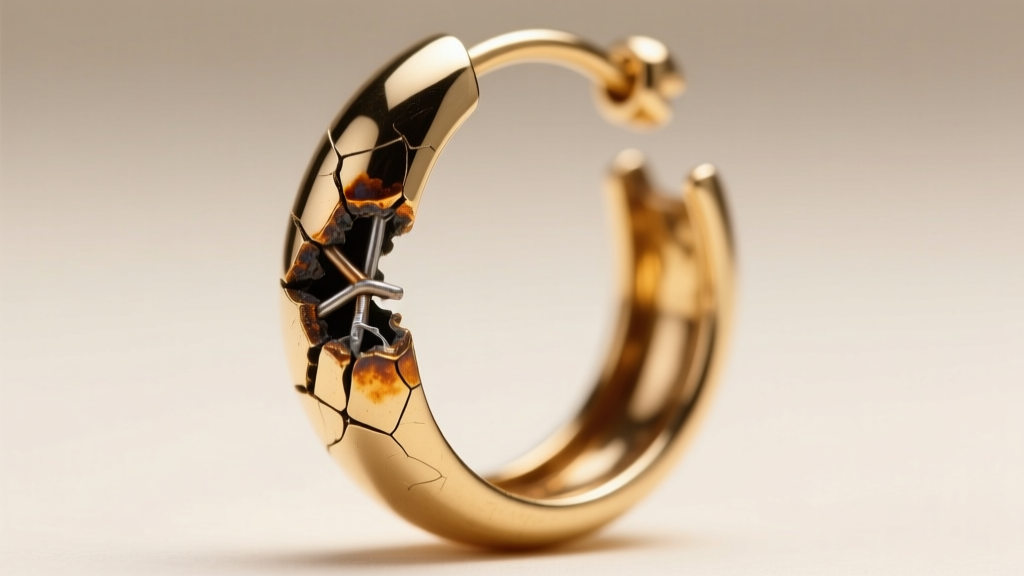
Many vintage hoops from the 1950s to 1980s were manufactured using die-striking and seam-soldering techniques to create lightweight, large-diameter hoops. Over decades, the lead-based or cadmium-based solders used in these eras become brittle. The high-frequency vibrations of an ultrasonic cleaner can cause micro-fractures in these aging solder joints. Once compromised, the cleaning solution is forced inside the hollow tube. Because the interior cannot be dried completely, the trapped moisture reacts with the base metal alloys (like copper and zinc) inside the karat gold, leading to internal oxidation. Weeks later, the earring will begin to "weep" green verdigris or rust, permanently ruining the piece from the inside out.
According to the Gemological Institute of America (GIA), vintage jewelry with suspected structural vulnerabilities or porous alloys should only be cleaned using mild surfactants, warm distilled water, and a soft-bristled brush, avoiding any mechanical vibration.
Market Valuation: Pricing Tiers for Collectors
The market for vintage hoop earrings has matured significantly, shifting from mere fashion accessories to collectible historical artifacts. Pricing is heavily dictated by era, manufacturing technique, and gold weight. Below is a current valuation framework for collectors assessing estate pieces:
- 1940s Retro Solid Gold Hoops ($800 - $2,500+): Characterized by heavy, solid gold construction, often in 14k rose or yellow gold. Valuations spike if they feature hand-engraved floral motifs or early screw-back/clasp hybrid mechanisms.
- 1960s-1970s Textured "Bark" Finish Hoops ($400 - $1,200): Highly sought after for their mid-century modern aesthetic. The value relies on the preservation of the textured finish; polished examples lose significant premium.
- 1980s Designer Signed Hoops ($250 - $800): Pieces bearing verified stamps from houses like Tiffany & Co., Cartier, or Bvlgari. Authentication of the specific font and depth of the laser or stamped mark is critical, as this era is heavily counterfeited.
- Unmarked / Acid-Tested Vintage Hoops ($150 - $400): Valued primarily on scrap gold weight plus a 20-30% "vintage premium" for the craftsmanship and historical clasp design.
Ultimately, mastering the appraisal of vintage hoop earrings requires looking past the surface shine. By analyzing the alloy composition, dissecting the clasp mechanics, and respecting the fragile nature of mid-century solder joints, collectors can preserve these wearable artifacts for future generations while making highly informed acquisitions in the estate jewelry market.


