Water Droplet Earrings: 2026 Value & Pricing Guide
Discover the true value of water droplet earrings in 2026. Compare materials, pricing tiers, and expert tips to find the best budget-friendly pairs.

The Anatomy of Water Droplet Earrings: What Are You Paying For?
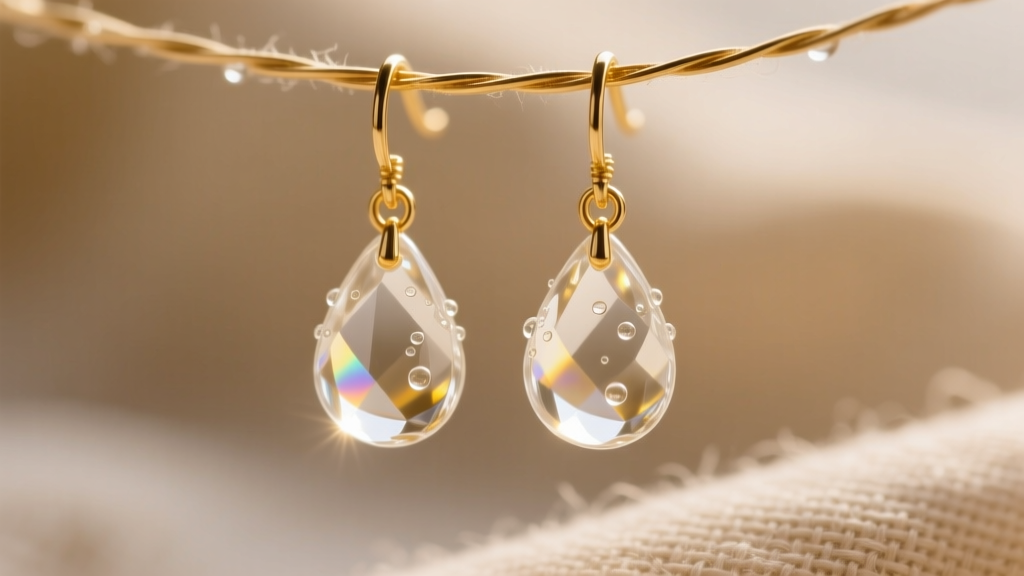
Water droplet earrings—characterized by their pear-shaped, teardrop, or literal liquid-like silhouettes—have maintained a steady grip on the jewelry market. However, the visual similarity between a $15 pair of fast-fashion drops and a $1,500 pair of fine jewelry teardrops can easily deceive the untrained eye. When evaluating the true cost and value of these pieces, you must deconstruct the earring into three core components: the post or hook (the metal touching your skin), the setting or bezel (the structural bridge), and the 'droplet' itself (the focal gemstone, glass, or resin). Understanding the material science behind each of these elements is the only way to accurately assess whether a price tag reflects genuine craftsmanship or inflated brand marketing.
2026 Pricing Tiers: From Fast Fashion to Fine Jewelry
In 2026, the market for teardrop and water-inspired earrings is heavily stratified. Pricing is rarely arbitrary; it is directly tethered to the melt value of the metals, the mining origin of the stones, and the labor required for lapidary cutting. Below is a breakdown of what you should expect to pay across different market tiers, and the specific materials that justify those price points.
| Tier | Price Range | Base Metal | Droplet Material |
|---|---|---|---|
| Fast Fashion | $10 - $35 | Zinc alloy, Brass (often nickel-plated) | Molded resin, Acrylic, Standard glass |
| Demi-Fine | $45 - $150 | 925 Sterling Silver, Gold Vermeil (2.5+ microns) | Cubic Zirconia, Lab-grown quartz, Chalcedony |
| Fine Jewelry | $300 - $2,500+ | 14k or 18k Solid Gold, Platinum | Natural Aquamarine, Briolette Diamonds, Iolite |
Material Deep Dive: Avoiding the 'Green Ear' Trap
The most common point of failure in budget water droplet earrings is the earring post. Many affordable brands use brass or copper alloys plated with a microscopic flash of silver or gold. When exposed to the natural salts and oils of your skin, the underlying copper oxidizes, resulting in the dreaded 'green ear' effect and, worse, contact dermatitis. If you are shopping in the $20 to $50 range, your safest bet for hypoallergenic wear is 316L surgical stainless steel or titanium. These metals possess a passive oxide layer that prevents corrosion and nickel leaching.
Decoding Gold Vermeil vs. Gold Plated
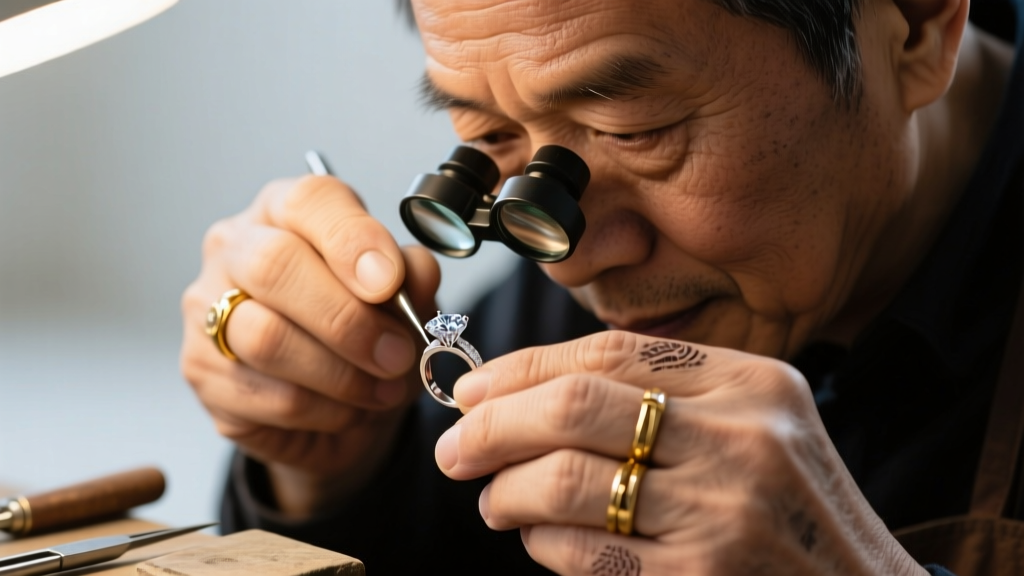
When stepping up to the demi-fine tier ($45 - $150), you will frequently encounter the term 'gold vermeil.' According to the Federal Trade Commission (FTC), for a piece to be legally marketed as vermeil in the United States, it must have a base of 925 sterling silver and be plated with at least 10k gold with a minimum thickness of 2.5 microns. Standard 'gold-plated' jewelry, by contrast, can use a cheap brass base and a gold layer as thin as 0.05 microns. When buying gold water droplet earrings on a budget, always verify the micron thickness; anything under 1.0 micron will wear off within months of daily use, exposing the base metal and ruining the value of your purchase.
Lobe vs. Cartilage: Weight and Gauge Considerations
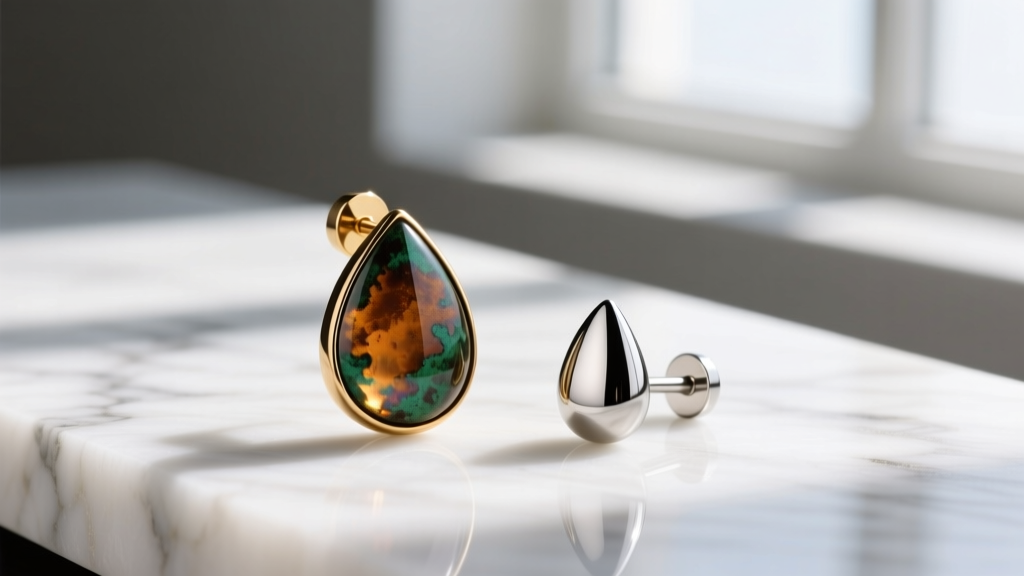
The physical shape of water droplet earrings inherently creates a pendulum effect. Because the mass of the teardrop is concentrated at the bottom, heavier materials like solid glass or genuine briolette-cut quartz can pull aggressively on the earlobe. Standard earring posts are typically 20-gauge (0.8mm) or 18-gauge (1.0mm). If you purchase a heavy gemstone droplet on a thin 22-gauge wire, you risk the 'cheese-cutter effect,' where the thin wire slowly migrates downward through the piercing hole over time. For heavy water droplet styles, always opt for an 18-gauge post or a thicker, structured French wire hook. If you are styling these in cartilage piercings (like the helix or forward helix), ensure the backing is a secure, threaded flat-back labret stud rather than a friction butterfly back, which can easily be pulled out by the weight of the dangling droplet.
Decoding the Droplet: Glass vs. Resin vs. Genuine Gemstones
Beyond the metal, the 'droplet' itself dictates the long-term value and visual brilliance of the earring. The Gemological Institute of America (GIA) notes that natural aquamarine and blue topaz are the most common genuine stones used for high-end water-themed jewelry due to their natural clarity and pleochroism. However, budget brands often substitute these with molded glass or epoxy resin. You can perform a simple thermal conductivity test at home: genuine gemstones and high-quality crystal glass will feel noticeably cold to the touch when first picked up, taking several seconds to warm to your body temperature. Resin and acrylic, being thermal insulators, will feel room-temperature or warm almost immediately. Furthermore, inspect the drill hole where the stone meets the metal setting; glass and resin often show chipping or 'conchoidal' fracturing around the drill site, whereas properly cut quartz or aquamarine will have clean, sharp edges.
Value Assessment: How to Spot Overpriced Fashion Jewelry
Not all expensive earrings are high quality, and not all cheap earrings are garbage. To ensure you are getting genuine value for your money, run any prospective water droplet earring purchase through this expert checklist:
- Inspect the Bezel or Prong Setting: Avoid glued-in stones. If you can see a thick line of epoxy around the base of the droplet, the piece will fail when exposed to water or humidity. Look for mechanical settings (prongs or wrapped wire) that physically grip the stone.
- Check the Clasp Mechanism: For dangle styles, the jump ring connecting the droplet to the post should be soldered shut or feature a secure click-lock. Open jump rings will inevitably bend and drop your earring.
- Verify the Stone Cut: A genuine briolette cut (a 3D teardrop shape covered in triangular facets) requires immense lapidary skill. If the facets are misaligned, dull, or look 'melted,' you are looking at molded glass or cubic zirconia, which should command a much lower price.
- Assess the Backing: High-value brands include secure backings. If a $90 pair of sterling silver teardrops comes with flimsy, thin-metal friction backs, the brand is cutting corners on the components that actually secure your investment.
Final Verdict: Where to Spend and Where to Save
Ultimately, the value of water droplet earrings depends entirely on your wear habits. If you are buying for a single event or a fleeting seasonal trend, a $25 pair of 316L stainless steel and glass drops offers exceptional budget value, provided the metal is nickel-free. However, if you intend to wear teardrop earrings daily, investing in the $80 to $150 demi-fine range is non-negotiable. Securing a pair with a solid 925 sterling silver base, 2.5-micron gold vermeil plating, and mechanically set lab-grown quartz will provide years of tarnish-resistant wear, bridging the gap between fast-fashion fragility and fine-jewelry pricing.


