Whale Tail Earrings: 2026 Buying Guide & Fit Tips
Discover how to choose the perfect whale tail earrings in 2026. Learn about material grades, gauge sizes, weight distribution, and styling tips.

The Evolution of the Whale Tail Motif
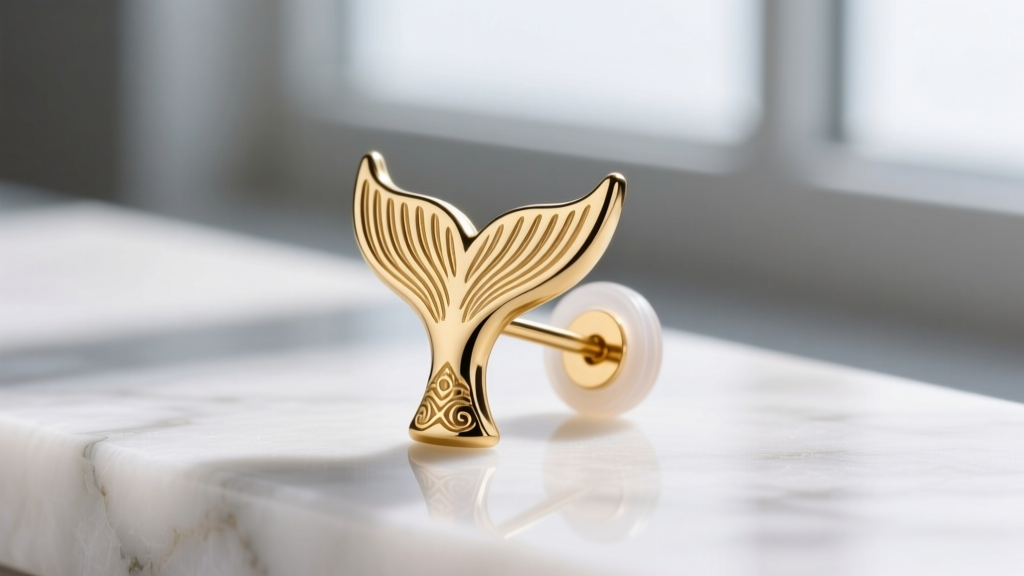
The whale tail earring, characterized by its sweeping, symmetrical fluke design, has transitioned from a fleeting Y2K nostalgia trend into a staple of modern nautical and architectural jewelry. In 2026, the motif has matured. Designers are moving away from the bulky, rhinestone-encrusted styles of the early 2000s, favoring instead minimalist wire-frame silhouettes, brushed metallic finishes, and organic, asymmetrical fluke curves that mimic actual marine biology. Whether you are looking for a subtle stud for daily office wear or an articulated dangle for evening events, understanding the structural nuances of this specific shape is critical for both comfort and longevity.
Structural Engineering: Weight and Post Placement
The most common failure point in poorly manufactured whale tail earrings is the solder joint where the post meets the fluke. Because the whale tail shape is inherently wide and horizontally dominant, it possesses a unique center of gravity. If a manufacturer solders a standard stud post exactly at the geometric center of the fluke, the top-heavy width will cause the earring to droop forward, resting awkwardly against the lower lobe rather than sitting flush.
Expert Insight: High-quality whale tail studs feature an offset post placement. The post is soldered slightly higher on the vertical axis, or utilizes a wider, flat solder pad to distribute the weight evenly, ensuring the fluke remains perfectly upright and flush against the earlobe.
For dangle or drop variations, the articulation point (the jump ring connecting the fluke to the ear wire) must be reinforced. A weak jump ring will easily warp under the pendulum motion of a wide fluke, eventually snapping or stretching out of shape.
Material Grades and Metallurgy
When shopping for whale tail earrings, the material dictates not only the price but the biocompatibility and tarnish resistance. The wide surface area of a fluke design means more metal is in direct contact with your skin and hair, making hypoallergenic properties essential.
| Material | Pros | Cons | Avg. Price Range |
|---|---|---|---|
| Implant-Grade Titanium (ASTM F136) | 100% nickel-free, ultra-lightweight, ideal for sensitive lobes | Limited to silver/grey tones, harder to cast intricate details | $25 - $60 |
| 925 Sterling Silver | Bright finish, excellent detail retention, affordable luxury | Prone to sulfide tarnishing, requires rhodium plating for protection | $35 - $85 |
| Gold Vermeil (over 925 Silver) | Rich gold appearance, durable base metal | Must meet FTC thickness standards to prevent rapid wear | $60 - $150 |
| Solid 14k / 18k Gold | Lifetime durability, heirloom quality, zero tarnish | High initial investment, softer metal can scratch on wide flukes | $180 - $450+ |
When purchasing gold-toned whale tail earrings, beware of the term 'gold plated.' According to the Federal Trade Commission Jewelry Guides, true gold vermeil must consist of a sterling silver base coated with a minimum of 2.5 microns of gold. Many fast-fashion brands use 0.5 microns of gold over brass; the wide friction surface of a whale tail earring will wear this thin plating down in a matter of weeks, exposing the copper-rich brass beneath and potentially turning your skin green.
Gauge Sizing and Lobe Health
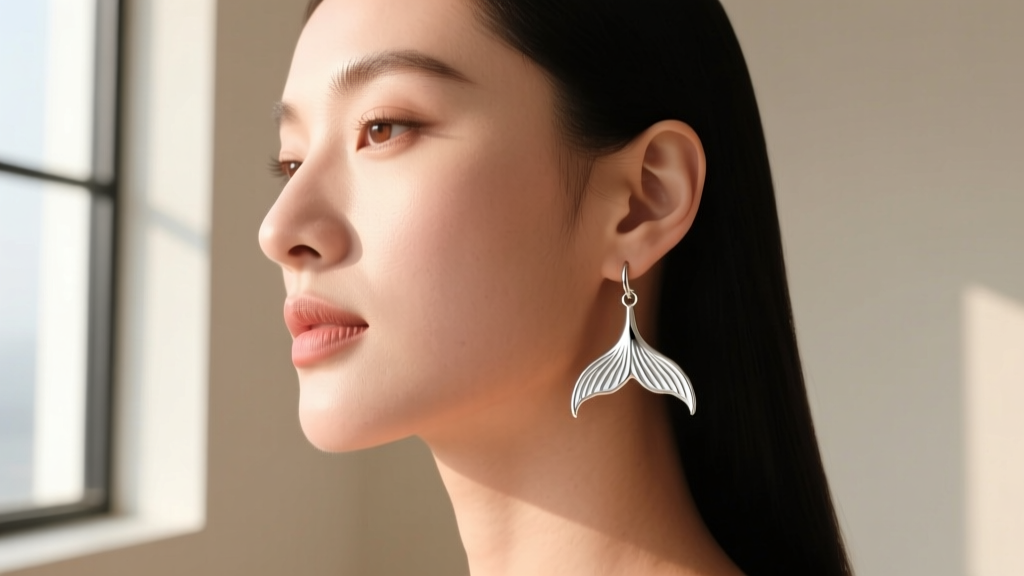
The gauge (thickness) of the earring post is a critical, yet frequently overlooked, buying factor. The standard post size for most fashion earrings is 20-gauge (0.81mm). However, because the whale tail fluke acts as a lever, it exerts disproportionate downward and outward torque on the piercing hole.
If you are buying a solid, heavy whale tail dangle that weighs more than 4 grams, a 20-gauge wire will slowly migrate through the lobe tissue over time, causing the dreaded 'cheese cutter' effect and permanent lobe stretching. The Association of Professional Piercers (APP) recommends thicker jewelry for heavier designs. For medium-to-large whale tail drops, insist on an 18-gauge (1.02mm) or 16-gauge (1.29mm) post to provide the necessary structural support for your earlobe.
Choosing the Right Backing Mechanism
The backing of your earring is the unsung hero of security and comfort, especially for wide, horizontal designs that easily catch on hair, scarves, and sweater collars.
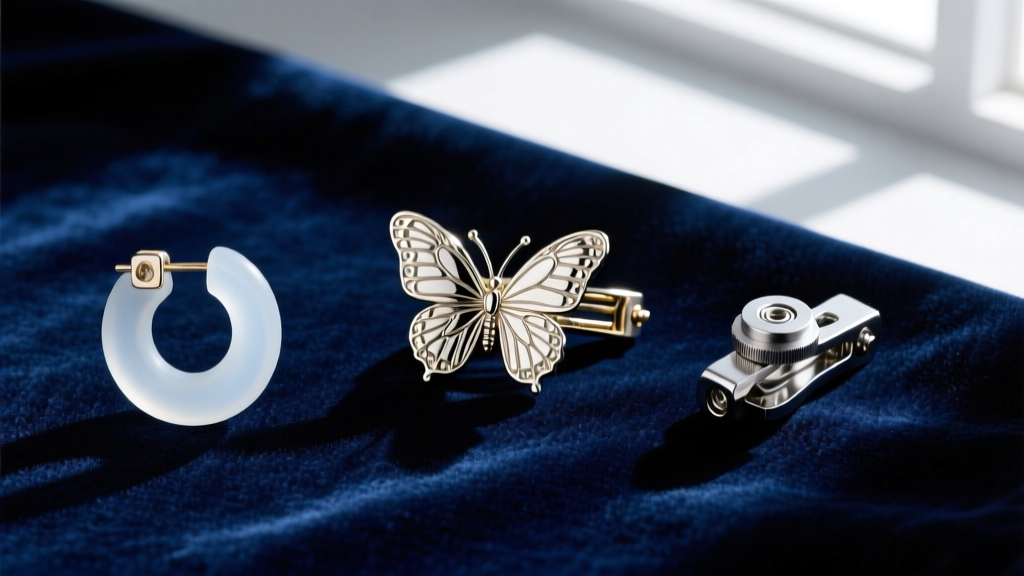
- Standard Butterfly Clutches: Adequate for lightweight, small studs (under 2 grams). However, they can easily slip off the post if the wide fluke catches on clothing.
- Silicone O-Rings / Friction Backs: Excellent for dangles. They grip the post securely without the metal-on-metal friction that can wear down the post's groove over time.
- La Pousette (Locking) Backs: The gold standard for fine jewelry. These feature a mechanical locking mechanism that clicks into a grooved post, making it virtually impossible for the earring to fall off, even if the wide whale tail fluke gets snagged.
- Screw Backs: Highly secure, but the threading on the post can strip if cross-threaded, and they are notoriously difficult to put on with one hand.
Face Shape and Styling Dynamics
The geometry of your jewelry should complement your facial structure. Because the whale tail motif adds significant horizontal volume and draws the eye outward, it interacts differently with various face shapes:
Best Suited For:
Oblong and Long Faces: The horizontal spread of the whale tail fluke creates an optical illusion that widens the face, beautifully balancing out long, narrow facial proportions. Opt for wider, more dramatic fluke spreads in a drop or dangle style.
Styling with Caution:
Round and Wide Faces: Adding horizontal volume can exaggerate facial width. If you have a round face but love the nautical motif, choose a minimalist, vertical wire-frame whale tail design, or a small, subtle stud that sits close to the lobe without extending outward.
Pricing Tiers and Authenticity
Understanding the market tiers will help you identify fair pricing and avoid overpaying for base metals masquerading as fine jewelry.
Tier 1: Fast Fashion & Alloy ($10 - $25)
Typically made from zinc or brass alloys with a micro-thin flash plating. High risk of nickel exposure. According to the Mayo Clinic, nickel allergies are among the most common contact dermatitis triggers, and the large surface area of a whale tail earring maximizes skin contact, increasing the risk of an allergic flare-up.
Tier 2: Mid-Tier & Demi-Fine ($40 - $120)
This is the sweet spot for most buyers. You will find high-quality 925 sterling silver, often rhodium-plated for tarnish resistance, or legitimate gold vermeil with proper micron thickness. Brands in this tier usually provide reliable customer service and replacement backings.
Tier 3: Fine Jewelry ($180 - $500+)
Solid 14k or 18k gold, sometimes featuring diamond or sapphire pave along the ridges of the fluke. These pieces are cast with precision, featuring reinforced jump rings, offset post placements for perfect balance, and locking La pousette backings.
The Ultimate Pre-Purchase Checklist
Before adding a pair of whale tail earrings to your cart, run them through this quick expert checklist:
- Weight Check: Is the earring under 4 grams? If heavier, does it have an 18G or 16G post?
- Post Placement: If it is a stud, is the post slightly elevated to counterbalance the wide top fluke?
- Material Verification: Does the listing explicitly state '925 Sterling Silver', 'ASTM F136 Titanium', or 'Solid Gold'? Avoid vague terms like 'gold-tone metal'.
- Vermeil Thickness: If buying gold vermeil, does the brand guarantee at least 2.5 microns of gold thickness?
- Backing Security: Does the wide shape require a silicone stopper or locking back to prevent snagging and loss?
By prioritizing structural integrity and metallurgical quality over fleeting fast-fashion trends, your whale tail earrings will remain a sophisticated, comfortable, and secure staple in your jewelry rotation for years to come.


