What Gauge Is a Regular Earring? A Buyer's Value & Cost Guide
Discover what gauge is a regular earring and how post thickness impacts pricing, durability, and overall value in your jewelry collection.

When building a curated ear stack or replacing a lost everyday stud, one of the most common questions shoppers ask is: what gauge is a regular earring? While the aesthetic appeal of a gemstone or gold setting often dominates the buying decision, the thickness of the earring post—the gauge—dictates not only the comfort and longevity of the piece but also its fundamental financial value. In the jewelry market, metal weight and structural integrity are directly tied to price. Understanding gauge sizing is the ultimate cheat code for budget-conscious buyers looking to maximize their investment without falling victim to the hidden costs of fast-fashion jewelry.
Decoding the Basics: What Gauge Is a Regular Earring?
In the jewelry and body modification industries, the gauge system measures the thickness of the wire or post that passes through the piercing. Counterintuitively, the higher the gauge number, the thinner the metal. For standard earlobe piercings performed with a hollow needle by a professional, the industry standard is 18-gauge (1.02mm) or 16-gauge (1.29mm). However, if your ears were pierced at a mall kiosk using a spring-loaded piercing gun, your "regular" earring size is likely 20-gauge (0.81mm) or even 22-gauge (0.64mm).
Cartilage piercings, such as the helix or tragus, almost universally default to 16-gauge (1.29mm) to accommodate the denser tissue and reduce the risk of migration. Knowing your exact starting gauge is the first step in assessing the value of any new earring purchase, as buying a post that is too thin can lead to structural failure, while buying one that is too thick requires forced stretching, which can cause micro-tears and expensive medical or corrective piercing bills.
The Hidden Costs of Gauge Sizes: Material Weight vs. Price
When evaluating the budget and value of precious metal earrings, gauge size is a primary driver of cost. A 14k or 18k gold earring's price is heavily influenced by its gram weight. Because gold is traded by the troy ounce, a thicker post literally contains more raw material. Below is a breakdown of how gauge thickness impacts the material weight and baseline pricing of a standard 6mm straight post stud.
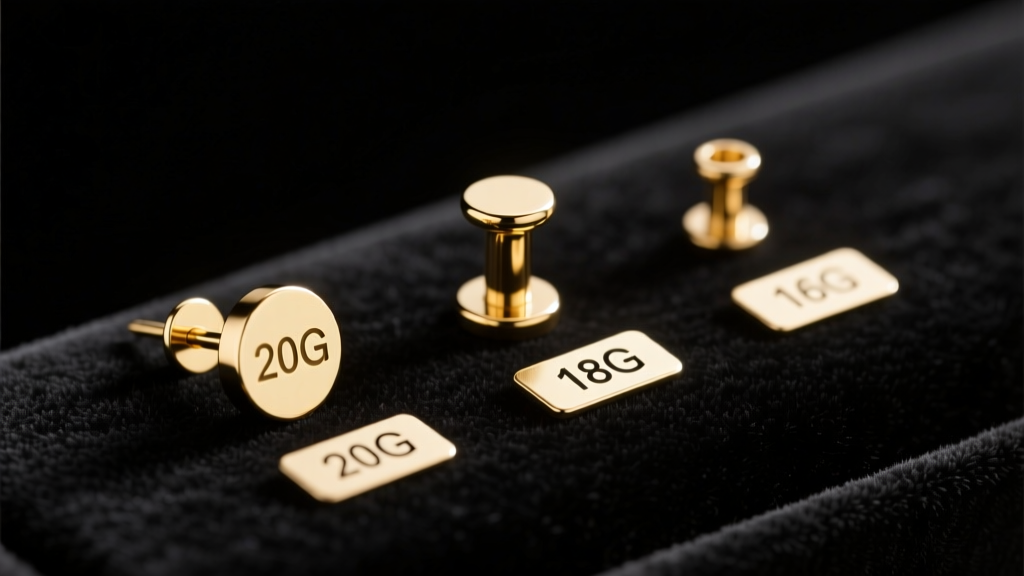
| Gauge Size | Millimeter (mm) | Approx. 14k Gold Weight (6mm Post) | Estimated Base Price Premium | Best Value Application |
|---|---|---|---|---|
| 22-Gauge | 0.64mm | ~0.04 grams | Lowest (High Breakage Risk) | Temporary fashion wear only |
| 20-Gauge | 0.81mm | ~0.07 grams | Low (Standard Commercial) | Standard gun-pierced lobes |
| 18-Gauge | 1.02mm | ~0.11 grams | Moderate (Sweet Spot) | Professional needle-pierced lobes |
| 16-Gauge | 1.29mm | ~0.18 grams | High (Premium Durability) | Cartilage, heavy dangles, active lifestyles |
From a strict budget perspective, an 18-gauge solid gold stud offers the highest return on investment. It provides enough structural rigidity to prevent bending during sleep or accidental snags, without carrying the heavy metal-weight premium of a 14-gauge or 12-gauge post, which are typically reserved for specialized body jewelry rather than standard earlobe wear.
Budget Breakdown: Standard vs. Custom Gauge Pricing
To truly assess value, we must compare the "cost per wear" of commercial jewelry versus professional body jewelry. A pair of 20-gauge, gold-plated brass studs from a fast-fashion retailer might cost $15. However, the plating will wear off within months, and the thin 0.81mm posts are highly susceptible to bending, rendering the earrings useless. The cost per wear is actually quite high when factoring in replacement frequency.
The "Thin Post" Trap and the Cheese-Cutter Effect
One of the most critical concepts in earring value assessment is the "cheese-cutter effect." When a heavy earring (like a large hoop or a gemstone drop) is suspended on a very thin wire (20G or 22G), the downward force concentrates on a tiny surface area of the earlobe. Over time, this thin wire acts like a cheese cutter, slowly migrating downward through the tissue. This not only ruins the aesthetic of the earlobe but can result in a split lobe, which requires surgical repair costing anywhere from $500 to $1,500. Investing in 18-gauge or 16-gauge posts for heavier earrings is a non-negotiable preventative measure that protects both your anatomy and your wallet.
Material Grades and Gauge: Maximizing Your Investment
Gauge size does not exist in a vacuum; it interacts directly with the material grade to determine the overall value of the earring. According to the Association of Professional Piercers (APP), the safest and most durable materials for long-term wear are implant-grade titanium and solid 14k or 18k gold.
- ASTM F136 Titanium (16G or 18G): Priced between $35 and $70 per stud. Titanium is incredibly strong, meaning a 16-gauge titanium post will never bend or snap under normal duress. It offers the highest durability-to-cost ratio on the market, especially for those with nickel allergies.
- 316L Surgical Steel (20G or 18G): Priced between $10 and $25. While budget-friendly, surgical steel contains trace amounts of nickel. Furthermore, steel posts in thinner gauges (20G) can warp if snagged on clothing, ruining the earring's structural integrity.
- Solid 14k Gold (18G): Priced between $120 and $350+. Gold is a softer metal. Therefore, buying an 18-gauge gold post is vastly superior to a 20-gauge gold post, as the extra 0.21mm of thickness provides the necessary rigidity to keep the post straight over years of daily wear.
"When budgeting for fine jewelry, always prioritize metal purity and structural gauge over the carat size of the accent gemstone. A 16-gauge solid gold post with a 2mm diamond will outlast and retain more scrap and resale value than a 22-gauge post holding a 5mm lab-created stone."
How to Measure Your Own Piercings Before Buying
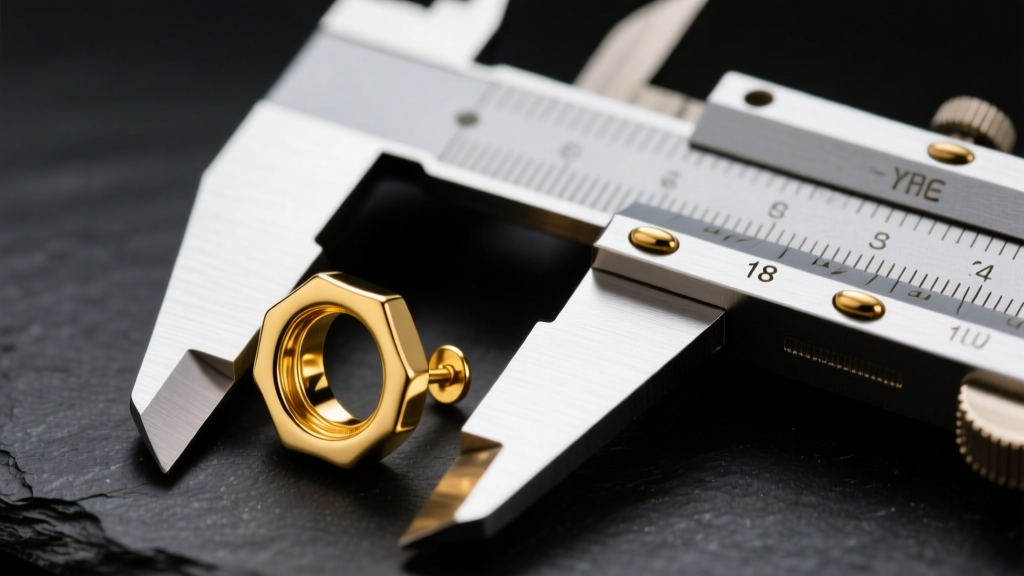
Never guess your gauge size when shopping for premium jewelry. Guessing leads to returned items, restocking fees, and wasted shipping costs. To accurately assess what gauge you need, purchase a cheap digital caliper ($10 to $15 online) and measure the post of the most comfortable earring you currently own. Ensure you are measuring the post thickness, not the length. If your caliper reads 0.81mm, you are a 20-gauge buyer. If it reads 1.02mm, you are an 18-gauge buyer. This one-time $15 investment will save you hundreds of dollars in misordered custom jewelry over your lifetime.
Final Verdict: Finding the Best Value for Your Ear Anatomy
So, what gauge is a regular earring? For the vast majority of the population, 18-gauge (1.02mm) represents the ultimate intersection of comfort, anatomical compatibility, and financial value. It is thick enough to support the weight of precious metals and gemstones without risking the cheese-cutter effect, yet thin enough to slide effortlessly into standard lobe piercings without requiring painful stretching.
When allocating your jewelry budget, shift your focus away from the visual size of the earring and toward the structural reality of the post. Opting for 18-gauge or 16-gauge pieces crafted from ASTM F136 titanium or solid 14k gold ensures that your investment will withstand the rigors of daily life, providing a lifetime of wear and retaining its intrinsic material value far better than flimsy, mass-produced alternatives.


