Earring on Left Ear Meaning: 2026 Style & Trend Guide
Discover the earring on left ear meaning in 2026. We analyze the shift from coded signals to modern asymmetrical ear curation and styling tips.

The Historical Code: Debunking the Left Ear Myth
If you have ever searched for the 'earring on left ear meaning,' you have likely stumbled upon a labyrinth of outdated playground myths, 1980s pop culture lore, and lingering generational confusion. For decades, a pervasive cultural code dictated that a single earring in the left ear on a man served as a covert signal of homosexuality, while the right ear indicated heterosexuality. This binary signaling system, often summarized by the outdated and offensive rhyme 'left is right, right is wrong,' was a product of an era when LGBTQ+ individuals required subtle, deniable methods of identifying one another in hostile social climates.
However, as we navigate the fashion landscape of 2026, it is crucial to state unequivocally: the 'gay ear' myth is entirely dead. The idea that an earring on the left ear carries any inherent information about a person's sexual orientation or gender identity is a historical relic. Today, the left ear is simply a canvas for self-expression, anatomical curation, and avant-garde styling. Understanding this evolution is key to mastering modern jewelry trends without being weighed down by archaic social baggage.
The 2026 Paradigm: Asymmetry and Gender-Fluid Styling
In contemporary style analysis, the focus has shifted from coded messaging to deliberate visual imbalance. According to trend forecasts from Vogue, the 'curated ear' movement has evolved past the symmetrical, mirror-image matching of the 2010s. Today's trendsetters, across all gender identities, are embracing heavy asymmetry. The left ear, in particular, has become a favored focal point for dense, intricate stacking, while the right ear is often left completely bare or adorned with a single, minimalist stud.
This left-heavy asymmetrical trend is driven by a desire for editorial, high-fashion aesthetics in everyday wear. It mimics the natural asymmetry found in modern haircuts, avant-garde tailoring, and architectural design. By loading the left ear with a mix of threadless ends, seamless hoops, and ear cuffs, wearers create a striking silhouette that draws the eye and frames the jawline, entirely divorced from any historical subcultural codes.
Curating the Left Ear: An Anatomical Framework
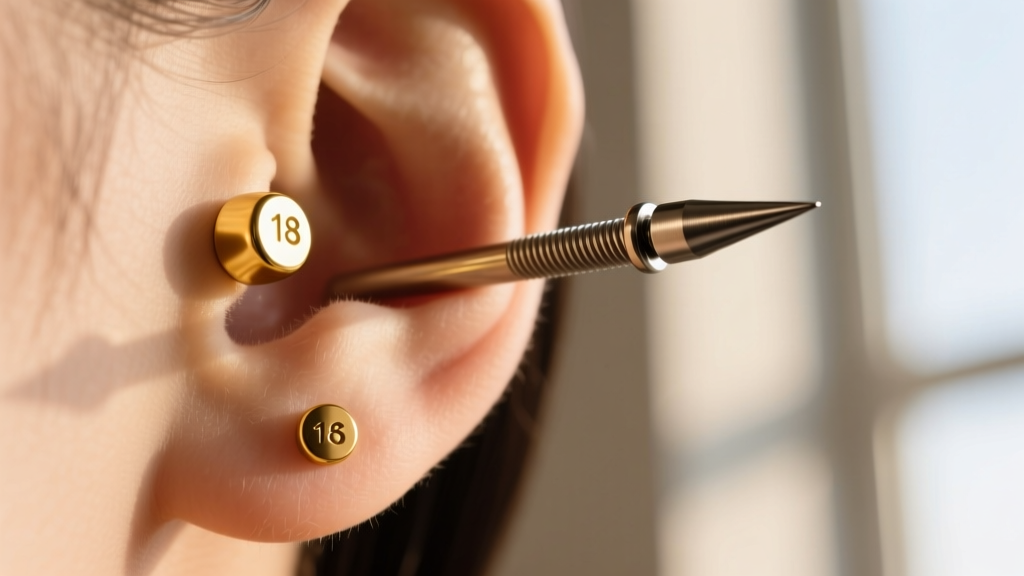
Building a cohesive left-ear stack requires an understanding of anatomical real estate and standard gauge sizing. A haphazard approach leads to visual clutter and potential healing complications. Below is a structural guide to the most common placements used in a modern left-heavy stack, adhering to the safety guidelines established by the Association of Professional Piercers (APP).
Primary Placements and Gauge Standards
- Standard Lobe (18g or 16g / 1.0mm - 1.2mm): The anchor of the stack. In 2026, many opt to stretch the initial lobe piercing slightly to 16g to accommodate a wider variety of high-end threadless jewelry and ensure better long-term tissue health.
- Upper Lobe / Second Lobe (18g or 16g): Placed roughly 8-10mm above the primary lobe. This is the ideal spot for a slightly smaller, complementary stud or a tiny huggie hoop.
- Helix (16g / 1.2mm): The outer cartilage rim. A 16g titanium hoop or a cluster of threadless stars creates a beautiful outer frame. Healing takes 6 to 12 months, requiring strict aftercare.
- Flat (14g or 16g / 1.6mm - 1.2mm): The broad, flat area of the upper cartilage. This is the prime real estate for intricate, decorative shields or larger gemstone clusters that act as the centerpiece of the left ear.
- Tragus (16g or 18g): The small flap of cartilage over the ear canal. A simple, sparkling 16g stud here adds depth to the inner ear without overwhelming the stack.
Material Science: What to Wear in a Heavy Stack
When curating a multi-piercing left ear, the metallurgy of your jewelry is non-negotiable. Wearing multiple pieces simultaneously increases the skin's exposure to potential allergens, making implant-grade materials essential. Avoid surgical steel (which contains nickel) and plated brass at all costs. Instead, invest in materials that guarantee biocompatibility and longevity.
| Material | Standard / Grade | Typical Gauge | Price Range (Per Piece) | Best Application |
|---|---|---|---|---|
| Implant-Grade Titanium | ASTM F136 | 18g, 16g, 14g | $40 - $120 | Initial piercings, sensitive skin, threadless posts |
| Solid Gold | 14k or 18k (Nickel-Free) | 18g, 16g | $150 - $800+ | Fully healed stacks, luxury statement pieces |
| Niobium | Unalloyed / Anodized | 16g, 14g | $30 - $90 | Seamless hoops, colorful anodized accents |
Brands like BVLA and Anatometal dominate the high-end titanium and gold market, offering precision-machined threadless ends that snap securely into place. For luxury 18k gold options, designers like Maria Tash have popularized the use of floating diamonds and intricate floral motifs specifically designed for asymmetrical curation.
The Mechanics of Asymmetry: Threadless vs. Internally Threaded
A critical, often overlooked aspect of maintaining a left-heavy ear stack is the mechanical design of the jewelry. When you have four or five piercings on one ear, dealing with externally threaded jewelry (where the screw is on the post) is a recipe for tissue damage and frustration. Furthermore, internally threaded jewelry (where the ball screws into the post) can be difficult to grip and unscrew, especially in hard-to-reach cartilage spots like the conch or rook.
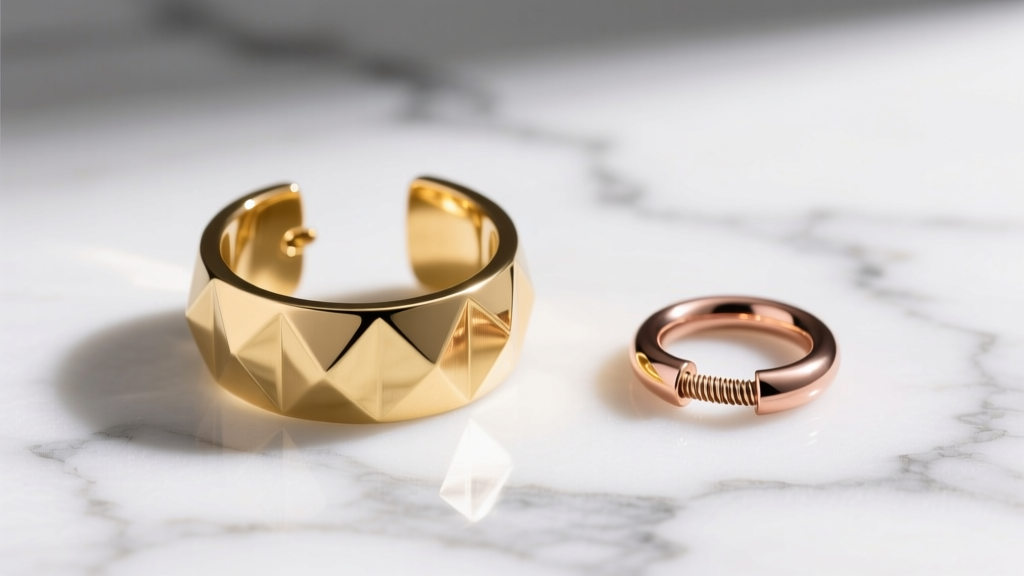
The 2026 standard for curated ears is threadless (push-pin) jewelry. Threadless posts feature a slight bend in the pin that creates tension against the inside of the shaft, holding the decorative end securely in place without any screwing. This mechanism allows for rapid swapping of decorative ends—perfect for adjusting the visual weight of your left ear stack to match different outfits or occasions without the hassle of tiny screwdrivers or pliers.
Visual Weight: Balancing a Left-Heavy Ear
Styling a heavily stacked left ear requires an understanding of visual weight and facial geometry. Because the left ear will naturally draw the eye, you must balance the rest of your aesthetic to prevent the look from feeling lopsided or unintentional.
Face Shape and Hair Considerations
For those with round or square face shapes, a vertical stack of hoops and elongated drop studs on the left helix and lobe can create an illusion of length, softening the jawline. Conversely, those with long or oval faces might prefer horizontal emphasis, utilizing conch hoops and tragus studs to widen the visual profile of the face.
'Asymmetry in jewelry is like asymmetry in architecture; it requires a deliberate counterweight. If the left ear is heavily curated, I advise clients to part their hair to the right, exposing the stack, while using a structured, high-collared garment on the left side of the neck to ground the visual weight.' — Senior Piercer & Stylist, NYC
Necklines and Accessories
When the left ear is the star of the show, avoid competing necklaces. A heavy left-ear stack paired with a busy, layered necklace creates visual noise. Instead, opt for clean, unadorned necklines—think crisp crewnecks, structured blazers, or simple silk slip dresses. If you must wear a necklace, choose a single, delicate chain that sits below the collarbone, allowing the left ear to remain the undisputed focal point of your upper body styling.
Conclusion: Meaning is What You Make It
The search for the 'earring on left ear meaning' ultimately leads to a liberating conclusion: in 2026, there is no hidden code. The left ear is a space for anatomical art, metallurgical appreciation, and bold stylistic choices. Whether you are a man embracing gender-fluid jewelry trends, a woman experimenting with editorial asymmetry, or simply someone who prefers the way a 16g titanium helix hoop catches the light on your left side, the only meaning your jewelry carries is the one you assign to it. Invest in ASTM F136 titanium, respect your healing cartilage, and curate your stack with intention.