What to Use to Clean Earrings: Expert Troubleshooting by Metal Type
Discover exactly what to use to clean earrings based on metal type. Expert troubleshooting for gold, silver, titanium, and gemstone buildup.

The Chemistry of Earwax and Tarnish: Why Generic Cleaners Fail
When deciding what to use to clean earrings, most people default to generic jewelry dips or harsh household chemicals. This is a critical mistake that often leads to irreversible damage. The environment of the human ear is uniquely hostile to metals. Sebum and earwax have a naturally acidic pH ranging from 4.5 to 5.5. When this acidic biological matter mixes with dead skin cells, cosmetic residues, and environmental sulfur, it creates a corrosive sludge that accumulates in the crevices of butterfly backs, clicker hinges, and gemstone prongs.
Generic silver dips often contain thiourea, a toxic chemical that strips the rhodium plating off white gold and leaves a micro-porous surface on sterling silver, accelerating future tarnishing. To properly troubleshoot earring maintenance, we must abandon one-size-fits-all solutions and look at the specific metallurgical and gemological properties of your jewelry.
What to Use to Clean Earrings: Metal-by-Metal Breakdown
Implant-Grade Titanium & Niobium (The Hypoallergenic Standard)
For fresh piercings or sensitive ears, ASTM F136 implant-grade titanium and pure niobium are the gold standards. Because these metals are highly biocompatible and lack nickel or copper alloys, they do not tarnish or oxidize in the presence of bodily fluids.
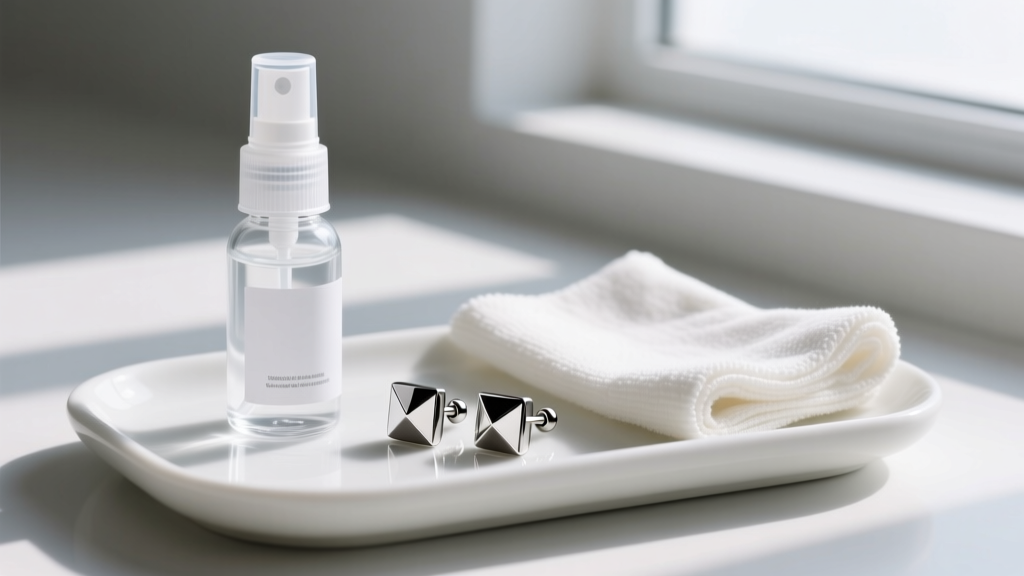
The Solution: Use a sterile saline wound wash (0.9% sodium chloride) or a mild, fragrance-free liquid castile soap. Avoid antibacterial soaps containing triclosan or benzalkonium chloride, as these can disrupt the skin's microbiome and cause contact dermatitis around the fistula. According to the Association of Professional Piercers (APP), gentle mechanical removal with a clean microfiber cloth is vastly superior to chemical soaking for titanium.
Solid Gold (14k, 18k) & Gold Vermeil
Pure 24k gold is too soft for daily-wear earrings, so it is alloyed with copper, silver, and zinc. The copper content in 14k gold makes it susceptible to stress corrosion cracking when exposed to chlorine. Gold vermeil (a thick layer of gold over sterling silver) is even more delicate, as abrasive cleaners will wear through the gold layer, exposing the silver beneath to rapid oxidation.
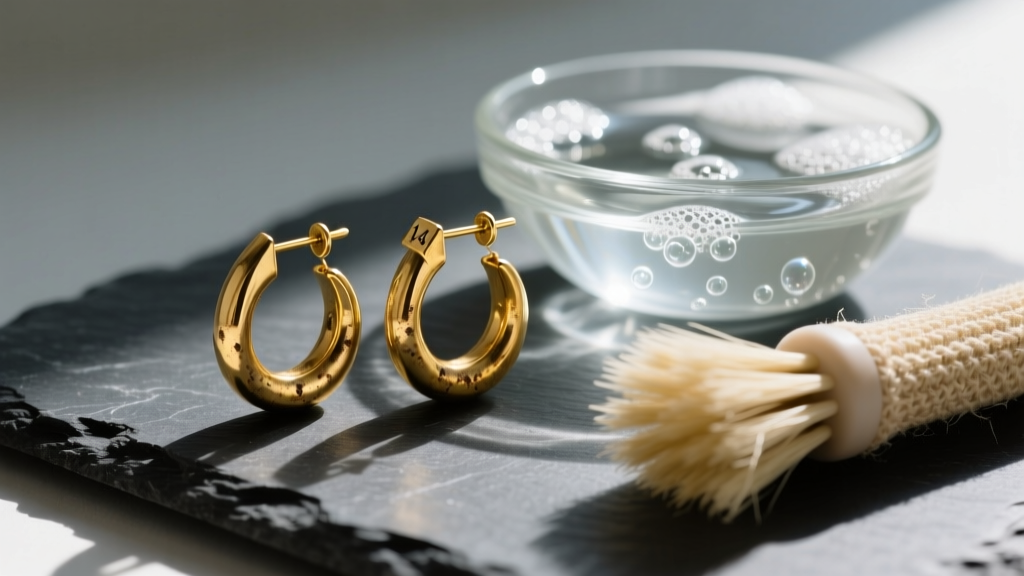
The Solution: Create a lukewarm bath of distilled water and a few drops of pH-neutral dish soap (like Dawn Original). Soak solid gold earrings for 15 minutes, then gently agitate with an extra-soft baby toothbrush. For gold vermeil, skip the soaking entirely; instead, dampen a lint-free cloth with the soapy solution and gently wipe the surface to preserve the gold micron layer.
Sterling Silver (925) & Argentium
Sterling silver tarnishes when the copper alloy reacts with hydrogen sulfide in the air and biological acids on the skin, forming black silver sulfide. Argentium silver contains germanium, which drastically slows this process, but it still requires specific care.
The Solution: For heavy silver sulfide buildup on solid 925 silver earrings (without gemstones), utilize an electrochemical reduction bath. Line a glass bowl with aluminum foil (shiny side up), add 1 tablespoon of baking soda and 1 tablespoon of sea salt, and pour in boiling water. Submerge the silver earrings so they touch the foil. The chemical reaction transfers the sulfur from the silver to the aluminum, instantly reversing the tarnish without removing any base metal.
Troubleshooting Common Earring Cleaning Disasters
Even with the best intentions, things go wrong. Below is a diagnostic matrix for the most frequent earring cleaning failures and their exact remedies.
| Problem Symptom | Root Cause | Troubleshooting Solution |
|---|---|---|
| White gold turning yellow | Rhodium plating worn away by harsh chemicals or friction | Stop using ultrasonic cleaners and silver dips. Take to a jeweler for re-rhodium plating (typically $35-$60). |
| Cloudy or milky diamonds | Hydrophobic buildup of lotions, sebum, and hairspray on the pavilion (underside) | Soak in a 50/50 mix of distilled water and isopropyl alcohol (90%+). Scrub the underside with a soft interdental brush. |
| Green skin discoloration | Copper oxidation in low-karat gold or brass alloys reacting to sweat | Switch to 18k gold, platinum, or titanium. Coat the earring post temporarily with clear medical-grade silicone barrier. |
| Stuck clicker hinges | Calcified sebum and dead skin locking the microscopic hinge pin | Apply a single drop of jojoba oil to the hinge, let sit for 10 minutes, then gently work open. Flush with soapy water. |
Gemstone & Pearl Precautions: What NOT to Use
When figuring out what to use to clean earrings featuring gemstones, the Mohs hardness scale and porosity are your guiding metrics. Many popular jewelry cleaners contain ammonia, which is highly destructive to organic and porous gems.
- Pearls & Coral: These are organic calcium carbonate structures with a Mohs hardness of just 2.5 to 4. Acids (even mild vinegar or citrus-based cleaners) will literally dissolve the nacre. Wipe only with a damp, untreated microfiber cloth.
- Emeralds & Opals: These stones are naturally heavily included and often treated with cedar oil or resin to improve clarity. Ultrasonic vibrations will shatter emeralds along their internal fracture lines, while heat and chemicals will dry out opals, causing 'crazing' (internal cracking). The Gemological Institute of America (GIA) strictly advises against mechanical cleaning for these stones.
- Turquoise & Lapis Lazuli: Highly porous. They will absorb colored liquids, soapy residues, and oils, permanently altering their color matrix. Clean only with a dry, soft brush.
Step-by-Step Ultrasonic vs. Manual Cleaning Protocols
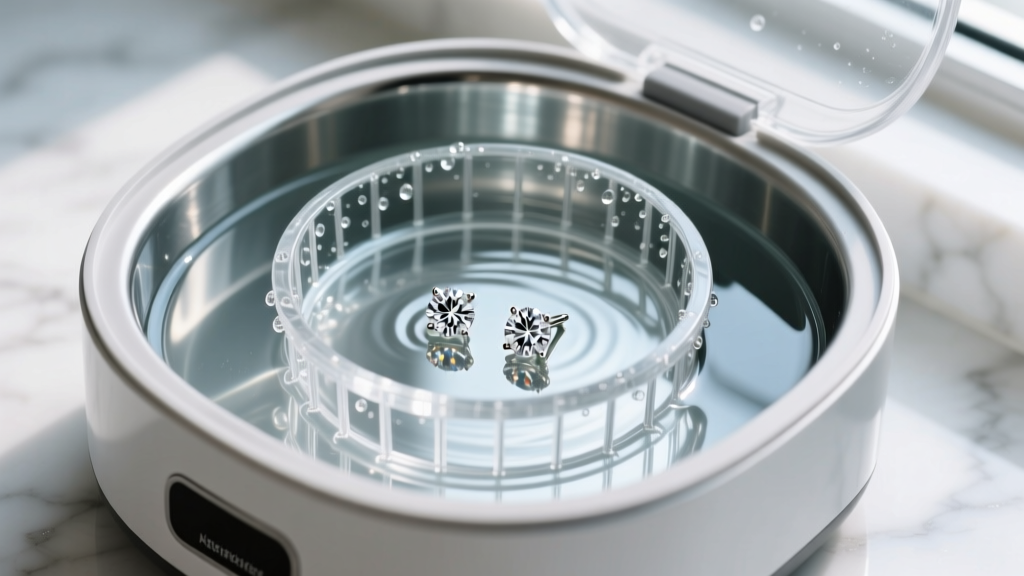
Ultrasonic cleaners use high-frequency sound waves (typically 42 kHz to 45 kHz) to create microscopic cavitation bubbles in a liquid solvent. When these bubbles collapse against the surface of an earring, they blast away microscopic debris. This is phenomenal for diamond studs and plain platinum hoops, but disastrous for plated jewelry.
The Manual Protocol (Safe for All Metals)
- Prepare a lukewarm bath of distilled water and pH-neutral dish soap.
- Submerge earrings for 10-15 minutes to soften biological buildup.
- Using an extra-soft baby toothbrush, brush in circular motions, paying special attention to the post grooves and earring backs.
- Rinse under a gentle stream of distilled water (tap water contains chlorine and minerals that can leave spots).
- Dry immediately with a lint-free microfiber cloth or use a hair dryer on the 'cool' setting to prevent water spots.
The Ultrasonic Protocol (Diamonds, Sapphires, Rubies, Solid Platinum/Gold)
- Fill the ultrasonic tank with distilled water and a specialized ultrasonic jewelry cleaning concentrate (avoid dish soap, which creates too much foam and dampens the cavitation effect).
- Place earrings in the suspended basket. Never let jewelry rest directly on the vibrating metal floor of the tank, as this can scratch the stones and damage the transducer.
- Run for exactly 90 to 120 seconds. Longer cycles do not clean better; they only increase the risk of loosening prong settings.
- Rinse and dry thoroughly.
Preventative Maintenance for Cartilage and Lobe Piercings
The best troubleshooting strategy is prevention. For cartilage piercings (like helixes or tragus) where space is tight and airflow is limited, biological buildup happens rapidly. Swap out heavy, occlusive ointments for breathable aftercare. If you wear continuous hoops or huggies, make it a habit to wipe the inner diameter of the hoop with an alcohol prep pad every time you take them out. This takes three seconds and prevents the sebum from hardening into the stubborn, foul-smelling crust that eventually requires aggressive chemical intervention to remove.


