Mastering Bow and Pearl Earrings: Materials, Gauges & Care
Explore the technical anatomy of bow and pearl earrings. Learn about alloy grades, pearl luster metrics, gauge sizing, and structural failure points.

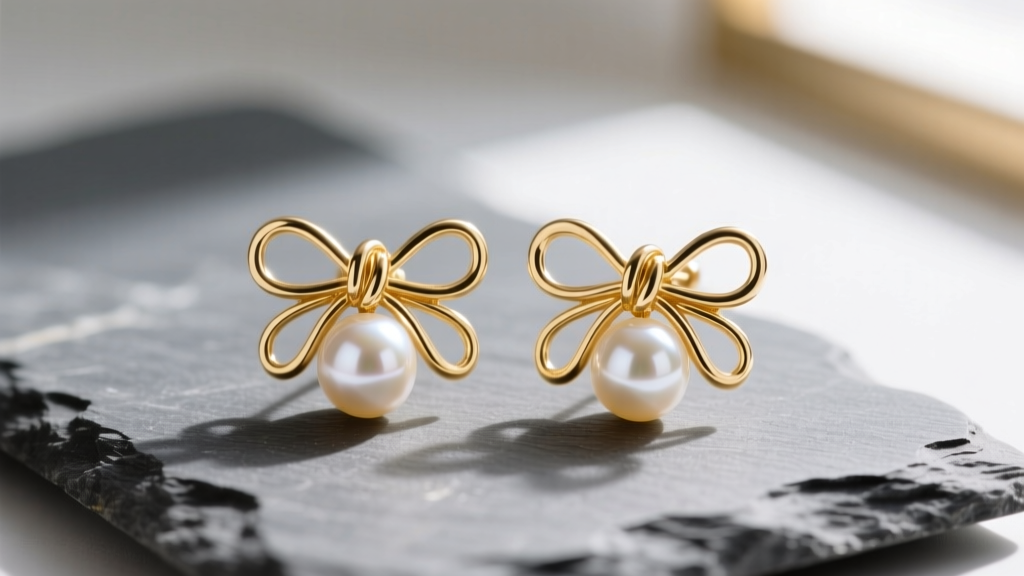
The Structural Anatomy of Bow and Pearl Earrings
Bow and pearl earrings represent a fascinating intersection of romantic aesthetics and rigorous jewelry engineering. While the visual appeal lies in the delicate ribbon motifs and the organic luster of the gemstones, the physical reality of manufacturing these pieces requires exact metallurgical tolerances. A poorly engineered bow motif will warp under minimal stress, while improperly mounted pearls are prone to catastrophic detachment. This technical deep dive explores the material science, gauge specifications, and structural failure modes inherent in fine bow and pearl earrings.
Metallurgical Requirements: Purity vs. Tensile Strength
The defining characteristic of a bow earring is its intricate wirework or cast ribbon structure. These designs feature thin, sweeping lines—particularly the "tails" of the bow—which are highly susceptible to permanent deformation. Consequently, the choice of metal alloy is dictated by yield strength rather than mere karat purity.
The Vickers Hardness Factor
In jewelry manufacturing, the Vickers Hardness (HV) scale measures a metal's resistance to indentation and bending. While 18k gold (75% pure gold) is highly prized for its rich color and hypoallergenic properties, it sits at a relatively soft 115-125 HV. For the delicate loops and tails of a bow motif, 18k gold is often structurally inadequate. Instead, expert jewelers utilize 14k gold (58.5% pure gold), which achieves a hardness of 130-150 HV due to higher concentrations of copper, silver, and zinc. This increased tensile strength allows the bow to retain its precise geometry even when subjected to the lateral stress of being caught on hair or clothing.
According to the Federal Trade Commission (FTC) Jewelry Guides, any piece stamped as 14k must not deviate more than 0.5 karats from the stated purity. However, the specific alloy mix (e.g., palladium for white gold vs. copper for rose gold) drastically alters the work-hardening properties of the metal during the bench-jeweler's forming process.
Pearl Grading and Nacre Integrity
The pearls used in high-end bow earrings are predominantly Akoya or premium round Freshwater varieties. The structural integrity of a pearl is entirely dependent on its nacre thickness and the crystalline alignment of its aragonite platelets.
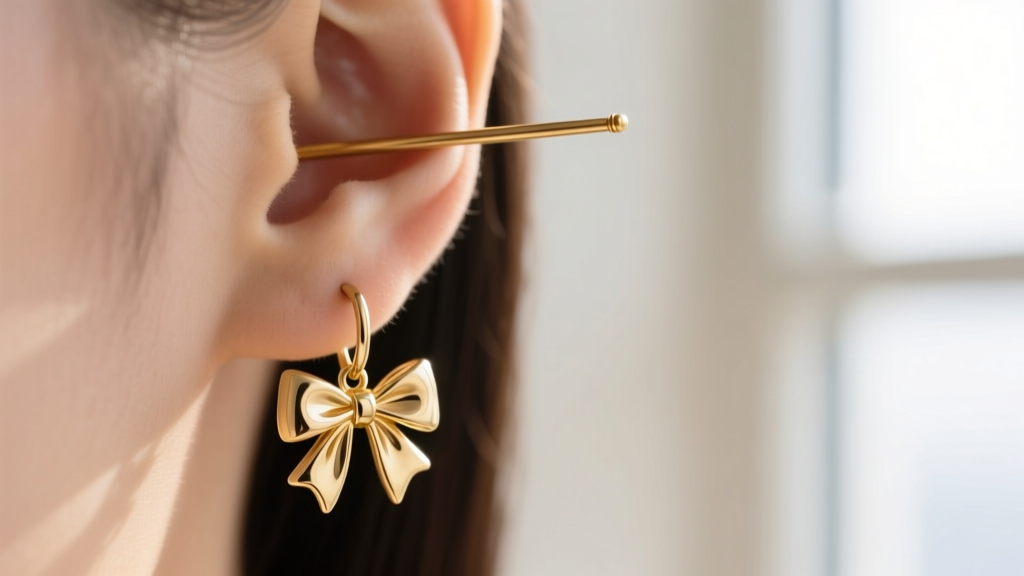
Nacre Thickness and Drill Tolerances
The Gemological Institute of America (GIA) notes that a high-quality Akoya pearl must possess a minimum nacre thickness of 0.4mm, with premium grades exceeding 0.6mm. Pearls with thin nacre are highly susceptible to "peeling," where the outer layers flake away from the organic conchiolin core. This is especially critical in bow and pearl drop earrings, where the pearl is subjected to pendulum-like kinetic stress.
Furthermore, the mounting process requires half-drilling the pearl. The drill bit must be exactly 0.8mm to 1.0mm in diameter to accommodate the metal peg (the "cup and post" setting). If a jeweler forces a 1.2mm peg into a 1.0mm hole, the resulting hydraulic pressure from the adhesive and friction will cause the pearl to split along its growth rings.
Gauge Sizing and Kinetic Load Distribution
The ear wire or post must support not only the static weight of the metal and pearl but also the dynamic kinetic load generated when the wearer moves. A heavy cast bow with a 9mm South Sea pearl can easily exceed 8 grams per earring.
| Component | Standard Gauge | Thickness (mm) | Best Application |
|---|---|---|---|
| French Wire Hook | 20 Gauge | 0.81mm | Lightweight bows (under 4g) with standard Akoya pearls |
| Heavy Duty Hook | 18 Gauge | 1.02mm | Medium drops requiring extra rigidity to prevent warping |
| Friction Post (Stud) | 16 Gauge | 1.29mm | Heavy, solid-cast bow studs to prevent the "cheese-cutter" lobe effect |
Using a standard 20-gauge wire for a heavy bow drop will result in the wire bending at the curve of the ear, altering the drape of the earring and causing the pearl to face backward against the neck. Upgrading to an 18-gauge or 16-gauge wire ensures the earring hangs plumb, allowing the bow motif to display its intended profile.
Common Structural Failure Modes
Despite precise manufacturing, bow and pearl earrings present unique vulnerabilities at the bench and during daily wear. Understanding these failure modes is essential for both jewelers and collectors.
Solder Joint Fatigue at the Center Knot
The center "knot" of a metallic bow is rarely cast as a single continuous piece; it is typically a separate wire wrap or cast component soldered to the main loops. If a jeweler uses a low-temperature, lead-bearing easy solder, the joint will suffer from fatigue and eventual fracture under repetitive micro-stresses. High-quality manufacturing requires hard silver solder (flowing at approximately 1450°F) to create a joint with tensile strength matching the parent metal. However, this high heat demands that the pearl be completely removed from the setting prior to soldering, as temperatures above 300°F will permanently dehydrate the pearl and cause severe crazing.
Adhesive Degradation in Pearl Cups
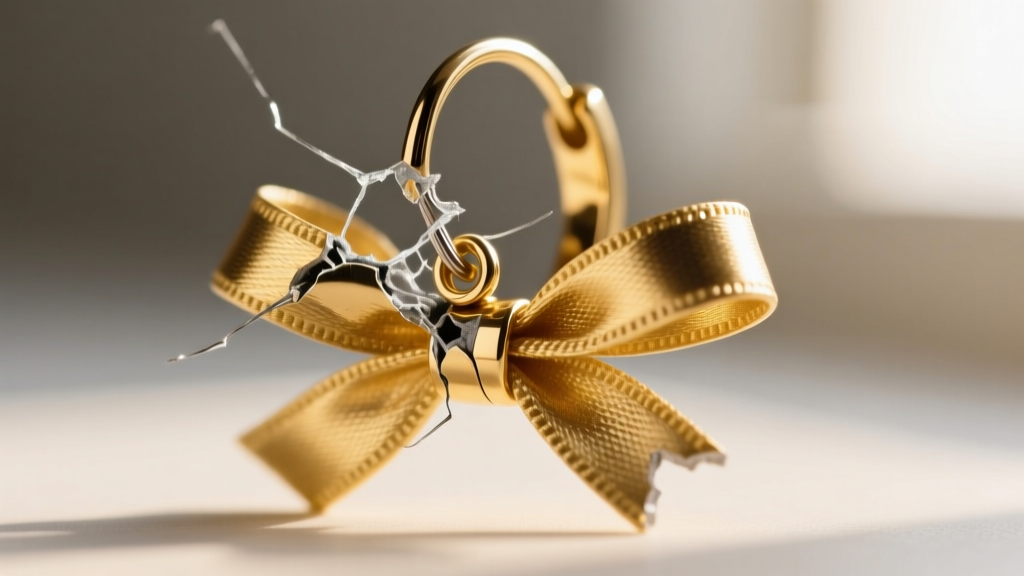
Pearls in bow earrings are secured to metal cups using specialized adhesives. A common industry mistake is the use of cyanoacrylate (super glue), which dries rigid and becomes brittle over time, eventually shattering upon impact. The professional standard is a two-part jeweler's epoxy, such as Epoxy 330 or G-S Hypo Cement. These adhesives maintain a slight flexibility, absorbing the shock of accidental drops and accommodating the minor thermal expansion differences between the organic pearl and the metallic post.
Maintenance Protocols for Mixed-Media Jewelry
Cleaning bow and pearl earrings requires strict adherence to chemical safety protocols. The juxtaposition of durable metal alloys and fragile organic gemstones creates a high-risk maintenance scenario.
- Ultrasonic Cleaners: Never use ultrasonic vibrations. The high-frequency cavitation will shatter treated pearls and aggressively dissolve the epoxy bonding the pearl to the bow's cup.
- Chemical Dips: Avoid silver dip solutions or ammonia-based cleaners. Ammonia will strip the natural oils from the pearl's nacre, resulting in a chalky, irreversible matte finish.
- Proper Protocol: Use a mild, phosphate-free surfactant (like diluted baby shampoo) and a soft microfiber cloth. Clean the metal bow with a Q-tip dipped in the solution, carefully avoiding the drill hole where moisture can become trapped and rot the internal conchiolin core.
By understanding the metallurgical limits, precise gauge requirements, and chemical vulnerabilities of these intricate designs, collectors and jewelers can ensure that bow and pearl earrings remain structurally sound and visually brilliant for generations.


