Black Hoops Earrings: The Ultimate Cleaning & Care Guide
Discover expert cleaning and maintenance tips for black hoops earrings. Learn how to protect PVD coatings, prevent oxidation, and restore dark finishes.

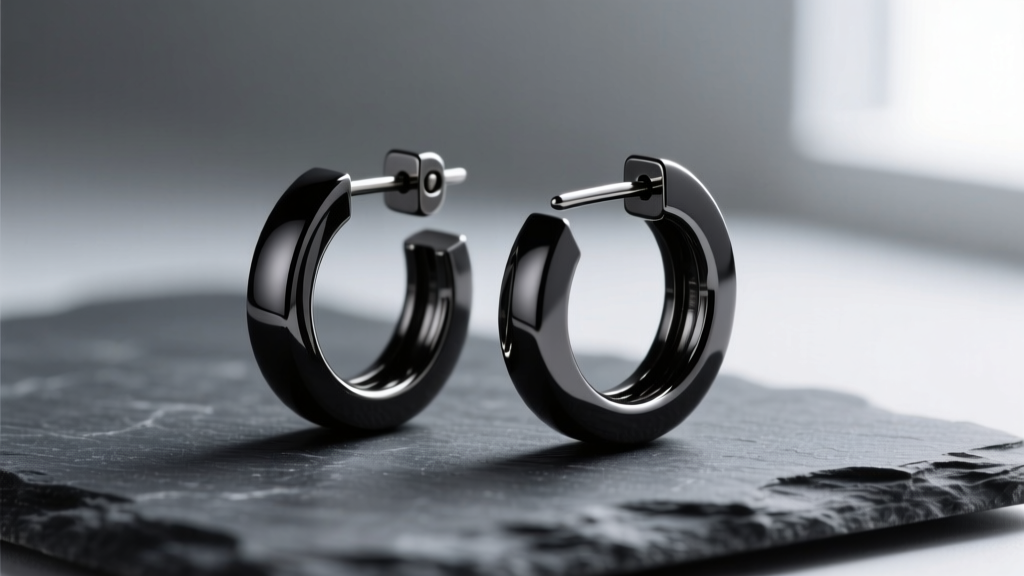
Black hoops earrings have cemented their status as a cornerstone of modern jewelry styling. Whether you are wearing a sleek 16-gauge black titanium huggie in your cartilage or a bold, oxidized sterling silver hoop in your lobe, the dark aesthetic offers unmatched versatility. However, maintaining the deep, rich blacks of these earrings requires a fundamentally different approach than cleaning traditional yellow gold or bright silver. In 2026, with the rise of advanced metallurgical coatings like DLC (Diamond-Like Carbon) and PVD (Physical Vapor Deposition), understanding the specific chemical and physical vulnerabilities of your black hoops is essential for long-term wear.
The Science of Dark Finishes: What Makes Your Hoops Black?
To properly clean black hoops, you must first identify how the dark color was achieved. The cleaning protocol for one type of finish will permanently destroy another. According to metallurgical standards outlined by Rio Grande, jewelry darkening generally falls into four distinct categories:
1. PVD (Physical Vapor Deposition) and DLC Coatings
Commonly applied to titanium, stainless steel, and tungsten, PVD involves vaporizing a metal (like titanium nitride) in a vacuum chamber to bond a microscopic, ultra-hard layer to the hoop. DLC (Diamond-Like Carbon) is a premium subset of PVD that introduces carbon, creating a black finish that is significantly harder and more scratch-resistant. These coatings are typically 0.25 to 5 microns thick.
2. Oxidized Sterling Silver
This is not a plating, but a controlled chemical reaction. The silver hoop is exposed to sulfur compounds, creating a layer of black silver sulfide on the surface. The dark color sits in the crevices and on the surface, providing an antique or matte black look.
3. Black Rhodium Plating
Black rhodium is electroplated over white gold or sterling silver hoops. It provides a brilliant, dark metallic luster but is notoriously soft, usually measuring only 0.1 to 0.3 microns thick. It is highly susceptible to friction and chemical degradation.
4. Vitreous and Cold Enamel
Enamel is essentially fused glass (vitreous) or a pigmented epoxy resin (cold) applied to the metal. While vitreous enamel is highly durable, cold enamel can degrade when exposed to alcohols and solvents.
The Daily Threats: What Destroys Black Coatings?
The human body and modern environment are hostile to dark jewelry finishes. The American Academy of Dermatology notes that the skin's natural acid mantle has a pH between 4.5 and 5.5. While mildly acidic, prolonged exposure to sweat, especially when mixed with the alkaline compounds found in many commercial perfumes and hairsprays, creates a corrosive micro-environment on the surface of your hoops.
- Ultrasonic Cleaners: The cavitation bubbles created by ultrasonic frequencies can literally blast black rhodium and poorly bonded PVD coatings off the underlying metal.
- Silver Dip (Thiourea): Commercial liquid silver cleaners contain thiourea, a chemical that instantly strips silver sulfide. Dipping oxidized black silver hoops in these solutions will revert them to bright, shiny silver in seconds, ruining the design.
- Abrasive Polishing Cloths: Treated jewelry cloths contain micro-abrasives designed to remove tarnish. Using them on black rhodium or PVD will act like sandpaper, wearing through the microscopic dark layer to reveal the bright metal beneath.
Step-by-Step Cleaning Protocol for Black Hoops
Because of the fragility of black rhodium and the chemical nature of oxidized silver, a universal, ultra-gentle approach is required. Follow this protocol for all black hoops, regardless of the base material.
Tools Required
- Distilled or filtered lukewarm water
- pH-neutral liquid dish soap (e.g., original Dawn)
- Extra-soft baby toothbrush
- Lint-free microfiber cloth
- Wooden toothpick (for crevice cleaning)
The Cleaning Process
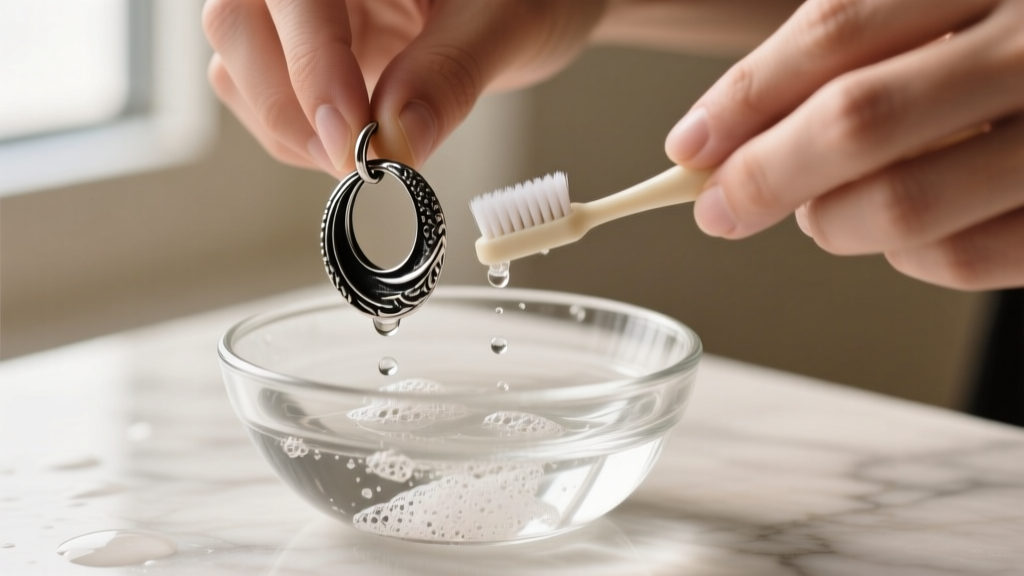
- Prepare the Solution: Mix one cup of lukewarm water with two drops of pH-neutral dish soap. Avoid hot water, which can cause thermal shock to cold enamel or gemstone inlays.
- Soak Briefly: Submerge the black hoops for no more than 3 to 5 minutes. This loosens sebum, dead skin cells, and cosmetic residue without compromising the finish.
- Gentle Agitation: Using the extra-soft baby toothbrush, lightly brush the hoop, focusing on the interior curve and the hinge or clicker mechanism where debris accumulates. Never scrub the outer decorative surfaces.
- Target the Hinge: If your hoop has a clicking closure, use a wooden toothpick to gently dislodge any compacted lint from the hinge pin. Metal tools will scratch the PVD or enamel.
- Rinse and Dry: Rinse thoroughly under a gentle stream of distilled water. Immediately pat dry with a microfiber cloth. Allowing water to air-dry on black rhodium can leave hard water spots that are difficult to remove without polishing.
Material Durability and Care Comparison
Understanding the limits of your specific black hoops will dictate how often you need to clean them and what risks they can withstand. The Gemological Institute of America (GIA) frequently emphasizes that surface treatments require specialized care matrices.
| Material / Finish | Coating Type | Durability (1-10) | Ultrasonic Safe? | Polish Safe? |
|---|---|---|---|---|
| Black Titanium / Steel | PVD / DLC | 9 | Yes (with caution) | No |
| Oxidized Sterling Silver | Silver Sulfide | 5 | No | No (strips black) |
| Black Gold / Silver | Black Rhodium | 3 | No | No (wears off) |
| Enameled Hoops | Vitreous / Cold | 7 / 4 | No (shatter risk) | No |
Gauge Size, Friction Points, and Plating Wear
When discussing black hoops, particularly huggies and cartilage rings, the gauge (thickness) of the wire plays a massive role in the longevity of the dark finish. Standard lobe hoops are often 18-gauge (1.0mm) or 20-gauge (0.8mm). Cartilage hoops, such as daith or rook rings, are typically 16-gauge (1.2mm) or 14-gauge (1.6mm).
Thicker gauges inherently hold black platings better. An 18-gauge wire is highly flexible; every time you open and close the hoop, the metal flexes. This micro-flexing causes invisible stress fractures in rigid coatings like black rhodium and PVD, leading to flaking along the curve of the hoop. A 14-gauge or 16-gauge hoop is structurally rigid, meaning the metal beneath the coating does not flex, preserving the integrity of the black finish for years longer. If you are buying black rhodium hoops, always opt for the thickest gauge your piercing can comfortably accommodate.
Proper Storage to Prevent Micro-Scratches
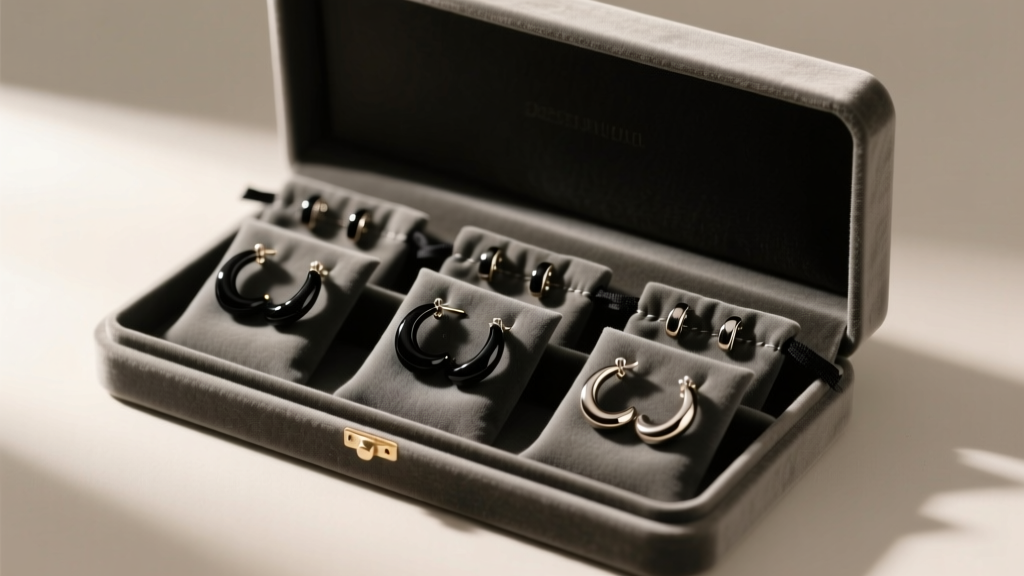
Black finishes, particularly PVD and black rhodium, show micro-scratches much more prominently than bright metals because the scratches reveal the lighter base metal beneath. Tossing black hoops into a communal jewelry box guarantees surface degradation.
Expert Storage Tip: Store every pair of black hoops in an individual, soft microfiber pouch. For oxidized silver hoops, include a 3M anti-tarnish strip in the pouch. While oxidation is the goal, uncontrolled atmospheric sulfur can cause the black finish to become patchy or develop a yellowish-green tinge over time. Anti-tarnish strips absorb ambient sulfur, keeping the factory-applied oxidation perfectly uniform.
Troubleshooting: Fading, Chipping, and Tarnish
Despite meticulous care, black finishes will eventually show wear. The post and the interior curve of the hoop endure the most friction against the skin and hair. If your black rhodium hoops begin to show silver or gold underneath, they cannot be cleaned back to black. They must be sent to a professional jeweler for re-plating, a service that typically costs between $30 and $60 depending on the hoop's surface area.
For PVD-coated titanium hoops, fading is rare, but if the coating chips due to a hard impact, the exposed titanium will not tarnish, though the visual contrast will be noticeable. In these cases, the hoop cannot be re-plated locally and usually requires replacement. By adhering to gentle, pH-neutral cleaning methods and respecting the physical limits of dark metallurgical coatings, your black hoops will remain a striking, edge-defining staple in your jewelry rotation for years to come.


