9mm Hoop Earrings: 2026 Micro-Hoop Trend Analysis
Discover why 9mm hoop earrings dominate 2026 ear curation. Explore gauge sizes, premium materials, and expert styling tips for micro-hoops.

The Shift to Micro-Architecture in 2026
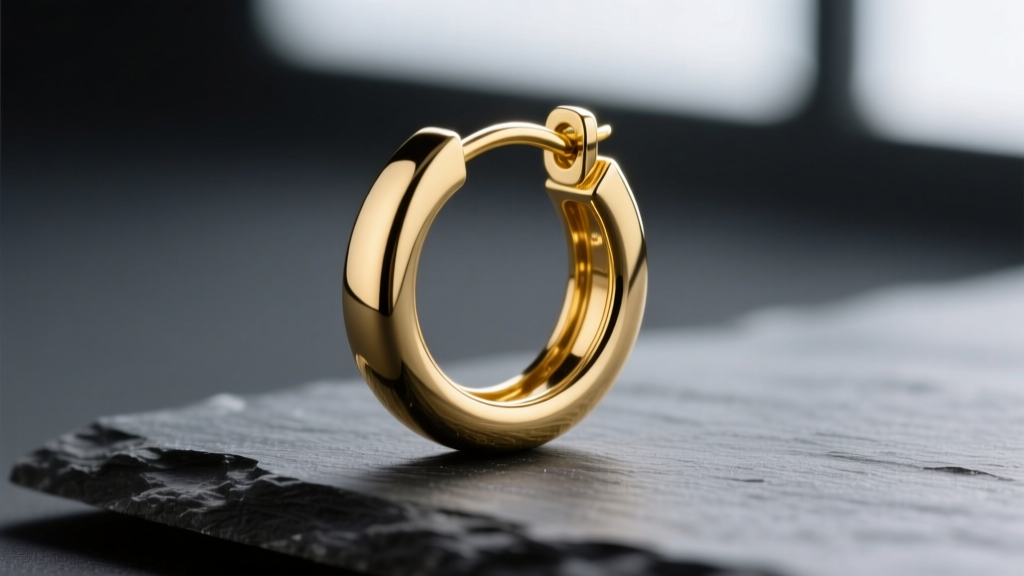
The jewelry landscape of 2026 has decisively pivoted away from the oversized, heavy statement pieces that defined the previous decade. In its place, the "quiet luxury" movement has firmly taken root in ear curation, and the undisputed anchor of this trend is the 9mm hoop earring. Often classified as a micro-hoop or a snug huggie, the 9mm diameter occupies a highly specific niche in modern body modification and fine jewelry styling. Unlike larger hoops that swing, catch on clothing, and risk tearing delicate tissue, 9mm hoop earrings offer a streamlined, architectural silhouette that hugs the ear's natural contours. This comprehensive style and trend analysis breaks down exactly why micro-hoops are dominating the current market, the technical specifications you must know before purchasing, and how to integrate them into a cohesive, anatomically sound ear stack.
The Geometry of 9mm: Inner vs. Outer Diameter
When master jewelers and professional piercers refer to a 9mm hoop, they are specifically citing the inner diameter (ID). This distinction is critical for achieving the perfect fit. A 9mm inner diameter means the actual empty space inside the hoop measures exactly 9 millimeters. However, the outer diameter (OD) will vary based on the thickness of the metal wire and any decorative elements.
For example, a standard 20-gauge (0.8mm) wire will result in an outer diameter of roughly 10.6mm. If you opt for a thicker 16-gauge (1.2mm) wire to achieve a bolder look, the outer diameter pushes closer to 11.4mm. Understanding this geometry prevents the common mistake of buying a hoop that looks chunkier than anticipated or fails to close properly around thicker cartilage folds.
Sizing and Placement Matrix
To ensure your 9mm hoop earrings sit flush without causing pressure necrosis or migration, refer to this placement matrix:
| Piercing Placement | Recommended Gauge | 9mm Fit Profile | Best Closure Type |
|---|---|---|---|
| Standard Lobe | 20g (0.8mm) | Snug Huggie | Hinged Clicker |
| Helix / Flat | 18g (1.0mm) | Tight Wrap | Segment Ring |
| Tragus | 16g (1.2mm) | Comfortable Hoop | Hinged Clicker |
| Rook / Daith | 16g (1.2mm) | Snug / Flush | Threadless End |
Material Science: What to Buy (and Avoid)
Because 9mm hoop earrings sit in close, continuous contact with the skin and often trap moisture against the piercing channel, material purity is non-negotiable. The Association of Professional Piercers strictly recommends specific alloys for long-term wear, especially in high-friction areas like the tragus or rook.
- Implant-Grade Titanium (ASTM F136): The gold standard for sensitive ears and healing piercings. It is entirely nickel-free, lightweight, and can be anodized to create vibrant, permanent colors without using surface plating that might chip.
- 14k Solid Gold: According to the Gemological Institute of America, 14k gold offers the ideal balance of rich color and structural durability. The alloy mix (usually copper, silver, and zinc) gives it a higher Vickers hardness than 18k, making it highly resistant to scratching in active cartilage piercings.
- 18k Solid Gold: While prized for its deep, buttery yellow hue, 18k gold is softer. It is best reserved for standard lobe placements where the micro-hoop will experience less mechanical friction.
- Materials to Avoid: Surgical steel (which contains trace nickel), gold vermeil, and gold-plated brass. At the micro-hoop scale, friction wears away thin plating within weeks, leading to contact dermatitis.
The Closure Mechanism: Why Clickers Win at 9mm
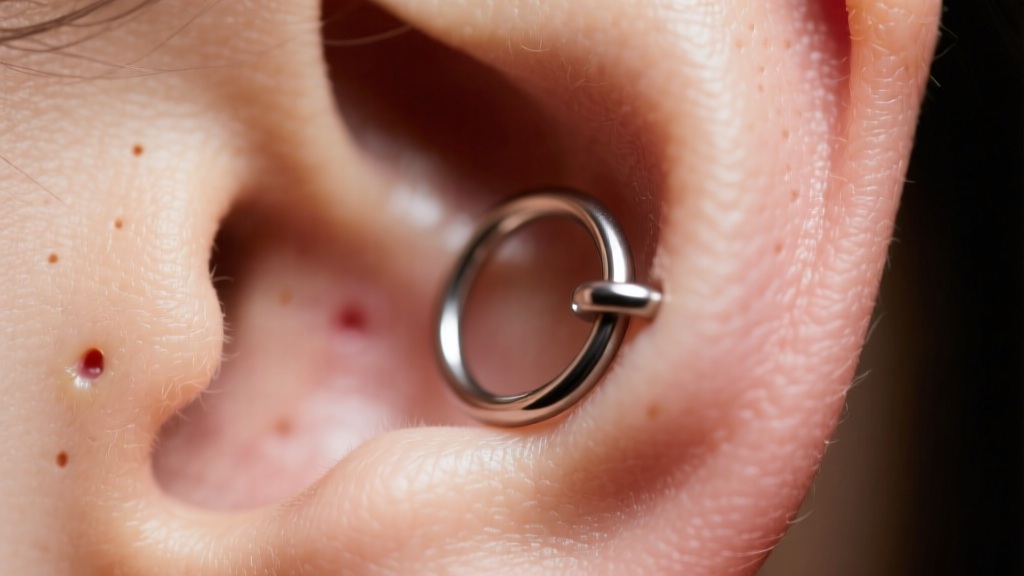
One of the most frequent failure points in micro-hoop jewelry is the closure mechanism. At larger diameters (15mm and above), seamless rings and captive bead rings (CBRs) are viable options. However, at the 9mm scale, physics works against you.
"Attempting to twist open a 9mm seamless ring requires excessive torque. This inevitably warps the metal, ruining the circular geometry and making it impossible to close flush against the ear."
For 9mm hoop earrings, the hinged clicker is the superior engineering choice. A high-quality clicker features a microscopic barrel hinge on one side and a tension-based locking clasp on the other. When closed, it produces an audible "click" and sits completely seamless against the skin, preventing hair from snagging and eliminating the pressure points that cause cartilage bumps. Always verify that the clicker mechanism is milled from a single piece of metal rather than soldered, as solder joints can snap under the stress of daily wear.
Curated Ear Stacking: The 2026 Constellation Trend
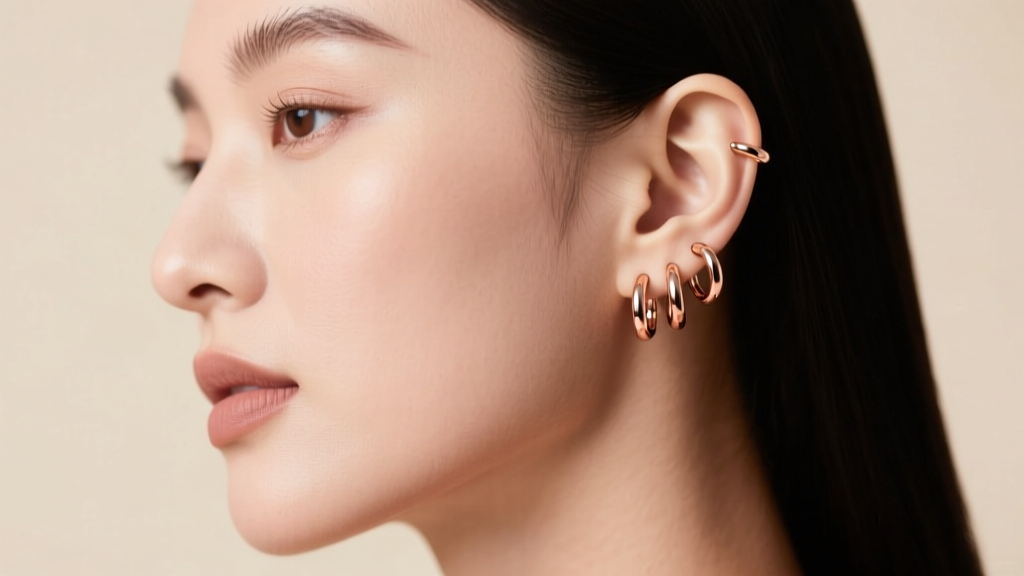
The 2026 approach to ear stacking favors intentionality over maximalism. The "Constellation" stack utilizes 9mm hoop earrings as a unifying visual thread across multiple piercings. Because 9mm hoops share the exact same outer silhouette regardless of where they are placed, they create a harmonious, geometric rhythm across the ear.
A highly sought-after configuration this year involves pairing a 9mm diamond-paved clicker in the lobe with a minimalist, high-polish 9mm titanium hoop in the mid-helix, and a tiny 9mm opal cabochon hoop in the tragus. This triad balances sparkle, texture, and anatomy without overwhelming the side profile. Furthermore, because 9mm hoops do not drag the eye downward, they are universally flattering, particularly for round and square face shapes that typically avoid elongated drop earrings.
Maintenance, Sleeping, and Longevity
Micro-hoops are frequently marketed as "sleeping hoops," but this requires a caveat. While a 9mm huggie is small enough to avoid catching on pillows, sleeping in any hoop can introduce torque to the fistula (the piercing channel) if you are a side sleeper. Over months, this lateral pressure can cause the piercing angle to shift, leading to rejection or uneven healing.
The Expert Maintenance Routine
To maintain the structural integrity and hygiene of your 9mm hoop earrings, follow this protocol:
- Weekly Cleansing: Remove the hoops and soak them in a sterile saline solution or a specialized jewelry cleaning bath. Avoid harsh alcohols, which can degrade the tension springs inside clicker mechanisms.
- Hinge Lubrication: If your clicker becomes stiff, apply a microscopic drop of jojoba oil to the hinge pin. Wipe away any excess to prevent buildup.
- Thread Checks: If you are using internally threaded or threadless 9mm ends, check the tension monthly. Use a nylon-jaw plier to gently adjust the pin on threadless jewelry to ensure it remains secure during active days.
Final Verdict: Are 9mm Hoops Worth the Investment?
In the context of 2026 jewelry trends, 9mm hoop earrings are not merely a passing fad; they represent a fundamental shift toward anatomical mindfulness and sustainable, high-quality body modification. By investing in ASTM F136 titanium or solid 14k gold clickers, you are acquiring versatile, biocompatible staples that will outlast seasonal trends. Whether you are building your first curated ear stack or refining a mature collection, the 9mm micro-hoop remains the ultimate tool for achieving effortless, structural elegance.


