Buying 80s Earrings Hoops: The 2026 Guide To Retro Gold
Discover how to buy, style, and protect your lobes with bold 80s earrings hoops. Our 2026 guide covers gauge sizes, gold vermeil, and vintage clasps.

The Resurgence of Power Dressing: Why 80s Hoops Are Back
The 2026 fashion landscape has seen a massive return to power dressing, and at the center of this revival are 80s earrings hoops. Unlike the delicate, minimalist jewelry that dominated the 2010s and early 2020s, the eighties demanded volume, texture, and unapologetic presence. Today, the oversized gold hoop is no longer just a nostalgic costume piece; it is a cornerstone of modern archival styling and elevated streetwear. However, buying vintage or vintage-inspired hoops requires more than just an eye for aesthetics. It demands a rigorous understanding of structural integrity, lobe health, and metallurgical standards. As Vogue has documented in their extensive history of hoop earrings, the oversized iterations of the 1980s were a direct cultural response to the economic boom and the rise of the female executive. To wear them today without compromising your ear health or your investment, you need a specialized buying framework.
Anatomy of an 80s Hoop: Tubing, Wire, and Surface Texture
When hunting for authentic 80s earrings hoops, the first thing a seasoned collector evaluates is the construction method. The visual weight of an 80s hoop is often deceiving, and understanding how they were engineered is critical for comfort.
Hollow Tubing vs. Solid Wire
True vintage hoops in the 50mm to 80mm diameter range were rarely crafted from solid wire. Instead, jewelers utilized hollow gold tubing. This ingenious manufacturing technique allowed for massive visual impact and a bold silhouette without the gravitational pull that inevitably tears earlobes. Many modern reproductions mistakenly use thick solid wire to mimic the retro look, resulting in earrings that are unwearable for more than an hour. If you are buying modern replicas of 80s earrings hoops, always check the product specifications for 'hollow core' or 'tubing construction.' If it is solid gold and over 40mm, it will likely cause severe lobe fatigue.
Signature Finishes: Florentine, Hammered, and Rope
The 1980s were defined by highly textured gold surfaces that caught the light dynamically. The three most prominent finishes you will encounter are:
- Florentine Finish: A meticulous cross-hatched engraving that gives the gold a matte, sparkling, almost fabric-like texture. This finish is highly prized but requires careful cleaning to avoid stripping the engraved grooves.
- Hammered Finish: Created by manually striking the gold with a ball-peen hammer, leaving organic dimples that reflect light in multiple directions. This is the most durable texture for daily wear.
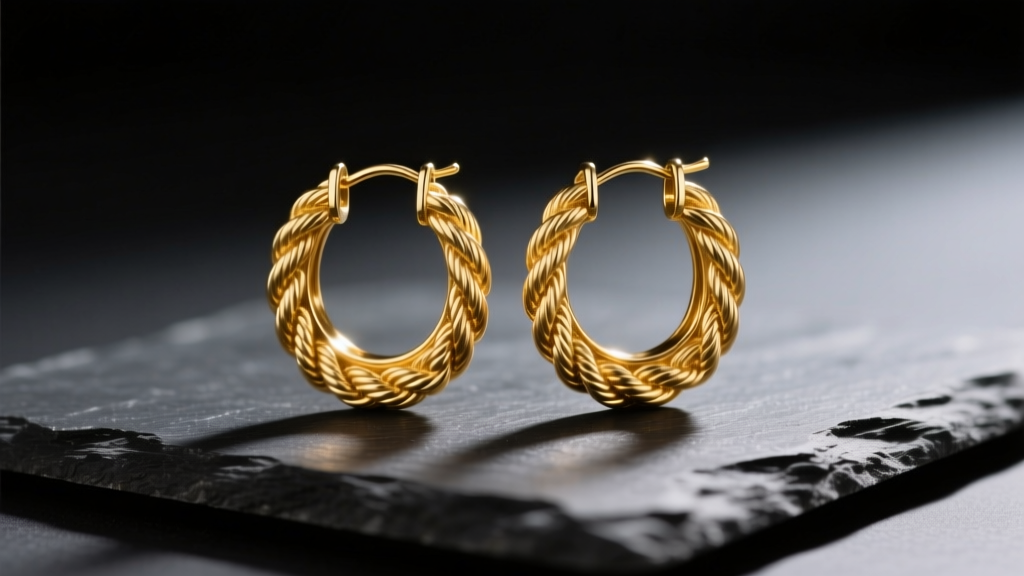
- Rope Twist: Wire wrapping or casting that mimics twisted nautical rope, offering a heavy, ornate look that pairs perfectly with structured blazers.
The Lobe Protection Protocol: Gauges, Clasps, and Failure Modes
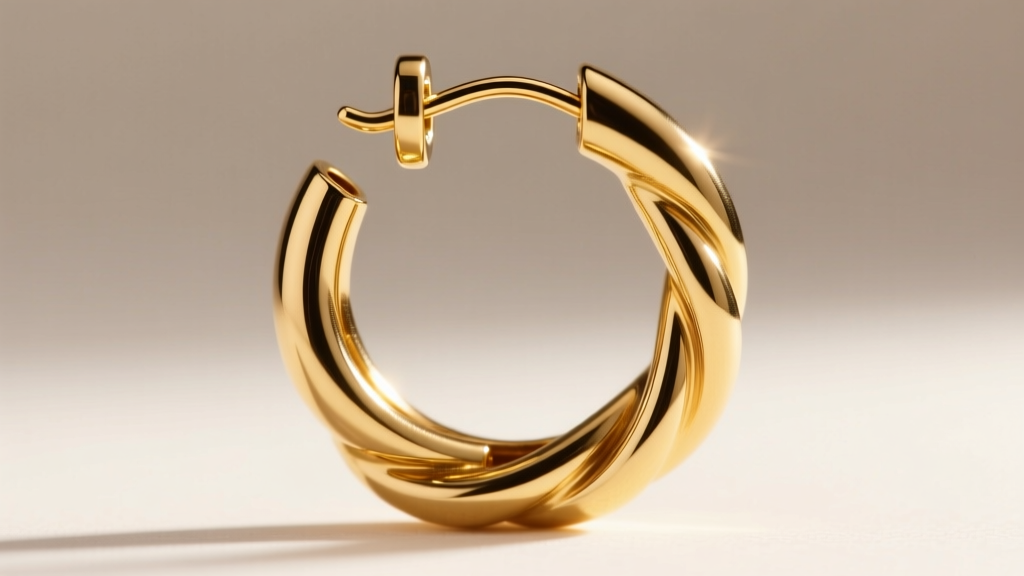
The most common failure mode when wearing heavy retro jewelry is the 'cheese wire effect,' where a thin post slices through the earlobe tissue under the weight of the hoop. Standard vintage posts from the 1980s were often 18-gauge (1.0mm). While this was acceptable for the lightweight hollow tubing of the era, it is entirely insufficient for modern solid reproductions.
If you are investing in heavy, solid gold modern reproductions of 80s earrings hoops, you must demand a 14-gauge (1.6mm) or 12-gauge (2.0mm) post. This wider diameter distributes the shear force across a broader area of the piercing fistula, preventing migration and tearing. Equally important is the clasp mechanism. Below is a breakdown of common clasp types and their structural viability for heavy hoops.
| Clasp Type | Structure & Mechanism | Lobe Stress & Failure Mode | Best For |
|---|---|---|---|
| Omega Back | Hinged, spring-loaded clip that snaps against a fixed post. | Distributes weight across a wide pad. Failure mode: Spring tension weakens over time, causing the earring to slide off. | Heavy, wide vintage hoops; non-pierced clip-on conversions. |
| Saddleback | A hinged, curved saddle that snaps over a thick, grooved post. | Excellent weight distribution and security. Rarely fails unless the hinge pin shears from lateral impact. | Thick, continuous 80s style tubing hoops (12g to 8g). |
| Latch-back (V-Wire) | A V-shaped wire that clicks into a hollow catch on the opposite side. | Poor weight distribution on the V-wire. Failure mode: The thin V-wire bends easily, losing tension and failing to click shut. | Lightweight hollow tubing hoops under 40mm. |
Material Grades: Navigating Modern Reproductions vs. True Vintage
Understanding metallurgical standards is non-negotiable when buying 80s earrings hoops. The market is flooded with misleading terminology regarding gold content. According to the Gemological Institute of America (GIA), the distinction between plating, vermeil, and solid gold dictates both the longevity of the piece and its biocompatibility with your skin.
- Solid 14k or 18k Gold: The holy grail of true vintage 80s pieces. Solid gold is hypoallergenic, will not tarnish, and can be polished indefinitely to remove scratches. True vintage solid gold hoops command premium prices, typically ranging from $600 to $1,500+ depending on weight and maker's marks.
- Gold Vermeil: The highest standard for modern reproductions. By FTC guidelines, vermeil must consist of a sterling silver (.925) base coated with a minimum of 2.5 microns of 10k, 14k, or 18k gold. It offers the look of vintage gold with a safer base metal for sensitive ears. Expect to pay between $120 and $350 for high-quality vermeil hoops.
- Gold Plated / Flash Plated: Usually a brass or copper base with less than 0.5 microns of gold. These will rapidly tarnish, the brass will oxidize and turn your skin green, and they frequently cause contact dermatitis. Avoid these entirely, regardless of the $20 to $50 price tag.
Face Shape & Proportion Framework for Oversized Hoops
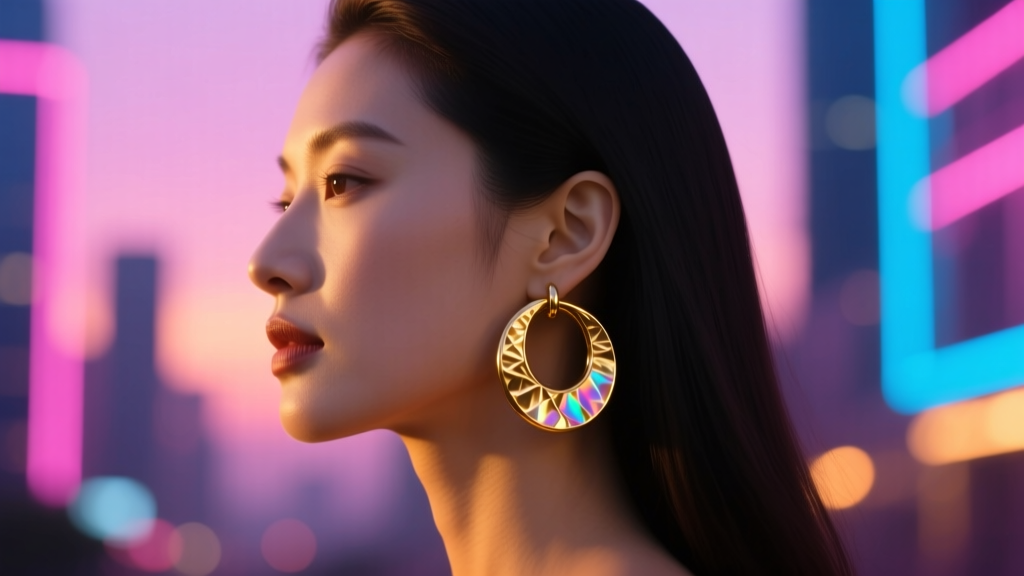
The sheer scale of 80s earrings hoops—often exceeding 50mm in diameter—means they interact directly with your facial geometry. Styling them requires a deliberate approach to proportion and balance.
Round and Square Faces
For round faces, the goal is elongation. Avoid perfectly circular, wide 80s hoops, as they will emphasize the width of your face. Instead, seek out slightly oval or elongated teardrop hoops that draw the eye downward, creating the illusion of a longer jawline. For square faces with strong, angular jawlines, heavily textured, hammered round hoops are ideal. The organic, curved dimples of the hammered finish soften the sharp angles of the jaw, creating a harmonious visual balance.
Heart and Oval Faces
Heart-shaped faces, characterized by a wider forehead and a narrow, pointed chin, benefit from hoops that feature a bottom-heavy silhouette or a flared base. This adds visual weight to the lower half of the face, balancing the narrower chin. Oval faces possess the most versatile proportions and can effortlessly carry the most extreme, oversized 80s circular hoops without disrupting their natural facial symmetry.
Sourcing Guide: Where to Buy and How to Authenticate
When sourcing authentic 80s earrings hoops, estate sales, specialized vintage jewelry dealers, and auction houses remain your best avenues. When authenticating a piece, do not rely solely on the '14k' or '585' stamp on the hoop body, as this can be easily counterfeited or transferred. Inspect the post and the clasp mechanism. True vintage pieces will often show microscopic wear patterns consistent with decades of use, particularly around the hinge and the catch.
Expert Maintenance Tip: Never use ultrasonic cleaners or harsh chemical dips on vintage Florentine or matte-finished 80s hoops. The high-frequency vibrations and acidic solutions will strip the delicate textured patina, leaving you with a flat, overly polished surface that destroys the vintage value. Instead, use a soft-bristled baby toothbrush with a drop of mild dish soap and warm water, gently brushing in the direction of the engraving.
Whether you are investing in archival solid gold or opting for high-grade modern vermeil reproductions, understanding the structural and material nuances of 80s earrings hoops ensures that your jewelry remains as powerful and enduring as the decade that inspired it.


