When Can I Change My Earrings? A Material Healing Guide
Wondering when can I change my earrings? Discover how jewelry materials like titanium and gold dictate lobe and cartilage healing timelines.

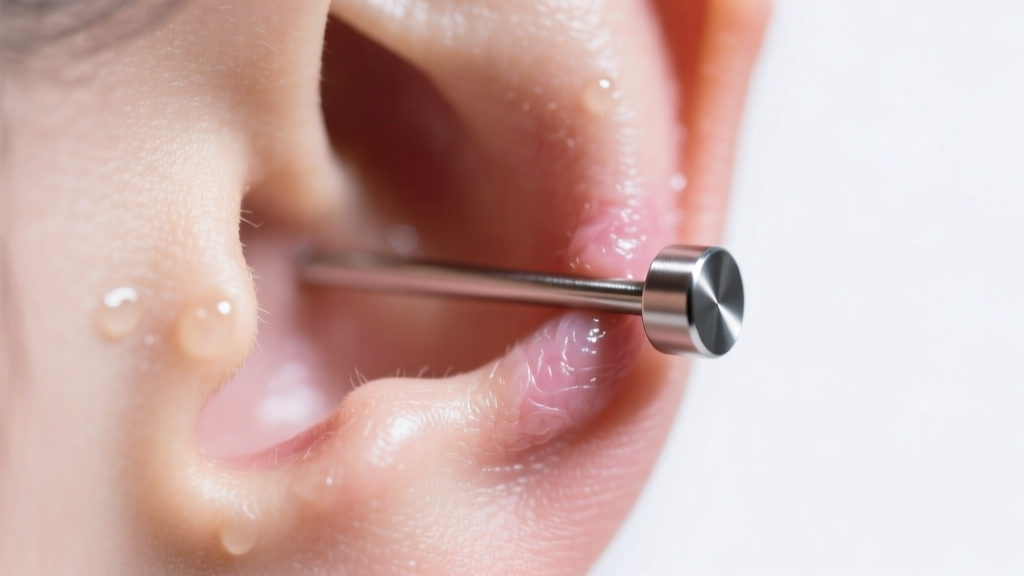
Getting your ears pierced is a thrilling milestone, but the healing process requires patience, precision, and a deep understanding of the metals resting against your skin. If you find yourself staring in the mirror asking, when can I change my earrings?, the answer is not just a matter of counting days on a calendar. The true timeline is dictated by the biological interaction between your tissue and the specific metallurgical properties of your starter jewelry.
As a senior jewelry stylist and piercing material researcher, I often see clients suffer from prolonged healing, hypertrophic scarring, or contact dermatitis simply because they swapped their jewelry too early or chose the wrong replacement metal. In this comprehensive guide, we will explore how material grades, gauge sizes, and fistula maturation dictate exactly when you can safely change your earrings.
The Baseline Timelines: Lobe vs. Cartilage
Before we dive into the chemistry of jewelry metals, we must establish the baseline biological timelines for tissue regeneration. The vascular structure of your ear determines the absolute minimum waiting period before a jewelry swap is even physically possible.
- Standard Earlobe Piercings: 6 to 8 weeks for initial closure, but 3 to 6 months for full fistula maturation.
- Upper Lobe / High Lobe: 8 to 12 weeks, as tissue is slightly denser and less vascular than the lower lobe.
- Cartilage (Helix, Tragus, Conch): 6 to 12 months. Cartilage is avascular, meaning it relies on surrounding tissue for nutrient delivery and waste removal, drastically slowing the healing cascade.
Expert Insight: Changing a standard 18-gauge lobe piercing at exactly 6 weeks is often a mistake. While the skin may look closed, the internal epithelial tube (fistula) is still fragile and prone to micro-tearing when subjected to the friction of a new earring post.
Why Material Dictates Your Healing Window
The core reason many people experience delayed healing—and are forced to wait longer to change their earrings—stems from the chemical composition of their starter jewelry. Your immune system reacts differently to various alloys, directly impacting the speed of fistula formation.
Implant-Grade Titanium (ASTM F136)
If you were pierced with ASTM F136 implant-grade titanium, you are in the optimal scenario for a swift, predictable healing timeline. This specific alloy is completely nickel-free and features a passive oxide layer that prevents corrosion from bodily fluids. Because the immune system does not recognize titanium as a threat, inflammation is kept to an absolute minimum. Consequently, lobe piercings in titanium often stabilize enough for a careful jewelry swap right at the 8-week mark, provided aftercare has been flawless.
Solid 14k and 18k Gold
High-quality, nickel-free solid gold (alloyed with palladium or silver, never copper or nickel) is highly biocompatible. However, gold is a softer metal than titanium. If your starter jewelry is 18k gold, microscopic scratches on the post can harbor bacteria, potentially extending your healing window by a few weeks. According to the Association of Professional Piercers (APP), only polished, high-karat solid gold should be used for initial piercings to ensure the timeline remains on track.
Surgical Steel and the Nickel Trap
Despite the reassuring name, 'surgical steel' (often ASTM F138) contains between 8% and 10% nickel. The Journal of Clinical and Aesthetic Dermatology notes that prolonged exposure to nickel in fresh wounds frequently triggers allergic contact dermatitis. If your starter earrings are surgical steel and you have even a mild sensitivity, your body will remain in a state of chronic low-grade inflammation. In this scenario, asking when can I change my earrings is the wrong question; the immediate priority is upsizing to titanium to halt the immune response before a jewelry swap can even be considered.
The Science of Fistula Maturation
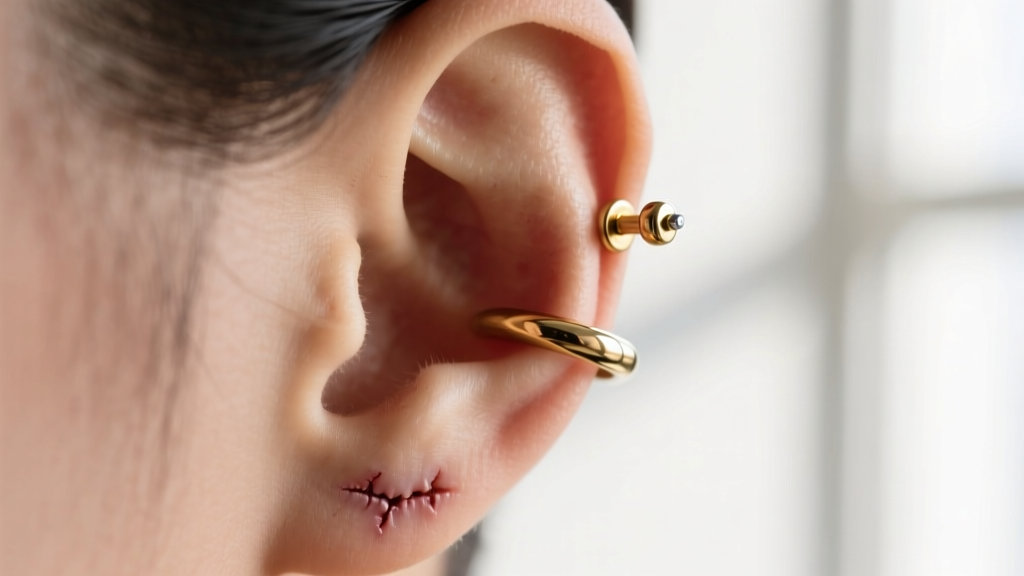
To truly understand when a piercing is ready for a new earring, you must understand the fistula. A fistula is the tube of epithelial tissue that your body builds around the jewelry to protect the wound tract.
During the first few weeks, this tube is incredibly thin, resembling wet tissue paper. Forcing a standard butterfly-back earring through an immature fistula will scrape the delicate cells away, effectively resetting your healing clock to day one. A mature fistula, by contrast, is lined with tough, stratified squamous epithelium. It can withstand the friction of a jewelry swap, the weight of a dangle earring, and the pressure of a huggie hoop clasp.
Material Comparison Chart: Healing & Biocompatibility
Use this reference table to evaluate your current jewelry and estimate your personal timeline for a safe swap.
| Material Grade | Nickel Content | Immune Response | Estimated Safe Swap Window (Lobe) | Estimated Safe Swap Window (Cartilage) |
|---|---|---|---|---|
| Implant-Grade Titanium (ASTM F136) | 0% | Minimal / Inert | 8 - 10 Weeks | 6 - 9 Months |
| Niobium | 0% | Minimal / Inert | 8 - 10 Weeks | 6 - 9 Months |
| Solid 14k/18k Gold (Palladium Alloy) | 0% | Low | 8 - 12 Weeks | 8 - 12 Months |
| Surgical Steel (ASTM F138) | 8% - 10% | Moderate to High | 12 - 16 Weeks (if no allergy) | 12+ Months |
| Sterling Silver (925) | Varies (often contains copper/nickel) | High (Tarnish causes argyria) | Never use for initial healing | Never use for initial healing |
Signs Your Fistula is Ready for a Jewelry Swap
Regardless of the calendar date, your body will give you specific physiological signals indicating that the fistula is robust enough for a change. The Mayo Clinic advises monitoring the piercing site for complete cessation of wound fluid production. Look for these definitive green lights:
- Zero Exudate: No yellow, white, or crusty lymph fluid around the entry or exit points.
- No Tenderness: The tissue does not throb or feel warm when you gently pinch the area around the post.
- Free Rotation (Lobes Only): The jewelry moves through the tract with absolutely zero resistance or friction.
- Normal Skin Tone: The piercing holes match the surrounding skin color, with no lingering pink or purple inflammation rings.
How to Safely Change Your Earrings for the First Time
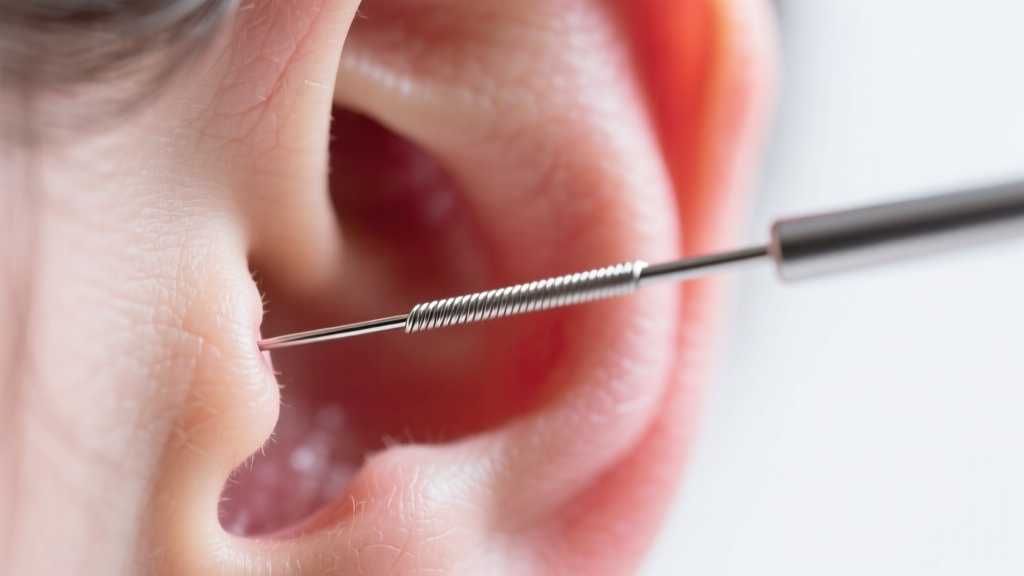
Once you have confirmed your timeline and material safety, the physical act of changing the earring requires care. The most common failure mode during a first swap is dropping the new earring or forcing a mismatched gauge into the tract.
Step 1: Prep and Lubricate
Wash your hands thoroughly with antimicrobial soap. Apply a single drop of pure, cold-pressed jojoba oil to the post of your new earring. Jojoba oil closely mimics human sebum, providing a safe, non-comedogenic lubricant that allows the metal to glide through the fistula without scraping the epithelial lining.
Step 2: Match the Gauge Exactly
Standard lobe piercings are usually done at 18-gauge (1.0mm) or 16-gauge (1.2mm), while cartilage is almost exclusively 16-gauge. Attempting to force a thick 14-gauge fashion earring into a delicate 18-gauge fistula will cause a blowout or a micro-tear. Always verify the gauge of your new jewelry before insertion.
Step 3: The Insertion Technique
Remove the starter jewelry in front of a mirror. Immediately insert the new earring. Do not leave the tract empty, even for a few minutes; a fresh fistula can begin to constrict and shrink within seconds. Push the new post through at the exact angle of the original piercing. If you meet resistance, stop immediately. Forcing jewelry will cause trauma, leading to the dreaded cartilage bump (hypertrophic scarring).
Troubleshooting Common Material Reactions
If you change your earrings and notice itching, redness, or a clear, weeping fluid within 24 hours, you are likely experiencing a contact allergy to the new metal. Immediately remove the offending jewelry, clean the area with sterile saline, and re-insert your original implant-grade titanium starter piece. Wait an additional four weeks for the inflammation to subside before attempting another swap with a verified hypoallergenic material.


