Which Earring Side Is The Gay Side? Debunking The Myth
Wondering which earring side is the gay side? We debunk this outdated 1980s myth and explore modern 2026 ear curation and styling.


The Short Answer: Does a 'Gay Ear' Still Exist?
If you are frantically searching your phone to figure out which earring side is the gay side before heading to a piercing studio or buying a gift, take a deep breath. The short answer is: neither. In 2026, the concept of a 'gay ear' is entirely obsolete. Piercing your right ear, left ear, or both ears no longer serves as a secret code for your sexual orientation. Today, ear curation is an exercise in personal aesthetics, facial symmetry, and anatomical suitability, not a covert signaling system.
However, to truly troubleshoot this styling dilemma, we must understand where this pervasive myth originated, why it persisted for decades, and how modern jewelry enthusiasts approach asymmetrical ear styling today without worrying about outdated stereotypes.
Tracing the History: Where Did the Right-Ear Myth Come From?
The idea that the right ear was exclusively for gay men while the left ear was for straight men peaked in the 1970s and 1980s. During an era when homosexuality was heavily stigmatized and often criminalized, LGBTQ+ individuals relied on subtle, deniable visual cues to identify one another. This was the same era that popularized the 'Hanky Code,' where colored bandanas worn in specific back pockets signaled specific preferences.
According to cultural historians and LGBTQ+ archives documented by publications like Them, a single stud in the right earlobe became a quiet nod of solidarity and identification among gay men. The mnemonic phrase 'Left is right, right is wrong' was cruelly but widely circulated in schoolyards and locker rooms throughout the 1990s, cementing the stigma into pop culture.
The 1990s and 2000s: The Code Breaks Down
By the late 1990s and early 2000s, the 'gay ear' code began to fracture. Straight male celebrities, punk rock musicians, and athletes began sporting right-ear piercings purely for rebellious aesthetics. George Michael, Harrison Ford, and countless others blurred the lines. By the time Gen Z entered the cultural conversation, the binary 'left vs. right' rule was viewed not just as outdated, but as an archaic relic of a less tolerant era.
Modern Ear Curation: Why Side No Longer Matters
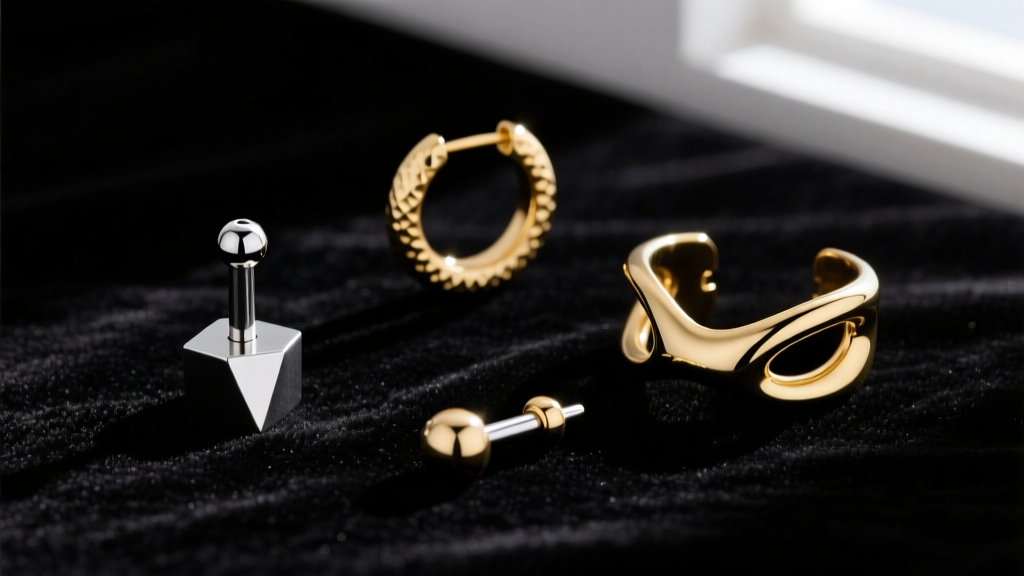
Today, the focus has shifted from which ear you pierce to how you curate the ear. The modern 'ear curation' movement treats the ear as a canvas. Troubleshooting your ear styling in 2026 isn't about avoiding the wrong side; it's about managing healing times, balancing visual weight, and choosing biocompatible materials.
Troubleshooting Asymmetrical Ear Styling
If you prefer an asymmetrical look—such as a heavily curated left ear and a single, bold statement piece on the right earlobe—the challenge is achieving visual balance. Here is a framework for styling asymmetrical ears:
- The Rule of Visual Weight: A single, heavy 14-karat gold huggie or a large gemstone drop on one lobe can perfectly balance a constellation of three or four delicate 16-gauge titanium flat-back studs scattered across the opposite ear's cartilage.
- Metal Consistency: Even if the styles differ, keeping the metal tone consistent (e.g., all yellow gold or all silver-toned titanium) creates a cohesive look across both sides of the face.
- The Anchor Piece: Give the 'emptier' ear a focal point. A mid-sized hoop (10mm-12mm) in the primary lobe piercing prevents the ear from looking neglected compared to its heavily decorated counterpart.
Material Science: Solving the Real Ear Problems
While worrying about which earring side is the gay side is a waste of mental energy, worrying about metal toxicity and contact dermatitis is crucial. Many commercial jewelry brands use 'surgical steel,' which contains nickel and frequently causes allergic reactions, especially in fresh cartilage piercings.
The Association of Professional Piercers (APP) strongly recommends specific materials for both initial healing and long-term wear. If you are troubleshooting a stubborn, irritated bump on your helix or daith, the culprit is almost always jewelry material or improper gauge sizing, not the side of your head.
| Piercing Placement | Standard Gauge | Avg. Healing Time | Recommended Material |
|---|---|---|---|
| Standard Lobe | 18g - 14g | 6 - 8 Weeks | Implant-Grade Titanium (ASTM F-136) |
| Helix / Cartilage | 16g | 6 - 12 Months | 14k/18k Solid Gold or Titanium |
| Daith / Rook | 16g | 9 - 12 Months | Internally Threaded Titanium |
| Tragus | 16g | 6 - 9 Months | Flat-Back Titanium Labret |
Understanding Gauge and Threading
A common troubleshooting mistake is buying standard 20-gauge or 22-gauge fashion earrings and forcing them into 16-gauge cartilage piercings. This 'cheese-cutter effect' can cause the thin wire to migrate through the tissue. Furthermore, always opt for internally threaded or threadless (push-pin) jewelry. Externally threaded jewelry damages the fistula (the piercing channel) every time you insert it.
Troubleshooting Piercing Rejection and Migration
When curating multiple piercings on one or both ears, a far more pressing issue than societal stereotypes is the risk of piercing rejection. Migration occurs when the body treats the jewelry as a foreign invader and slowly pushes it toward the surface of the skin. This is exceptionally common in surface-adjacent cartilage piercings like the industrial or the anti-tragus.
Signs of Migration: The piercing hole appears larger, the skin between the entry and exit points becomes visibly thinner, and the jewelry hangs more loosely than it did initially. If you notice these signs, the troubleshooting protocol is immediate: downsize the jewelry to reduce weight, switch to a lighter material like hollowed 14k gold or ASTM F-136 titanium, and consult a professional piercer. Leaving a migrating piercing in place will result in permanent scarring and the loss of that specific placement.
The Role of Anatomy: Not every ear can support every piercing. A 'flat' (the broad space on the upper ear cartilage) requires a specific ridge depth to heal properly. If you are troubleshooting a flat piercing that refuses to heal, it is likely an anatomical mismatch rather than an aftercare failure. In these cases, pivoting to a faux-piercing ear cuff or a magnetic stud is a stylish, zero-damage alternative.
How to Choose Earrings Based on Face Shape
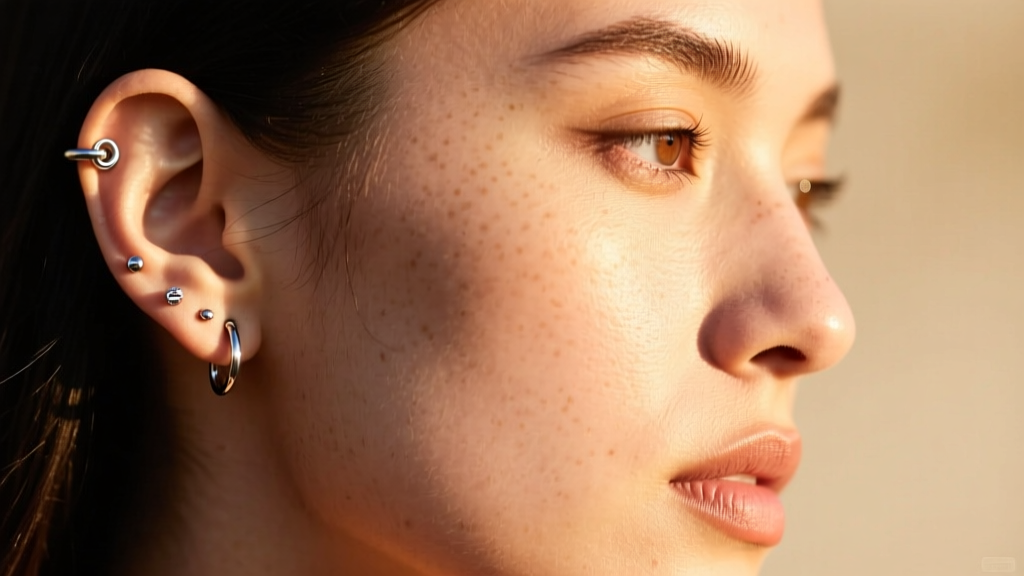
Since sexual orientation is no longer dictated by your choice of ear, you should base your earring selection on what actually enhances your features: your face shape.
- Round Faces: Opt for angular, linear drops or geometric studs. Avoid small, perfectly round hoops that mimic the face's natural curves. Long, rectangular ear cuffs or drop earrings help elongate the jawline.
- Square Faces: Soften strong jawlines with curved hoops, oval gemstones, and fluid, organic shapes. Huggies with rounded edges or teardrop dangles work beautifully.
- Heart-Shaped Faces: Balance a narrower chin with wider, bottom-heavy earrings like chandeliers or wide-bottomed hoops. Avoid inverted triangles or top-heavy ear cuffs.
- Oval Faces: The universal shape. Almost any style, from tight 8mm huggies to dramatic shoulder-grazing dangles, will complement your natural proportions.
Final Verdict: Wear What You Want, Where You Want
The anxiety surrounding which earring side is the gay side belongs in a 1980s time capsule. Modern jewelry styling is about self-expression, anatomical precision, and high-quality materials. Whether you are rocking a single 14k gold stud in your right ear, a fully curated constellation in your left, or symmetrical lobes, the only rule that matters in 2026 is that you feel confident in your aesthetic. Invest in implant-grade titanium, respect your healing timelines, and let your personal style speak louder than outdated myths.


