White Pearl Gold Earrings: Technical Guide to Grading & Settings
An expert technical guide to white pearl gold earrings, covering nacre thickness, gold alloy metallurgy, setting architecture, and market pricing.

The Intersection of Gemology and Metallurgy
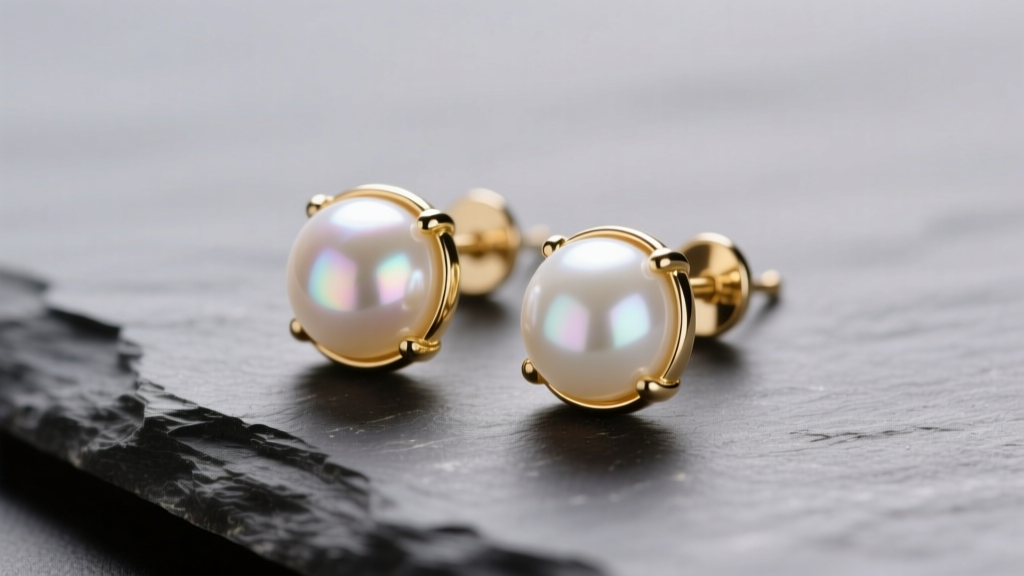
When evaluating white pearl gold earrings, most consumers focus solely on surface aesthetics. However, as a domain expert in fine jewelry architecture, I approach these pieces through the dual lenses of gemological grading and metallurgical engineering. A pearl earring is not merely a decorative object; it is a composite structure where organic gemstones meet precision-machined metal alloys. The longevity, value retention, and structural integrity of your earrings depend entirely on the nacre thickness of the pearl, the Vickers hardness of the gold alloy, and the mechanical engineering of the setting.
In this comprehensive technical deep dive, we will bypass generic buying advice and examine the exact specifications, failure modes, and material grades that separate heirloom-quality white pearl gold earrings from mass-market costume pieces.
Pearl Typology and Nacre Crystallography
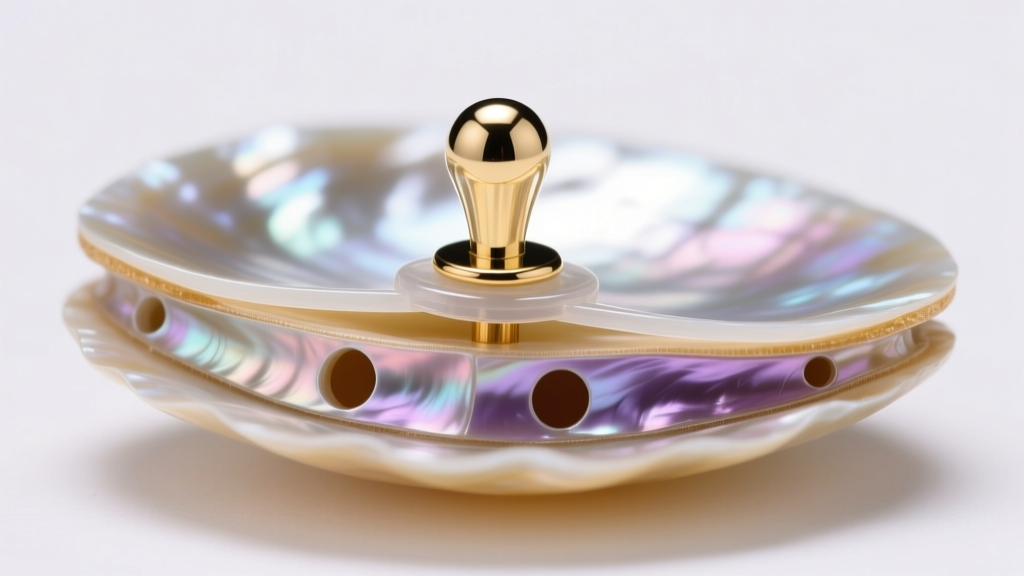
The term 'white pearl' encompasses three distinct biological classifications, each with unique structural properties and nacre thickness metrics. Nacre is composed of microscopic aragonite platelets bound by conchiolin (an organic protein). The alignment and thickness of these platelets dictate the pearl's optical luster and structural durability.
Akoya Pearls (Pinctada fucata martensii)
Akoya pearls are the industry standard for classic white pearl gold earrings. They typically range from 6.0mm to 9.0mm in diameter. Because they are bead-nucleated, the nacre layer is relatively thin, usually between 0.4mm and 0.6mm. Despite this thinness, the aragonite crystals in Akoya pearls are exceptionally well-aligned due to the cooler waters of the Japanese and Chinese coastlines, resulting in a sharp, mirror-like luster that outperforms thicker-nacred pearls.
White South Sea Pearls (Pinctada maxima)
Ranging from 10.0mm to 15.0mm, White South Sea pearls boast a massive nacre thickness of 2.0mm to 4.0mm. However, the warmer waters of Australia and the Philippines cause faster, less organized aragonite deposition. This results in a softer, 'satiny' luster rather than a sharp mirror reflection. Structurally, they are far more resistant to chipping than Akoya pearls.
Edison and High-Grade Freshwater Pearls
Modern bead-nucleated Edison freshwater pearls (8.0mm to 13.0mm) have disrupted the market. While they offer thick nacre (often 2.0mm+), their luster can sometimes appear slightly chalky compared to premium Akoya. According to the Gemological Institute of America (GIA), the optical quality of freshwater nacre has improved dramatically, but top-tier Akoya still holds the crown for pure reflectivity.
Gold Metallurgy: Alloy Compositions and Hardness
The gold used in fine earrings is never pure (24k), as pure gold is too malleable to securely hold a pearl. Jewelers alloy gold with copper, silver, zinc, and palladium to manipulate color and tensile strength. Understanding the Vickers Hardness (HV) of these alloys is critical for predicting how well the earring post and setting will withstand daily mechanical stress.
14k Gold (58.5% Pure Gold)
14k gold registers approximately 140 to 150 on the Vickers hardness scale. This makes it the superior choice for prong settings and omega backs. The higher alloy content provides the necessary 'spring' and memory for friction clasps and the tensile strength required to keep prongs tightly gripped around a pearl's equator. If you are buying white pearl gold earrings with mechanical prongs, 14k gold is the most structurally sound choice.
18k Gold (75% Pure Gold)
18k gold is softer, with a Vickers hardness of roughly 115 to 125. It possesses a richer, deeper yellow hue and is highly hypoallergenic. However, 18k prongs are prone to snagging and bending. Therefore, 18k gold is best utilized in pegged settings or bezel cups, where the metal does not need to rely on tension to secure the gemstone.
White Gold and Rhodium Degradation
White gold is created by alloying yellow gold with nickel or palladium. Because the resulting metal still has a faint yellowish-gray tint, it is electroplated with a microscopic layer of rhodium. Over 12 to 24 months of wear, friction and skin acids will wear away this plating, revealing the base alloy. For white pearl gold earrings, this means budgeting for professional rhodium re-plating every two years to maintain the bright white aesthetic that complements the pearls.
Setting Architecture: Pegged vs. Cup and Prong
The mechanical interface between the gold and the pearl is the most common point of catastrophic failure in earring design. There are two primary engineering approaches used in the industry.
The Pegged Setting (Adhesive Reliance)
In a pegged setting, a gold post (typically 0.8mm / 20-gauge or 1.0mm / 18-gauge) is inserted into a half-drilled hole in the pearl. The two are bonded using a two-part jeweler's epoxy resin.
- Advantage: Allows the pearl to sit flush against the earlobe without visible metal framing, maximizing the organic beauty of the gem.
- Failure Mode: Epoxy degradation. Exposure to chlorinated pool water, ultrasonic cleaners, or high heat (like leaving earrings on a dashboard) will break down the chemical bonds of the resin, causing the pearl to spin or detach completely.
The Cup and Prong Setting (Mechanical Reliance)
Here, the pearl sits in a shallow gold cup, and 3 to 4 metal prongs are bent over the pearl's girdle to lock it in place. This requires a full-drilled or undrilled pearl.
- Advantage: Superior physical security. Even if adhesive fails, the mechanical grip of the prongs prevents loss.
- Failure Mode: Prong deformation. If caught on heavy clothing, 18k gold prongs will bend outward, releasing the pearl. Furthermore, excessive prong pressure during manufacturing can induce micro-fractures in thin-nacred Akoya pearls.
Expert Insight: For everyday wear, a hybrid approach is the gold standard. The most secure white pearl gold earrings utilize a shallow cup with a micro-peg and two structural prongs, combining adhesive surface area with mechanical redundancy.
Technical Comparison of Setting Types
| Setting Architecture | Ideal Gold Karat | Primary Failure Mode | Maintenance Requirement |
|---|---|---|---|
| Standard Pegged (Epoxy) | 14k or 18k | Adhesive thermal/chemical breakdown | Re-gluing every 3-5 years |
| 3-Prong Cup | 14k (for rigidity) | Prong snagging and deformation | Annual prong tightening |
| Hybrid Peg-Prong | 14k or 18k | Extreme blunt force impact | Minimal; inspect annually |
| Full Bezel | 18k or 22k | Loss of luster due to metal coverage | None structural |
2026 Market Pricing and Value Retention
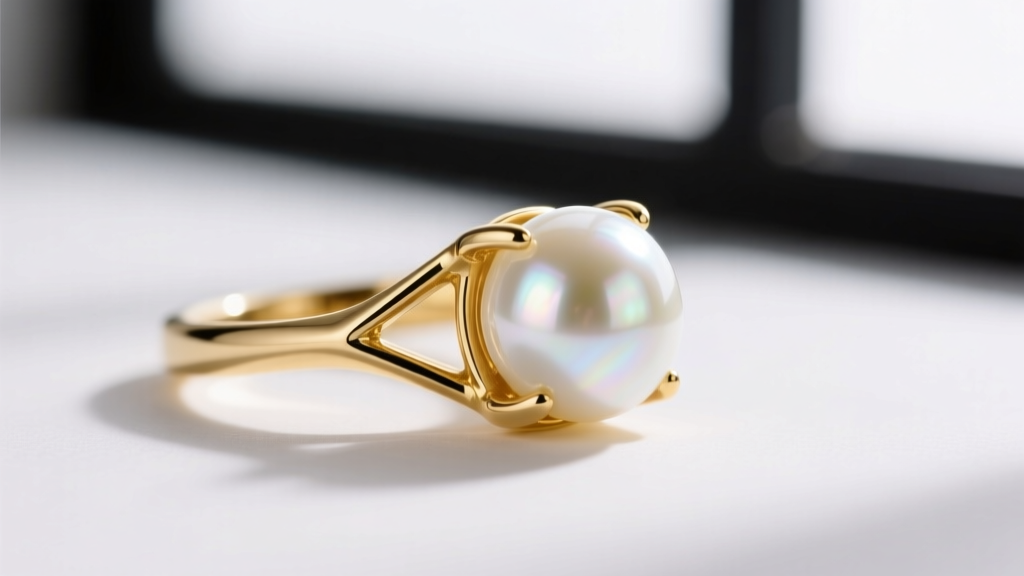
The pricing of white pearl gold earrings is heavily stratified based on pearl origin, nacre quality, and gold weight. Based on current wholesale market data and Jewelers of America retail indices, here is what you should expect to pay for genuine, high-specification pieces.
Pricing Matrix by Pearl Type
- 7.0mm - 7.5mm AAA Akoya in 14k Yellow Gold (Pegged): $350 – $600. This is the entry point for fine jewelry grade. Anything below $250 likely utilizes commercial-grade pearls with visible blemishes and chalky luster, or features gold-plated brass rather than solid gold.
- 8.5mm - 9.0mm Hanadama Akoya in 18k White Gold (Hybrid Setting): $800 – $1,400. Hanadama is the highest Japanese export grade, guaranteeing a minimum nacre thickness of 0.4mm and exceptional luster.
- 11.0mm - 12.0mm White South Sea in 18k Yellow Gold (Pronged): $2,200 – $4,500. The premium here is driven by the rarity of large, perfectly round Pinctada maxima pearls and the heavy gram-weight of the 18k gold required to support their mass.
Chemical Vulnerabilities and Preventative Care
Pearls rank at a mere 2.5 to 3.0 on the Mohs hardness scale, making them highly susceptible to scratching. More critically, the calcium carbonate (aragonite) structure is acutely vulnerable to acidic and alkaline degradation.
Never expose white pearl gold earrings to ultrasonic jewelry cleaners. The high-frequency cavitation bubbles will not only shatter the epoxy in pegged settings but can also cause the nacre layers to delaminate. Similarly, aerosol hairsprays, perfumes containing alcohol, and chlorinated swimming pools will slowly dissolve the conchiolin protein matrix, leading to irreversible dullness.
The correct maintenance protocol is simple: wipe the pearls with a clean, dry microfiber cloth immediately after removal to strip away acidic skin oils, and store them in a soft pouch separate from diamond or sapphire jewelry, which will easily scratch the pearl's surface. By respecting the material science behind these gems, your white pearl gold earrings will maintain their structural integrity and optical brilliance for generations.


