White Turquoise Earrings: Budget and Value Assessment Guide
Discover the real value of white turquoise earrings. Learn to spot genuine Dry Creek stones vs. howlite imitations and find the best budget options.

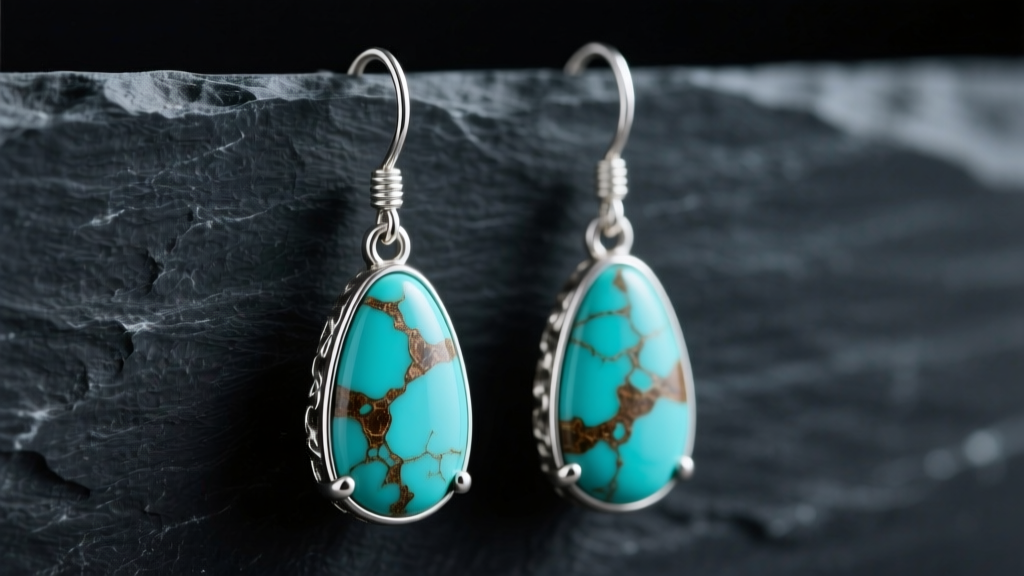
The market for white turquoise earrings is notoriously difficult to navigate. While traditional blue and green turquoise have well-established grading systems, the white variant is shrouded in geological confusion and aggressive marketing. For buyers conducting a budget and value assessment, understanding the stark difference between rare geological anomalies and mass-produced imitations is the difference between investing in a heirloom and overpaying for dyed howlite.
This guide breaks down the material science, pricing tiers, and hardware specifications you need to evaluate white turquoise earrings in 2026, ensuring your budget aligns with actual gemological value.
The Geological Reality: Genuine vs. Imitation
True white turquoise is exceptionally rare. According to the Gemological Institute of America (GIA), turquoise is a hydrous phosphate of copper and aluminum. The blue and green hues come from copper and iron, respectively. When these trace metals are virtually absent, the stone forms as a pale, chalky white.
The Two Genuine Sources
- Dry Creek Mine (Nevada): Produces a creamy, pale white turquoise with a distinct golden-brown to black spiderweb matrix. It is highly prized and strictly limited in supply.
- Sacred White Buffalo (Nevada): Often marketed as white turquoise, though mineralogists debate its exact classification. It features a stark white base with sharp black matrix veining.
The Market Substitutes
Over 90% of the 'white turquoise' sold in budget jewelry is actually howlite or magnesite. Howlite is a borate mineral with a Mohs hardness of just 3.5, featuring natural grey veining that mimics turquoise matrix. Because howlite is highly porous, it is frequently bleached and sold as 'white turquoise.' While beautiful, it holds virtually no long-term gemological value compared to genuine Dry Creek turquoise.
The 2026 Pricing Matrix: What Are You Actually Paying For?
When assessing value, price is the most immediate indicator of material authenticity. Below is a realistic pricing framework for white turquoise earrings based on current market data and material scarcity.
| Material | Origin | Stud Earrings (Price Range) | Dangle Earrings (Price Range) | Long-Term Value Retention |
|---|---|---|---|---|
| Genuine Dry Creek Turquoise | Nevada, USA | $120 - $350 | $250 - $800+ | High (Appreciates with scarcity) |
| Sacred White Buffalo | Nevada, USA | $80 - $200 | $150 - $450 | Moderate to High |
| Stabilized White Turquoise | Various (Treated) | $40 - $90 | $75 - $180 | Low (Treated stones don't appreciate) |
| Howlite / Magnesite | Global (Mass Mined) | $15 - $45 | $30 - $85 | None (Costume jewelry tier) |
Value Rule of Thumb: If you find a pair of large, bezel-set 'white turquoise' dangle earrings priced under $50, you are looking at howlite or magnesite. Genuine Dry Creek stones of that size would command a significant premium due to rough stone scarcity.
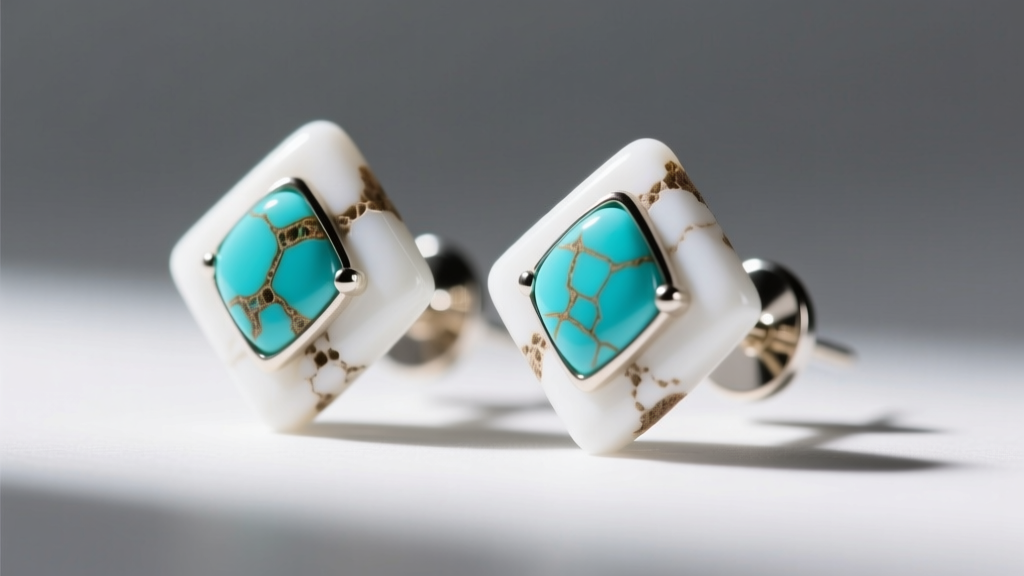
Metal Pairings and Hardware Value
The value of your earrings is not solely dictated by the stone; the metal hardware and setting style drastically impact both the price and the lifespan of the piece.
Precious Metal Tiers
Sterling Silver (925) is the traditional and most cost-effective pairing for white turquoise. The cool tone of silver complements the stark white and brown/black matrix of the stone. Expect to pay a 20-30% premium for Gold Vermeil (a thick layer of 14k or 18k gold over sterling silver), but avoid standard gold-plated brass, which will tarnish and degrade quickly when exposed to skin oils.
Setting Styles: Bezel vs. Prong
From a durability standpoint, bezel settings are mandatory for genuine turquoise. Turquoise is relatively soft and prone to chipping at the girdle (the edge of the stone). A full or partial bezel wraps the metal around the stone's perimeter, protecting it from impacts. Prong settings leave the edges exposed and are a major failure point for porous gemstones.
Post Gauge Specifications
For stud earrings, the industry standard post thickness is 20-gauge (0.81mm). However, if you are purchasing heavy white turquoise dangles or drops, you must verify the ear wire or post gauge. Heavy stones require an 18-gauge (1.02mm) wire to prevent the earring from drooping or, worse, tearing through the earlobe over time.
Durability, Porosity, and Failure Modes
Understanding the mineralogical properties of turquoise is critical for long-term care. Genuine turquoise ranks between 5 and 6 on the Mohs hardness scale, making it softer than quartz but harder than howlite (3.5).
The Stabilization Factor
Because chalky white turquoise is highly porous, it is often 'stabilized'—a process where the stone is infused with an epoxy resin under pressure to harden it and lock in its color. While purists prefer natural, unstabilized stones, stabilization is an accepted industry practice that prevents the stone from absorbing skin oils, lotions, and perfumes, which can cause white turquoise to turn a muddy green over time.
Common Failure Modes
- Chemical Discoloration: Spraying hairspray or perfume while wearing unstabilized white turquoise will permanently stain the porous matrix.
- Thermal Shock: Leaving turquoise earrings in a hot car or exposing them to ultrasonic cleaners can cause the stone to crack or the stabilization resin to cloud.
- Abrasion: Storing turquoise in a communal jewelry box alongside diamonds or sapphires will result in severe surface scratching due to turquoise's lower Mohs rating.

The Authentication Checklist
Before finalizing your purchase, run the earrings through this quick assessment framework to verify you are getting the value you are paying for:
- The Matrix Test: Examine the veining under a jeweler's loupe. Genuine Dry Creek turquoise features deep, embedded brown or black spiderwebbing. Howlite features grey veining that often looks superficial or is dyed to appear darker.
- The Temperature Test: Genuine turquoise is a dense mineral and will feel noticeably cold to the touch when first picked up, taking a moment to warm to your skin. Howlite and plastic imitations warm up almost instantly.
- The Price-to-Size Ratio: Large, flawless white stones with perfect matrix patterns are incredibly rare. If the stones are large, perfectly uniform, and cheap, they are almost certainly lab-created or howlite.
Final Verdict: Budgeting for Your Pair
If your goal is to acquire a piece of fine jewelry with intrinsic value and cultural heritage, budget between $150 and $400 for genuine Dry Creek or Sacred White Buffalo turquoise earrings set in 925 sterling silver with a protective bezel.
However, if you are simply looking for the aesthetic of white and brown matrix stones for everyday fashion wear, howlite is a highly durable, attractive, and budget-friendly alternative—provided you are paying howlite prices (under $50) and not being upcharged for a mislabeled gemstone. True value in jewelry comes from transparency; knowing exactly what rests against your skin ensures your investment is always sound.


