The Best Wood Earring Display Options for Makers and Collectors
Discover how to choose, build, and style the perfect wood earring display for your collection or craft booth. Expert tips on wood types and finishes.

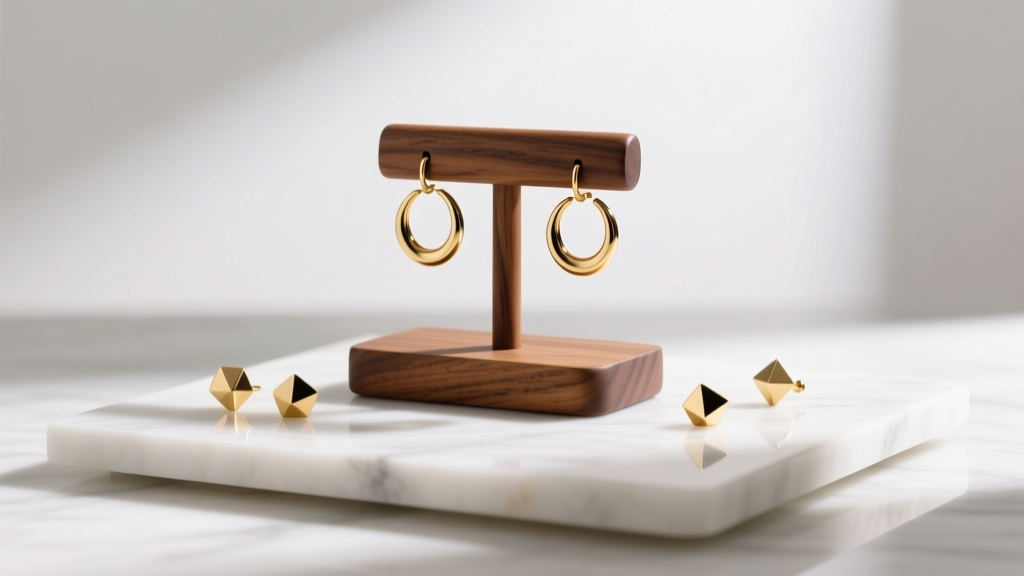
Whether you are an independent jewelry maker preparing for a weekend craft fair, or a dedicated collector looking to curate your growing assortment of artisanal pieces, how you present your jewelry matters just as much as the jewelry itself. A well-crafted wood earring display elevates the perceived value of your work, protects delicate metalwork, and transforms a messy pile of accessories into a cohesive visual gallery. In this beginner-friendly explainer, we will dive deep into the material science, technical sizing, and visual merchandising strategies required to choose or build the ultimate wooden display for your earrings.
Why Upgrade to a Wood Earring Display?
Many beginners default to cheap acrylic stands or flimsy cardboard displays lined with synthetic felt. While these options are inexpensive, they often detract from the craftsmanship of the earrings. Wood offers several distinct advantages for both makers and collectors:
- Aesthetic Warmth: The natural grain patterns of wood provide a neutral, organic backdrop that makes metallic finishes (like gold, rose gold, and oxidized silver) and vibrant gemstones pop without competing for attention.
- Durability and Weight: A solid wood base provides a low center of gravity, preventing top-heavy displays from tipping over when customers handle dangle earrings.
- Customizability: Wood can be easily drilled, routed, and laser-engraved to accommodate specific earring types, from standard friction-post studs to thick 16-gauge ear hooks.
Selecting the Right Wood Species for Your Display
Not all wood is created equal. When selecting a material for your wood earring display, you must consider the Janka hardness scale (which measures resistance to dents and wear), the grain pattern, and crucially, the chemical properties of the wood. Below is a comparison of the most popular wood species used in jewelry merchandising.
| Wood Species | Janka Hardness | Grain Profile | Best Display Use | Sterling Silver Safe? |
|---|---|---|---|---|
| Hard Maple | 1,450 lbf | Subtle, uniform, light | Minimalist studs, modern galleries | Yes |
| American Black Walnut | 1,010 lbf | Rich, dark, prominent | High-end gold pieces, luxury booths | Yes |
| Cherry | 995 lbf | Warm, reddish-brown, smooth | Vintage styles, gemstone drops | Yes |
| Bamboo (Grass) | 1,380 lbf | Linear, node patterns | Eco-friendly brands, lightweight travel | Yes |
| Red Oak | 1,290 lbf | Coarse, highly porous | Rustic crafts (with strict sealing) | No (High Acid) |
According to material experts at the Woodworking Network, woods like Oak and Sweet Chestnut contain high levels of tannins and emit acetic acid vapors as they age. If you display raw sterling silver on unsealed oak, the acidic off-gassing will rapidly accelerate tarnishing, turning your bright silver black within weeks. Always opt for Maple, Walnut, or Cherry when displaying silver jewelry.
The Technical Guide to Drilling and Sizing
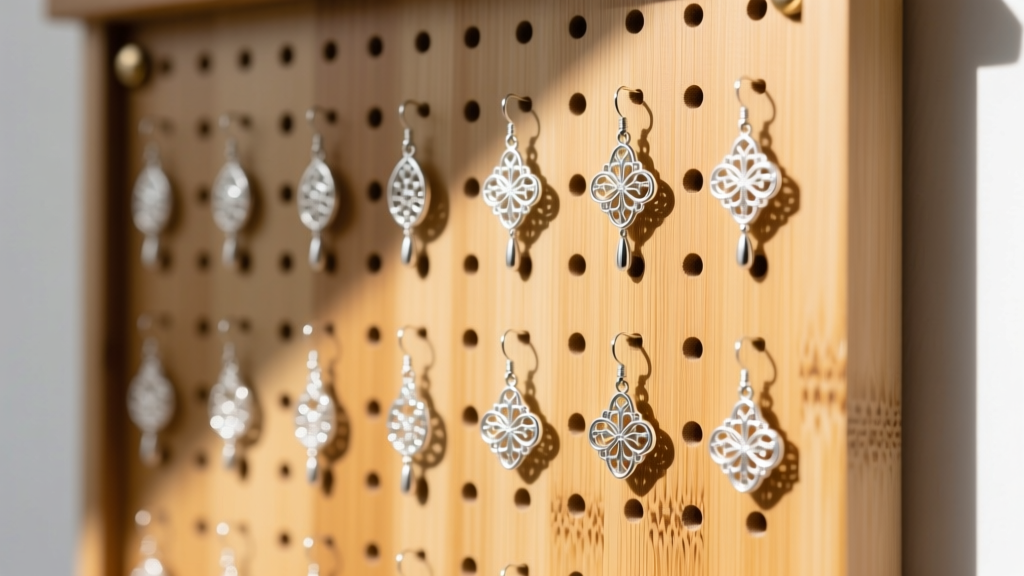
If you are building your own wood earring display, precision is paramount. Earring posts and wires come in specific gauges, and your display holes must accommodate them without scratching the metal or splintering the wood.
Understanding Earring Gauges
Standard commercial stud earrings typically feature a 20-gauge (0.81mm) or 18-gauge (1.02mm) post. Handmade ear wires and hooks are often slightly thicker, ranging from 18-gauge up to 16-gauge (1.29mm) for heavier dangle designs.
Choosing the Right Drill Bit
Do not use a standard twist drill bit for your display holes, as it tends to tear out the wood fibers on the surface, leaving a fuzzy, unprofessional edge. Instead, use a brad-point drill bit. The spur on a brad-point bit scores the wood cleanly before the cutting lips remove the material, resulting in a glass-smooth hole.
- For 20G and 18G Studs: Use a 1/16-inch (1.59mm) brad-point bit. Drill to a depth of exactly 1/4-inch (6.35mm) so the earring post sits securely without bottoming out and bending.
- For Dangles and Ear Wires: Use a 3/32-inch (2.38mm) bit. For dangle displays, drill completely through the wood (a through-hole) so the ear wire can hang freely without the metal clasp resting awkwardly against the wood surface.
"Pro Tip: Always apply a strip of blue painter's tape over the wood surface before drilling. The tape prevents the drill bit from splintering the delicate top veneer, ensuring a factory-finish look for every hole in your display."
Finishing and Protecting Your Display
A raw wood display will quickly absorb oils from customers' hands and accumulate dust. You must seal the wood, but the type of finish you choose can impact the jewelry it holds. The Gemological Institute of America (GIA) frequently notes that certain chemicals and sulfur compounds can degrade porous gemstones like pearls, turquoise, and opals.
Recommended Finishes
- 100% Pure Tung Oil: Penetrates deeply, hardens into a durable matte finish, and is completely inert once cured. It will not off-gas harmful chemicals that could damage sensitive gemstones.
- Shellac (Dewaxed): A natural resin secreted by the lac bug. It dries in minutes, is non-toxic, and provides a beautiful, warm amber glow to lighter woods like Maple.
- Hardwax Oils (e.g., Odie's Oil, Rubio Monocoat): These modern molecular-bonding oils offer incredible water and fingerprint resistance, making them ideal for high-traffic craft fair displays where hundreds of people might touch the stand.
Warning: Avoid aerosol lacquers or cheap polyurethanes that contain volatile organic compounds (VOCs) which may remain active for months and potentially react with soft metals or porous stones.
Visual Merchandising for Craft Fairs and Galleries
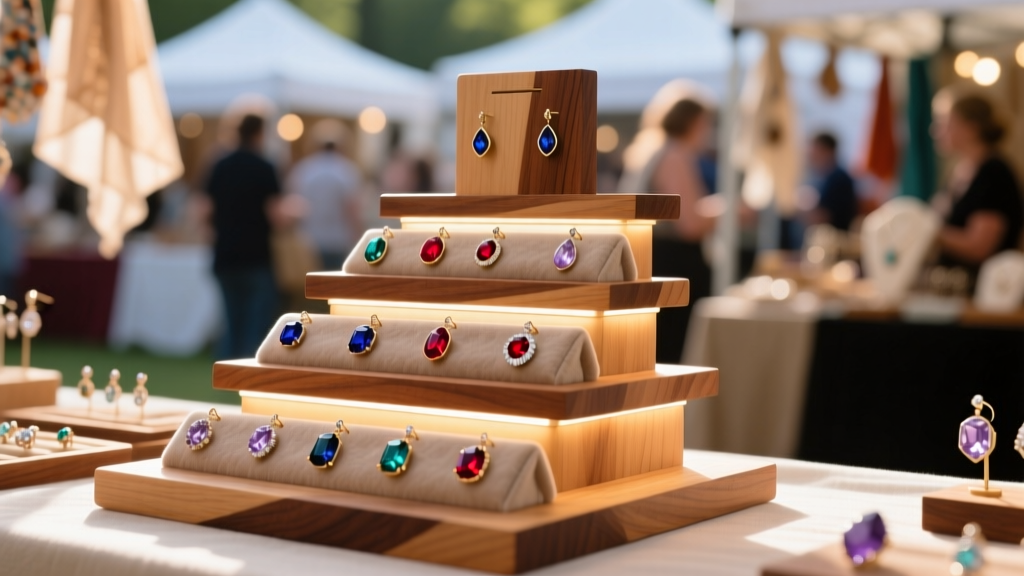
Having a beautiful wood earring display is only half the battle; how you arrange the jewelry on it dictates your sales and engagement. Visual merchandising relies on guiding the customer's eye through intentional spacing and lighting.
The Rule of Thirds and Negative Space
Beginners often overcrowd their displays, drilling holes mere inches apart to maximize inventory. This creates visual clutter and makes it difficult for customers to isolate a single pair of earrings to admire. Follow the "Rule of Thirds" by leaving at least 60% of your display as negative (empty) space. Group earrings in asymmetrical triads—one large statement piece flanked by two smaller, complementary studs.
Lighting Your Wood Display
Wood absorbs light, meaning your jewelry needs dedicated illumination. Avoid overhead tent lighting, which casts harsh shadows. Instead, integrate battery-operated LED strip lights (with a Color Rendering Index, or CRI, of 90+) into the back lip of tiered wooden risers. A warm white light (3000K) enhances gold and rose gold, while a daylight bulb (5000K) makes silver and diamonds sparkle against the dark grain of a Walnut display.
Conclusion
Investing time into selecting, building, or curating the right wood earring display is a direct investment in your jewelry brand's perceived value. By understanding the chemical properties of different wood species, utilizing precise drilling techniques for various earring gauges, and applying safe, non-reactive finishes, you create a functional masterpiece that protects your jewelry while showcasing it in the best possible light. Whether you are displaying a personal collection or selling at a bustling artisan market, a thoughtfully crafted wooden display speaks volumes before a single word is exchanged.


