Expert Guide to Gold Loop Earrings for Women: Alloys and Gauges
Discover the technical specs behind gold loop earrings for women. Expert analysis of karat alloys, wire gauges, and closure mechanics for lasting wear.

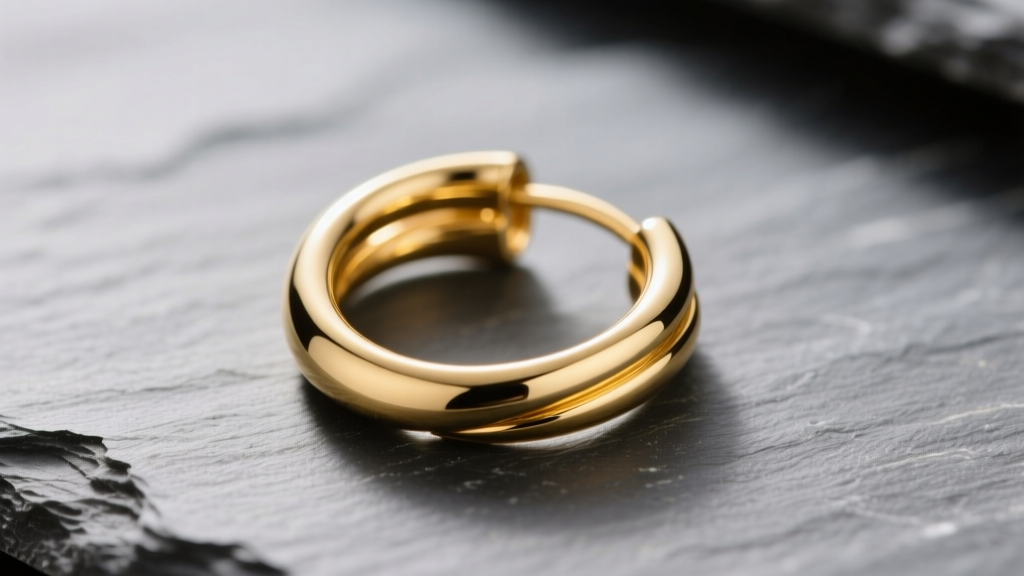
The Metallurgy of Gold: Decoding Karat Alloys for Loop Earrings
When evaluating gold loop earrings for women, most consumers focus purely on color and diameter. However, from a metallurgical and structural engineering perspective, the karat weight dictates the tensile strength, yield point, and long-term durability of the jewelry. Pure gold (24K) is exceptionally malleable, possessing a Vickers hardness (HV) of roughly 25. This makes it entirely unsuitable for continuous loop earrings, which rely on the spring-back tension of the metal to stay secured in the ear fistula.
To create functional gold loop earrings, master jewelers alloy pure gold with metals like copper, silver, zinc, and palladium. This not only alters the color profile but fundamentally changes the crystalline lattice structure of the metal, increasing its resistance to deformation. According to the Gemological Institute of America (GIA), the specific ratio of these alloying metals determines the jewelry's structural integrity and its susceptibility to stress corrosion cracking over time.
14K vs. 18K vs. 22K: Tensile Strength and Wearability
Understanding the mechanical properties of different gold alloys is critical when selecting a continuous loop or hinged hoop. The table below outlines the technical specifications of common karat weights used in premium loop earrings.
| Karat Weight | Gold Purity | Approx. Vickers Hardness (HV) | Density (g/cm³) | Structural Application |
|---|---|---|---|---|
| 24K | 99.9% | 25 - 30 HV | 19.32 | Display pieces; fails under bending stress. |
| 22K | 91.6% | 70 - 90 HV | 17.70 | Thick, heavy gauge loops; prone to warping if thin. |
| 18K | 75.0% | 120 - 140 HV | 15.60 | Ideal balance of luxury, color, and spring tension. |
| 14K | 58.3% | 140 - 160 HV | 13.40 | Maximum durability; best for large-diameter, thin-wire loops. |
For large-diameter gold loop earrings for women (exceeding 30mm), 14K gold is often the superior engineering choice. Its lower density reduces the overall mass of the earring, minimizing the pendulum effect that can stretch the earlobe fistula over time, while its higher hardness ensures the loop retains its perfect circular geometry.
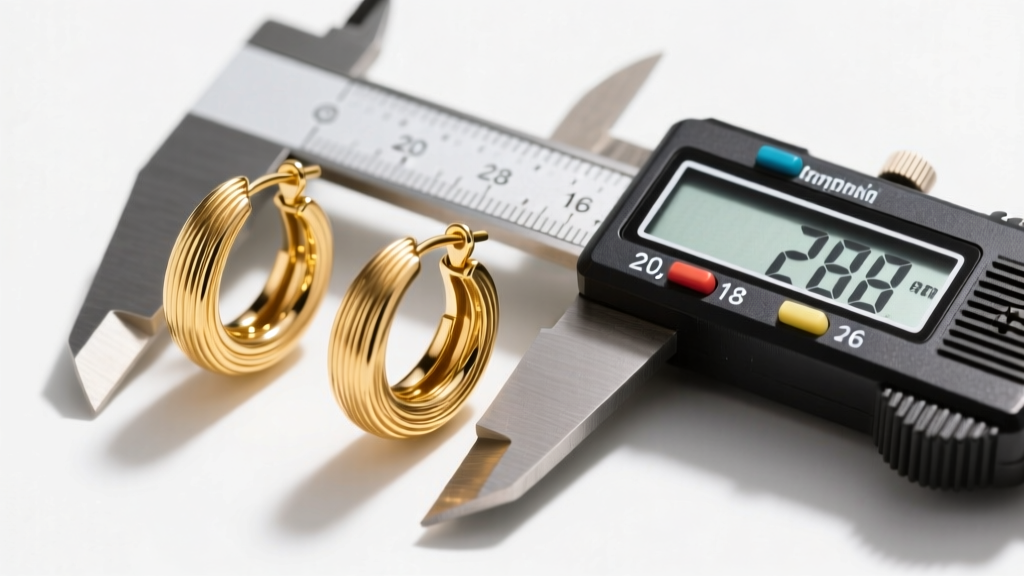
Wire Gauge and Structural Integrity
The thickness of the wire used to form the loop is just as critical as the alloy itself. In jewelry manufacturing, wire thickness is measured either in American Wire Gauge (AWG) or millimeters. The gauge dictates the earring's resistance to bending and its compatibility with different piercing types.
- 20-Gauge (0.81mm): The standard for delicate, lightweight loops. Best suited for standard earlobe piercings that are fully healed. Offers minimal structural resistance and can warp if snagged on clothing.
- 18-Gauge (1.02mm): The industry sweet spot for premium gold loop earrings for women. Provides excellent structural rigidity while remaining comfortable for all-day lobe wear. It offers sufficient mass for a satisfying tactile feel without causing tissue fatigue.
- 16-Gauge (1.29mm): The standard for cartilage, helix, and tragus piercings. The increased cross-sectional area provides the necessary yield strength to withstand the higher pressure and tighter fistula tracts of cartilage piercings.
- 14-Gauge (1.63mm): Reserved for heavy-duty, statement continuous loops or stretched lobes. Requires a robust hinge mechanism if not a continuous endless design.
When a wire is drawn through a draw plate to achieve these precise gauges, it undergoes work hardening. Jewelers must carefully anneal (heat and cool) the wire to relieve internal stresses before forming it into a loop. If this annealing process is rushed or skipped, the loop will suffer from premature metal fatigue, snapping at the joint after repeated opening and closing.
Closure Mechanics: Failure Modes and Engineering
The closure mechanism is the single most common point of failure in hoop and loop earrings. The engineering required to keep a gold loop securely fastened while navigating the biomechanics of the human ear is surprisingly complex.
Continuous (Endless) Loops
Continuous loops feature a hollow tubing or a solid wire that bends to insert into the opposite end. The retention relies entirely on the tensile spring-back of the gold alloy. When you bend an 18K gold wire to insert it, the metal 'wants' to return to its annealed circular shape, creating lateral pressure against the receiving tube. The primary failure mode here is metal fatigue; repeatedly bending the wire past its elastic limit will eventually cause microscopic fissures, leading to a clean break. To mitigate this, high-end manufacturers use slightly thicker hollow tubing rather than solid thin wire, maintaining the visual gauge while reducing bending stress.
Hinged Clickers and Micro-Latches
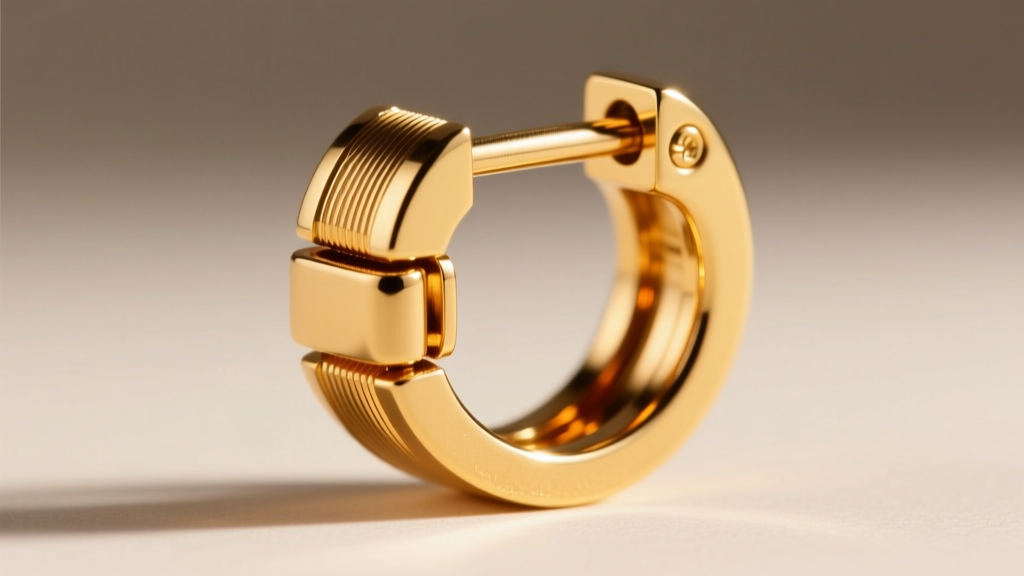
For gold loop earrings for women that prioritize security, the hinged clicker is the gold standard. This mechanism utilizes a micro-machined post that snaps into a precision-milled groove on the opposite side of the hoop. The 'click' is achieved through a tiny, integrated spring or the precise friction-fit of the post's shoulder against the latch housing. According to manufacturing standards discussed at the World Gold Council, achieving a reliable clicker mechanism in 18K gold requires advanced CNC machining or high-precision casting, as even a 0.05mm tolerance error will result in a latch that either fails to close or wears out prematurely.
Surface Finishes and Wear Dynamics
The surface finish of a gold loop earring affects more than just aesthetics; it influences how the metal interacts with the skin and how it resists environmental degradation.
A mirror-polished finish is not merely cosmetic. By buffing the gold to a micro-smooth surface, jewelers close the microscopic pores of the metal, creating a barrier that resists the accumulation of sebum, cosmetics, and environmental chlorides that can trigger stress corrosion cracking in lower-karat alloys.
Conversely, hammered or satin-finished loops, while visually striking, possess a higher surface area and microscopic texture that can trap debris. For individuals with sensitive skin or those who wear their gold loop earrings in high-friction environments (such as during exercise or while wearing over-ear headphones), a high-polish finish reduces the coefficient of friction against the skin, minimizing irritation and preserving the structural integrity of the gold surface.
Sizing and Biomechanical Fit
Selecting the correct inner diameter (ID) versus outer diameter (OD) is a frequent point of confusion. When manufacturers list a 20mm gold loop, they are typically referring to the Outer Diameter. However, the biomechanical fit is dictated by the Inner Diameter.
For a standard earlobe piercing, an ID of 10mm to 12mm provides a snug 'huggie' fit, minimizing movement and reducing the risk of the earring catching on hair or clothing. An ID of 15mm to 18mm allows for a classic, relaxed drape. If the ID is too large relative to the earlobe's thickness, the loop will slide forward, placing asymmetric stress on the fistula and causing the earring to droop. Expert fitters always recommend measuring the distance from the piercing hole to the edge of the earlobe and adding 2-3mm to determine the ideal minimum Inner Diameter for a comfortable, structurally sound fit.
Conclusion: Specifying Your Ideal Pair
Investing in high-quality gold loop earrings for women requires looking past the display case and examining the technical specifications. For everyday wear and maximum longevity, an 18-gauge, 14K or 18K gold loop with a precision-machined hinged clicker or a properly annealed continuous joint offers the optimal balance of tensile strength, corrosion resistance, and biomechanical comfort. By understanding the metallurgy and engineering behind these seemingly simple accessories, you can curate a collection that remains structurally flawless and visually stunning for decades.


