The Ultimate Guide to Silver Spike Earrings: Alloys & Gauge Specs
Explore the technical specs of silver spike earrings. Learn about sterling vs. argentium alloys, gauge sizing for cartilage, and clasp mechanics.

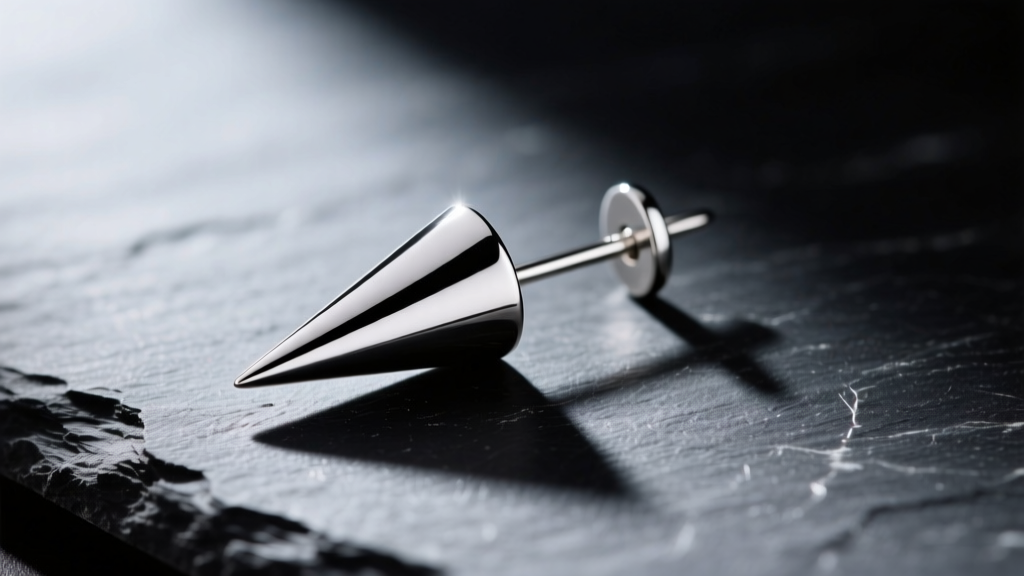
The Metallurgy of Silver Spikes: Sterling vs. Argentium
When evaluating silver spike earrings from a technical perspective, the alloy composition dictates not just the aesthetic, but the structural longevity of the piece. The vast majority of the market relies on standard 925 Sterling Silver, an alloy comprising 92.5% pure silver and 7.5% copper. While the copper provides necessary tensile strength, it also introduces a critical vulnerability: susceptibility to oxidation and fire scale during the soldering process. According to The Silver Institute, the copper content is the primary catalyst for silver sulfide tarnishing when exposed to atmospheric hydrogen sulfide.
For high-end, structurally demanding spike designs, master jewelers are increasingly turning to Argentium 960 silver. This modern alloy replaces a portion of the copper with germanium. The germanium creates a transparent, self-healing oxide layer on the surface that drastically inhibits tarnish. More importantly for spike earrings, Argentium can be fusion-welded without solder, eliminating the weak, heat-stressed joints where the post meets the spike base. When shopping for premium silver spike earrings, verifying the specific alloy grade is the first step in ensuring you are purchasing a piece engineered for lifelong wear.
Structural Integrity: Why Spike Length and Base Width Matter
A common failure mode in poorly engineered silver spike earrings is the snapping of the spike at the base or the detachment of the post. This is fundamentally a physics problem related to leverage and the center of gravity. A spike acts as a cantilever beam; the longer the spike, the greater the bending moment exerted on the base when subjected to lateral forces (such as catching on clothing or hair).
The Physics of the Drape and Base Ratios
To counteract lateral shear stress, the base diameter of the spike must scale proportionally with its length. For a standard 20mm spike, a base width of 4mm is generally sufficient. However, for dramatic 40mm to 50mm spikes, the base must flare to at least 8mm to 10mm to distribute the mechanical load. Furthermore, the manufacturing method plays a vital role. Cast spikes can suffer from microscopic porosity, creating internal weak points. Die-struck or CNC-machined silver spikes offer a much higher density and uniform grain structure, resulting in superior Vickers hardness (HV) and resistance to bending.
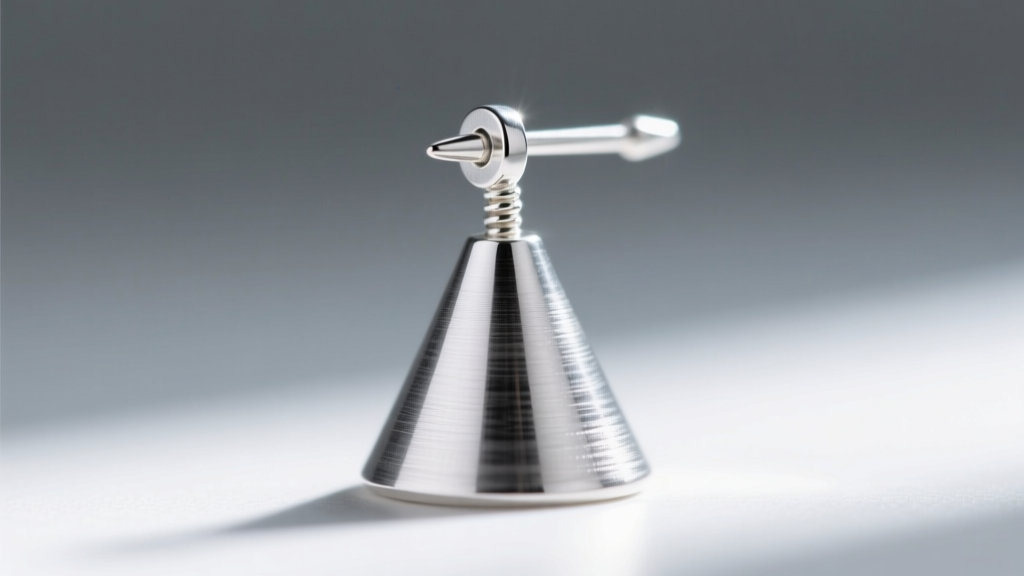
Gauge Specifications: Lobe vs. Helix & Tragus Piercings
The most critical technical oversight in commercial silver spike earrings is the use of inappropriately thin posts for heavy, elongated designs. The standard earring post is 20-gauge (0.81mm) or 18-gauge (1.02mm). While this is perfectly adequate for lightweight studs, it is mechanically disastrous for heavy silver spikes.
The Cheese-Cutter Effect
When a heavy, elongated spike hangs from a standard earlobe piercing, the pendulum effect generates dynamic downward and outward force. Because pressure is equal to force divided by area, a thin 20-gauge wire concentrates this immense force onto a microscopic surface area of the fistula (the piercing hole). Over time, this causes the jewelry to slowly migrate and slice through the earlobe tissue—a phenomenon known in body modification as the 'cheese-cutter effect.' The Association of Professional Piercers (APP) strongly recommends thicker gauges for heavy or dangling jewelry to distribute the load safely.
| Spike Length | Approx. Weight (per pair) | Minimum Safe Post Gauge | Post Thickness (mm) | Recommended Placement |
|---|---|---|---|---|
| 10mm - 15mm | 2.0g - 3.5g | 20G or 18G | 0.81mm - 1.02mm | Standard Lobe, Upper Lobe |
| 20mm - 30mm | 4.0g - 7.0g | 16G | 1.29mm | Standard Lobe (stretched), Helix |
| 35mm - 50mm+ | 8.0g - 15.0g+ | 14G or 12G | 1.63mm - 2.05mm | Stretched Lobes, Industrial, Conch |
If you are purchasing heavy silver spike earrings for standard, un-stretched earlobe piercings, you must seek out designs that feature a 16-gauge post or utilize a specialized taper that transitions from a thick base to a standard post, though the latter still risks tissue irritation.
Clasp and Backing Mechanics for Asymmetrical Weight
The backing mechanism of a silver spike earring must counteract the forward-tilting momentum of the spike. Standard 'butterfly' friction backs are entirely inadequate for spikes longer than 20mm. The narrow surface area of a standard butterfly back will dig painfully into the posterior of the earlobe, and the friction grip is easily overcome by the leverage of the spike, leading to lost jewelry.
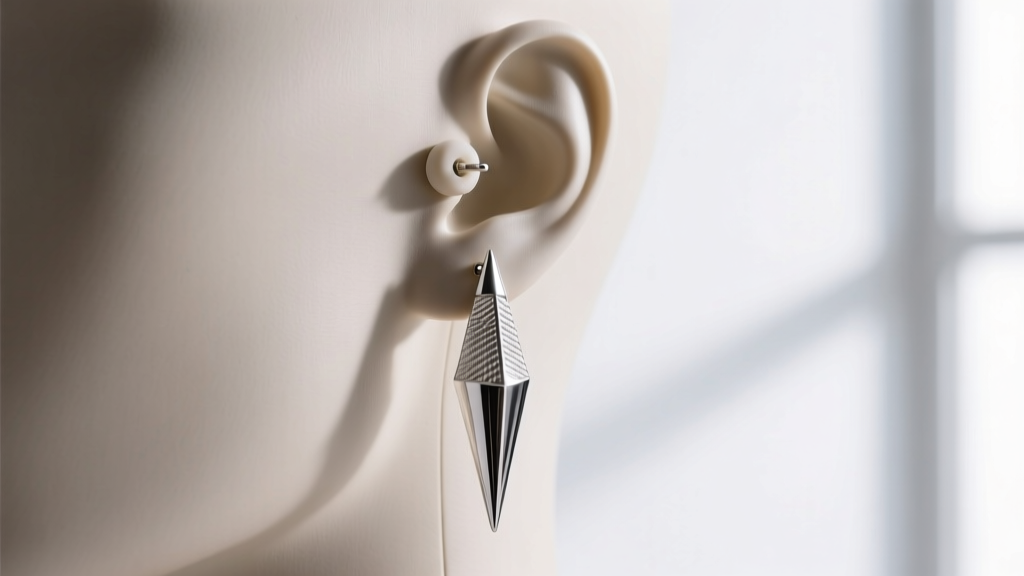
Engineered Backing Solutions
- Jumbo Silicone Ear Nuts: These provide a wide, cushioned surface area that distributes the backward pressure of the spike across a broader section of the earlobe, preventing localized pressure necrosis.
- La Pousette (Push-Pull) Backs: Utilizing a spring-loaded internal mechanism, these metal backs grip the post with mechanical force rather than simple friction, offering superior security for heavy silver spikes.
- Screw-Back Threads: For high-value or exceptionally heavy spikes, internally threaded screw-backs are the gold standard. They physically lock the backing in place, making accidental loss virtually impossible.
Tarnish Resistance and Maintenance Protocols
Maintaining the mirror finish of silver spike earrings requires an understanding of silver sulfide formation. Unlike rust, which flakes away and destroys iron, silver tarnish is a surface-level corrosion. However, because spike earrings often feature sharp, hard-to-reach crevices near the base, polishing can be hazardous and technically difficult without dulling the sharp point of the spike.
Expert Maintenance Tip: Never use abrasive silver dips or ultrasonic cleaners on oxidized or antiqued silver spike earrings, as this will strip the intentional dark patina from the recessed areas. For high-polish spikes, use a treated microfiber cloth and store the pieces in an airtight anti-tarnish bag infused with activated charcoal or silver-shield paper.
Expert Buying Framework: What to Look For in 2026
As jewelry manufacturing techniques evolve, the market is saturated with both precision-engineered pieces and cheap, structurally compromised castings. When evaluating silver spike earrings, use this technical checklist to ensure quality:
- Inspect the Post Joint: Look for a smooth, seamless transition where the post meets the spike. Visible pitting or excess solder indicates poor quality control and a high risk of structural failure.
- Verify the Alloy Stamp: Look for '925' for standard sterling, or '960' / '.960' for premium Argentium. Avoid pieces stamped only 'Silver' or 'Tibetan Silver,' which are often base metal alloys containing nickel and zinc.
- Check the Tip Geometry: While the spike should look sharp, the very tip should have a microscopic blunting (a flat spot less than 0.5mm) to prevent accidental lacerations to the neck or scalp when taking the earrings off.
- Assess the Weight Distribution: Hold the earring by the post. If it immediately and aggressively flips downward, the center of gravity is too far forward, and it will not sit flush against your ear without specialized backing support.
By prioritizing metallurgical quality, appropriate gauge thickness, and advanced backing mechanics, you can confidently wear silver spike earrings that are as structurally sound as they are visually striking.


