Master The Zoey Kpop Earrings Look: Technical Guide
Master the Zoey Kpop earrings trend with our technical guide. Explore gauge sizes, titanium ear cuffs, and asymmetrical cartilage layering techniques.

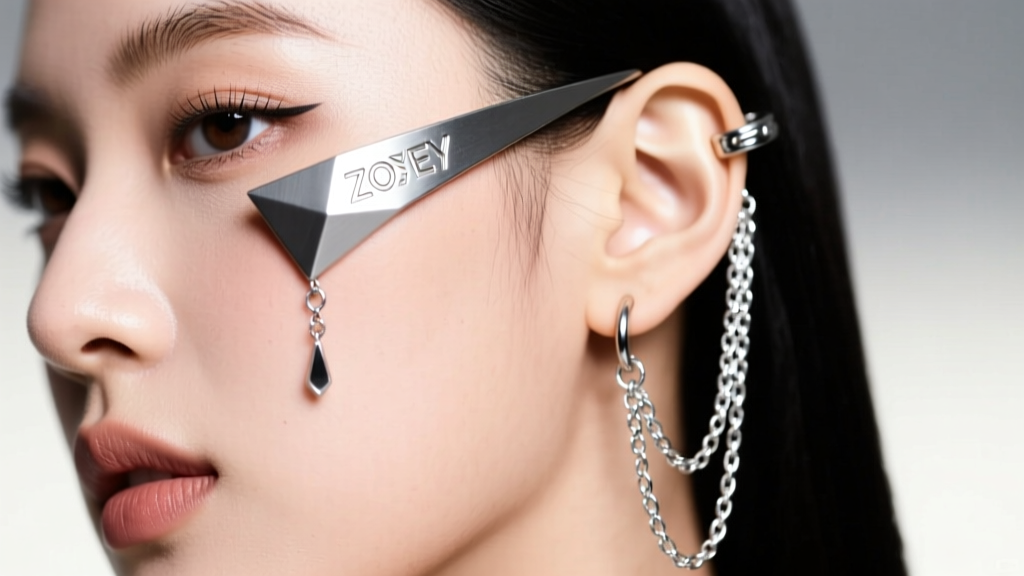
The Anatomy of the Zoey K-Pop Ear Curation
The 'Zoey Kpop Earrings' aesthetic has fundamentally disrupted the traditional boundaries of ear styling in 2026. What began as a viral stage-styling methodology for 5th-generation K-pop idols has evolved into a highly technical approach to ear curation. Unlike traditional stacking, which relies heavily on multiple healed piercings, the Zoey aesthetic prioritizes structural illusion. It utilizes high-tension, non-pierced cartilage armor, modular ear jackets, and asymmetrical weight distribution to mimic the look of a heavily pierced ear without the associated trauma or healing downtime.
As jewelry specialists, we must look past the visual impact and examine the biomechanical and metallurgical engineering required to execute this look safely. Stage lighting, high-intensity choreography, and extended wear times demand jewelry that performs under extreme conditions. This deep dive explores the exact material grades, wire gauges, and tension mechanics necessary to master the Zoey Kpop earrings trend without compromising tissue health or structural integrity.
Material Science: Stage-Grade Alloys vs. Fast Fashion
The most common failure point in replicating high-end K-pop ear curation is material degradation. Fast-fashion ear cuffs are typically cast from zinc alloys or low-grade brass, which lack the tensile strength required to maintain clamping force on the helix or conch. Furthermore, the copper content in standard 925 sterling silver reacts rapidly with the high-salinity sweat produced during stage performances, leading to rapid oxidation and skin discoloration.
To achieve the authentic Zoey Kpop Earrings look, professionals rely on two primary materials: Rhodium-plated 925 silver and ASTM F136 Implant-Grade Titanium. According to the Gemological Institute of America (GIA), rhodium plating provides a crucial inert barrier that prevents tarnishing while maintaining the high-reflectivity required for stage lighting. For non-pierced tension pieces, titanium is the undisputed standard.
| Material | Vickers Hardness (HV) | Tarnish Resistance | Tension Memory | Best Application |
|---|---|---|---|---|
| 925 Sterling Silver (Unplated) | 60-70 HV | Low | Poor (Bends easily) | Standard lobe drops, static studs |
| 925 Silver (Rhodium Plated) | 120-150 HV (Surface) | High | Moderate | Ear jackets, chain connectors |
| ASTM F136 Titanium (Grade 23) | 310-350 HV | Absolute | Excellent | Helix cuffs, conch clips, tension rings |
| 316L Surgical Steel | 150-190 HV | Moderate | Good | Budget-friendly cartilage cuffs |
For a comprehensive understanding of implant-grade metal specifications, the ASTM International F136 standard outlines the precise chemical composition of Titanium-6Aluminum-4Vanadium (ELI), ensuring zero nickel leaching—a critical factor when jewelry is clamped tightly against thin cartilage skin.
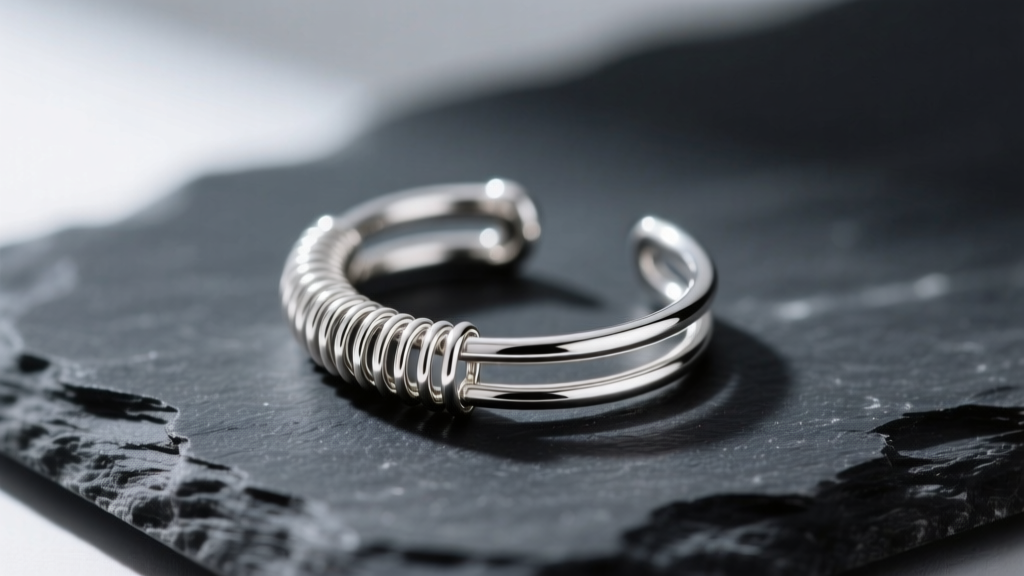
Tension Mechanics: Engineering the Non-Pierced Cuff
The cornerstone of the Zoey Kpop Earrings trend is the seamless integration of ear cuffs along the outer helix and inner conch. However, improper tension calibration is a leading cause of cartilage necrosis and jewelry loss. The human ear's capillary perfusion pressure is approximately 30 mmHg. If an ear cuff exerts clamping force significantly above this threshold for an extended period, it restricts blood flow, leading to ischemia, pain, and eventual tissue damage.
The Wire Gauge Debate: 0.8mm vs. 1.2mm
Most commercial ear cuffs are manufactured using 20-gauge (0.81mm) wire to save on material costs. While 0.8mm wire is easily adjustable by the wearer, it suffers from poor 'tension memory.' After a few adjustments, the metal fatigues, loses its clamping force, and falls off during movement.
- 0.8mm (20G) Wire: Suitable only for lightweight, static decorative pieces on the thinnest part of the upper helix.
- 1.0mm (18G) Wire: The minimum acceptable gauge for standard K-pop styling, offering a balance of adjustability and retention.
- 1.2mm (16G) Wire: The professional standard for the Zoey aesthetic. Often pre-calibrated by the jeweler using a mandrel, 1.2mm titanium or hardened silver provides enough spring tension to survive choreography without crushing the cartilage.
Expert stylists utilize cuffs featuring a micro-spring mechanism or a silicone-lined inner channel. The silicone increases the coefficient of friction against the skin, allowing for a wider, safer gap in the metal while preventing the cuff from sliding down the ear ridge.
Asymmetrical Weight Distribution and Ear Jackets
Another defining characteristic of the Zoey Kpop Earrings look is extreme asymmetry. One ear may feature a minimalist 16G titanium hoop, while the other is weighed down by a complex, multi-tiered drop earring. The standard human earlobe can comfortably support 10 to 15 grams of static weight before long-term stretching of the fistula begins. However, statement K-pop drops frequently exceed 25 grams.
To counteract this, the industry utilizes 'Ear Jackets' or 'Ear Chains.' These are modular frameworks that hook over the superior ridge of the ear (the helix root) and drape down to connect to the primary lobe earring. By anchoring the top of the structure to the rigid cartilage of the upper ear, the weight is distributed across a much larger surface area, bypassing the delicate lobe tissue entirely.
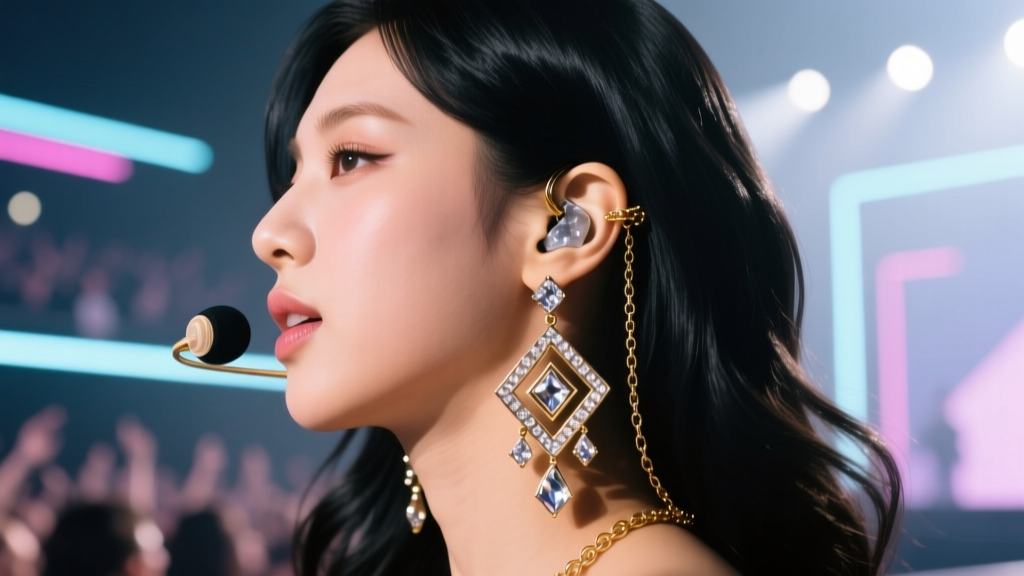
Calculating Drop Weight Limits
'In stage styling, we never rely on the lobe piercing alone to hold a piece over 18 grams. If the design requires a 30-gram drop, an 18-karat gold or titanium ear chain is structurally mandatory to prevent acute lobe tearing during dynamic movement.' — Senior K-Pop Visual Director
When sourcing components for heavy asymmetrical setups, always verify the jump ring thickness. A 4mm jump ring used to connect a heavy drop to a lobe stud must be at least 1.2mm thick and soldered shut. Open jump rings will inevitably pull apart under the centrifugal force of stage choreography.
Sourcing and Maintenance Protocols
Achieving the Zoey Kpop Earrings aesthetic requires a commitment to maintenance. Because the look relies heavily on layered silver chains and intricate ear jackets, oxidation in the crevices of the jewelry can quickly ruin the visual impact.
For daily maintenance, avoid chemical dip cleaners, which strip rhodium plating and degrade the tension memory of titanium springs. Instead, utilize a low-frequency ultrasonic cleaner (35-40 kHz) with a mild, ammonia-free surfactant for exactly three minutes. For storage, the layered chains inherent to this trend must be kept in an airtight environment with activated charcoal or silver-chloride anti-tarnish strips to absorb ambient sulfur compounds. By respecting the metallurgy and biomechanics behind the trend, you can execute the Zoey Kpop Earrings look with the precision and durability of a top-tier stage stylist.


