Budget Guide to Horizontal Eyebrow Piercing Jewelry
Discover the true cost of horizontal eyebrow piercing jewelry. Compare material grades, surface bar prices, and avoid hidden rejection costs.

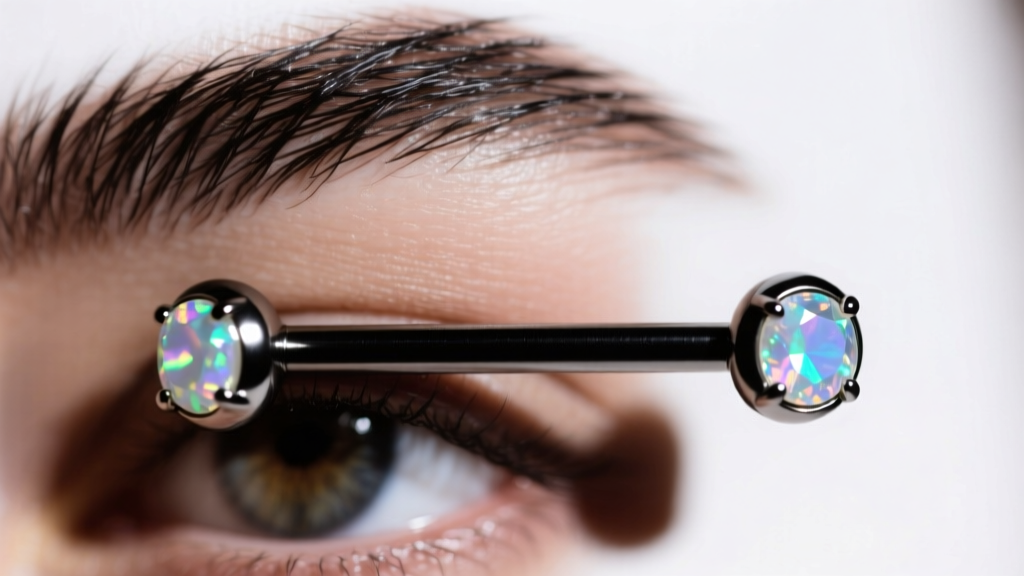
The Hidden Costs of "Cheap" Surface Piercings
When assessing the budget for horizontal eyebrow piercing jewelry, the most critical factor to understand is anatomical reality. Unlike a standard vertical eyebrow piercing, which passes through a substantial ridge of tissue and can accommodate a curved barbell, a horizontal eyebrow piercing is classified as a surface piercing. The jewelry sits parallel to the skin, anchored only by a shallow channel of tissue. This anatomical distinction completely changes the value proposition of the jewelry you choose.
Budget-conscious buyers often make a fatal error: purchasing a standard 14-gauge curved barbell (banana bell) for a horizontal placement because it is cheaper and more widely available. This is a false economy. The natural outward tension of a curved barbell acts as a lever against the shallow tissue channel, practically guaranteeing migration and eventual rejection. When you factor in the cost of the initial piercing service (typically $60 to $120), the cost of a professional removal, and the permanent scarring left behind, a "$15 budget barbell" actually costs you hundreds of dollars in wasted time and tissue damage. True value in horizontal eyebrow jewelry is measured by its ability to remain inert, stable, and comfortable for years, not just its initial price tag.
Material Breakdown: Where to Spend and Where to Save
The material of your surface bar is the single greatest predictor of long-term success. The Association of Professional Piercers (APP) strictly recommends implant-grade materials for fresh surface piercings due to their high rejection risk. Micro-inflammation caused by poor alloys is the primary catalyst for the body pushing the jewelry out.
| Material Grade | Average Price Range | Biocompatibility | Long-Term Value |
|---|---|---|---|
| ASTM F136 Titanium (Implant-Grade) | $35 - $120+ | Excellent (Nickel-Free) | Highest (Mandatory for healing) |
| Niobium (Pure) | $40 - $90 | Excellent (Highly Inert) | High (Great for sensitive skin) |
| 316L Surgical Stainless Steel | $10 - $25 | Poor (Contains Nickel) | Low (High rejection risk) |
| Acrylic / Bioplast / PTFE | $5 - $15 | Dangerous (Porous) | Zero (Guarantees infection) |
As outlined by Anatometal's material specifications, ASTM F136 titanium is the gold standard. It is completely nickel-free and features a mirror-polished finish that prevents bacteria from adhering to the surface. While a 316L steel surface bar might save you $30 upfront, the nickel content causes localized contact dermatitis in a significant portion of the population, triggering the immune system to attack the fistula and reject the jewelry. For horizontal eyebrows, implant-grade titanium is not an "upgrade"; it is a baseline requirement.
Surface Bars vs. Curved Barbells: A Structural Value Assessment
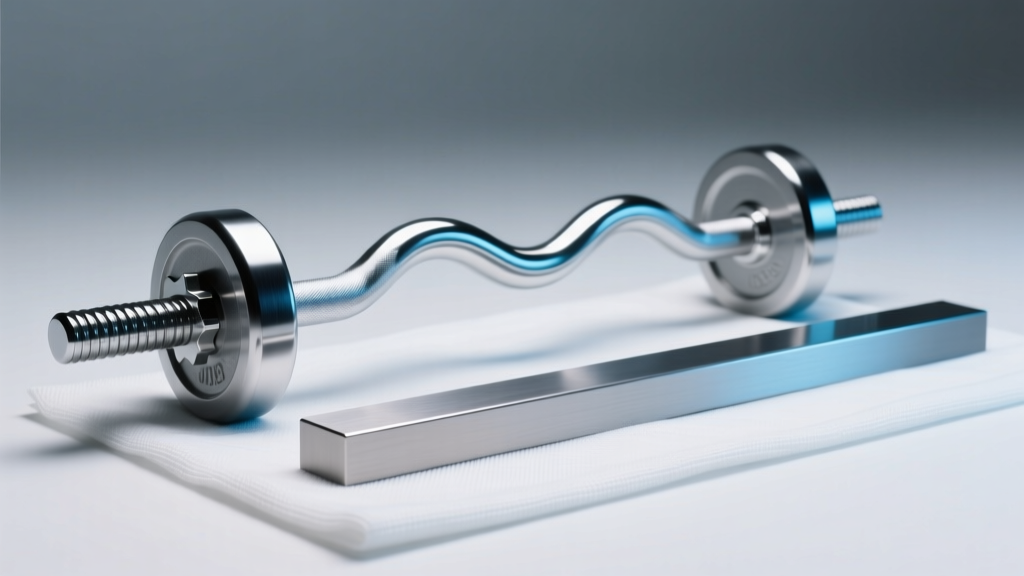
To achieve long-term value, you must invest in a dedicated surface bar (often called a staple bar). Unlike a curved barbell, a surface bar features a straight central post with two 90-degree bends (the "rise") that point upward toward the skin's surface. This design eliminates the outward lever tension, allowing the tissue to heal flat and undisturbed.
When budgeting for a surface bar, you must pay close attention to three specific measurements to ensure you aren't wasting money on ill-fitting stock:
- Gauge (Thickness): 14-gauge (1.6mm) is the industry standard for horizontal brows. It provides enough structural rigidity to prevent the "cheese-cutter effect," where thin wire slowly slices through the skin under tension. 16-gauge (1.2mm) is occasionally used for delicate anatomy but carries a higher migration risk.
- Wearable Length (Width): This is the distance between the two 90-degree bends. For most horizontal eyebrow placements, a width between 12mm and 18mm is required. If the bar is too narrow, it will pinch the tissue; if it is too wide, it will snag on clothing and towels.
- Rise (Depth): This is the length of the vertical posts that exit the skin. A 5mm to 8mm rise is standard. A rise that is too short will cause the decorative ends to embed into swelling tissue, while a rise that is too long creates a snag hazard that will physically rip the piercing out.
Price Ranges by Brand Tier
Not all titanium is machined equally. The precision of the 90-degree bends and the polish of the metal dictate the price. Here is how the market breaks down in 2026:
- The Budget Tier ($25 - $45): Brands like Body Circle or basic offerings from Urban Body Jewelry. These provide legitimate ASTM F136 titanium and internal threading. The polish may not be mirror-finished, requiring a slightly longer healing period, but they are structurally sound and safe for initial piercing.
- The Mid-Tier ($50 - $95): Brands like Anatometal and Industrial Strength. These feature flawless mirror finishes, precise 90-degree bends, and rigorous quality control. The smoother the metal, the less friction against the healing fistula, directly translating to a faster, less irritated healing process.
- The High-End / Luxury Tier ($100 - $250+): Brands like BVLA and NeoMetal. At this level, you are paying for threadless (press-fit) technology and premium gemstone settings. While expensive, the value here lies in the usability. Changing the decorative ends on a healed horizontal eyebrow is notoriously difficult due to the angle; threadless ends allow you to swap gems in seconds without unscrewing tiny, slippery balls.
The Rejection Tax: Calculating Long-Term Value
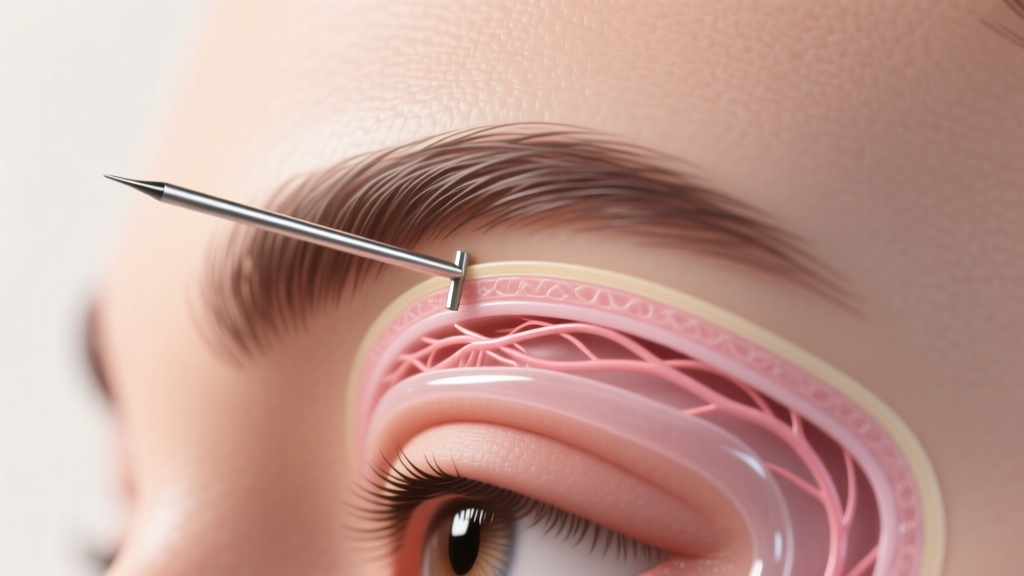
Surface piercings have the highest rejection rate of any body modification. According to the APP Aftercare and Healing Guidelines, surface piercings require meticulous aftercare and zero trauma to survive. When you buy cheap, poorly machined jewelry, you introduce micro-trauma every time you move your facial muscles. The rough threads of an externally threaded budget bar scrape the inside of the fistula, creating scar tissue that the body eventually decides to push out.
Let us calculate the "Rejection Tax." If you opt for a $20 surgical steel surface bar with external threading, you save roughly $60 compared to a high-end threadless titanium setup. However, when that steel bar inevitably migrates and rejects within 8 to 14 months, you lose the initial $100 piercing fee. You must then pay a professional to safely remove the embedded jewelry ($30-$50) and are left with a visible, indented scar on your eyebrow ridge. To fix the aesthetic, you may seek laser scar revision ($300+). The "$20 budget choice" ultimately costs you over $400 and permanent physical damage.
Conversely, investing $120 in a BVLA threadless titanium surface bar upfront provides a biocompatible, snag-free environment. The jewelry retains its structural integrity for decades. If you ever choose to retire the piercing intentionally, the clean exit leaves only two microscopic, barely visible dots. The cost-per-wear of a high-end surface bar over a five-year lifespan is literally pennies per month.
Final Verdict: Building Your Budget
When budgeting for horizontal eyebrow piercing jewelry, you must shift your mindset from "buying an accessory" to "investing in a medical-grade implant." The horizontal brow is an unforgiving placement that will ruthlessly expose the flaws of cheap manufacturing.
Allocate a minimum of $50 to $80 for a high-quality, internally threaded ASTM F136 titanium surface bar from a reputable manufacturer like Anatometal or Industrial Strength. If your budget allows, push into the $100+ range for threadless (press-fit) jewelry from BVLA or NeoMetal; the ease of changing ends without twisting the bar will save your piercing from unnecessary rotational trauma during maintenance. Never compromise on the gauge (stick to 14g), never accept external threading, and never settle for 316L steel. In the world of surface piercings, buying the right jewelry the first time is always the cheapest option in the long run.