Ultimate Care Guide for Jump Ring Jewelry Finger Rings
Learn expert cleaning and maintenance tips for jump ring jewelry finger rings. Prevent snagging, fix loose links, and restore shine to chainmaille designs.

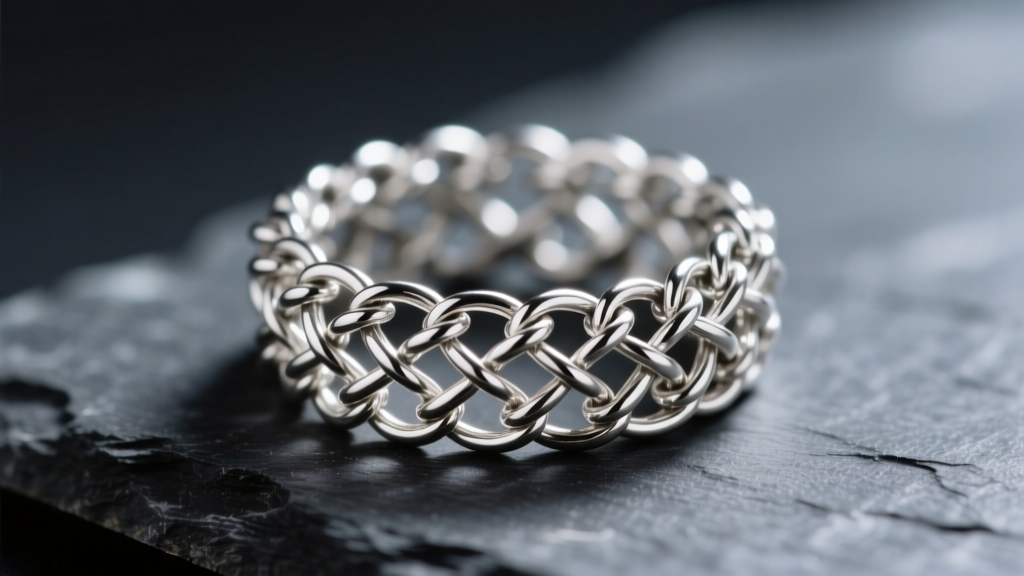
When it comes to structural complexity in finger adornments, few designs rival the intricate beauty of jump ring jewelry. Unlike solid cast bands or forged signets, rings constructed from interlocking jump rings—such as chainmaille weaves, articulated snake bands, and linked charm rings—rely entirely on the friction, tension, and work-hardening of individual wire loops. While visually stunning and highly flexible, this modular architecture introduces unique vulnerabilities. Dirt traps easily within the crevices of high-aspect-ratio weaves, and a single snag on a wool sweater can compromise the structural integrity of the entire band.
Proper maintenance of these pieces requires a departure from standard ring care. In this comprehensive guide, we break down the exact metallurgy, cleaning protocols, and repair techniques necessary to preserve your linked finger rings for decades of daily wear.
The Mechanics and Vulnerabilities of Linked Bands
To understand how to care for jump ring jewelry, you must first understand how it fails. A jump ring is created by coiling wire around a mandrel and slicing it, leaving a single microscopic seam. In high-quality finger rings, jewelers typically use 18-gauge (1.02mm) or 20-gauge (0.81mm) wire to balance flexibility with tensile strength.
The primary vulnerability lies in the seam. If a ring is subjected to lateral torque—such as catching on a pocket edge or lifting heavy gym equipment—the seam can pull apart. Once a single ring in a Byzantine or European 4-in-1 chainmaille weave springs open, the load distribution shifts, rapidly accelerating wear on adjacent links. Furthermore, the overlapping nature of the seams creates microscopic shelves where dead skin cells, cosmetic lotions, and environmental sulfur accumulate, leading to localized galvanic corrosion if left untreated.
The "Snag and Pull" Failure Mode: Daily Wear Precautions
Preventative care is vastly superior to reactive repair. Because jump rings are essentially tiny, overlapping hooks, they are naturally predisposed to snagging on textiles and hair. To mitigate the "snag and pull" failure mode, adopt the following wearing protocols:
- The "Last On, First Off" Rule: Always put your linked rings on after dressing to avoid catching the seams on silk, lace, or knitwear. Remove them before taking off tight clothing.
- Moisturizer Timing: Apply hand creams and allow them to fully absorb (minimum 5 minutes) before wearing jump ring jewelry. Thick emollients will pack tightly into the wire intersections, acting as a magnet for abrasive dust.
- Impact Avoidance: Never wear articulated or chain-link rings while weightlifting or handling coarse ropes. The compressive force can permanently warp the circular geometry of the jump rings into ovals, weakening the work-hardened metal.
Deep Cleaning Protocols for High-AR Weaves
In jewelry fabrication, the Aspect Ratio (AR) is the inner diameter of the jump ring divided by the wire thickness. High-AR weaves (looser links) are more flexible but trap significantly more debris than low-AR weaves (tight, rigid links). Standard polishing cloths are useless here, as they cannot penetrate the interstitial spaces between the wires.
According to the Gemological Institute of America (GIA), mechanical agitation is often required to dislodge particulate matter from complex jewelry settings. Below is a comparison of the most effective cleaning methods for linked finger rings.
| Cleaning Method | Best For | Frequency | Precautions |
|---|---|---|---|
| Ultrasonic (40-45 kHz) | Heavy buildup, plain metal weaves | Monthly | Never use on rings with porous stones (opal, turquoise) or oxidized patinas. |
| Warm Surfactant Soak | Routine maintenance, all metals | Bi-weekly | Use a drop of mild dish soap; agitate with a soft-bristled baby toothbrush. |
| Steam Cleaning | Diamond-accented linked bands | Quarterly | High pressure can distort thin 22-gauge decorative jump rings. |
For a safe, manual deep clean, mix three parts warm distilled water with one part ammonia-free dish detergent. Let the ring soak for 15 minutes to soften sebum and lotions. Using a soft-bristled brush, gently sweep along the curve of the weave, never aggressively scrubbing across the seams, which can force debris deeper into the link overlaps.
Restoring Structural Integrity: Closing Sprung Rings
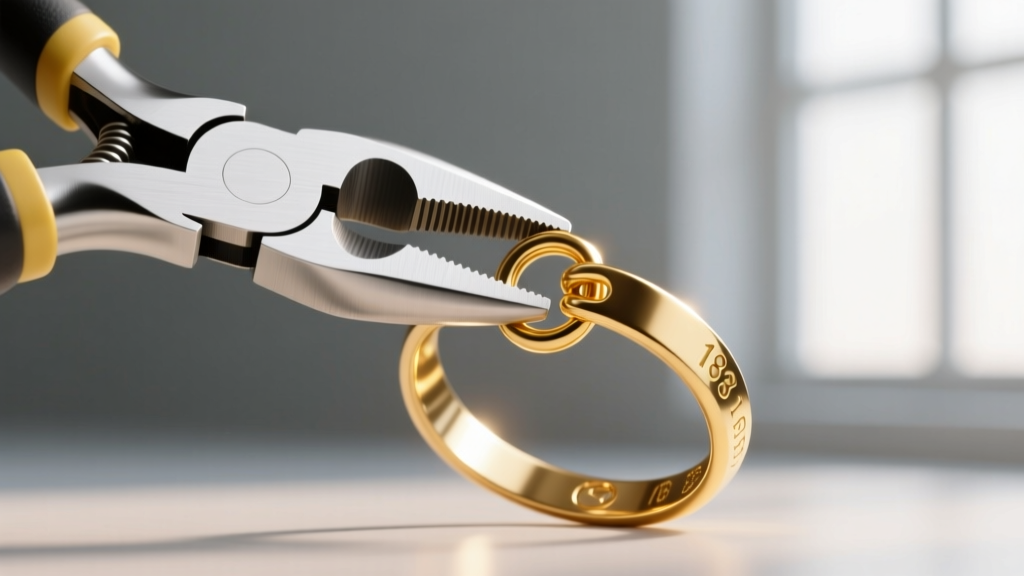
Eventually, a jump ring will catch and pull open. When this happens, the structural integrity of the wire is compromised by "spring-back"—the metal's natural tendency to return to its coiled state. The most critical mistake amateurs make is pulling the two ends of the seam apart laterally to close it. This stretches the wire, thins the gauge, and ruins the perfect circular geometry.
As detailed in the fabrication guidelines by master suppliers like Rio Grande, a sprung jump ring must be closed using a twisting motion. Here is the professional protocol:
- Secure the Ring: Hold one side of the open jump ring firmly with a pair of smooth-jawed chain-nose or flat-nose pliers. (Never use serrated pliers, as they will mar the metal and create stress fractures).
- Apply Torque: Grip the opposite side with a second pair of pliers. Instead of pushing the ends together, twist one hand toward you and the other away from you, allowing the wire ends to slide past each other.
- The Snap: Gently wiggle the ends back and forth in this twisting motion while applying slight inward pressure. You will feel and hear a distinct "snap" when the ends align perfectly flush.
- Work-Harden: If the ring feels loose, the metal has annealed (softened). You can lightly tap the closed ring with a rawhide mallet on a steel bench block to re-harden the wire without altering its shape.
Metal-Specific Maintenance Guidelines
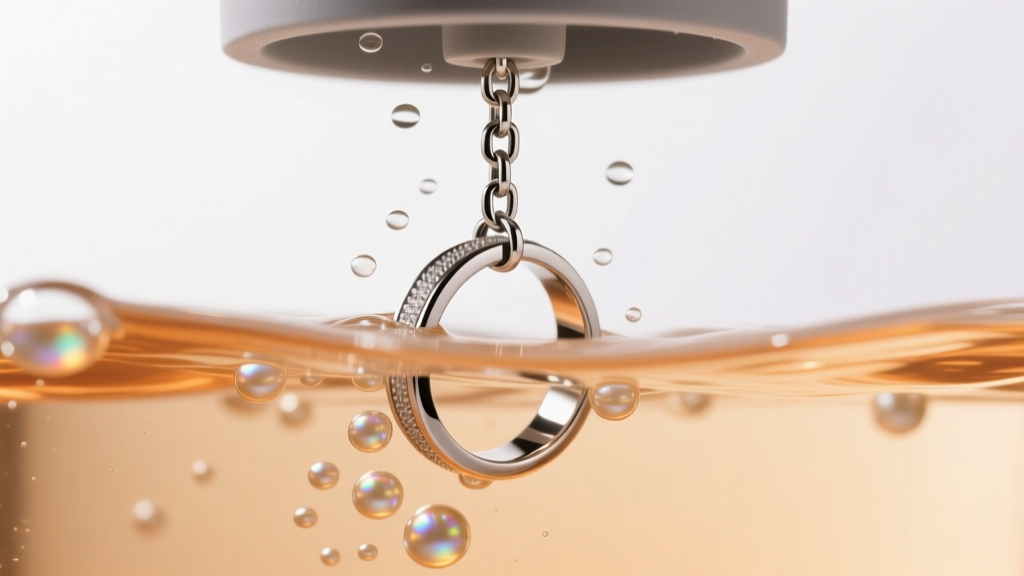
The material composition of your jump ring jewelry dictates its long-term chemical care. Different alloys react uniquely to the acids in human sweat and the sulfur in the atmosphere.
Sterling Silver (925)
Silver is highly susceptible to tarnishing, particularly in the microscopic shadows between jump rings where airflow is restricted. Store sterling silver linked rings in airtight ziplock bags with anti-tarnish silica strips. If tarnish develops in the weave, use a liquid silver dip sparingly, followed by an immediate and thorough rinse in distilled water. Trapped silver dip chemicals will aggressively corrode the wire from the inside out.
Titanium and Niobium
These reactive metals are often anodized to produce vibrant, iridescent colors in chainmaille rings. Because anodization is an altered surface oxide layer rather than a plating, it is incredibly durable but can be dulled by abrasive polishes. Clean these exclusively with mild soap and water. Never use ultrasonic cleaners on anodized titanium, as the cavitation bubbles can cause microscopic pitting that scatters light and dulls the color.
Solid Gold (14k and 18k)
Gold jump rings offer the best longevity due to their resistance to oxidation and high tensile strength. However, 18k gold is softer than 14k, making it slightly more prone to pulling open under heavy lateral stress. Maintain gold linked rings with regular surfactant soaks and occasional polishing with a treated jeweler's cloth to restore the high-polish finish on the outer curves of the links.
Long-Term Storage and Anti-Tangle Strategies
Because jump ring jewelry is inherently flexible, storing it improperly can lead to severe tangling, especially if you own multiple linked stacking rings. When flexible bands are tossed into a jewelry box, the microscopic seams act like Velcro, interlocking with one another.
To prevent this, store each linked ring individually in a soft flannel pouch or a dedicated compartment lined with tarnish-resistant Pacific cloth. If you must travel with multiple chainmaille or linked rings, thread them onto a rigid plastic ring cone or a dedicated jewelry roll with individual snap-fastened straps. By respecting the unique mechanical properties of jump ring jewelry, you ensure that these masterpieces of micro-engineering remain as structurally sound and visually brilliant as the day they were woven.