Halo Ring Jewelry Trends 2026: Asymmetrical & Hidden Settings
Discover 2026 halo ring jewelry trends. Explore asymmetrical, hidden, and mixed-gemstone halo settings with expert styling and buying advice.

The 2026 Shift: Beyond the Traditional Concentric Halo
For over a decade, the classic concentric halo—a perfectly symmetrical circle of micro-pavé diamonds encircling a central gemstone—dominated the fine jewelry market. However, as we navigate the style landscape of 2026, halo ring jewelry has undergone a radical aesthetic and structural evolution. Today’s collectors and style-forward consumers are experiencing fatigue with the "cookie-cutter" double and triple halos of the 2010s, which often prioritized sheer carat weight over architectural elegance. The modern halo is no longer just a tool to make a center stone look larger; it is an exercise in asymmetrical design, negative space, and hidden details.
According to trend forecasts from leading gemological institutions, the new era of halo ring jewelry focuses on intentionality. Designers are manipulating the gallery, offsetting the pavé, and utilizing mixed gemstone melee to create pieces that feel deeply personal and avant-garde. Whether you are evaluating an engagement ring or a statement right-hand cocktail ring, understanding these structural shifts is critical for making an informed, future-proof investment.
Deconstructing the Modern Halo Ring Jewelry Aesthetic
To truly appreciate the 2026 trends, we must break down the three dominant design philosophies currently redefining the halo setting.
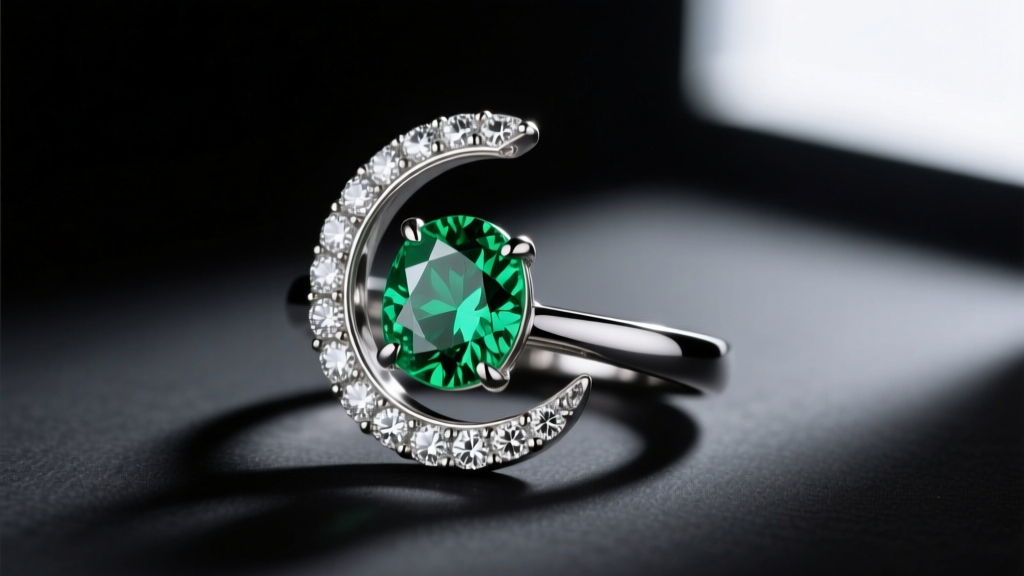
1. The Asymmetrical Halo (The "Crescent" Effect)
The symmetrical halo is being replaced by the crescent or "half-halo." In this design, micro-pavé diamonds or colored gemstones only wrap around 40% to 60% of the center stone’s circumference. This deliberate asymmetry draws the eye across the ring in a dynamic sweep, creating a sense of motion. From a technical standpoint, jewelers are utilizing French-cut pavé (also known as fishtail pavé) for these crescents. By minimizing the metal visible on the surface, French-cut settings allow light to enter the melee stones from the sides, maximizing brilliance in an off-center arrangement.
2. The Hidden Halo (Under-Basket Pavé)
Perhaps the most significant trend in contemporary halo ring jewelry is the "hidden halo." Rather than encircling the girdle of the center stone on the same horizontal plane, the halo is set underneath the center stone, wrapping around the gallery or the basket of the setting. When viewed from above, the ring appears to be a classic solitaire. But from a profile or low-angle view, a secret ring of brilliance is revealed. This trend caters to the desire for understated luxury and "quiet wealth" aesthetics, offering intricate detail that is meant for the wearer, not just the observer.
3. Mixed-Cut and Mixed-Gemstone Halos
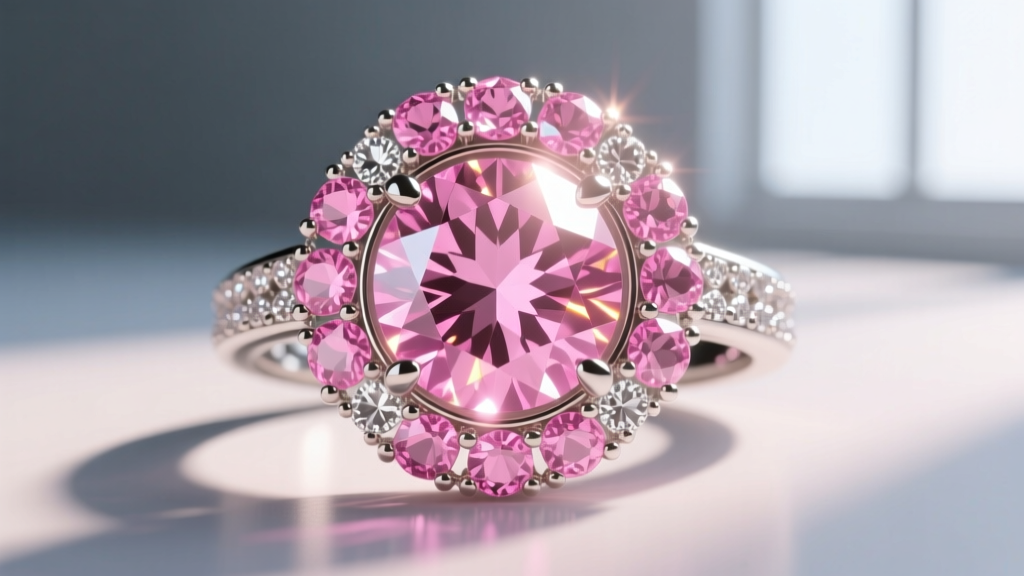
Gone are the days when a round brilliant center stone was exclusively paired with round brilliant melee. In 2026, high-end halo ring jewelry frequently contrasts cuts and species. A popular configuration features an emerald-cut or Asscher-cut center stone (which produces broad, geometric flashes of light known as the hall-of-mirrors effect) surrounded by a halo of alternating French-cut baguettes and round brilliants. Furthermore, mixing gemstone species—such as a vivid blue sapphire center surrounded by a halo of neon-pink Padparadscha sapphires or black diamonds—creates striking chromatic tension.
Material & Gemstone Specifications for 2026 Halos
The structural integrity and optical performance of a halo rely heavily on the materials used. A common pitfall in mass-produced halo ring jewelry is the use of inferior melee diamonds and inadequate metal alloys. As an informed buyer, you must scrutinize the specifications of the micro-stones and the precious metal holding them.
| Specification | Standard / Commercial Grade | 2026 Luxury / Expert Grade | Impact on Halo Ring Jewelry |
|---|---|---|---|
| Melee Cut | Single Cut (17-18 facets) | Full Cut (57-58 facets) | Full cut melee ensures the halo sparkles with the same fire and scintillation as the center stone, avoiding a "glassy" or dull appearance. |
| Metal Alloy | 14k or 18k White Gold | Platinum 950 | Platinum 950 is denser and more malleable, allowing for ultra-fine micro-prongs that resist snapping and do not require rhodium re-plating. |
| Pavé Technique | Bright-Cut (Shared Prong) | French-Cut / Fishtail | French-cut exposes more of the melee girdle, increasing light return by up to 30%, which is vital for hidden and asymmetrical halos. |
| Melee Color/Clarity | I-J Color / I1-I2 Clarity | F-G Color / VS1-VS2 Clarity | Lower grades create a visible "dirty" or yellowish ring around the center stone, drastically reducing the premium look of the jewelry. |
The Gemological Institute of America (GIA) emphasizes that the optical properties of melee stones are just as critical as those of larger gems. When evaluating halo ring jewelry, always request the exact color and clarity grades of the pavé diamonds. If a jeweler cannot provide this data, it is a strong indicator that commercial-grade, poorly graded melee was used in bulk.
Sizing and Proportional Frameworks
A halo fundamentally alters the visual footprint and physical dimensions of a ring. Understanding these proportional shifts is essential for proper finger sizing and aesthetic balance.
- The Diameter Multiplier: A standard halo adds approximately 1.0mm to 1.5mm of pavé on all sides of the center stone. Therefore, a 6.5mm (1.00ct) round brilliant diamond with a 1.5mm halo will have a total face-up diameter of 9.5mm. This gives the visual weight of a 3.00ct solitaire, without the exponential price increase.
- The Profile Height: Hidden halos require a deeper basket to accommodate the under-gallery pavé. Expect the setting to sit 1.5mm to 2.0mm higher off the finger than a standard bezel or low-profile solitaire. This increases the risk of snagging on textiles.
- Shank Tapering: To balance a wide halo head, the shank (band) should feature a subtle taper. A band that is 2.0mm wide at the base and tapers to 1.5mm where it meets the halo creates an elegant, elongating effect on the finger.
Expert Styling: Pairing Halos with Stacking and Signet Rings
Because halo ring jewelry inherently commands attention, styling it alongside other rings requires a strategic approach to avoid visual clutter. The 2026 styling ethos favors contrast in texture and weight.
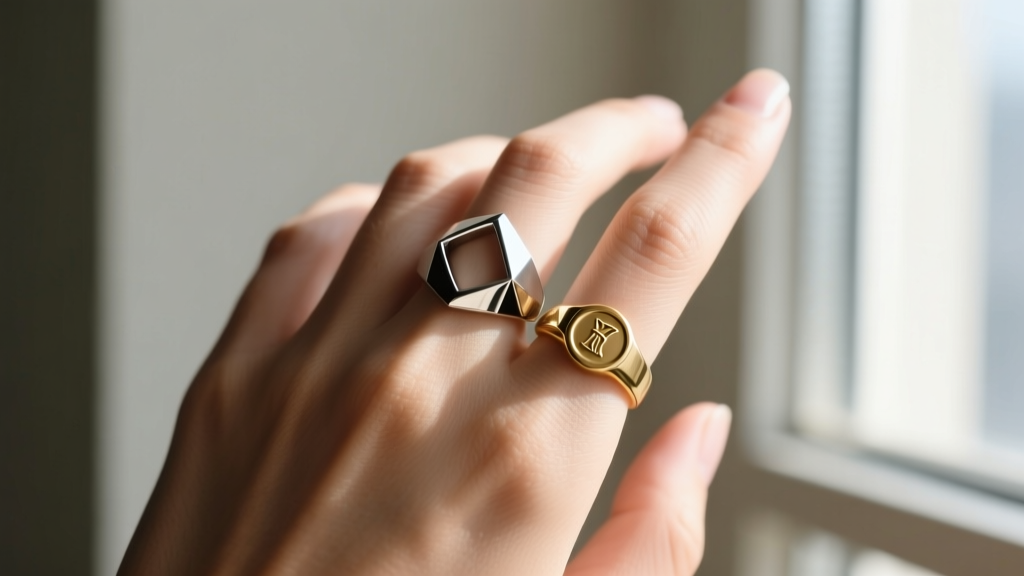
If you are wearing a highly detailed, micro-pavé hidden halo ring on your ring or middle finger, avoid pairing it with other diamond-encrusted bands. Instead, contrast the high-sparkle halo with matte-finished metals or signet rings. A brushed 18k yellow gold signet ring on the pinky finger provides an anchoring, architectural weight that grounds the ethereal sparkle of the halo. For stacking, utilize plain, high-polish knife-edge bands. The sharp, clean lines of a knife-edge band reflect light in broad, continuous sheets, which beautifully offsets the pinpoint scintillation of the halo’s melee stones.
Sourcing and Pricing Benchmarks
The pricing of halo ring jewelry varies wildly based on the melee quality and metal choice. As a benchmark for the 2026 market, a high-quality hidden halo setting (Platinum 950, F-G VS melee, French-cut pavé) crafted by a bespoke jeweler typically starts between $1,800 and $2,500 for the setting alone, excluding the center stone. Commercial-grade halos using single-cut melee and 14k white gold can be found for $600 to $900, but these will suffer from diminished light return and long-term prong durability issues.
"When investing in a halo setting, you are paying for the precision of the micro-setter. A master setter spends hours ensuring each 0.01ct melee stone is perfectly leveled and angled to catch light uniformly. This labor is where the true value of a luxury halo lies." — Master Bench Jeweler & Appraiser
For those exploring alternative gemstones, Blue Nile's educational resources on ring settings note that halos can also serve a protective function. Surrounding a softer center stone, like a 7.5 on the Mohs scale emerald or tanzanite, with a halo of harder diamonds (10 on the Mohs scale) creates a physical bumper that shields the vulnerable edges of the center gem from impact damage. Ultimately, the 2026 approach to halo ring jewelry is about merging this practical protection with cutting-edge, asymmetrical artistry.


