DIY Ring Jewelry Care: Cleaning & Maintenance Guide
Master the care of DIY ring jewelry. Learn expert cleaning methods for wire-wrapped metals, resin, and polymer clay to prevent tarnish and degradation.

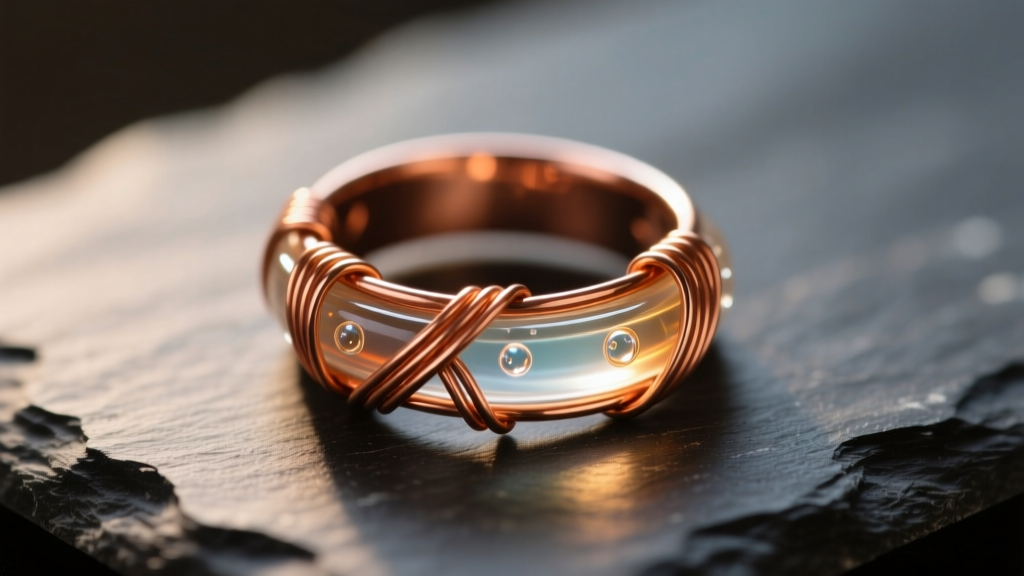
The explosion of the maker economy has fundamentally changed how we accessorize. As we navigate 2026, DIY ring jewelry is no longer just a niche craft; it is a celebrated form of wearable art. From hand-stamped brass signets and intricate wire-wrapped gemstones to UV resin cocktail rings and polymer clay stackers, homemade rings offer unparalleled individuality. However, because these pieces typically bypass industrial finishing processes like rhodium plating, electropolishing, or high-pressure tumbling, they require highly specific care and maintenance protocols to survive daily wear.
Treating a handmade copper ring the same way you would treat a cast 14k gold band is a recipe for disaster. Commercial jewelry cleaners often contain harsh chemicals like ammonia or thiourea that can strip intentional patinas, dissolve adhesives, or cloud synthetic materials. This comprehensive guide breaks down the exact chemical, structural, and environmental maintenance routines required to preserve the integrity and beauty of your DIY ring jewelry collection.
The Chemistry of Tarnish in Hand-Fabricated Metals
Most DIY metal rings are fabricated from accessible, non-precious, or semi-precious alloys such as C110 raw copper, NuGold (jeweler’s brass), or 925 sterling silver. Unlike fine jewelry, these metals are highly reactive to the sulfur compounds, moisture, and natural acidity found in human skin and the atmosphere.
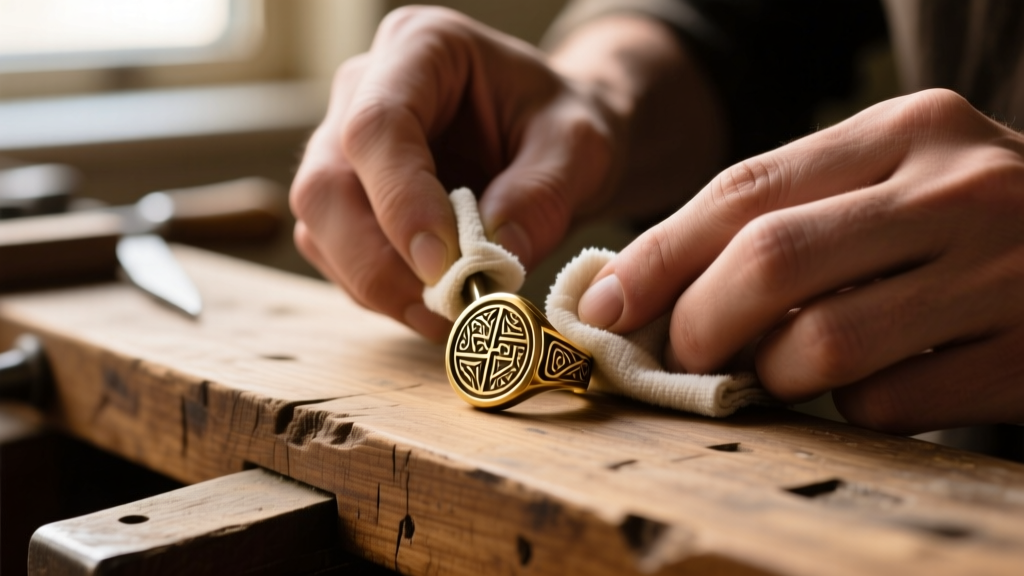
When raw copper oxidizes, it first forms copper oxide (a dark brown or black layer). If exposed to prolonged moisture and carbon dioxide, it develops copper carbonate, commonly known as verdigris (the chalky green patina). While some makers intentionally force a patina using liver of sulfur, unprotected bright copper will tarnish unpredictably. According to metalworking experts at Rio Grande, mechanical polishing is always preferred over chemical dipping for hand-fabricated metals, as chemical dips can cause microscopic pitting in porous, hand-soldered joints.
Safe Cleaning Protocols by Metal Type
Below is a decision matrix for safely cleaning the most common metals used in DIY ring jewelry without compromising structural solder joints or intentional oxidized detailing.
| Material Grade | Common Failure Mode | Recommended DIY Cleaning Agent | Chemicals to Strictly Avoid |
|---|---|---|---|
| C110 Raw Copper | Green verdigris buildup, skin discoloration | Lemon juice and coarse salt paste (rinse immediately) | Ammonia-based commercial dips |
| NuGold (Jeweler's Brass) | Dull, cloudy oxidation, loss of pink hue | Mild dish soap, warm water, and a soft toothbrush | Ultrasonic cleaners (can loosen glued settings) |
| 925 Sterling Silver | Black silver sulfide tarnish | Aluminum foil, baking soda, and boiling water bath | Chlorine bleach (causes irreversible pitting) |
| 999 Fine Silver | Bends easily, minor surface scratching | Polishing cloth infused with jeweler's rouge | Abrasive pastes (removes too much soft metal) |
Preserving Non-Metallics: Resin and Polymer Clay
DIY ring jewelry frequently incorporates non-metallic elements, most notably two-part epoxy resin and polymer clay. These materials present entirely different maintenance challenges, primarily revolving around UV degradation and plasticizer leaching.
Combating UV Yellowing in Epoxy Resin
Epoxy resin rings, especially those featuring suspended dried flowers or metallic foils, are highly susceptible to UV degradation. Over time, exposure to direct sunlight breaks down the polymer chains, resulting in an irreversible amber or yellow tint. When crafting or caring for resin rings, it is vital to understand that not all resins are created equal. Formulations containing HALS (Hindered Amine Light Stabilizers) resist yellowing significantly longer. As detailed by the chemists at ArtResin, even UV-resistant resins will eventually degrade if left in direct sunlight, meaning storage away from windows is a non-negotiable maintenance step.
Cleaning Rule: Never use isopropyl alcohol (IPA) or hand sanitizers to clean resin rings. While IPA is great for removing sticky residue during the crafting phase, prolonged contact with cured resin can cause micro-fractures and clouding over time. Stick to a damp microfiber cloth and mild soap.
Protecting Polymer Clay from Plasticizer Loss
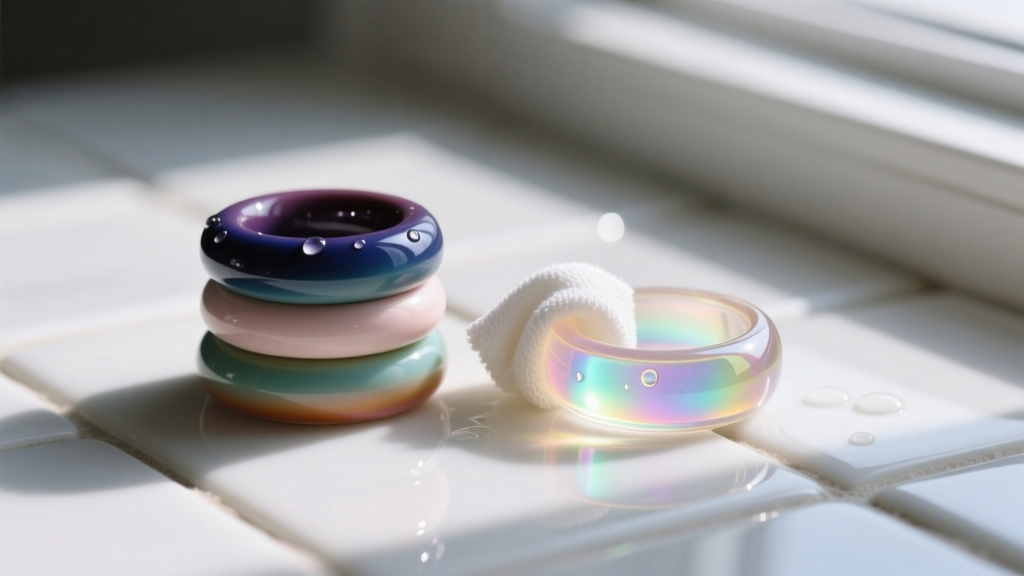
Polymer clay (such as Sculpey or Fimo) is essentially a PVC-based compound suspended in plasticizers. The flexibility and durability of a polymer clay ring depend entirely on retaining these plasticizers. Alcohol-based cleaners, acetone, and even the natural oils in some citrus-based lotions can draw the plasticizers out of the clay, leaving the ring brittle and prone to snapping under the mechanical stress of being worn on a finger.
To maintain polymer clay stacking rings, wipe them gently with a damp cloth. If the clay is unsealed, consider applying a dedicated polyurethane water-based varnish (like Varathane) rather than a spray-on clear coat, which often remains tacky and attracts dust.
Structural Maintenance: Wire Wraps and Adhesives
The physical structure of DIY ring jewelry is often its weakest point. Commercial rings are cast in a single piece or laser-welded. DIY rings rely on wire tension, mechanical cold connections, and chemical adhesives.
Managing Wire Tension and Work Hardening
Wire-wrapped rings are typically made from dead-soft or half-hard wire. With daily wear, the metal undergoes a process called "work hardening" — it becomes stiffer but more brittle. Conversely, the prongs holding a focal stone can slowly bend outward due to friction against clothing.
- Monthly Prong Check: Gently tap the stone with a wooden toothpick. If you hear a click or rattle, the wire tension has relaxed.
- Re-tensioning: Use nylon-jaw pliers to gently squeeze the wire wraps back into place. Never use bare steel pliers, as they will mar the soft copper or silver wire.
Adhesive Degradation in Stone Settings
Many DIY makers use E6000 or UV-cured resin to secure cabochons into hand-soldered bezels. E6000 is a solvent-based adhesive that remains slightly flexible, which is excellent for absorbing impact. However, it degrades when exposed to prolonged moisture and heat. If you notice a stone shifting, do not simply apply more glue over the old layer. You must carefully pry the stone out, remove the degraded adhesive with a small amount of Goo Gone, and re-set the stone with fresh adhesive, allowing a full 72-hour cure time before wearing.
Advanced Storage and Environmental Controls
How you store your DIY ring jewelry when it is not on your hand is just as critical as how you clean it. The Gemological Institute of America (GIA) notes that environmental sulfur is the primary catalyst for silver tarnish, and this applies equally to copper and brass.
The Anti-Tarnish Storage Protocol
Throw away the open-air ceramic jewelry dishes. To properly store hand-fabricated metal rings:
- Sealable Poly Bags: Place each ring in an individual, airtight ziplock bag.
- Anti-Tarnish Strips: Drop a 3M anti-tarnish strip into the bag. These strips absorb airborne sulfur compounds and can protect reactive metals for up to 6 months.
- Silica Gel Packets: For rings incorporating resin, wood, or polymer clay, add a small silica gel packet to control ambient humidity, preventing wood warping and clay degradation.
Sealing the Deal: Protective Coatings
For makers looking to reduce the maintenance burden of their DIY ring jewelry, applying a permanent protective barrier is the ultimate solution. For copper and brass rings that you want to keep bright, Renaissance Wax is the museum-standard choice. Originally developed for the British Museum, this micro-crystalline wax is buffed onto the clean metal surface, creating a hard, moisture-resistant shell that prevents oxidation without looking like a thick, plastic coating. Apply a thin layer every six months to keep raw metals shining and to prevent the dreaded "green finger" effect associated with acidic skin chemistry reacting with copper alloys.
By understanding the unique material science behind your handmade pieces, you can ensure your DIY ring jewelry remains as vibrant and structurally sound as the day it was crafted. Proper care transforms a fragile craft project into a lasting heirloom.