EDCO Jewelry Rings: Titanium vs Tungsten vs Zirconium
Compare titanium, tungsten, and zirconium EDCO jewelry rings. Discover material hardness, scratch resistance, and safety features for everyday wear.

The Rise of EDCO Jewelry Rings in Everyday Wear
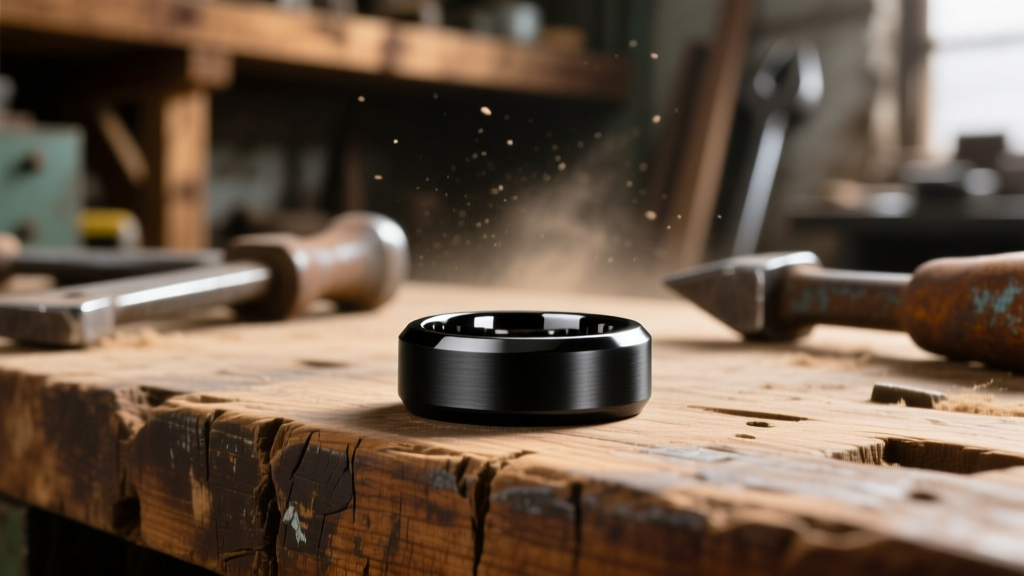
When traditional precious metals fail under the rigors of daily labor, outdoor exploration, or tactical environments, EDCO (Everyday Carry/Everyday Combat) jewelry rings step in to bridge the gap between durability and style. Unlike standard 14k gold or sterling silver bands that scratch, dent, and deform under pressure, EDCO rings are engineered from advanced alternative metals and ceramics. As we navigate the 2026 landscape of men's and women's rugged jewelry, the market has matured significantly. Manufacturers are now utilizing 5-axis CNC machining and advanced sintering techniques to produce rings that can survive a mechanic's shop, a rock-climbing expedition, or a deployment, all while maintaining a refined aesthetic.
However, not all alternative metals behave the same way under stress. Choosing the right EDCO ring requires a deep understanding of metallurgical properties, failure modes, and emergency removal protocols. In this comprehensive material comparison, we dissect the three titans of the EDCO ring category: Titanium, Tungsten Carbide, and Black Zirconium.
Titanium (Grade 5 vs. Grade 2): The Lightweight Champion
Titanium is the cornerstone of the EDCO jewelry market, prized for its exceptional strength-to-weight ratio and hypoallergenic properties. However, a critical distinction exists between the two primary grades used in ring manufacturing, and confusing them can lead to severe disappointment in the field.
Grade 2 (Commercially Pure) vs. Grade 5 (Ti-6Al-4V Alloy)
Most entry-level titanium rings are crafted from Grade 2 commercially pure titanium. While highly resistant to corrosion, Grade 2 has a tensile strength of roughly 50,000 psi (ksi). It can still dent or bend under extreme blunt force. In contrast, Grade 5 titanium (Ti-6Al-4V) is an aerospace-grade alloy containing 6% aluminum and 4% vanadium. This alloy boasts a tensile strength of up to 130 ksi—more than double that of Grade 2—and is virtually impervious to bending or denting in real-world scenarios.
Because titanium has an extremely high melting point (over 3,000°F), it cannot be cast using traditional jewelry lost-wax methods. Instead, premium EDCO rings are milled from solid billets using CNC lathes. This machining process allows for intricate topographies, knurled grips, and precise bevels that define the modern tactical aesthetic.
The Science of Voltage Anodizing
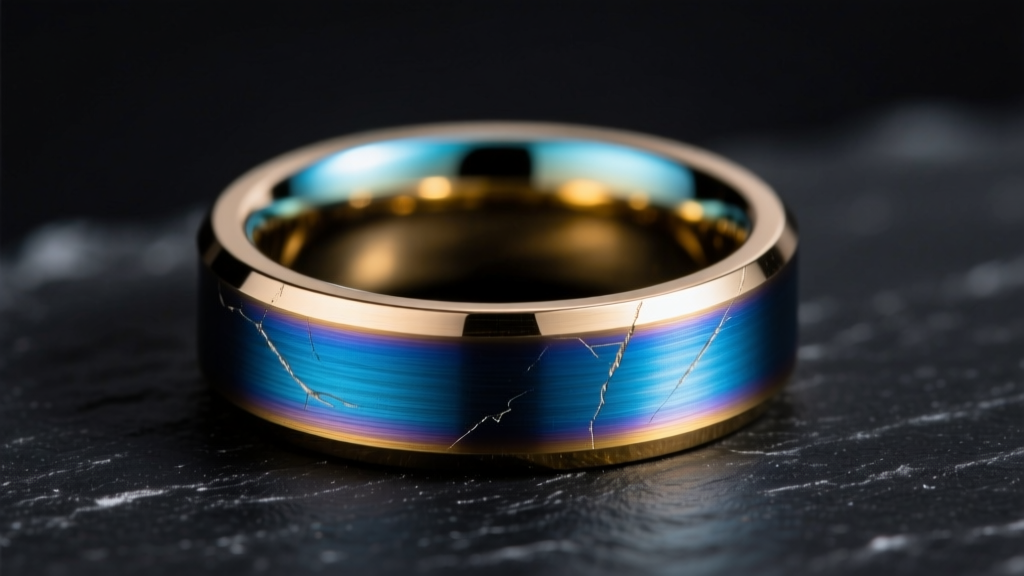
One of titanium's most unique properties is its ability to be anodized without dyes or paints. By applying specific voltages to the metal in an electrolytic bath, the naturally occurring oxide layer on the surface thickens. This altered oxide layer refracts light differently, producing vibrant, permanent colors ranging from electric blue to deep gold. A 15-volt charge yields a bronze hue, while 90 volts produces a vivid green. This makes Grade 5 titanium EDCO rings highly customizable while maintaining complete biocompatibility.
Tungsten Carbide: Unmatched Scratch Resistance and Heft
If titanium is the featherweight champion, tungsten carbide is the undisputed heavyweight. Tungsten rings are not made from pure tungsten metal, which is too brittle; rather, they are forged from tungsten carbide, a compound of equal parts tungsten and carbon atoms. The powder is pressed and sintered at extreme temperatures (over 2,500°F) to create a dense, incredibly hard material.
Hardness, Density, and the Binder Dilemma
On the Mohs scale of mineral hardness, tungsten carbide ranks between 8.5 and 9, making it nearly scratch-proof. It will easily survive contact with concrete, steel tools, and abrasive rocks without losing its polished or brushed finish. Furthermore, its density (approx. 15.6 g/cm³ for jewelry-grade carbide) gives it a satisfying, substantial heft that many wearers prefer over lighter metals.
However, the sintering process requires a metallic binder. Historically, cobalt was used, but cobalt can oxidize when exposed to skin oils and sweat, leaving unsightly dark spots on the finger and the ring. Modern, high-quality EDCO tungsten rings use nickel-free binders or proprietary ceramic binders to eliminate both the oxidation issue and the risk of contact dermatitis. Always verify the binder composition before purchasing a tungsten carbide ring.
The Shatter Risk: A Critical Failure Mode
Tungsten's greatest strength is also its fatal flaw: it lacks malleability. While it will never bend, it possesses low impact resistance. If struck with a heavy hammer or caught in a heavy door, a tungsten ring will not deform to absorb the energy; it will shatter like glass. While this prevents the ring from crushing the finger bone (a common issue with bending gold bands), it means the ring is destroyed upon severe impact.
Black Zirconium: The Heat-Treated Tactical Choice
Often confused with cubic zirconia (a synthetic diamond simulant), zirconium is a completely different, naturally occurring transition metal. In its raw state, zirconium is a silvery-grey metal similar to titanium. However, its true EDCO potential is unlocked through a proprietary heat-treatment process.
The Zirconium Oxide (ZrO2) Shell
When heated to extreme temperatures in the presence of oxygen, the outer layer of the zirconium ring oxidizes, forming a shell of zirconium oxide (ZrO2). This oxidized layer is jet-black, incredibly hard (ranking around 8 on the Mohs scale), and highly resistant to abrasion and chemicals. Unlike black rhodium plating or PVD (Physical Vapor Deposition) coatings applied to other metals—which eventually wear off to reveal the silver metal beneath—the black layer on a zirconium ring is a permanent, structural part of the metal itself.
Pro-Tip for Zirconium Care: While the black oxide layer is extremely hard, the zirconium core beneath it is relatively soft (Mohs 5). If the ring is struck with a sharp, heavy object that penetrates the oxide shell, the softer core can dent. Treat it with the same respect you would give a hardened steel tool.
Material Comparison Matrix
To help you select the ideal EDCO ring for your specific lifestyle, refer to the comparative data below. Prices reflect the 2026 market average for high-quality, CNC-machined bands from reputable manufacturers.
| Property | Grade 5 Titanium | Tungsten Carbide | Black Zirconium |
|---|---|---|---|
| Mohs Hardness | 6.0 | 8.5 - 9.0 | 8.0 (Oxide Layer) / 5.0 (Core) |
| Density (g/cm³) | 4.43 | 15.6 | 6.52 |
| Tensile Strength | 130 ksi | N/A (Brittle) | 55 ksi |
| Scratch Resistance | Moderate | Exceptional | High (Surface only) |
| Impact Resistance | High (Will bend/dent) | Low (Will shatter) | Moderate |
| Emergency Removal | Requires diamond-coated saw | Cracked with vice grips | Standard steel ring cutter |
| 2026 Avg. Price | $80 - $250 | $40 - $150 | $70 - $180 |
Safety and Emergency Removal Protocols
The most critical consideration when wearing any ring in an industrial, medical, or outdoor environment is the risk of ring avulsion—a severe degloving injury that occurs when a ring catches on a fixed object while the body is in motion. The Centers for Disease Control and Prevention (CDC) and NIOSH strongly advise removing all hand jewelry when operating heavy machinery. However, if an emergency medical situation arises (such as severe finger swelling due to trauma or allergic reaction), the removal method varies drastically by EDCO material.
- Titanium: Because Grade 5 titanium is so strong and tough, standard hospital ring cutters (designed for gold and silver) will instantly destroy their blades. First responders must use specialized diamond-coated rotary saws or heavy-duty manual cutters (like the 'Ring Thing' device) equipped with titanium-specific blades. It is a slow, heat-generating process that requires cooling the finger with saline.
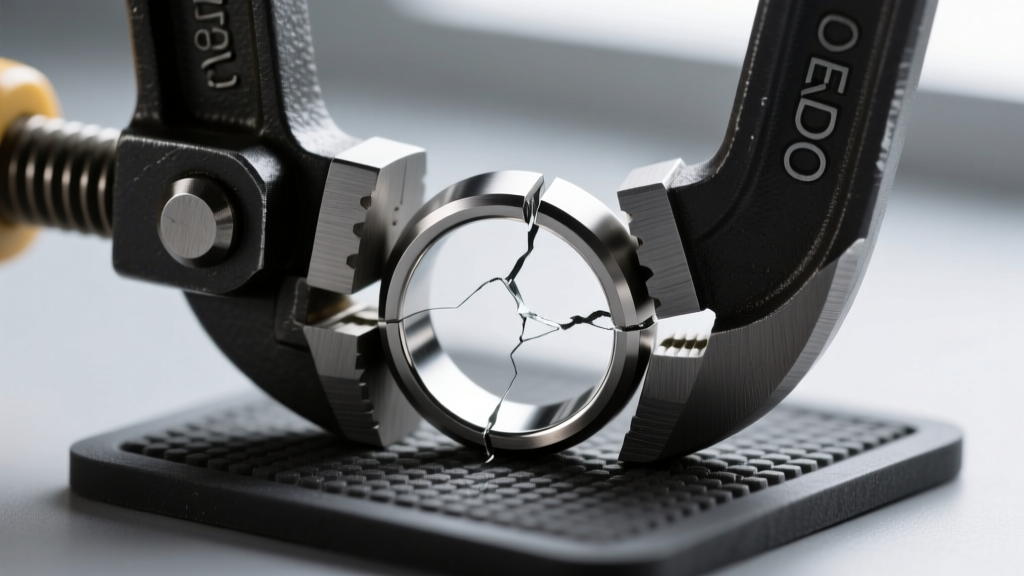
- Tungsten Carbide: Tungsten cannot be cut. Instead, emergency personnel use locking vice grips to clamp down on the ring, applying steady, increasing pressure until the carbide shatters and falls away in pieces. This is actually the fastest removal method, provided the responder is trained not to crush the underlying tissue.
- Zirconium: The oxidized shell is hard, but the core is soft enough that high-quality, hardened steel hospital ring cutters can slice through it, though it requires significantly more effort than cutting a silver band.
Final Verdict: Choosing Your EDCO Ring
There is no single "best" material for EDCO jewelry rings; the ideal choice depends entirely on your daily environment. If you work with your hands, lift heavy weights, and require a ring that will never scratch but can be easily shattered off in a medical emergency, Tungsten Carbide is your best bet. If you are an outdoor enthusiast, climber, or military professional who needs a lightweight, unbreakable ring that won't shatter upon impact with rock or steel, invest in a Grade 5 Titanium band. Finally, if you want a unique, stealthy aesthetic with excellent surface hardness and a mid-range weight profile, Black Zirconium offers a perfect tactical compromise.
Regardless of your choice, always ensure your EDCO ring features a comfort-fit interior and a beveled edge to minimize the risk of snagging, ensuring your everyday carry gear remains both safe and stylish.

