Beginner Guide to Picking the Perfect Ring and Jewelry Holder
Learn how to choose the best ring and jewelry holder for your collection. Expert tips on materials, tarnish prevention, and organizing rings.

Why Your Rings Need a Dedicated Storage System
If you are just starting to build a curated collection of finger rings—from delicate stacking bands to bold cocktail pieces—you might be tempted to toss them into a communal ceramic bowl on your nightstand. As a beginner, this is the most common mistake you can make. A proper ring and jewelry holder is not just about aesthetic organization; it is a critical tool for preserving the structural integrity and finish of your precious metals and gemstones.
The primary enemy of a mixed ring collection is the Mohs scale of mineral hardness. Diamonds sit at a 10 on this scale, while 14k and 18k gold alloys sit around 2.5 to 3. If you drop a diamond stacking ring into a bowl alongside a soft gold signet ring, the diamond will easily scratch and gouge the gold every time the bowl is moved. Furthermore, gemstones like opals (5.5-6.5 on the Mohs scale) and pearls (2.5-4.5) require individual, padded isolation to prevent surface abrasion. Investing in the right storage system ensures your rings remain in pristine condition for decades.
Matching the Ring and Jewelry Holder to Your Collection
Not all rings are created equal, and neither are their storage requirements. The shape, weight, and gemstone settings of your rings should dictate the type of holder you purchase.
Stacking & Midi Rings: Cones and Trees
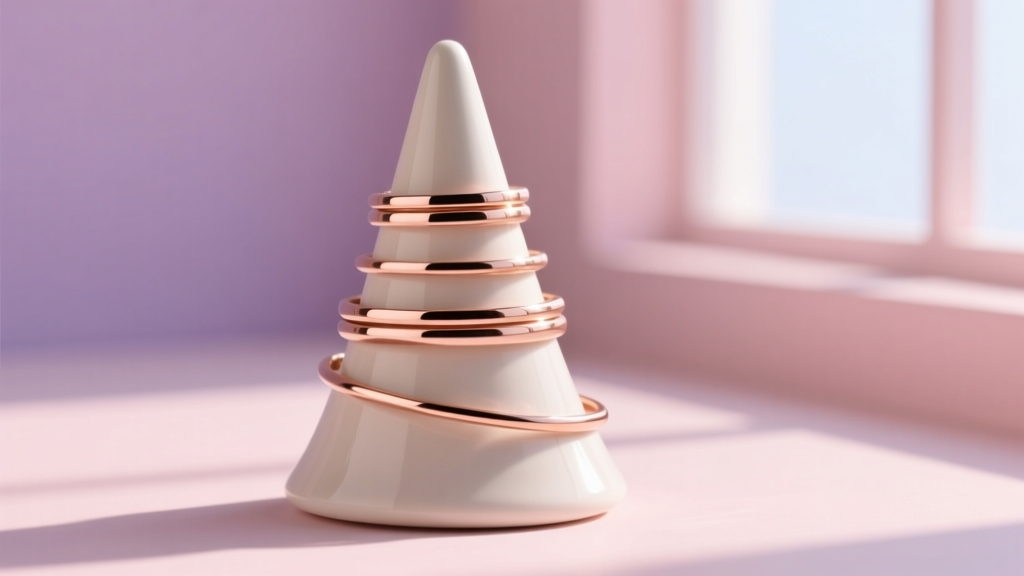
Stacking rings and midi rings are characterized by their thin bands and lightweight profiles. Because you likely own these in multiples, a multi-tiered ring cone or a branching jewelry tree is ideal. Cones allow you to slide the rings on vertically, preventing them from tangling or scratching one another. Look for ceramic or velvet-wrapped cones, as bare metal or rough wood cones can wear down the inner rhodium plating of white gold stacking bands over time.
Cocktail & Signet Rings: Padded Slots and Drawers
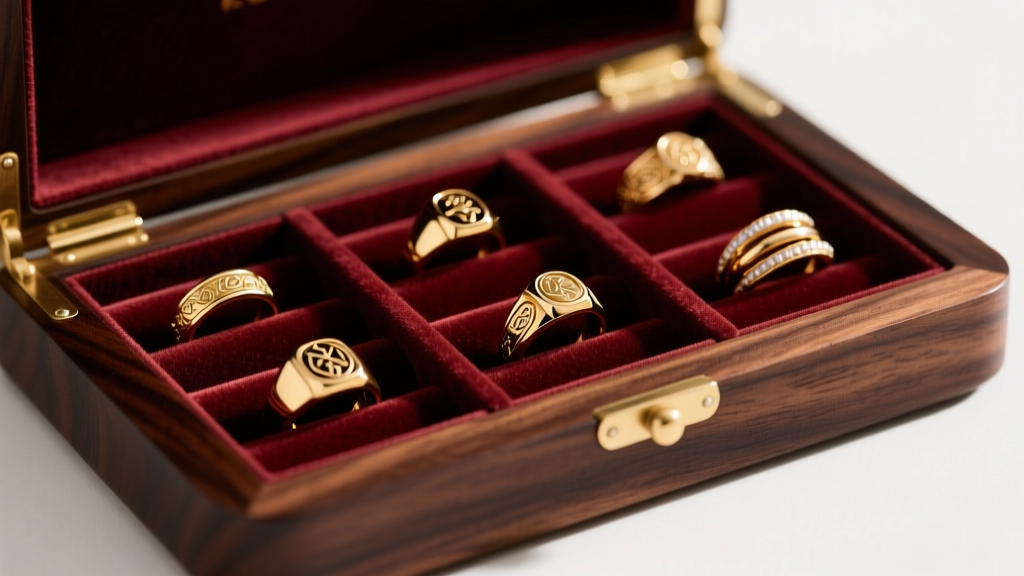
Cocktail rings feature large, often protruding center stones, while signet rings boast wide, heavy metal faces. These pieces require a ring and jewelry holder with individual, plush-lined slots. The slots should be deep enough to accommodate the height of a cocktail stone without the velvet lid pressing down on the prongs. For heavy gold or silver signets, a drawer-style organizer with rigid dividers prevents the rings from sliding and colliding when the drawer is pulled open.
Thumb, Pinky, and Spinner Rings: Compartmentalized Trays
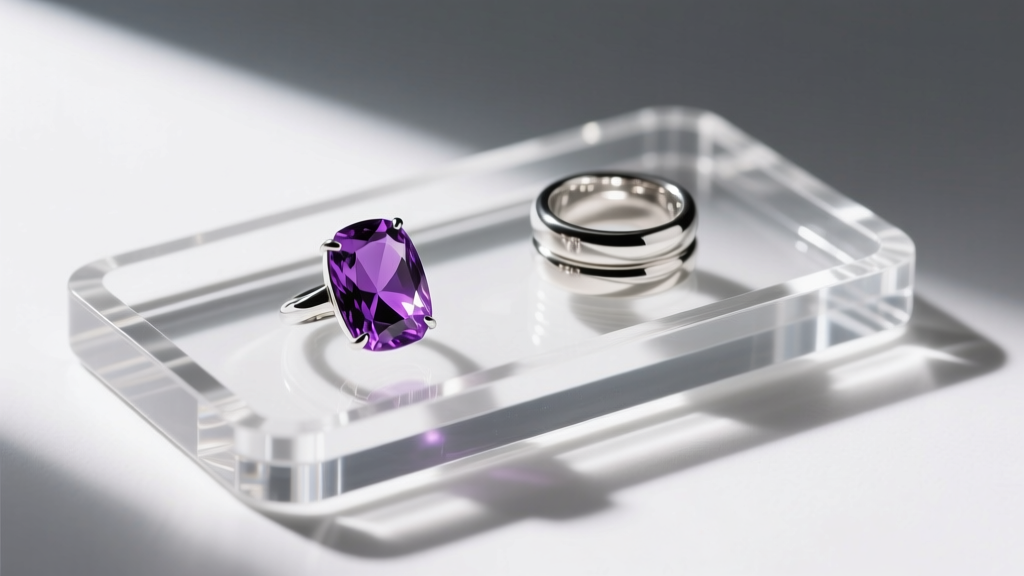
Thumb and pinky rings often feature unique, asymmetrical shapes or wider bands that do not sit flush on standard ring rolls. Spinner rings, which feature an outer band that rotates freely, are particularly prone to rolling off flat surfaces and getting lost. For these specialty rings, a shallow, compartmentalized acrylic or leather tray with a non-slip suede base is the best solution. The shallow depth allows you to see the intricate designs at a glance, while the suede base stops spinner rings from rolling away.
Material Science: What Should Your Holder Be Made Of?
As we navigate the jewelry storage trends of 2026, sustainable materials and modular designs are taking center stage. However, the interior lining of your ring and jewelry holder is far more important than its exterior shell. The material touching your rings dictates how well they are protected from environmental damage.
| Holder Material / Lining | Best For | Tarnish Protection | Durability |
|---|---|---|---|
| Pacific Silvercloth | Sterling Silver & White Gold | Excellent (Absorbs H2S gases) | High (Washable & reusable) |
| Polyurethane Faux Leather | Mixed Metals & Daily Wear | Moderate (Requires anti-tarnish strips) | High (Water & scratch-resistant) |
| Clear Acrylic (Unlined) | Gemstone Cocktail Rings | Low (Purely visual display) | Moderate (Prone to micro-scratches) |
| Solid Walnut/Oak | Heavy Signet & Thumb Rings | Low (Must have fabric lining) | Very High (Generational lifespan) |
According to the Jewelers of America, sterling silver is highly susceptible to tarnishing when exposed to sulfur compounds in the air. If your collection is heavy on silver, a holder lined with Pacific Silvercloth—a specialized fabric embedded with microscopic silver particles that trap hydrogen sulfide gases before they reach your jewelry—is a non-negotiable investment.
Tarnish Prevention and Environmental Controls
Even the most beautiful ring and jewelry holder will fail to protect your collection if it is placed in a high-humidity environment. Bathrooms are the worst possible location for jewelry storage due to the constant fluctuations in temperature and humidity from showers, which accelerate the oxidation of copper alloys found in rose and yellow gold.
Expert Tip: To create a micro-climate inside your ring drawers, place a small, breathable pouch of silica gel desiccant and a 3M anti-tarnish strip in each compartment. Replace the strips every six months to maintain optimal protection against sulfur and moisture.
Step-by-Step: Organizing Your Daily Rotation
Organizing your rings should be based on your daily styling habits rather than just their monetary value. Here is a practical framework for setting up your new holder:
- Zone 1 (The Daily Drivers): Keep your wedding bands, simple signets, and everyday stacking rings in the most accessible top tray or on the front row of your ring cones. These are the pieces you grab without thinking.
- Zone 2 (The Statement Pieces): Store your large cocktail rings and mood rings in the secondary, padded drawers. These require more deliberate styling and should be protected from dust when not in use.
- Zone 3 (The Archives): Use the bottom, enclosed sections of your holder for heirloom pieces, high-carat gemstone rings, or seasonal items that you only wear a few times a year. Ensure these are sealed in individual anti-tarnish ziplock bags before placing them in the holder.
Final Thoughts on Ring Care
Choosing the right ring and jewelry holder is an exercise in material science and personal organization. By understanding the Mohs hardness of your gemstones, the tarnish risks of your metal alloys, and the physical shape of your ring styles, you can select a storage system that actively preserves your collection. Avoid the communal bowl, invest in proper padded compartments, and control your storage environment to ensure your rings remain as brilliant as the day you acquired them.


