Jewelry Jump Ring Materials for Durable Chain Finger Rings
Discover how jewelry jump ring materials, gauges, and aspect ratios impact the durability and style of chain-link and adjustable finger rings.

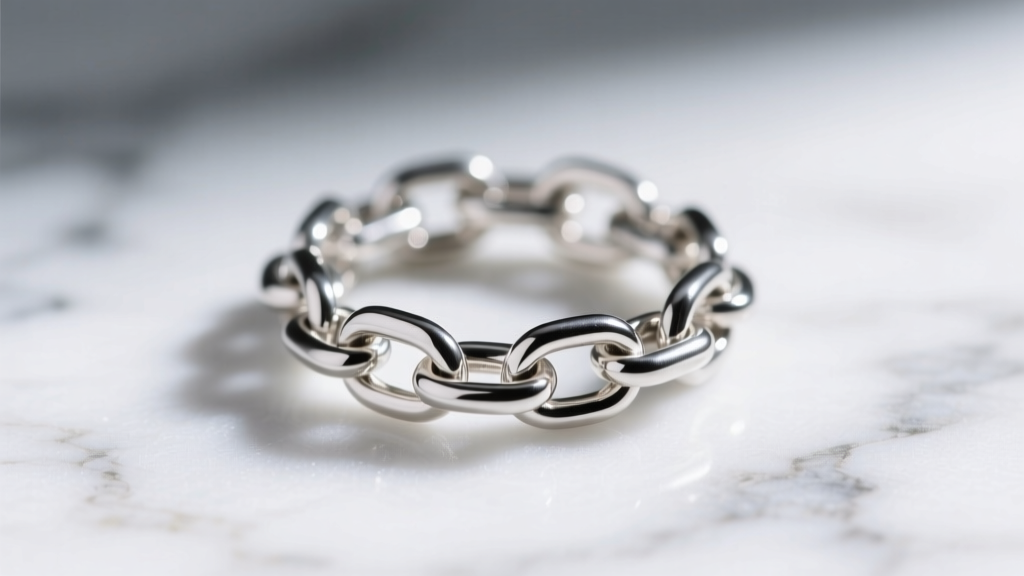
The Structural Renaissance of Chain and Modular Finger Rings
In the contemporary jewelry landscape of 2026, the traditional solid-band finger ring has been joined by a surge in chain-link rings, adjustable slider bands, and modular charm rings. At the absolute core of these designs is a humble but critical component: the jewelry jump ring. While often dismissed as a mere finding or connector in necklace and bracelet assembly, the jump ring serves as the primary structural backbone for chain maille finger rings and the tension-bearing pivot point for adjustable sizing mechanisms. When a jump ring fails on a necklace, a pendant drops; when it fails on a finger ring, the entire structural integrity of the band collapses, often resulting in the loss of the piece.
Designing durable finger rings that utilize these connectors requires a deep understanding of metallurgy, tensile strength, and work-hardening properties. The constant friction against adjacent fingers, exposure to skin acids, and the lateral stress of hand movements demand that jewelers select the precise material and temper for their jump rings. This guide explores the material properties, aspect ratios, and failure modes associated with using jump rings in high-stress finger jewelry.
Material Breakdown: Tensile Strength and Malleability
Not all metals behave identically when drawn into wire, coiled, and cut into jump rings. The temper (hardness) of the metal dictates whether the ring will hold its shape under lateral stress or easily pull apart. According to metallurgical standards referenced by Rio Grande's jewelry manufacturing guides, selecting the correct Vickers Hardness (HV) is paramount for finger-worn chain maille.
Sterling Silver (925): The Traditional Standard
Sterling silver remains the most popular choice for artisan chain rings due to its excellent solderability and classic luster. However, the temper is everything. Dead-soft sterling silver (approx. 60 HV) is easy to manipulate but will gap and pull apart under the lateral stress of a finger ring. For unsoldered chain rings, jewelers must use half-hard sterling silver (approx. 90-100 HV). Half-hard jump rings resist lateral deformation but are prone to work-hardening and snapping if tumbled aggressively during the polishing phase. For high-end sterling silver chain rings, flash-soldering every individual jump ring is the only way to guarantee lifelong durability.
Titanium: Grade 2 vs. Grade 5
Titanium has become a staple in modern, industrial-style adjustable rings and lightweight chain bands. Grade 2 (Commercially Pure) Titanium is relatively soft (approx. 120 HV) and can be manipulated with standard jewelry pliers, making it ideal for intricate, unsoldered Byzantine chain rings. However, it lacks the sheer tensile strength required for heavy load-bearing connections. Grade 5 Titanium (Ti-6Al-4V), with a hardness exceeding 330 HV, is the aerospace-grade standard used for the heavy-duty jump rings that secure adjustable slider mechanisms on modern finger rings. Grade 5 cannot be torch-soldered; it requires specialized laser welding to fuse the seam shut, a process that adds significant manufacturing cost but yields a virtually indestructible connection.
316L Stainless Steel: The Budget Workhorse
For fashion-tier chain rings, 316L surgical stainless steel offers incredible tensile strength (approx. 150-190 HV) and high tarnish resistance at a fraction of the cost of precious metals. The primary drawback is its hardness, which rapidly wears down standard steel saw blades during the manufacturing process. Furthermore, 316L cannot be easily soldered with traditional jeweler's torches, meaning steel chain rings almost exclusively rely on unsoldered, tightly butted jump rings or mechanical crimping.
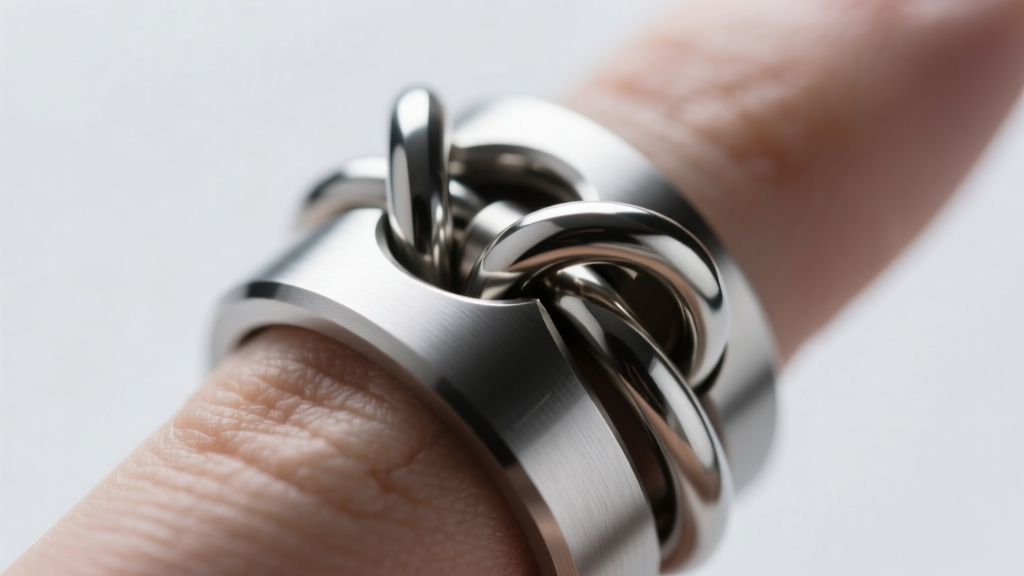
The Aspect Ratio (AR) Matrix for Finger Ring Chains
In chain maille jewelry, the Aspect Ratio (AR) is the mathematical relationship between the Inner Diameter (ID) of the jump ring and the Wire Diameter (WD). The formula is simple: AR = ID / WD. Getting the AR right is critical for finger rings; an AR that is too high results in a sloppy, loose chain that catches on clothing, while an AR that is too low makes the chain rigid, stiff, and impossible to weave. The Maille Artisans International League (MAIL) provides extensive databases on how specific ARs dictate the behavior of different weaves.
| Wire Gauge (WD) | Inner Diameter (ID) | Aspect Ratio (AR) | Best Chain Pattern for Finger Rings | Structural Characteristics |
|---|---|---|---|---|
| 18 AWG (1.0mm) | 3.5mm | 3.5 | European 4-in-1 | Dense, rigid, excellent for wide statement bands |
| 20 AWG (0.8mm) | 4.0mm | 5.0 | Byzantine | Highly flexible, textured, drapes comfortably over the knuckle |
| 16 AWG (1.3mm) | 5.0mm | 3.8 | Helm Chain | Heavy, structural, requires robust clasp or soldered closure |
| 22 AWG (0.6mm) | 2.5mm | 4.1 | Full Persian | Delicate, rope-like, ideal for stacking rings and charm connectors |
Failure Modes: Why Chain Rings Snap and How to Prevent It
Understanding how jump rings fail in finger jewelry allows designers to engineer out weak points before production. The finger is a high-impact environment, and jump rings are subjected to unique stress vectors.
- Lateral Gaping: This occurs when unsoldered jump rings are pulled sideways rather than end-to-end. The seam of the ring opens, compromising the weave. Solution: Use half-hard metals, ensure a perfectly flush saw-cut, or laser-weld the seam shut.
- Shearing from Poor Cuts: Jump rings cut with standard wire clippers have a pinched, beveled edge that creates a weak point and prevents a tight closure. Solution: Exclusively use saw-cut jump rings for finger rings. Saw-cutting removes a microscopic kerf of metal, allowing the two ends to butt together perfectly flush, creating a nearly invisible seam that resists snagging on skin and fabric.
- Work-Hardening Snaps: Tumbling a finished sterling silver chain ring in steel shot to polish it can work-harden the jump rings to the point of brittleness. If the ring is subsequently bent to fit a finger, the jump rings may snap. Solution: Anneal the chain ring after tumbling, or use a magnetic tumbler with gentler media.
- Galvanic Corrosion: Mixing metals—such as using brass jump rings to connect sterling silver chain segments—creates a galvanic cell when exposed to the salt and moisture of human skin. The less noble metal (brass) will rapidly corrode and turn green, eventually crumbling. Solution: Maintain strict metallurgical consistency throughout the entire finger ring assembly.
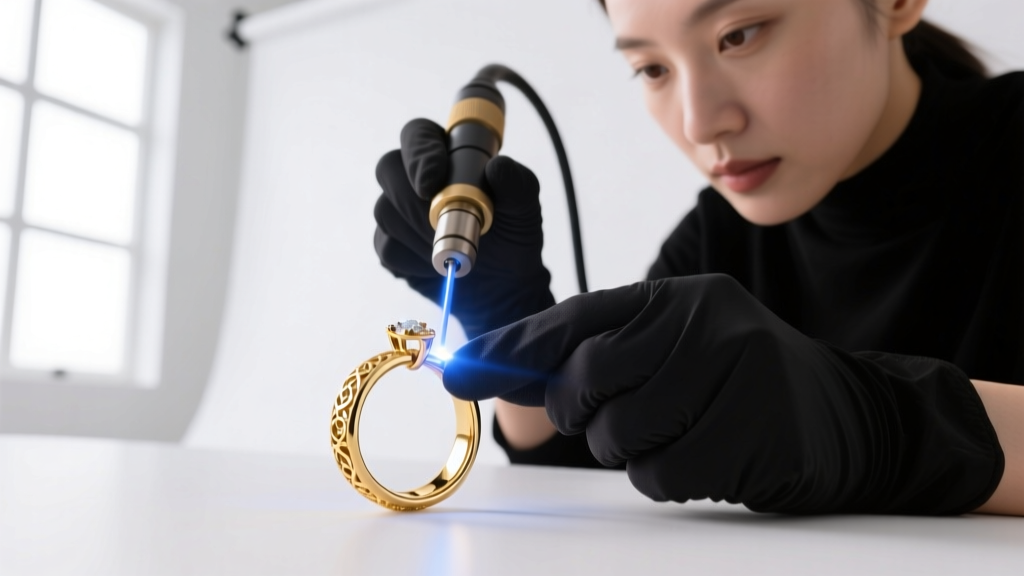
Soldered vs. Unsoldered: The Ultimate Durability Test
The debate between soldered and unsoldered jump rings in finger jewelry ultimately comes down to price point and design intent. For delicate charm rings, where a 22-gauge jump ring connects a gemstone bezel to a fine chain band, soldering is non-negotiable. The surface area of a 22g wire is too small to rely on tension alone; a simple snag on a sweater will pull an unsoldered ring apart. Traditional flash soldering using a torch and silver or gold solder paste creates a permanent, fused bond.
However, for heavy chain maille rings (like a 16-gauge European 4-in-1 band), soldering every single ring by hand is economically unfeasible for most independent jewelers, adding upwards of $40 to $80 in labor costs per piece. In these cases, utilizing high-tensile, half-hard, saw-cut jump rings with a tight Aspect Ratio provides sufficient durability for daily wear. The rings are woven so tightly that lateral movement is restricted by the neighboring rings, effectively locking the seams in place through geometric tension rather than thermal fusion.
Whether you are engineering an avant-garde titanium adjustable ring or a classic 14k gold Byzantine band, treating the jewelry jump ring as a primary structural element rather than an afterthought is the hallmark of master-level jewelry design. By matching the metal's temper to the weave's Aspect Ratio, you ensure that your chain finger rings will endure the rigors of daily wear while maintaining their structural elegance.