Precision Birthstone Essentials: Fit, Hardness, Settings, and Daily Wear
Expert birthstone ring guide with Mohs data, millimeter fit ranges, setting specs, brand examples, and care rules for durable, comfortable daily wear.
Why Precision Matters in Birthstone Rings
Precision birthstone essentials are the details that make a birthstone ring safe, comfortable, and long wearing: correct finger size, gemstone hardness matched to lifestyle, a setting that protects the stone, metal thickness, and care rules. A beautiful stone can chip, fall out, or turn a finger purple if the build is sloppy. This guide focuses on measurable choices, not vague styling talk. It covers Mohs hardness, ring diameter, setting depth, stacking spacing, and brand examples that show how to buy a birthstone ring that fits real hands.
A birthstone ring is personal, but it is also a piece of engineered jewelry. The gemstone is hard, brittle, or soft depending on species. The band must resist bending. The prongs must hold enough metal without covering the stone. The finger must not swell too much to make a tight ring painful. Precision means using numbers and materials, not just symbolism.
When you buy with a jewelry company, ask for the stone dimensions in millimeters, the setting type, the metal weight or thickness, and the return or resizing policy. If the company cannot give these details, the ring may be pretty, but it is not a precision product.
Hands are not identical. The right index finger may be a size 7.5 and the right middle finger a size 6.5. Temperature changes finger volume by about 5 to 10 percent, so a ring measured cold can feel loose in warm weather. If your hand gets puffy after salty food or exercise, choose a design with a slightly looser fit and a security feature such as a sizing bead.
Birthstone Hardness, Durability, and Wear
The Mohs scale measures scratch resistance, not toughness. A diamond at Mohs 10 can still shatter if struck sideways. A pearl at Mohs 2.5 to 4.5 scratches in a pocket with keys. Birthstone rings need hardness plus a protective setting. Daily wear usually needs a stone at Mohs 7 or higher, unless the ring is worn occasionally and protected.
- January: Garnet, Mohs 6.5 to 7.5, good for daily rings if set with bezel or six prongs.
- February: Amethyst, Mohs 7, best in protective prong or halo settings.
- March: Aquamarine, Mohs 7.5 to 8, good for everyday, avoid heavy knocks.
- April: Diamond, Mohs 10, excellent for daily wear, still needs prong inspection.
- May: Emerald, Mohs 7.5 to 8 but brittle, use bezel or low prong and avoid ultrasonic cleaning.
- June: Pearl Mohs 2.5 to 4.5 or Alexandrite Mohs 8.5, pearl needs occasional wear and no chemicals.
- July: Ruby, Mohs 9, excellent, choose high-quality prong or bezel.
- August: Peridot, Mohs 6.5 to 7, good for evening, protect from scratches.
- September: Sapphire, Mohs 9, excellent daily stone, often set in four or six prongs.
- October: Opal Mohs 5.5 to 6.5 or Tourmaline Mohs 7 to 7.5, opal needs closed-back or bezel and no heat.
- November: Topaz, Mohs 8, good daily stone, watch for facet chips.
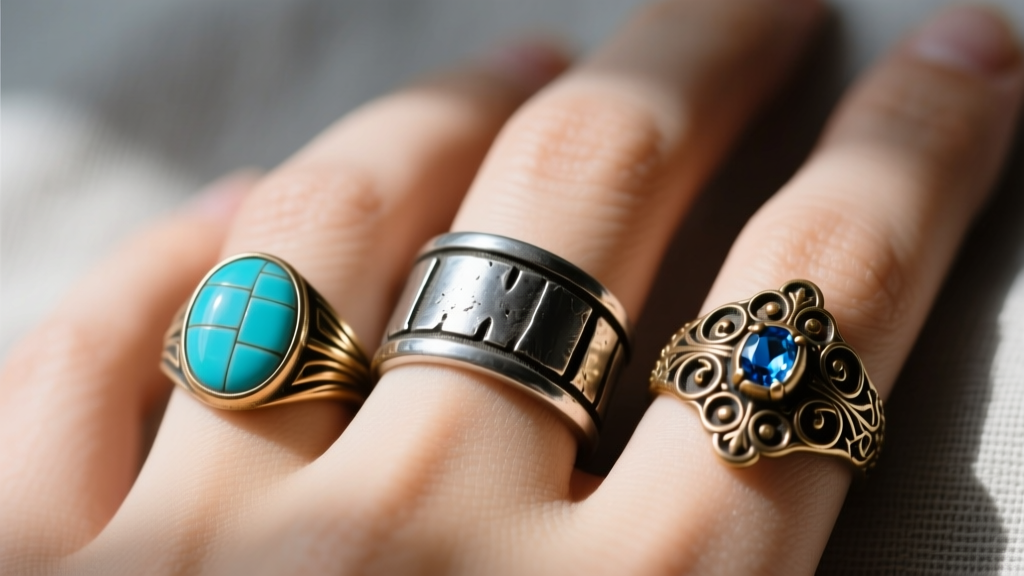
- December: Turquoise Mohs 5 to 6, Tanzanite Mohs 6 to 7, or Zircon Mohs 6 to 7.5, use protective settings.
Brilliant Earth, Blue Nile, James Allen, and Tiffany offer birthstone or gemstone styles that vary by setting. The brand matters less than the spec sheet: a sapphire in a thin four-prong mount may feel delicate, while the same sapphire in a bezel can be a workhorse.
Ring Size, Finger Swelling, and Measurements
US ring size is based on diameter and circumference. For a precision fit, measure the finger at the end of the day, when it is warm but not swollen from exercise. A ring that slides over the knuckle with light resistance and sits centered on the finger is usually right. If it leaves a deep red mark or feels numb, it is too tight. If it spins fully and catches on the knuckle, it is too loose.
Common US sizes in millimeters: size 4 diameter 14.05 mm, size 5 diameter 15.70 mm, size 6 diameter 16.51 mm, size 7 diameter 17.31 mm, size 8 diameter 18.19 mm, size 9 diameter 19.05 mm. Circumference grows about 0.8 mm per full size. Half sizes matter because a 0.4 mm difference can be the line between comfort and snagging.
Knuckles can be wider than the finger base. For rings with a large birthstone, measure the knuckle too. If the knuckle is 18.60 mm and the base is 16.80 mm, a size 6 may not pass. A size 7 may sit loose at the base. Solutions include a sizing bead, a thinner band, a lower profile, or a different finger.
Stacking Rings and Spacing
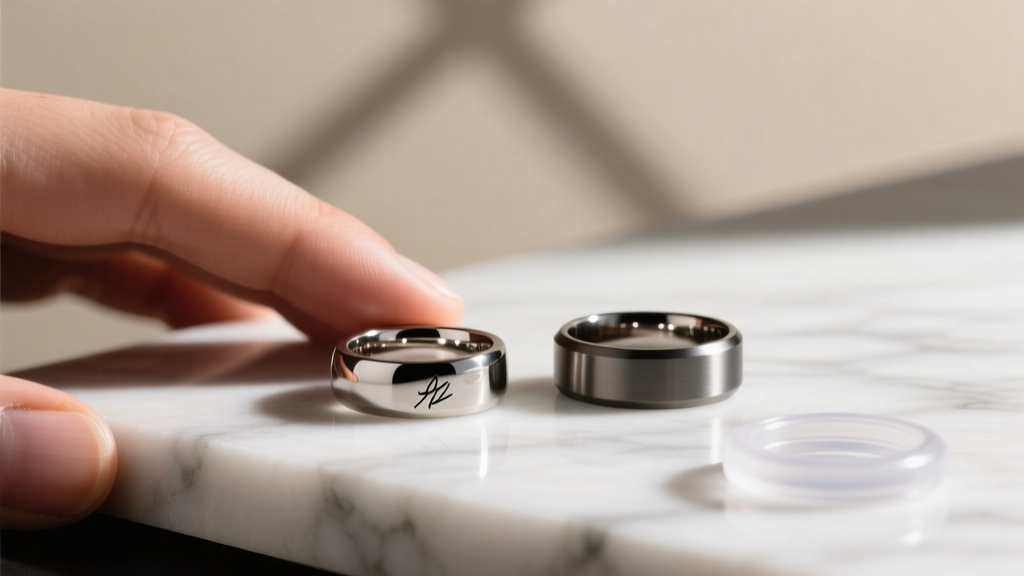
Birthstone rings often stack with a diamond band or a simple wedding band. Each ring needs clearance. A 1.8 mm band with a 2 mm raised stone needs about 0.5 mm to 1.0 mm of vertical space. If you want flush stacking, choose a band with a notch or a curved birthstone ring. Brands such as Mejuri and Catbird sell stackable styles that often use lower profiles, which helps with comfort.
Ring thickness also affects durability. A 1.5 mm band can bend on soft gold. A 2.0 mm to 2.4 mm band is safer for daily wear, especially with prongs. For platinum, a 1.8 mm band can feel sturdy, but platinum is dense and may be heavier on smaller fingers.
Side stones add complexity. A 0.5 mm accent diamond around a 6 mm birthstone can raise total width to 7 mm and add tiny prongs that collect lint. If you want a simpler profile, use a channel-set band or a plain shank with one stone. If you want more sparkle, choose a halo with low-set pavé and inspect it every four months.
Settings That Protect Birthstones
Setting choice determines how much of the stone is exposed and how hard it is to knock. The best setting is not always the prettiest. For soft or brittle stones, protection matters more than sparkle. For hard stones, you can choose an open look and still be safe if the prongs are thick enough.
- Bezel: A metal rim surrounds the stone. Best for opal, turquoise, pearl, peridot, and rings for active wearers. It reduces chips but can make the stone look smaller.
- Prong: Four or six claws. Best for diamond, ruby, sapphire, aquamarine, and topaz. It lets light enter but exposes edges.
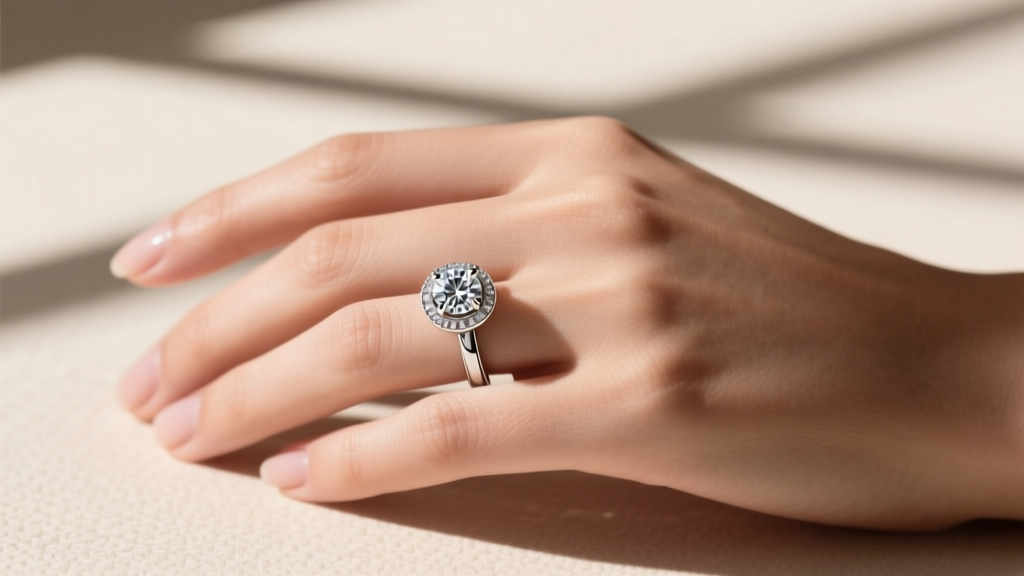
- Halo: A ring of small diamonds around the center. It can protect the center edge and add size, but tiny prongs need inspection.
- Flush or gypsy: Stone sits inside the band. Best for men's rings and active lifestyles, but less light for colored stones.
- Channel: Stones set between metal walls. Useful for side stones, not always ideal for one large birthstone.
Prong height matters. A 1 mm prong that is too tall can bend. A 0.6 mm to 0.8 mm prong on a 14K yellow gold ring is a common compromise. White gold prongs can be harder but may show rhodium wear. Platinum prongs resist snagging better because they move rather than snap, but they can scratch and develop a patina.
For a 6 mm round stone, a setting should cover about 15 to 20 percent of the edge with metal if using prongs, or have a continuous bezel at least 0.4 mm thick. A bezel thinner than 0.3 mm can deform if the ring hits a door. A bezel too thick can hide too much stone.
Birthstone Ring Specifications You Should Check
Before ordering, ask for a spec list. If a retailer does not provide it, request it from customer service. Precision buying is about verifying what you receive.
| Item | Typical Measurement | Why It Matters |
|---|---|---|
| Round center stone | 4 mm, 5 mm, 6 mm, 7 mm, 8 mm | 6 mm is about 0.50 to 0.70 carats for many gems; larger stones raise snag risk. |
| Band width | 1.6 mm to 2.4 mm | Narrow bands feel light but bend; wider bands are stable but can feel bulky. |
| Band thickness | 1.2 mm to 2.0 mm | At least 1.5 mm is safer for daily prong settings. |
| Prong count | 4 or 6 | Six prongs are more secure for a 7 mm or larger stone. |
| Setting height | 3 mm to 6 mm above finger | Lower height catches less on clothing and hair. |
| Metal type | 14K, 18K, platinum | 14K is durable; 18K is richer but softer; platinum is dense and hypoallergenic. |
Stone Shape and Edge Safety
Round and cushion stones have fewer sharp corners than princess cuts. Princess cut gems can chip at corners, so use V-prongs or corner bezels. Oval and marquise stones can look elegant but may snag on sleeves because of pointed ends. For daily birthstone rings, round, oval with protective prongs, and cushion are easier to manage.
Faceted stones can have small chips near the girdle. Inspect under a 10x loupe before wear. A chip does not always ruin the ring, but it can catch skin or fabric. If the chip is near a prong, ask the setter to add a tiny bead or change the prong position.
Daily Wear, Cleaning, and Long-Term Care
Precision is also maintenance. A ring can be well built and still fail if cleaned wrongly. Diamonds, rubies, and sapphires tolerate mild dish soap and warm water. Pearls, opals, turquoise, and emeralds need gentler care. Use a soft toothbrush around the setting, not on the stone, and dry with a lint-free cloth.
Ultrasonic cleaners can loosen settings and fracture treated stones. Steam cleaning can damage opals and heat-sensitive gems. Keep a birthstone ring away from gym weights, gardening tools, and chemicals. If you wear it daily, check prongs every six months. If you have an active job, consider a bezel or a lower profile.
Resizing rules depend on design. A simple band can be resized up or down about one full size without major issues. A eternity band with stones all around often cannot be resized easily. A birthstone ring with a thin shank may need a reinforcing solder or a new band. James Allen, Blue Nile, and Brilliant Earth often provide resizing or warranty terms, but policies vary by setting and stone.
Storage is part of precision. Keep birthstone rings in a soft pouch or a compartmented jewelry box so they do not touch other gemstones. A sapphire can scratch gold, but a garnet or topaz can be scratched by a diamond if stored loosely. For opals, avoid dry storage for long periods; a small humidity-controlled pouch helps prevent crazing, especially in arid climates.
When to Choose a Lower-Profile Ring
Choose lower profile if you wear gloves, type with a desk edge, play instruments, or have small hands. A 3 mm to 4 mm setting height can be more comfortable than a 7 mm cathedral mount. For a 5 mm sapphire, a low bezel can keep the total height under 4.5 mm. That reduces snagging without losing color visibility.
Brand Examples and Practical Buying Tests
Real brands show how precision is applied. Tiffany uses classic settings and often has substantial metal work, but prices can reflect brand and design. Blue Nile and James Allen provide detailed stone specs, which helps when comparing birthstone rings. Brilliant Earth often lists metal weight and ethical sourcing, useful if you want a traceable stone. Mejuri and Catbird sell stackable, everyday styles with lower profiles. Pandora offers affordable charm and birthstone pieces, but check metal thickness if you want lifelong wear.
Custom jewelers add another option. A good studio may create a wax or CAD model and let you try a dummy ring before the final stone is set. This is useful for uneven knuckles, because the dummy can show how the ring passes over the finger. Brands such as Brilliant Earth and Blue Nile have online customization, but a local jeweler can physically adjust prong height and band taper more easily.
A good buying test is simple: look at the back of the ring. Can you see the bottom of the stone or a solid setting? A solid bezel protects, but it can trap moisture under opals if not sealed. A cut-back lets light through but reduces protection. For pearls, a sealed base is often better than an open back.
Another test is the snag test. Run the ring across a knit sleeve. If it pulls threads, the prong or stone edge is too high. If it passes smoothly, the setting is likely safe for clothing. For hair, pass the ring through a loose bun; if it pulls hair, it is not a good ring for active mornings.
Finally, record the measurements. Keep the ring size, stone millimeter size, metal type, and purchase date. If you need insurance or a repair, these numbers save time. A precision birthstone ring is not just a gift; it is a wearable specification. When the numbers match your finger and your habits, the stone becomes easier to love every day.