Expert Guide to Snake Bite Jewelry Rings for Fingers
Discover the technical construction, sizing metrics, and material grades of snake bite jewelry rings for fingers in this expert metallurgy guide.

The Anatomy of Finger Snake Bite Jewelry Rings
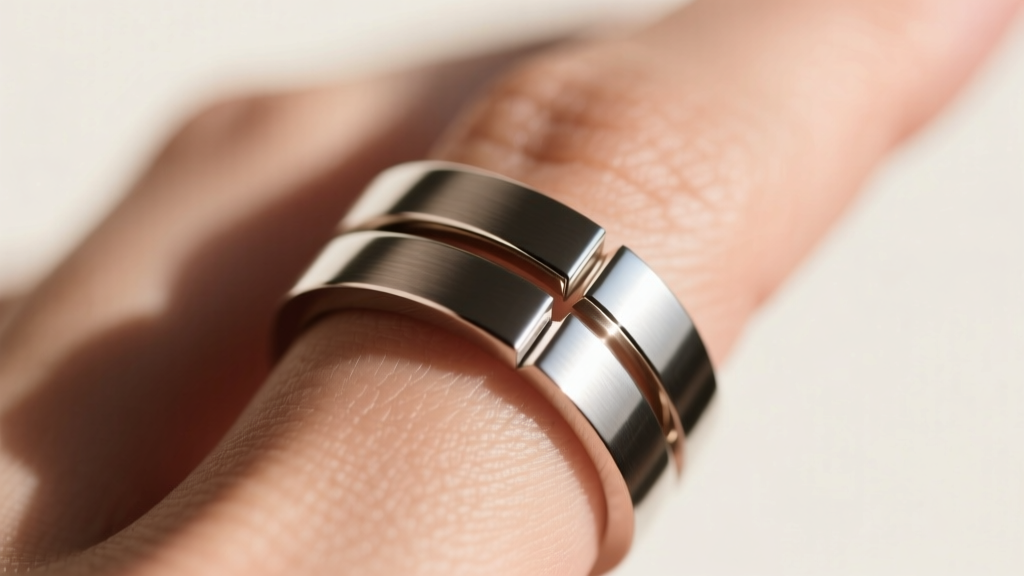
When discussing 'snake bite jewelry rings' within the context of finger adornment, we are addressing two distinct structural categories that mimic the iconic dual-puncture aesthetic or the visual of a serpent's strike. The first is the illusion double-band ring, engineered to look like two separate rings worn simultaneously, replicating the parallel spacing of a traditional snake bite lip piercing. The second is the Ouroboros or fang-motif ring, where the serpent's jaw physically 'bites' into the opposing side of the band or the wearer's finger. Both styles present unique metallurgical and ergonomic challenges that standard single-band rings do not face.
In 2026, the illusion double-band has become a staple in alternative and high-end architectural jewelry. However, constructing a rigid double-band requires precise bridging struts to maintain the negative space gap—typically ranging from 2.0mm to 3.5mm—without compromising the tensile integrity of the shank. If the connecting struts are under-engineered, the ring becomes highly susceptible to torsional shearing during daily wear.
Metallurgy and Material Grades
The material chosen for snake bite jewelry rings dictates not only the biocompatibility but also the maximum width of the negative space gap. Softer metals require thicker bridges, which ruins the delicate 'floating' illusion of the double bands.
- ASTM F136 Ti-6Al-4V ELI (Titanium): The gold standard for hypoallergenic body and finger jewelry. With a Vickers hardness of approximately 350 HV and exceptional tensile strength, titanium allows for bridge struts as thin as 1.2mm while maintaining structural rigidity. According to the Association of Professional Piercers, this specific implant-grade titanium is virtually nickel-free, making it ideal for prolonged skin contact.
- 316L Surgical Stainless Steel: A cost-effective alternative with a Vickers hardness around 220 HV. While highly polished, 316L contains 8-10% nickel, which can cause contact dermatitis in sensitive individuals when trapped against the skin in the narrow gap between double bands.
- 14k Palladium White Gold: For luxury iterations, 14k or 18k gold alloyed with palladium (rather than nickel) provides a Vickers hardness of 140-160 HV. While softer than titanium, it allows for intricate laser-welding of the serpent fang motifs. The Gemological Institute of America notes that palladium alloys significantly increase the durability and tarnish resistance of white gold without introducing common allergens.
| Material Grade | Vickers Hardness (HV) | Min. Bridge Thickness | Nickel Content | Price Range (USD) |
|---|---|---|---|---|
| ASTM F136 Titanium | ~350 | 1.2mm | Trace / None | $85 - $250 |
| 316L Stainless Steel | ~220 | 1.8mm | 8% - 10% | $25 - $60 |
| 14k Palladium White Gold | ~150 | 2.2mm | None | $450 - $1,200 |
Sizing Mechanics for Double-Band Illusion Rings
Sizing a snake bite illusion ring is vastly more complex than sizing a standard band. Because the double-band structure spans a wider surface area (often 8mm to 12mm total width, including the gap), it interacts with the finger's anatomy differently. The primary metric a jeweler must evaluate is the knuckle-to-base differential.
If a wearer's knuckle is more than 1.5 standard US ring sizes larger than their finger base, a rigid, closed-shank double-band will either become painfully stuck at the knuckle or spin uncontrollably once past it. To solve this, expert jewelers utilize two technical modifications:
- Sizing Beads (Speed Bumps): Two small 1.5mm spherical beads are laser-welded to the inner bottom shank of the lower band. This reduces the effective inner diameter at the base, preventing spinning, while allowing the wider knuckle to pass over the smooth top half of the rings.
- Open Shank (Tension) Design: The bottom of the lower band is left open with a 3mm gap, allowing the metal to flex slightly during knuckle insertion. This is highly recommended for 14k gold snake bite rings, as the metal's malleability accommodates the tension without permanent deformation.
Structural Failure Modes and Stress Points
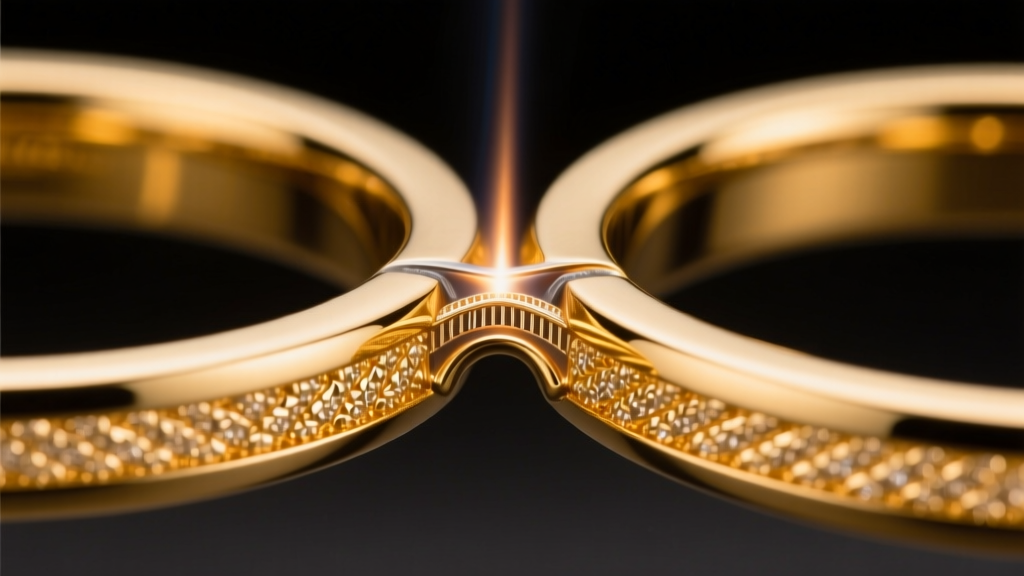
The most common point of catastrophic failure in snake bite jewelry rings is the connecting bridge strut. When the finger bends, or when the ring catches on heavy fabrics like denim or knitwear, the two parallel bands experience opposing lateral forces. This creates torsional shear stress at the exact point where the bridge meets the inner wall of the band.
In mass-produced, low-quality steel rings, these bridges are often cast as part of the mold rather than individually welded. Cast bridges are porous at a microscopic level and will snap under as little as 150 MPa of shear stress. In contrast, high-end jewelers use CNC-milled bridges that are subsequently laser-welded at 120 watts to the inner bands. This creates a metallurgical bond that penetrates 0.5mm into the band's surface, raising the shear tolerance well beyond 400 MPa, effectively making the bridge stronger than the band itself.
Ergonomics and Daily Wear Tolerances
While visually striking, the negative space gap in illusion snake bite rings creates a functional hazard known in the industry as the 'lint trap effect.' The 2.0mm to 3.5mm void between the bands acts as a channel for dead skin cells, sebum, hand soap residue, and environmental dust. Over a period of 14 to 21 days, this debris can compact into a hardened layer that traps moisture against the skin, leading to localized maceration or contact dermatitis, even in hypoallergenic titanium.
Maintenance Protocols
To maintain the structural hygiene of double-band snake bite rings, standard wiping is insufficient. Owners must implement an ultrasonic cleaning protocol. Using a desktop ultrasonic cleaner operating at 40 kHz frequency with a mild, ammonia-free surfactant for exactly 180 seconds will cavitate and dislodge compacted debris from the inner bridge crevices without damaging the polish or any tension-set gemstones often found in luxury serpent motif rings.
The Ouroboros Variant: Serpent Fang Mechanics
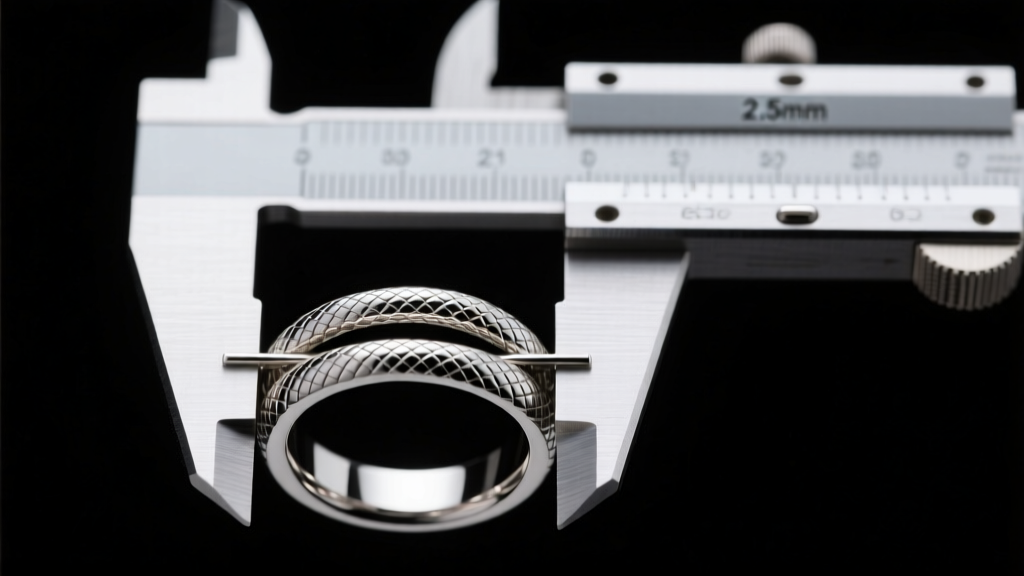
For those interpreting 'snake bite jewelry rings' through the lens of the Ouroboros (the snake biting its tail) or fang designs, the technical focus shifts to the interlocking tolerance. In high-end iterations, the serpent's fangs do not merely rest against the opposite band; they slot into precision-milled micro-recesses. This 'click-fit' mechanism requires a dimensional tolerance of +/- 0.05mm. If the recesses are too shallow, the fangs will scratch the opposing metal during daily wear; if too deep, the ring will snag on the skin when being removed. Master jewelers achieve this by milling the recesses with 0.1mm diamond-tipped burrs and hand-polishing the fangs to a mirror finish to eliminate microscopic burrs that could cause abrasion.
Final Verdict on Technical Procurement
When investing in snake bite jewelry rings for the fingers, prioritize the manufacturing method over the base metal. A CNC-milled and laser-welded 316L steel ring will vastly outperform a cast 14k gold ring in terms of sheer structural survival. Always verify the bridge thickness (minimum 1.5mm for gold, 1.2mm for titanium) and ensure the jeweler offers sizing beads to accommodate your specific knuckle-to-base differential. By understanding the metallurgy and stress points inherent to these complex designs, you can secure a piece that is as mechanically sound as it is visually arresting.


