Troubleshooting Your Ring Jewelry Holder: Storage Fixes & Tips
Discover how to troubleshoot your ring jewelry holder setup. Learn material safety, anti-tarnish fixes, and organization tips to protect your collection.

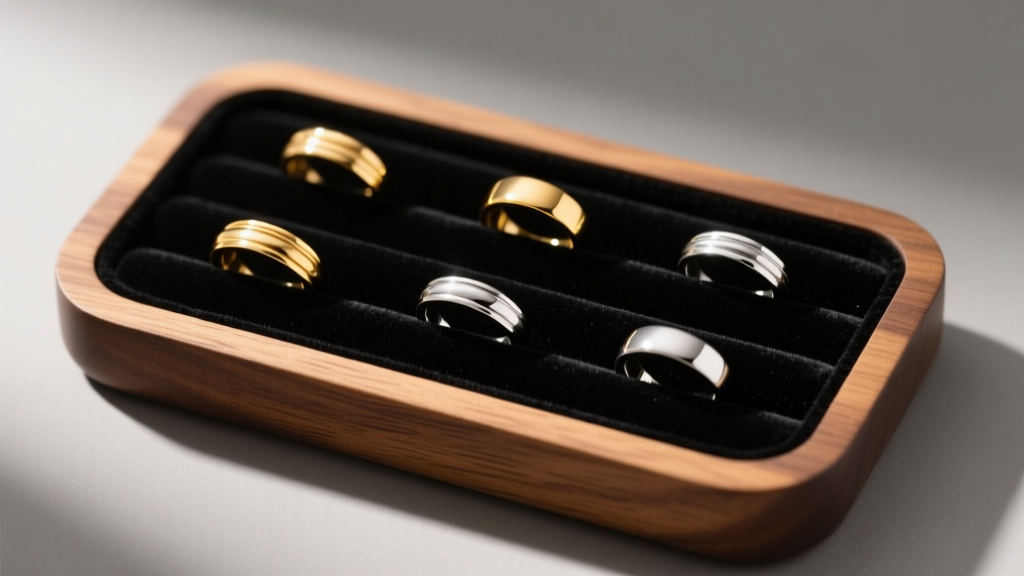
The Hidden Dangers of Improper Ring Storage
When you invest in fine jewelry, the storage solution is just as critical as the pieces themselves. A poorly designed or chemically reactive ring jewelry holder can cause irreversible damage, ranging from micro-scratches on high-polish gold to severe sulfur-induced tarnishing on sterling silver. Many collectors assume that any padded box is sufficient, but the internal materials of mass-market storage units often off-gas harmful chemicals. According to the Canadian Conservation Institute, materials like medium-density fiberboard (MDF), certain synthetic foams, and cheap rubberized linings release volatile organic compounds (VOCs) and sulfur dioxide, which rapidly accelerate the corrosion of silver and copper alloys.
If your sterling silver rings are turning black or developing a yellowish hue while sitting in a closed box, your ring jewelry holder is likely the culprit. The hydrogen sulfide in the trapped air reacts with the silver to form silver sulfide. Troubleshooting this requires a complete audit of your storage materials, replacing acidic or sulfur-heavy components with archival-safe alternatives like acid-free tissue, polyethylene plastics, and treated Pacific Silvercloth.
Sizing the Slots: Why Standard Holders Fail Modern Rings
One of the most common frustrations with commercial ring jewelry holders is the rigid slot sizing. Standard velvet ring rolls and wooden box inserts are typically manufactured with 15mm to 18mm slits. While this accommodates traditional 2mm to 4mm wedding bands, it completely fails modern ring trends. Wide signet rings, heavy cocktail rings, and multi-band soldered wedding sets often measure 8mm to 15mm in thickness. Forcing these oversized rings into standard slits stretches the velvet, tears the underlying foam, and creates excessive tension on the ring shanks, potentially loosning pave settings over time.
The Fix: Transition from slitted velvet to open-plan acrylic inserts or custom-cut archival polyethylene foam. If you must use a slitted holder, use a sharp craft knife to carefully extend the slit depth by 5mm, relieving the lateral pressure on your wider bands.
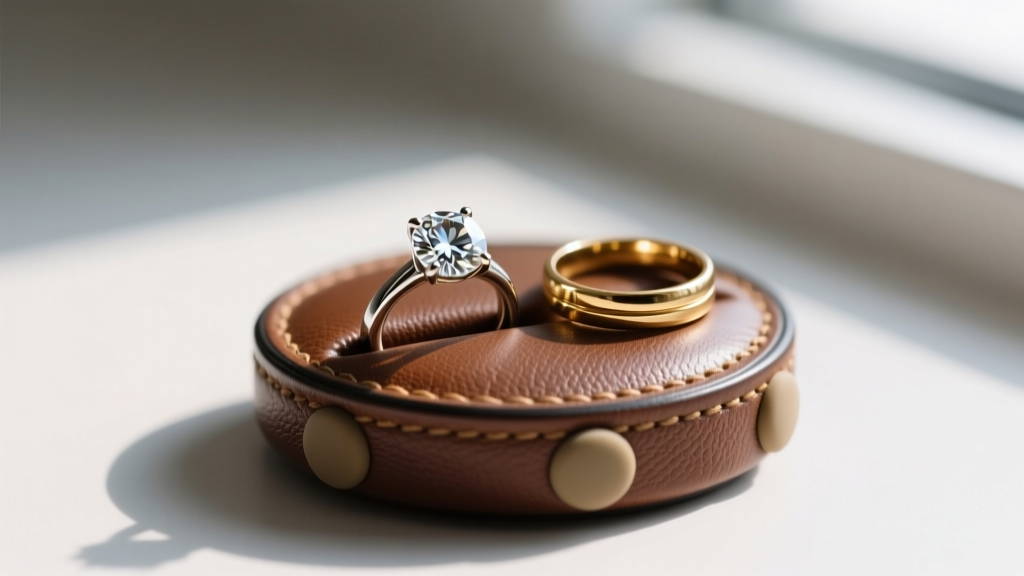
Troubleshooting Common Ring Jewelry Holder Failures
Problem 1: Rings Slipping Out of Velvet Slots
Over time, the foam backing inside velvet ring slots compresses and loses its memory, causing rings to slip out when the box is moved or tilted. This leads to rings tumbling together, causing severe scratching, especially when diamonds or sapphires (which rank 9 and 10 on the Mohs scale) come into contact with softer 14k or 18k gold.
Actionable Solution: Do not throw away your favorite box. Purchase a roll of clear, medical-grade silicone grip tape (often used for stair treads or tool handles). Cut tiny 5mm strips and adhere them to the inner walls of the velvet slits. The high-friction silicone will grip the metal shanks securely without reacting chemically with the gold or platinum, effectively retrofitting your ring jewelry holder for a fraction of the cost of a replacement.
Problem 2: Tarnish Acceleration in "Anti-Tarnish" Boxes
Many consumers buy boxes marketed as "anti-tarnish," only to find their silver oxidizing anyway. This usually happens because the anti-tarnish treatment (often a zinc or silver particle infusion in the cloth) has a finite lifespan, typically lasting between 12 to 24 months depending on ambient humidity. Furthermore, if the box is not airtight, the continuous flow of sulfur-heavy room air overwhelms the treatment.
Actionable Solution: Supplement your ring jewelry holder with 3M Anti-Tarnish Strips. These strips absorb airborne sulfides before they reach your jewelry. Place one strip in each quadrant of your box and replace them strictly every six months. For a premium upgrade, re-line the box interior with genuine Pacific Silvercloth, which embeds microscopic silver particles into the cotton fibers to intercept tarnish-causing gases.
Problem 3: Stackable Tray Warping and Sticking
Stackable acrylic and MDF ring trays are incredibly popular for large collections, but they frequently suffer from warping in high-humidity environments (like bathrooms or coastal climates). When MDF absorbs moisture, it swells, causing the trays to stick together or crack the velvet lining.
Actionable Solution: Never store MDF-based ring jewelry holders in a bathroom. If you live in a high-humidity area, switch to injection-molded polypropylene or cast acrylic stackable trays. Apply a thin layer of micro-crystalline wax (like Renaissance Wax) to the stacking lips of the trays to ensure they glide smoothly and never fuse together.
Material Compatibility Matrix: What Touches Your Gold and Silver?
Not all storage linings are created equal. The Gemological Institute of America (GIA) emphasizes that proper storage prevents the majority of jewelry damage. Use this matrix to audit your current ring jewelry holder setup.
| Material | Tarnish Risk | Best Used For | Troubleshooting / Upgrade |
|---|---|---|---|
| Standard Felt / Wool | High (Contains Sulfur) | Costume jewelry only | Replace immediately with acid-free cotton or flannel. |
| PVC Vinyl | High (Off-gasses Chlorides) | None (Avoid entirely) | Causes pitting on silver; swap for Polyurethane (PU) leather. |
| Pacific Silvercloth | Zero (Active Protection) | Sterling Silver, Platinum | Requires periodic replacement when cloth turns brown/black. |
| Injection-Molded Acrylic | Zero (Inert) | Diamonds, Gold, All Metals | Can scratch high-polish gold; add a silicone mat base. |
| Archival Polyethylene | Zero (Inert) | Long-term vault storage | Brittle in extreme cold; keep at stable room temperature. |
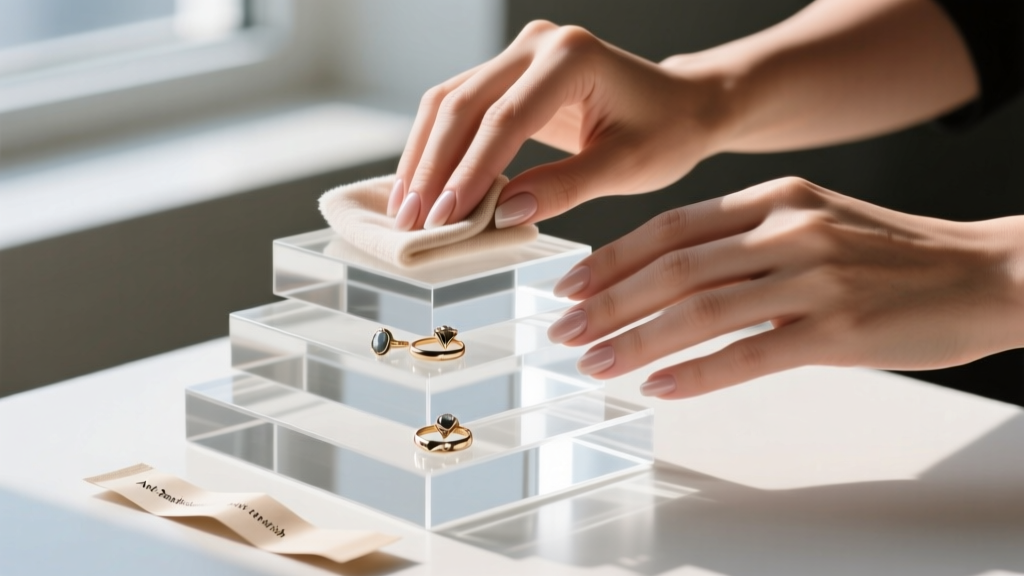
Upgrading Your Ring Jewelry Holder for Travel
Travel introduces kinetic energy and compression risks that static home storage does not. Soft leather ring rolls are aesthetically pleasing but offer zero crush protection. If placed in a packed suitcase, the pressure can bend delicate ring shanks or snap the prongs on tension-set stones. Furthermore, soft rolls allow rings to knock against each other if the roll is not tightly secured.
For frequent travelers, troubleshooting your travel ring jewelry holder means upgrading to a hard-shell EVA (Ethylene-Vinyl Acetate) case. Look for cases featuring individual, silicone-topped pegs rather than slitted foam. The silicone creates a high-friction grip that holds the ring upright, preventing the stones from scratching against the interior lid, while the rigid EVA shell disperses compression forces across the entire case rather than transferring them to your jewelry.
Expert Maintenance Schedule for Storage Units
A ring jewelry holder is not a "set it and forget it" item. To maintain a pristine environment for your collection, implement this strict maintenance schedule:
- Weekly: Inspect rings before placing them in the holder. Ensure no hand lotions, perfumes, or acidic residues are on the metal, as these will degrade the velvet lining and trap corrosive chemicals against the ring shank.
- Monthly: Vacuum the interior of your ring jewelry holder using a soft brush attachment to remove microscopic dust and skin cells that attract moisture and pests.
- Bi-Annually: Replace all anti-tarnish strips and silica gel desiccant packets. Test the velvet slots for elasticity; if they no longer grip a standard 2mm band, apply the silicone tape fix mentioned above.
- Annually: Wipe down acrylic and wooden exteriors with a damp microfiber cloth. Avoid chemical wood polishes like Pledge, as the aerosolized silicones can settle inside the box and create a hazy film on your gemstones.
Proper storage is the silent guardian of your jewelry’s longevity. By actively troubleshooting the materials and mechanics of your ring jewelry holder, you ensure that your pieces remain as brilliant as the day they were acquired.


