Material Breakdown: The Dainty 14k Gold Necklace Guide
Discover why a dainty 14k gold necklace offers the perfect balance of durability and elegance. Compare alloys, chain gauges, and longevity.

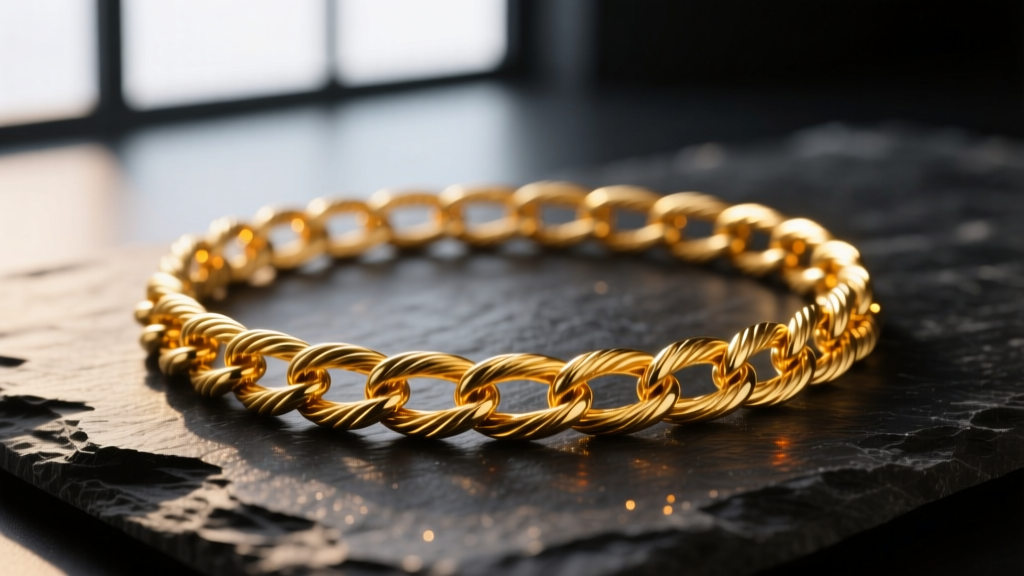
When selecting fine jewelry, the allure of a dainty 14k gold necklace lies in its delicate aesthetic and everyday versatility. However, in the jewelry industry, 'dainty' is often mistakenly conflated with 'fragile.' The reality of material science tells a different story. A well-constructed 14k gold chain leverages specific metallurgical alloys and precise gauge engineering to deliver a piece that is both visually lightweight and structurally resilient. In this comprehensive guide, we break down the exact properties, alloy compositions, and tensile strengths that dictate the performance of fine gold necklaces in 2026.
The Metallurgy of 14k Gold: Why 58.5% Purity Matters
Pure 24k gold is exceptionally soft, scoring roughly 25 on the Vickers hardness scale. While it offers a rich, unalloyed yellow hue, it is entirely unsuitable for dainty chains, which require high tensile strength to support pendants and resist snapping under minor tension. To solve this, metallurgists alloy pure gold with harder base metals.
A standard 14k gold necklace contains exactly 58.3% to 58.5% pure gold (14 parts out of 24). The remaining 41.5% consists of alloying metals that dictate both the color and the structural integrity of the piece. According to the Gemological Institute of America (GIA), the specific alloy mix dramatically alters the physical properties of the final product:
- 14k Yellow Gold: Typically alloyed with roughly 25% silver and 16.5% copper. This maintains a warm hue while boosting the Vickers hardness to approximately 140 HV.
- 14k Rose Gold: Contains a much higher copper content (up to 32.5%) and less silver. The high copper volume actually increases the tensile strength, making rose gold slightly more durable against stretching than its yellow counterpart.
- 14k White Gold: Alloyed with bleaching metals like palladium, nickel, or manganese. Palladium-based white gold is denser and heavier, offering superior resistance to micro-abrasions.
By sacrificing a portion of pure gold content, 14k alloys achieve a structural rigidity that prevents the permanent stretching and warping commonly seen in higher-karat, dainty chains.
Chain Gauge and Tensile Strength for Dainty Profiles
The term 'dainty' generally refers to chain widths ranging from 0.8mm to 1.2mm. At these microscopic dimensions, the cross-sectional geometry of the wire and the linking method become critical failure points.
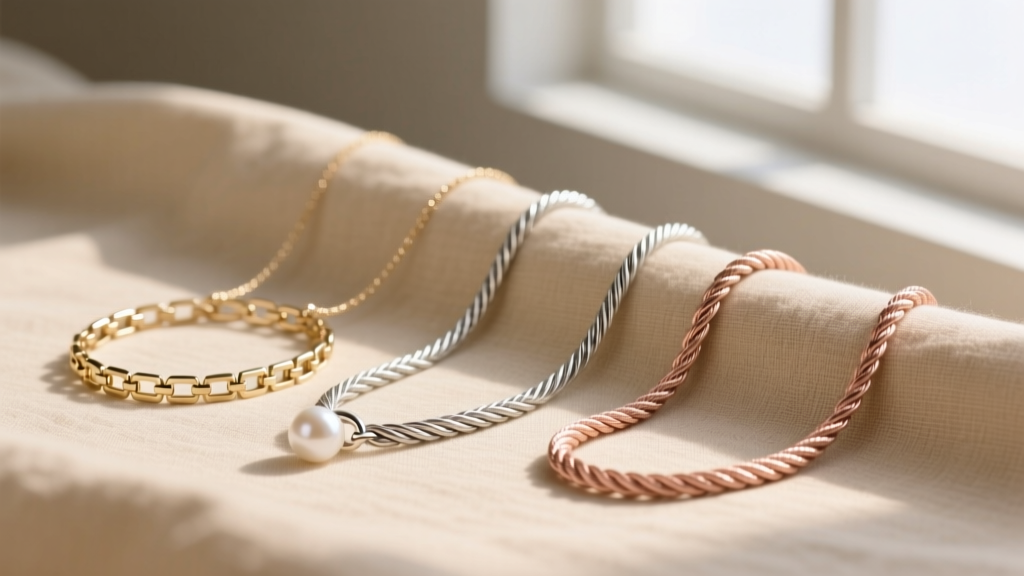
Wire Thickness vs. Link Geometry
A 1.0mm cable chain made from round wire will behave very differently than a 1.0mm box chain made from square wire. Box chains, constructed from interlocking square links, distribute tension more evenly across the flat surfaces of the metal. However, they are prone to kinking, which can permanently weaken the crystalline structure of the 14k gold alloy.
Conversely, a 1.0mm rope chain—composed of twisted, helical links—offers the highest tensile strength in the dainty category. The twisting pattern naturally absorbs shock and prevents localized stress fractures. For a dainty 14k gold necklace intended to hold a 2-gram pendant, a 1.0mm to 1.2mm rope or wheat chain is structurally superior to a standard cable chain of the exact same weight.
The Clasp Weak Point
Manufacturers often pair dainty chains with 4mm spring-ring clasps to maintain a seamless aesthetic. From a mechanical standpoint, this is a critical failure point. Spring rings rely on a microscopic internal steel spring that frequently degrades or snaps. Upgrading to a 5mm or 6mm solid 14k gold lobster clasp adds roughly 0.4 grams to the total weight but increases the clasp's lifespan by a factor of ten.
14k Solid Gold vs. Plated and Filled Alternatives
Consumers navigating the fine jewelry market frequently encounter terms like vermeil, gold-filled, and gold-plated. Understanding the regulatory definitions set by the Federal Trade Commission (FTC) is essential for evaluating longevity and true material value.
| Material Type | Gold Thickness / Content | Base Metal Core | Estimated Lifespan (Daily Wear) | Relative Price Point |
|---|---|---|---|---|
| Solid 14k Gold | 100% 14k Alloy (58.5% Au) | N/A (Solid throughout) | Lifetime (Generational) | High ($250 - $600+) |
| Gold-Filled | 5% Gold by Weight (Mechanically Bonded) | Brass or Copper | 3 to 5 Years | Low ($40 - $90) |
| Gold Vermeil | Minimum 2.5 Microns (Electroplated) | Sterling Silver (925) | 1 to 3 Years | Medium ($80 - $150) |
| Gold-Plated | Less than 0.5 Microns (Flash Plated) | Brass, Steel, or Alloy | 3 to 6 Months | Very Low ($15 - $40) |
While a gold-filled or vermeil chain may visually mimic a dainty 14k gold necklace in the first few months of wear, the ultra-thin profiles of dainty chains accelerate the wear-through process. Friction against the collarbone and exposure to acidic skin pH levels will strip a 2.5-micron vermeil layer down to the sterling silver core in under two years of continuous daily wear. Solid 14k gold remains the only viable option for permanent, never-remove jewelry.
Nickel-Free Alloys and Hypoallergenic Properties
Contact dermatitis is a prevalent issue with white gold jewelry. Historically, nickel was the primary bleaching agent used to create white gold alloys due to its low cost and effective color-masking properties. However, nickel is a severe sensitizer, and prolonged exposure to sweat and moisture can trigger allergic reactions, particularly on the sensitive skin of the neck and décolletage.
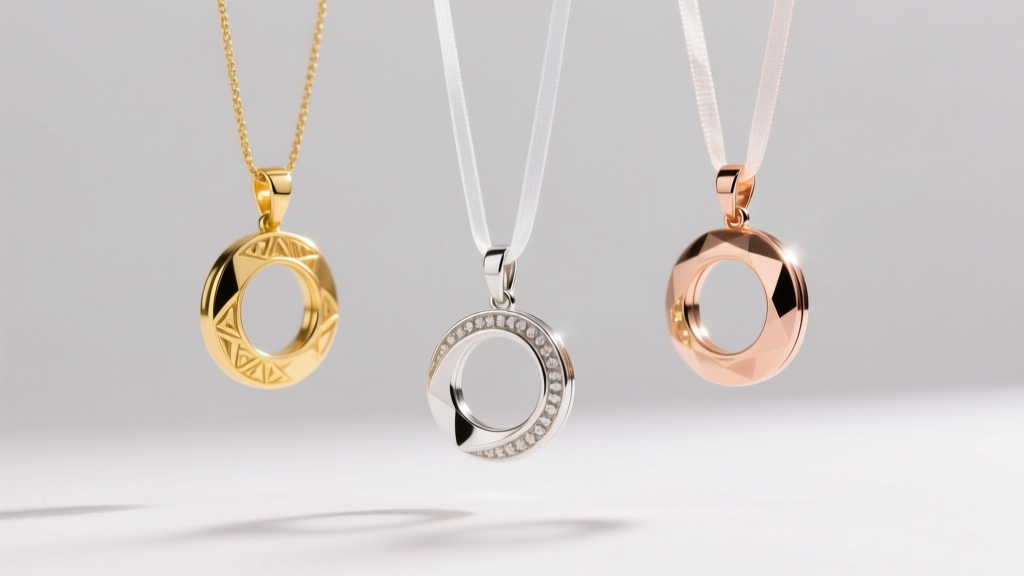
When sourcing a white dainty 14k gold necklace, it is imperative to verify that the alloy is palladium-based rather than nickel-based. Palladium is a platinum-group metal that is inherently hypoallergenic. Furthermore, reputable jewelers will rhodium-plate white gold to enhance its bright, silvery-white finish. Because dainty chains experience constant friction against the skin, this rhodium plating will wear off faster on a 1.0mm chain than on a heavy ring or bracelet, making the underlying nickel-free alloy a strict requirement for sensitive skin.
Pricing Framework: What You Should Actually Pay
The pricing of solid gold jewelry is intrinsically tied to the daily spot price of gold, combined with manufacturing labor and retail markup. As of early 2026, with raw gold markets experiencing sustained upward momentum, understanding the melt-weight math protects consumers from predatory markups.
Consider a standard 16-inch dainty 14k gold cable chain with a width of 1.0mm. This chain typically weighs between 1.6 and 1.9 grams. Since 14k gold is 58.5% pure, a 1.8-gram chain contains roughly 1.05 grams of pure 24k gold. By calculating the current spot price of gold and adding a standard 10-15% premium for the alloying and wire-drawing process, you can determine the intrinsic melt value of the chain.
A fair retail markup for a high-quality, laser-soldered dainty chain ranges from 2.5x to 4x the intrinsic metal value to cover casting, polishing, clasp assembly, and retail overhead. If a brand is charging $800 for a 1.8-gram, unbranded dainty cable chain, the markup exceeds 10x the material cost, indicating that you are paying for a luxury logo rather than material quality.
Maintenance, Tarnish, and Repair Realities
Unlike pure 24k gold, the copper and silver alloys in 14k gold are susceptible to oxidation. Over time, exposure to sulfur in the environment, lotions, and natural body oils will cause a dainty 14k gold necklace to develop a subtle patina or tarnish, particularly in the crevices of the links.
'The tighter the link geometry, the more prone the chain is to trapping microscopic debris and sulfur compounds. Regular ultrasonic cleaning is highly recommended for intricate dainty chains like wheat or box styles to prevent long-term corrosive buildup.' - World Gold Council Material Guidelines
When a dainty chain inevitably snaps, the repair method is crucial. Traditional torch soldering requires heating a large section of the chain, which can melt the microscopic adjacent links and leave a visible, discolored scar. Modern jewelers utilize laser welding, which focuses a highly concentrated beam of light to fuse a microscopic piece of 14k gold wire into the broken link without transferring heat to the surrounding chain. Always insist on laser welding for chains under 1.2mm in thickness to preserve the structural integrity and seamless visual flow of the necklace.


