The 14K Gold Necklace: A Beginner's Guide to Purity and Pricing
Discover why a 14K gold necklace is the ultimate choice for everyday wear. Learn about purity, pricing math, durability, and how to spot real 14 karat gold.

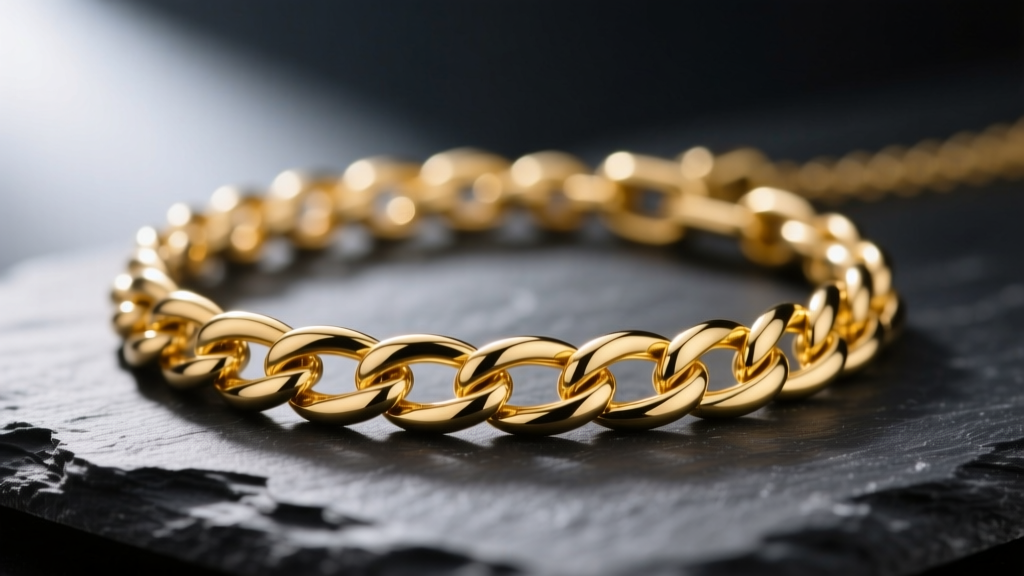
When stepping into the world of fine jewelry, the sheer volume of terminology can be overwhelming. Many buyers search for a 'necklace 14' when they actually mean either a 14-inch choker length or a 14-karat gold purity. In this guide, we are focusing on the latter: the 14K gold necklace. For beginners and seasoned collectors alike, 14-karat gold represents the ultimate sweet spot between luxurious purity and everyday durability. Whether you are investing in a classic cable chain, a delicate pendant necklace, or a layered choker, understanding the metallurgy, pricing, and care of 14K gold is essential for making a smart purchase in 2026.
What Does '14K' Actually Mean? The Science of Gold Alloys
Pure gold is measured at 24 karats (24K), meaning it is 99.9% gold. However, pure gold is exceptionally soft—rating a mere 25 on the Vickers Hardness (HV) scale. A 24K gold chain would stretch, dent, and eventually snap under the weight of a simple pendant. To solve this, jewelers alloy pure gold with other metals to increase its tensile strength and alter its color.
A 14K gold necklace contains exactly 58.3% pure gold (14 parts gold out of 24 total parts). The remaining 41.7% consists of alloy metals like copper, silver, zinc, and nickel. This specific ratio pushes the Vickers Hardness to approximately 140 HV, making it highly resistant to scratching and bending while retaining the rich, warm luster that makes gold so desirable.
The Alloy Matrix: Yellow, White, and Rose
The 41.7% alloy mixture is not arbitrary; it dictates the final color of your necklace. According to the Gemological Institute of America (GIA), here is how the alloy breakdown changes the metal:
| Gold Color | Pure Gold | Primary Alloy Metals | Visual Characteristic |
|---|---|---|---|
| Yellow Gold | 58.3% | Silver, Copper, Zinc | Warm, classic, buttery yellow hue |
| Rose Gold | 58.3% | High Copper, Low Silver | Pinkish-red, vintage aesthetic |
| White Gold | 58.3% | Nickel or Palladium, Zinc | Silvery-white (requires rhodium plating) |
14K vs. 18K vs. 10K: The Durability Matrix
If you are debating between 10K, 14K, and 18K for a daily-wear necklace, you must weigh purity against structural integrity. 18K gold (75% pure) is softer (approx. 120 HV) and more prone to micro-scratches, making it better suited for low-impact pieces like stud earrings or occasional-wear pendants. 10K gold (41.7% pure) is incredibly hard but lacks the deep yellow saturation of higher karats and can cause skin irritation due to higher nickel or copper content.
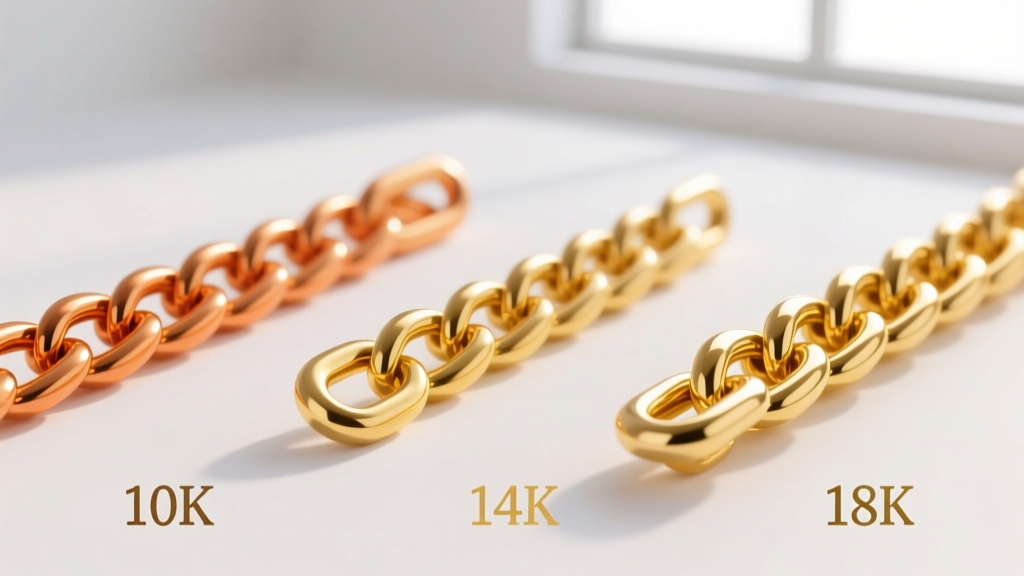
A 14K gold necklace sits perfectly in the middle. It is durable enough to withstand the friction of daily wear, sleeping, and showering (though removing it is always best practice), while maintaining a color profile that is virtually indistinguishable from 18K to the untrained eye. For chain styles that endure high tension, such as box chains or rope chains, 14K is the undisputed industry standard for longevity.
Pricing Breakdown: What Should You Pay in 2026?
One of the most common beginner mistakes is overpaying for gold jewelry because they do not understand the difference between 'melt value' and 'retail markup.' With the World Gold Council reporting gold spot prices hovering around $2,300 to $2,400 per troy ounce in 2026, you can calculate the baseline intrinsic value of any necklace.
The Melt Value Formula
There are 31.1 grams in one troy ounce. If you are looking at a standard 5-gram 14K gold cable chain, here is the exact math to find its raw gold value:
- Step 1: 5 grams x 0.583 (58.3% purity) = 2.915 grams of pure gold.
- Step 2: 2.915 grams / 31.1 grams = 0.0937 troy ounces.
- Step 3: 0.0937 oz x $2,350 (average spot price) = $220.19 melt value.
A fair retail price for a basic, mass-produced 14K gold chain is typically 1.5x to 2.5x the melt value to account for manufacturing, labor, and retail overhead. For our 5-gram chain, a fair retail price falls between $330 and $550. If a brand is charging $1,200 for a simple 5-gram chain without diamonds or intricate artisan craftsmanship, you are paying an exorbitant 'brand tax'.
How to Verify Authenticity: Hallmarks and Testing
When buying vintage or secondhand, verifying the authenticity of your 14K gold necklace is critical. The most reliable visual indicator is the hallmark, usually stamped on the clasp or the jump ring connecting the clasp to the chain.
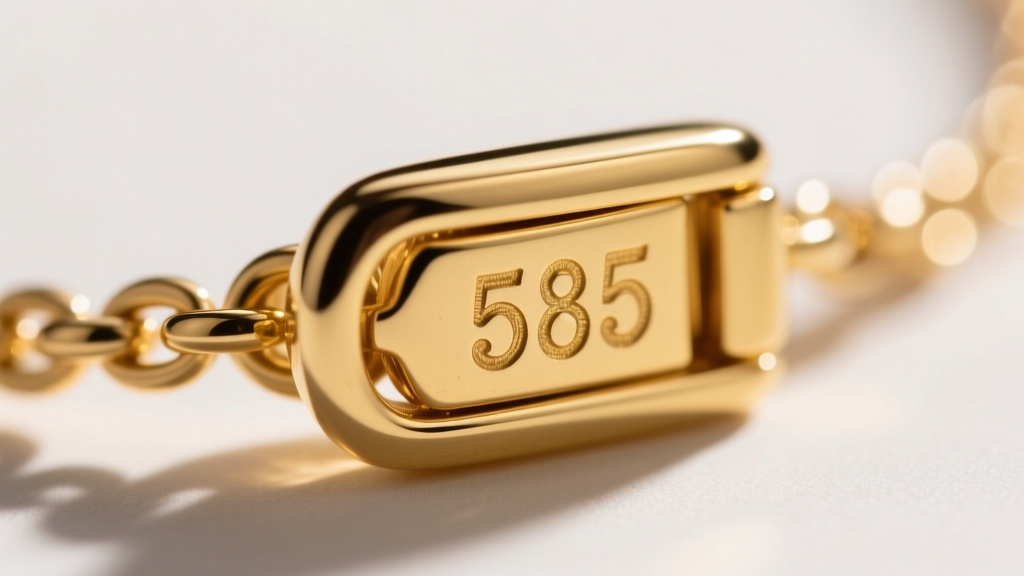
In the United States, you will typically see 14K or 14KP (the 'P' stands for 'plumb,' meaning it is guaranteed to be at least 58.3% gold). In Europe and many international markets, the hallmark is expressed in parts per thousand. Therefore, look for 585 or occasionally 583. If a piece is stamped '14K HGE' or '14K GF', it is not solid gold; these stand for Heavy Gold Electroplate and Gold Filled, respectively, which are merely thin layers of gold over a base metal core.
Beginner Mistakes to Avoid When Buying
To ensure your investment lasts a lifetime, avoid these common pitfalls:
- Ignoring the Clasp Quality: A 14K chain is only as strong as its clasp. Avoid flimsy spring-ring clasps on heavier chains; opt for lobster clasps or secure box clasps with safety catches.
- Assuming White Gold is Maintenance-Free: 14K white gold is naturally slightly yellowish-gray. It is plated with rhodium to achieve a bright white finish. This plating wears off every 1-3 years and requires professional re-plating.
- Buying Hollow Chains: Many retailers sell 'hollow' 14K gold chains that look thick but weigh very little. These are prone to crushing and are nearly impossible to repair. Always check the gram weight and ask if the chain is solid or semi-solid.
Final Thoughts
A 14K gold necklace is more than just an accessory; it is a foundational piece of fine jewelry that offers unmatched versatility and resilience. By understanding the alloy compositions, calculating fair market pricing based on current spot values, and knowing how to read international hallmarks, you can shop with absolute confidence. Whether you choose a buttery yellow rope chain or a sleek white gold pendant, 14-karat gold ensures your piece will endure as a staple in your wardrobe for decades to come.


