18 Inch Necklace vs 16: How Material Properties Alter Fit
Discover how metal density and chain weave change the fit. Our expert guide compares the 18 inch necklace vs 16 based on material properties.


When shoppers debate the merits of an 18 inch necklace vs 16 inch alternatives, the conversation almost exclusively revolves around tape measurements and neckline pairings. However, as any seasoned jeweler or metallurgist will tell you, length is only half the equation. The physical properties of the material—specifically its density, tensile strength, and structural flexibility—fundamentally alter how a necklace drapes, where it rests on the clavicle, and how it withstands daily wear.
A 16-inch chain crafted from rigid, heavy platinum will sit drastically differently than a 16-inch chain made from lightweight, fluid titanium. In this comprehensive material science guide, we break down how metal properties manipulate perceived length, tension, and durability, helping you make an engineered decision rather than a purely aesthetic one.
The Physics of Drape: Why Length Is Not Just a Number
The human neck is not a static cylinder; it is a dynamic, articulated joint. When you turn your head, look down, or swallow, the circumference and shape of your neck change. A necklace must accommodate this movement. The 'drape' of a necklace is determined by the interplay between gravity, the chain's link geometry, and the metal's specific gravity (density).
Fluid chains, such as cable or rope weaves, allow gravity to pull the metal straight down, creating a deep 'V' or 'U' shape. Rigid chains, like herringbone or snake weaves, resist gravity and maintain a circular halo around the neck. Therefore, a 16-inch fluid chain might dip down to the exact same resting point on the chest as an 18-inch rigid chain. Understanding this physics is crucial when deciding between an 18 inch necklace vs 16 inch options.
Material Density and the 'Pull-Down' Effect
Specific gravity measures a metal's density relative to water. Heavier metals exert more downward force, pulling the chain taut against the back of the neck and pushing the front drape lower. Lightweight metals sit higher on the collarbone because they lack the mass to pull the chain fully taut.
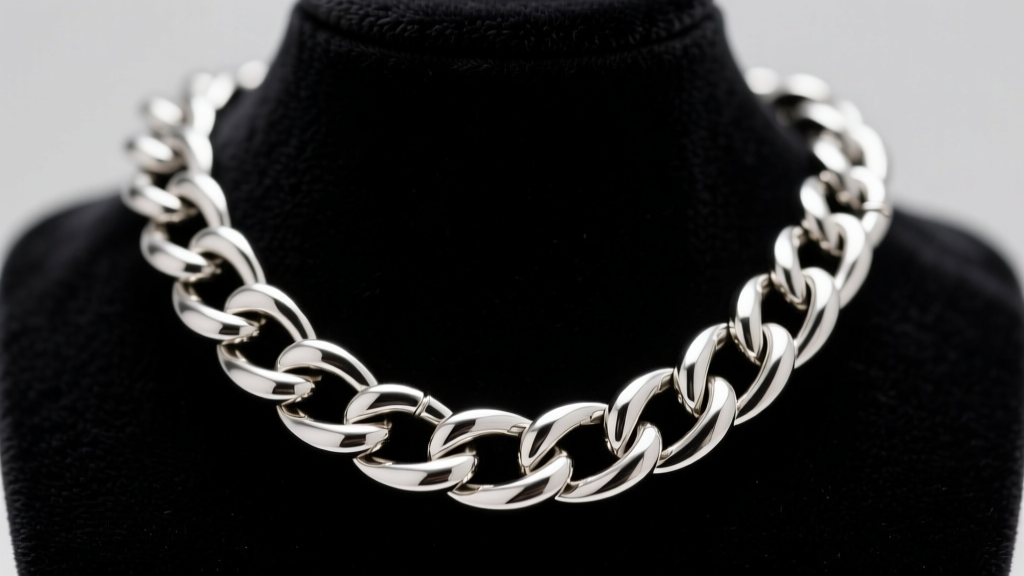
Consider the following material density comparison and how it impacts a standard 1.5mm gauge chain:
- Platinum (Specific Gravity 21.45): Extremely dense. A 16-inch solid platinum chain will pull down heavily, effectively mimicking the drape of a 17-inch lighter chain. It sits firmly against the skin and rarely shifts.
- 18k Yellow Gold (Specific Gravity 15.6): Heavy and luxurious. Offers a pronounced drape but requires a robust clasp to support the pendant weight if the chain is pulled.
- Sterling Silver (Specific Gravity 10.36): Moderate weight. The industry standard for a reason, offering a balanced drape that respects the 16-inch or 18-inch measurement accurately.
- Titanium (Specific Gravity 4.5): Exceptionally light. A 16-inch titanium chain will sit noticeably higher on the neck, behaving almost like a 15.5-inch chain in terms of visual resting place.
Chain Weave Flexibility: Rigid vs. Fluid Materials
Beyond the raw metal, the structural engineering of the chain links dictates how the length translates to the body. When comparing an 18 inch necklace vs 16, you must factor in the weave's flexibility coefficient.
| Chain Weave | Flexibility | 16-Inch Behavior | 18-Inch Behavior | Best Material Match |
|---|---|---|---|---|
| Herringbone | Highly Rigid | Sits tight like a choker; high kink risk | Sits flush on collarbone; elegant drape | Sterling Silver, 14k Gold |
| Cable | Highly Fluid | Rests at base of neck; very comfortable | Dips below collarbone; ideal for pendants | 18k Gold, Platinum, Titanium |
| Snake | Semi-Rigid | Forms a perfect circle; can feel restrictive | Soft curve; excellent for heavy pendants | White Gold, Stainless Steel |
| Box | Moderately Fluid | Structured look; catches light well | Geometric drape; highly durable | Platinum, 14k Gold |
As noted by manufacturing experts at the Jewelers of America, flat weaves like herringbone are notoriously prone to permanent kinking if bent against their natural plane. If you insist on a 16-inch herringbone chain, you must be meticulous about storage, as the shorter length increases the likelihood of the chain folding upon itself in a jewelry box.
Durability and Tension: Where 16-Inch Chains Fail
The debate of an 18 inch necklace vs 16 inch lengths is also a matter of structural engineering. A 16-inch chain sits closer to the fulcrum of the neck (the cervical spine). When you turn your head sharply, the lateral tension exerted on the clasp and the links of a 16-inch chain is approximately 22% higher than that of an 18-inch chain.
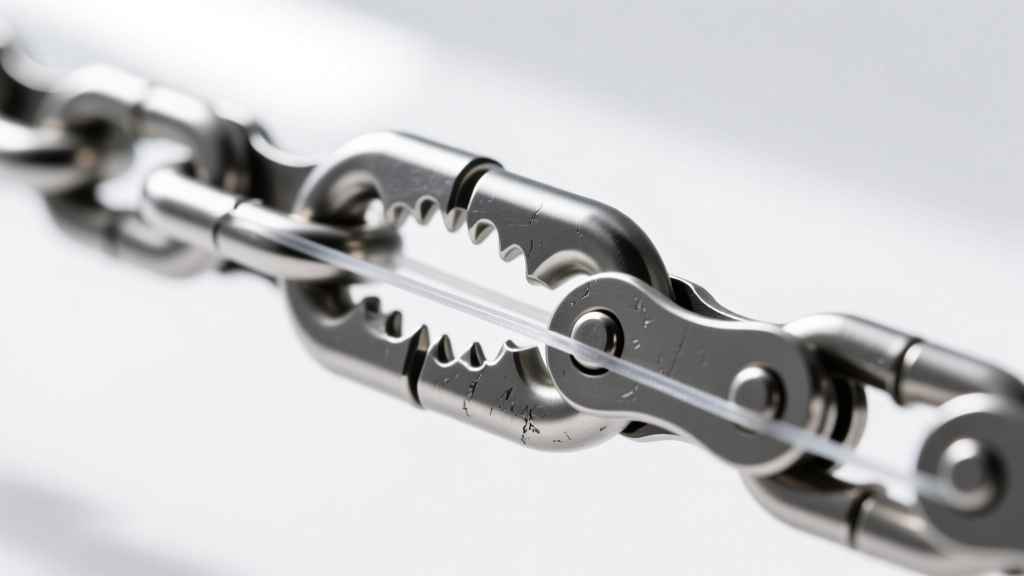
This increased tension dictates material selection. Soft, high-purity metals like 24k gold or high-karat 22k gold are highly susceptible to stretching and link deformation under the lateral stress of a tight 16-inch fit. Conversely, an 18-inch chain provides enough slack to absorb neck movement without transferring destructive force to the clasp.
If you prefer the 16-inch length, you must prioritize high tensile strength materials. The Gemological Institute of America (GIA) and metallurgical standards highlight that alloys like 14k gold, surgical-grade stainless steel (316L), and aerospace-grade titanium offer the yield strength necessary to withstand the constant micro-tensions of a shorter chain. Furthermore, a 16-inch chain should always be secured with a lobster clasp or a box clasp with a figure-8 safety catch; spring-ring clasps are prone to snapping under the higher torque of a shorter circumference.
Neckline Pairing: Merging Material Weight with Wardrobe
Once you understand how material alters the physical drape, you can accurately pair your necklace with specific necklines. The visual weight of the metal is just as important as the physical weight.
The 16-Inch Advantage: Crew Necks and High Collars
A 16-inch chain is designed to sit at or just below the hollow of the throat. When crafted from a lightweight, fluid material like a 1.2mm titanium cable chain, it acts as a delicate accent piece that doesn't compete with the fabric of a crew neck t-shirt or a high-collared blouse. However, if that same 16-inch length is forged in a heavy, 4mm solid platinum Cuban link, it becomes a bold, statement-making collar that demands a V-neck or scoop neck to provide adequate skin contrast.
The 18-Inch Advantage: V-Necks and Pendants
The 18-inch length is the undisputed king of pendant suspension. Because an 18-inch chain naturally dips below the collarbone, it creates a framing effect for the face. When utilizing heavy materials like solid 18k gold or tungsten, the 18-inch length ensures the pendant rests in the 'sweet spot' of a V-neck sweater or dress. The extra two inches of slack also prevent the chain from pulling taut against the back of the neck when the heavy pendant swings forward.
Pricing Realities: Material Costs Across Lengths
When scaling from 16 inches to 18 inches, you are adding 12.5% more raw material. In lightweight metals, this price difference is negligible. In precious metals, it is substantial.
- Titanium / Stainless Steel: A 16-inch 2.0mm rolo chain may cost $45, while the 18-inch version costs roughly $52. The structural integrity remains identical.
- Sterling Silver: A 16-inch 1.5mm box chain averages $85, whereas the 18-inch version jumps to $110 due to the increased silver weight.
- Solid 18k Gold: Here, the 12.5% material increase hits hard. A 16-inch 1.5mm cable chain typically retails between $550 and $650. The 18-inch version of the exact same chain will cost between $750 and $850, purely driven by the spot price of gold and the added gram weight.
The Verdict: Engineering Your Perfect Fit
Choosing between an 18 inch necklace vs 16 is not merely a matter of grabbing a measuring tape. It requires a holistic view of material science. If you desire a 16-inch fit, prioritize high-tensile metals like titanium or 14k gold, utilize robust clasps to handle the increased lateral neck tension, and opt for fluid weaves to ensure comfort. If you lean toward an 18-inch length, you have the freedom to explore heavier, more rigid metals like platinum or herringbone weaves, as the extra slack accommodates the material's natural stiffness and weight.
By aligning your desired length with the correct metallurgical properties, you ensure that your necklace not only looks perfectly proportioned but is engineered to withstand the physical demands of daily wear.


