Technical Guide to Buying an I Love You Gold Necklace
Explore the technical anatomy of an i love you gold necklace, from gold alloy grades and projection stone optics to chain tensile strength.

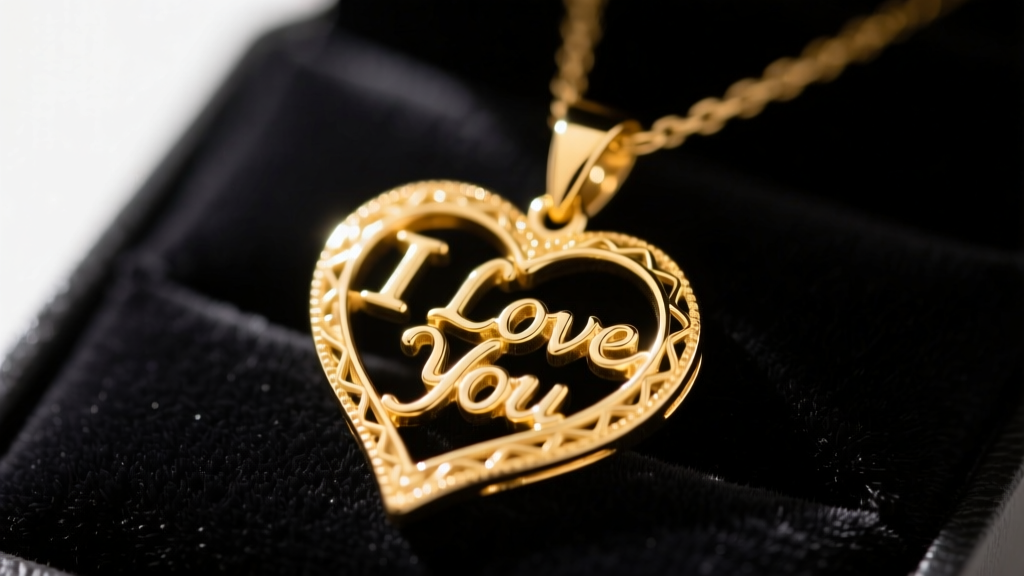
The market for sentimental jewelry is vast, but few pieces carry the universal resonance of the i love you gold necklace. While often purchased for its emotional value, from a gemological and metallurgical perspective, this piece of jewelry is a complex assembly of precision casting, optical engineering, and tensile mechanics. In 2026, as manufacturing technologies like nano-laser carving and CAD/CAM milling become more accessible, the quality disparity between mass-produced novelty items and heirloom-grade necklaces has widened significantly. This expert deep dive deconstructs the technical anatomy of the 'I Love You' necklace, providing you with the exact specifications needed to evaluate gold purity, structural integrity, and optical performance before making a purchase.
The Metallurgy of Sentiment: Gold Alloys and Hardness
The foundation of any high-quality gold necklace lies in its alloy composition. Pure 24k gold is far too malleable for daily wear, possessing a Vickers hardness (HV) of merely 25-30. To create a durable 'I Love You' pendant and chain, gold must be alloyed with metals like copper, silver, and zinc. Understanding the Gemological Institute of America's (GIA) standards for gold alloys is critical for evaluating durability.
- 14k Gold (58.5% Au): With a Vickers hardness of approximately 120-135 HV, 14k gold is the industry standard for pendant prongs and chain links. Its higher copper and zinc content provides the tensile strength necessary to secure delicate projection stones without the prongs bending under lateral stress.
- 18k Gold (75% Au): Softer and richer in color, 18k gold sits around 90-110 HV. While it offers superior hypoallergenic properties and a deeper yellow hue, an 18k 'I Love You' pendant requires thicker, more robust prong architecture and heavier chain gauges to prevent deformation over time.
- White Gold Alloys: Often alloyed with nickel or palladium. Palladium-based 18k white gold is preferable for sensitive skin but requires periodic rhodium plating (typically 0.75 to 1.0 microns thick) to maintain its bright, reflective white finish.
Pendant Engineering: Projection Stones vs. Solid Casts
The modern 'I Love You' necklace typically falls into two distinct engineering categories: the optical projection pendant or the solid topographic cast. Each requires entirely different manufacturing tolerances.
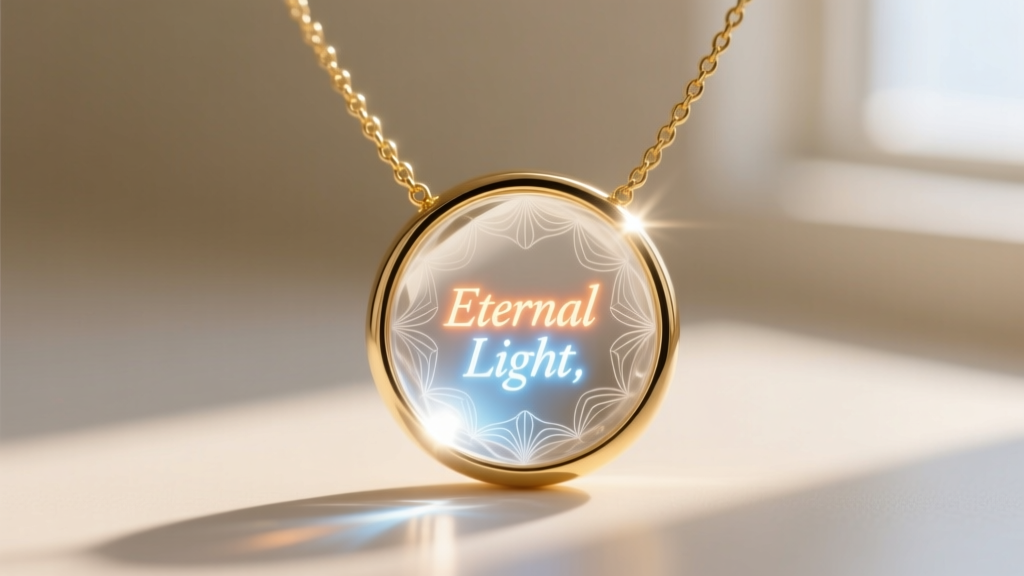
The 100 Languages Projection Stone
The viral '100 languages' projection necklace relies on a micro-optical bead, usually made of high-refractive-index glass (n ≈ 1.52) or synthetic moissanite (n ≈ 2.65). The phrase 'I love you' is not printed on the surface; rather, it is etched into the flat rear facet of the convex stone using 3D nano-laser carving. When a focused light source (like a smartphone flashlight) enters the convex front, the stone acts as a condenser lens, projecting the micro-carvings onto a flat surface. A high-quality projection stone will have a carving depth of less than 5 microns, ensuring the text remains sharp and legible at a projection distance of up to 12 inches.
Solid Cast and Soundwave Pendants
Alternative designs utilize lost-wax casting to create 3D soundwaves of a spoken 'I love you' or interlocking heart geometries. High-end manufacturers use CAD software to model the soundwave with a tolerance of 0.05mm before 3D printing the resin wax model. The resulting gold cast should feature crisp, unrounded peaks and valleys, indicating that the casting flask was properly burned out and the gold was centrifugally injected at optimal temperatures (around 1,064°C for pure gold, adjusted for alloys).
| Pendant Type | Manufacturing Method | Durability Risk | Maintenance Requirement |
|---|---|---|---|
| Projection Stone | Nano-Laser Carving + Prong Setting | Prong wear, glass chipping | Annual prong tightening, lens cleaning |
| Solid Soundwave | Lost-Wax Casting + CAD Milling | Surface scratching, bail thinning | Occasional ultrasonic cleaning, polishing |
| Interlocking Hearts | Multi-Piece Solder Assembly | Solder joint failure, link friction | Lubrication of moving parts, solder checks |
Chain Mechanics: Tensile Strength and Bail Ratios
A common failure point in sentimental necklaces is the chain snapping under the dynamic load of the pendant. The relationship between the pendant's weight and the chain's gauge thickness is a critical safety metric. According to structural guidelines referenced by Jewelers of America, a chain should have a tensile failure point at least four times the static weight of the pendant it supports.
A standard 'I Love You' projection pendant weighs between 3.0 and 5.5 grams. Therefore, the chain must withstand 12 to 22 grams of force (roughly 0.5 lbs) minimum, though real-world dynamic forces (snagging on clothing) require a much higher safety margin.
- Cable Chains (0.8mm - 1.0mm): While aesthetically delicate, standard 0.8mm cable chains have a tensile failure point of roughly 3-5 lbs. They are prone to kinking and are not recommended for pendants exceeding 3 grams.
- Box Chains (1.2mm - 1.5mm): The interlocking square links distribute stress evenly, offering a tensile strength of 8-12 lbs. A 1.2mm 14k box chain is the optimal balance of delicate appearance and structural redundancy for a 4-gram projection pendant.
- Wheat Chains (1.5mm+): Featuring woven, braided links, wheat chains offer the highest tensile strength (15+ lbs) and are virtually kink-proof, making them ideal for heavier 18k solid cast pendants.
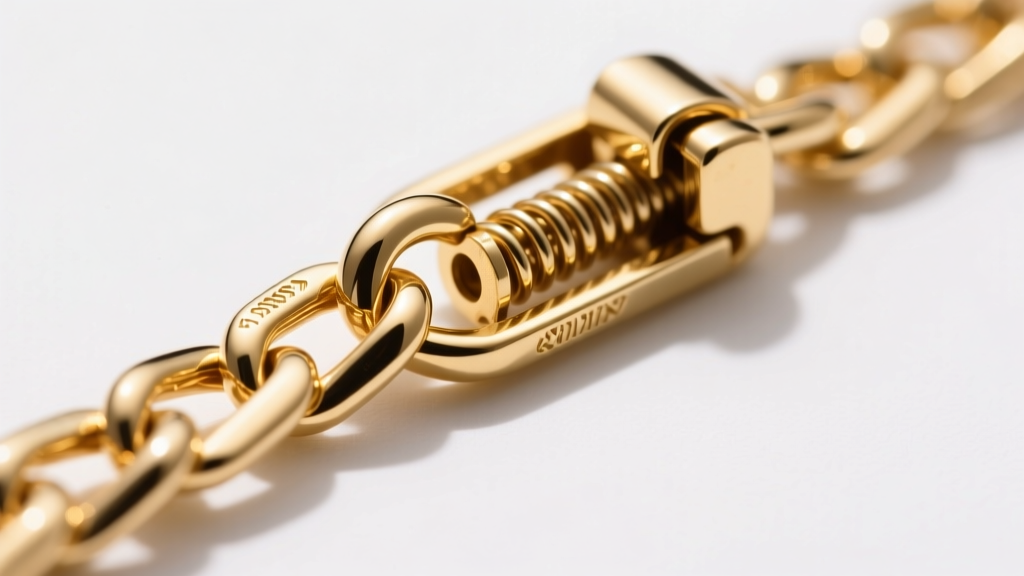
Clasp Mechanics: Never accept a spring-ring clasp for a gold necklace of this caliber. Spring rings suffer from internal spring fatigue and misaligned jump rings. A properly machined lobster claw clasp with a minimum length of 12mm and a secure, tension-calibrated internal spring is mandatory for daily wear security.
Laser Engraving and Surface Finishing Tolerances
Many buyers opt to add a personalized date or name to the reverse side of the pendant or the interior of the bail. The method of engraving drastically affects the structural integrity of the gold. Traditional rotary drag engraving removes significant material and can weaken thin pendant backs (especially those under 0.8mm thick).
Modern fiber laser engraving is the superior technical choice. Operating at a 1064nm wavelength, fiber lasers anneal the gold surface rather than gouging it, creating a high-contrast, permanent mark with a depth of less than 0.02mm. This preserves the structural thickness of the pendant back and prevents the accumulation of skin oils and debris that occur in deeper, mechanically carved grooves.
Authentication and the 2026 Price-to-Value Matrix
When evaluating an i love you gold necklace, reliance on visual inspection is insufficient. Authenticity must be verified through precise hallmarking and, if necessary, X-ray Fluorescence (XRF) spectrometry. Legitimate pieces will bear a laser-stamped or mechanically struck hallmark indicating purity (e.g., '585' for 14k, '750' for 18k) alongside the manufacturer's registered trademark stamp.
As of 2026, the pricing matrix for a genuine, technically sound 'I Love You' gold necklace is dictated by raw gold spot prices, CAD design fees, and optical component costs. Buyers should expect the following baseline ranges:
- 10k Gold / Glass Projection: $150 - $250 (Entry-level, higher alloy content, lower optical clarity).
- 14k Gold / Moissanite Projection: $350 - $600 (Optimal durability, high refractive index, premium lobster clasp).
- 18k Gold / Solid CAD Soundwave: $750 - $1,200+ (Heirloom grade, heavy gram weight, precise lost-wax casting).
By prioritizing metallurgical hardness, optical precision, and tensile chain mechanics over superficial marketing, you can secure an 'I Love You' necklace that is not only emotionally resonant but engineered to survive decades of daily wear.


