Choosing Your One Necklace: A Material Durability Guide
Discover how to choose your one necklace for daily wear. Compare platinum, gold, and titanium properties for ultimate durability and style.

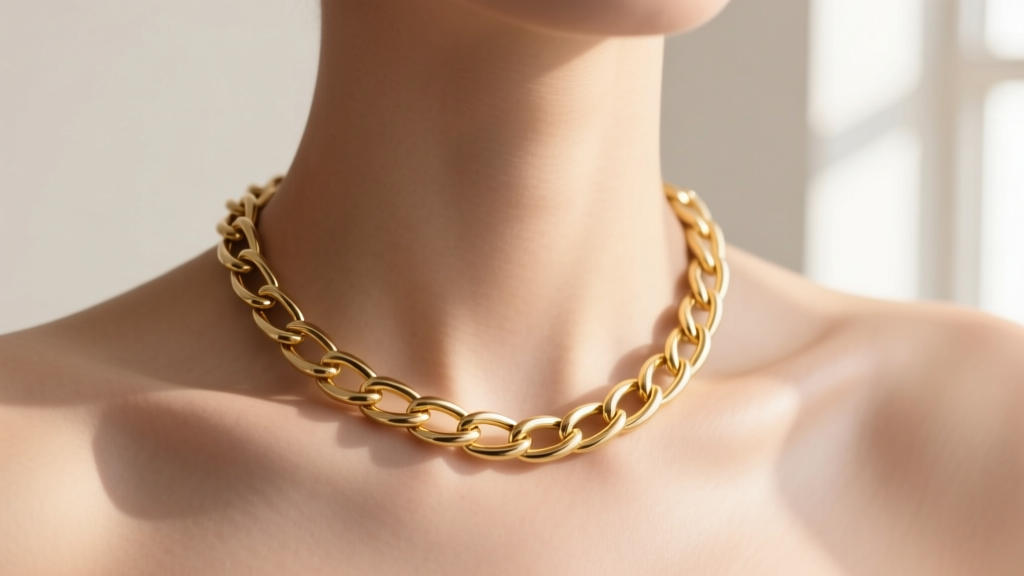
In an era of hyper-curation, the concept of a capsule wardrobe has evolved beyond clothing into the realm of fine jewelry. As we navigate 2026, the prevailing trend among minimalists and luxury enthusiasts alike is the 'one necklace' philosophy: selecting a single, impeccable piece designed to be worn 24/7, 365 days a year. However, committing to one necklace for every waking moment—including showering, sleeping, and exercising—demands a rigorous understanding of metallurgy. Not all precious metals are created equal when subjected to the relentless friction, moisture, and chemical exposure of daily human life.
The 'One Necklace' Philosophy: Why Material Dictates Longevity
When you decide to wear only one necklace, that piece transitions from a mere accessory to a permanent extension of your body. The primary point of failure in daily-wear jewelry is rarely the chain snapping; it is the gradual degradation of the metal's surface, the fatigue of the clasp mechanism, and the allergic reactions triggered by alloy breakdown. According to the Rio Grande Precious Metals Guide, the environmental stressors placed on a necklace worn in the shower (chloramines, hard water minerals, and thermal expansion) accelerate micro-abrasions and chemical tarnishing. Therefore, choosing your one necklace requires prioritizing Vickers hardness (HV), alloy stability, and structural geometry over sheer karat weight or initial brilliance.
The Contenders: Grading Metals for Daily Wear
Platinum 950: The Indestructible Standard
Platinum is widely considered the apex metal for a forever piece. Standard jewelry platinum is 95% pure platinum, typically alloyed with 5% ruthenium or cobalt to increase workability. With a Vickers hardness ranging from 110 to 135 HV, platinum is actually softer than 14k gold. However, its unique property is its malleability over friability. When platinum scratches, the metal is displaced, not lost. Over years of continuous wear, your one necklace will develop a soft, satiny patina that many collectors prize. Furthermore, platinum is entirely hypoallergenic and impervious to the chlorine in tap water or the sulfur in human sweat.
14k vs. 18k Solid Gold: The Classic Compromise
Gold remains the most popular choice, but purity dictates durability. 18k gold (75% pure gold) possesses a rich, buttery hue but is relatively soft, making it prone to deep gouging and link stretching if worn as a heavy chain. 14k gold (58.3% pure gold), alloyed with copper, silver, and zinc, boasts a higher hardness (up to 140 HV) and superior resistance to deformation. As noted by the Gemological Institute of America (GIA), the specific alloy mix in 14k gold provides the ideal balance of tarnish resistance and tensile strength required for a chain that will endure decades of pulling and snagging.
A Warning on White Gold: If you are choosing a single necklace to never take off, avoid white gold. White gold is inherently yellowish-gray and relies on a microscopic rhodium plating to achieve its bright white finish. Continuous friction against your skin and clothing will wear this plating away in 6 to 12 months, requiring constant, expensive replating—a maintenance cycle that defeats the purpose of a carefree, everyday piece.
Titanium & Argentium: The Modern Alternatives
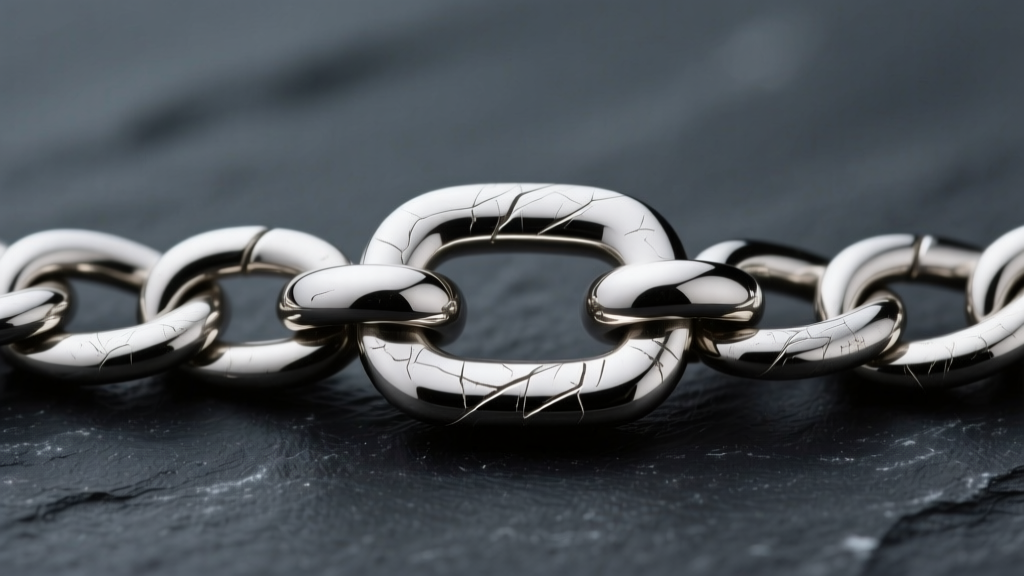
For those seeking extreme durability at a lower price point, Grade 5 Titanium (Ti-6Al-4V) offers a strength-to-weight ratio that dwarfs precious metals. It is entirely immune to corrosion and will not react with highly acidic skin pH levels. However, titanium cannot be easily soldered; if a link breaks, the chain is often unrepairable. Alternatively, Argentium Silver (935 or 960 grade) replaces some of the copper found in traditional sterling silver with germanium. This creates a transparent germanium dioxide layer on the surface, making it virtually impervious to the sulfur-induced tarnishing that plagues standard 925 silver.
Comprehensive Material Comparison Matrix
To make an informed decision, consult the data matrix below. This table synthesizes the critical metallurgical properties required for a 24/7 wear scenario.
| Material | Composition | Hardness (HV) | Tarnish / Corrosion | Est. Price (18' Chain) |
|---|---|---|---|---|
| Platinum 950 | 95% Pt, 5% Ru/Ir | 110 - 135 | None (Patina only) | $1,800 - $4,500+ |
| 14k Yellow Gold | 58.3% Au, Ag, Cu, Zn | 120 - 140 | Very Low | $400 - $1,200 |
| 18k Yellow Gold | 75% Au, Ag, Cu | 125 - 130 | Low | $900 - $2,500 |
| Grade 5 Titanium | 90% Ti, 6% Al, 4% V | 330 - 350 | None | $80 - $250 |
| Argentium 960 | 96% Ag, Ge, Cu | 85 - 95 | Extremely Low | $150 - $400 |
Failure Modes: How Your Necklace Will Age
Even the most robust metals succumb to specific mechanical and chemical failure modes when worn continuously. Understanding these will help you inspect and maintain your one necklace:
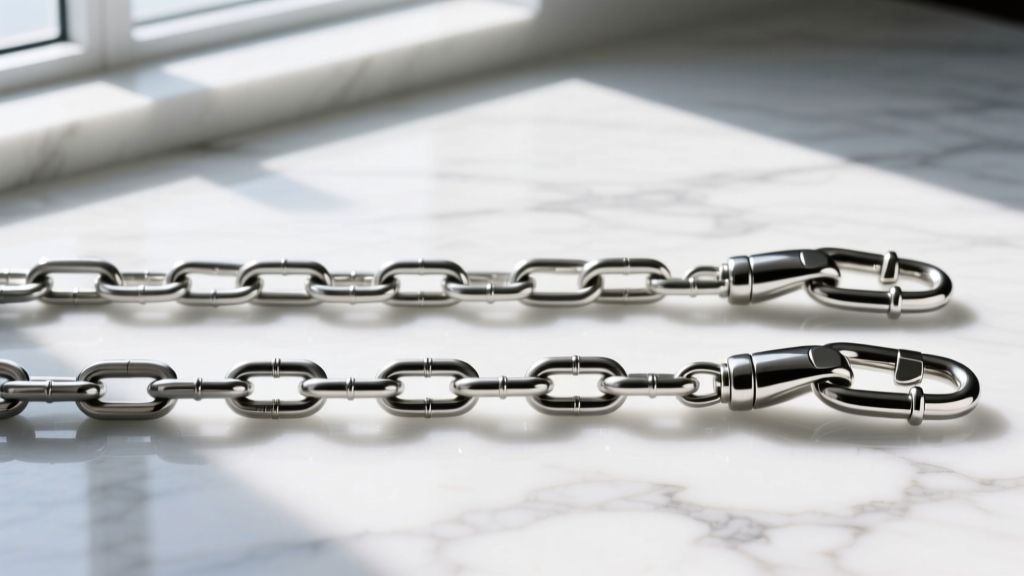
- Clasp Spring Fatigue: The internal spring inside a standard 'spring ring' or 'lobster claw' clasp is usually made of steel or a base metal alloy. Over time, sweat and shower water corrode this internal spring, causing the clasp to stick open or fail to close. Solution: Opt for a solid gold or platinum box clasp with a figure-eight safety latch, which relies on friction and tension rather than a hidden spring.
- Jump Ring Abrasion: The point where the clasp connects to the chain via a jump ring experiences the highest degree of localized friction. In softer metals like 18k gold, this can eventually saw through the jump ring. Solution: Ensure the jump ring is soldered shut or forged from a thicker gauge wire than the chain links.
- Link Stretching: Oval links (like cable or rolo chains) can slowly deform into elongated ovals if the necklace is frequently caught or pulled. This is particularly common in hollow-forged chains. Solution: Only purchase solid-forged links for a permanent daily-wear piece.
Matching Chain Architecture to Your Lifestyle
The physical geometry of the chain is just as vital as the metal itself. If you are committing to one necklace, you must avoid chains that are prone to kinking or trapping debris.
Chains to Avoid
Snake Chains and Herringbone Chains: While these offer a beautiful, fluid drape, their interlocking surface geometry is highly susceptible to permanent kinking. If you sleep in a snake chain and roll over, bending it past a 45-degree angle, the structural integrity of the links is permanently compromised. Furthermore, the tight gaps between links trap dead skin cells and lotions, which are nearly impossible to clean without an ultrasonic machine.
Chains to Embrace
Rolo, Cable, and Wheat (Spiga) Chains: These styles feature distinct, open links that allow for easy self-cleaning in the shower and resist kinking under pressure. A Wheat chain, with its braided, multi-directional link structure, offers exceptional tensile strength and distributes weight evenly, making it the ideal candidate for holding a daily-wear pendant.
The Gauge Sweet Spot
For a standalone chain without a heavy pendant, a gauge of 1.2mm to 1.5mm provides enough visual presence without feeling restrictive. If your one necklace will feature a pendant, step up to a 1.8mm to 2.2mm gauge to support the localized weight and prevent the bail from sawing through the top links.
Final Verdict: Selecting Your Forever Piece
True luxury in the modern age is not defined by how much jewelry you own, but by the thoughtfulness, durability, and personal resonance of the single piece you choose to wear every day.
Choosing your one necklace is an exercise in pragmatic metallurgy and personal style. If budget permits and you desire a piece that will outlive you and develop a rich, historical patina, Platinum 950 in a solid Rolo or Wheat chain is the undisputed champion. For those seeking the classic warmth of gold with the tensile strength required for active lifestyles, a 14k Yellow Gold chain with a soldered box clasp offers the perfect equilibrium of beauty and resilience. By prioritizing material science and structural geometry over fleeting trends, your single necklace will transition from a simple accessory into a lifelong companion.


