Men Necklace Cross Buying Guide: 2026 Value & Budget
Discover the true value of a men necklace cross in 2026. Compare material grades, chain mechanics, and pricing tiers to maximize your budget.

The True Cost of a Men's Cross Necklace in 2026
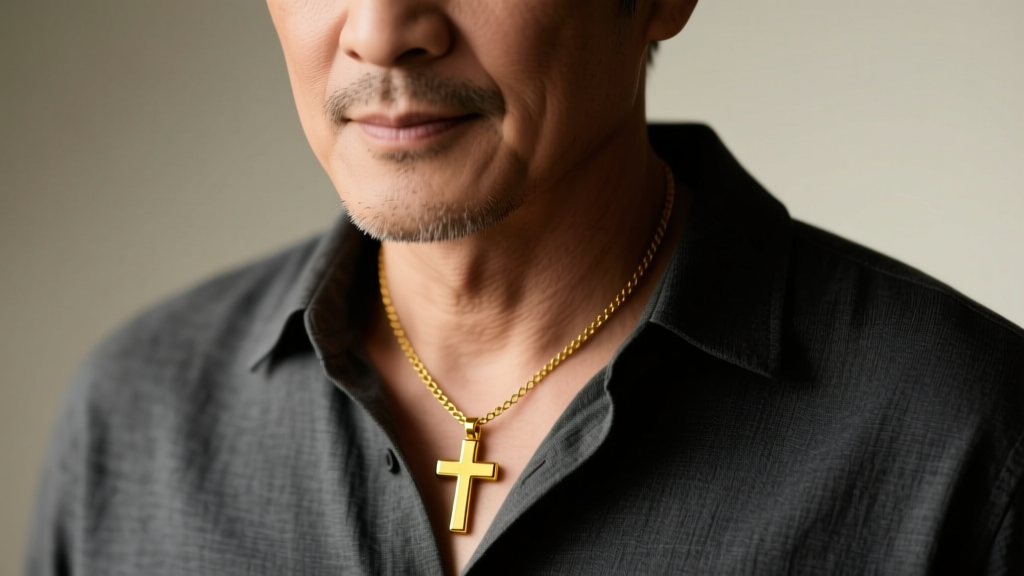
The men's jewelry market has undergone a massive correction over the last few years. As we navigate 2026, the men necklace cross remains a foundational staple, bridging the gap between personal faith, cultural expression, and streetwear aesthetics. However, the market is currently saturated with overpriced fashion jewelry masquerading as fine jewelry. For the budget-conscious buyer, understanding the difference between intrinsic material value and brand markup is the only way to make a sound investment.
A cross pendant is deceptively simple, which means there is nowhere for poor craftsmanship to hide. Unlike complex gemstone settings that can distract the eye, a cross relies entirely on metal purity, structural integrity, and proportional balance. This guide strips away the marketing fluff to provide a rigorous budget and value assessment of men's cross necklaces, detailing exact material grades, mechanical failure points, and realistic pricing tiers.
Material Breakdown: Where Your Money Actually Goes
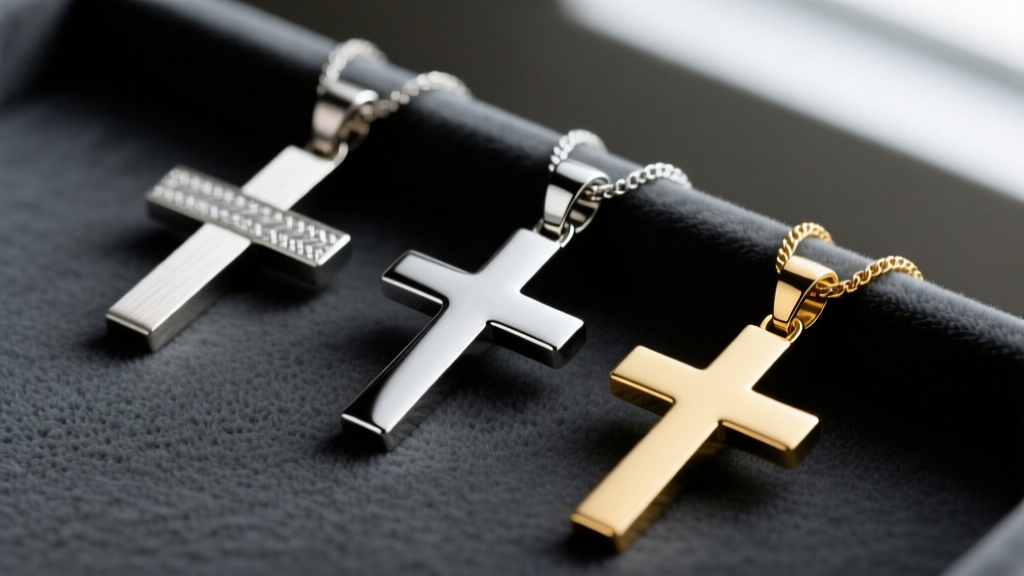
The single largest determinant of your necklace's value is the base metal. According to the Gemological Institute of America (GIA), understanding alloy compositions is critical for assessing both durability and long-term value retention. Here is how the primary materials stack up in the current market.
316L Surgical Stainless Steel
Do not confuse 316L steel with standard 304 stainless steel. 316L contains 2-3% molybdenum, which drastically increases its resistance to chlorides (like sweat and saltwater). It is hypoallergenic and virtually impervious to tarnish. Value Verdict: Excellent for budgets under $50. It holds zero resale value, but its longevity-to-cost ratio is unbeatable.
925 Sterling Silver
Composed of 92.5% pure silver and 7.5% copper. The copper adds necessary tensile strength but introduces oxidation (tarnish). When buying silver, look for pieces with a rhodium flash (usually 0.1 to 0.5 microns thick) or an e-coating to delay tarnishing. Value Verdict: The sweet spot for the $70–$180 range. It offers the look of white gold at a fraction of the cost, though it requires occasional polishing.
Solid Gold (10k, 14k, and 18k)
Gold is priced by weight and purity. 10k (41.7% gold) is highly durable but can look slightly dull and is prone to causing reactions in those with nickel sensitivities. 14k (58.3% gold) is the undisputed king of men's daily wear, balancing rich color with structural hardness. 18k (75% gold) offers a deep, luxurious hue but is softer and more prone to micro-scratches on a heavy pendant. Value Verdict: 14k gold ($400–$1,200+) is the best investment, retaining intrinsic scrap value while surviving daily abuse.
| Material Grade | 2026 Price Range | Tarnish Risk | Structural Longevity | Best Use Case |
|---|---|---|---|---|
| 316L Stainless Steel | $25 - $60 | None | Decades | Beach, gym, daily beater |
| 925 Sterling Silver | $70 - $180 | Moderate | 10-20 Years | Office, casual evenings |
| 10k Solid Gold | $150 - $350 | Low | Lifetime | Budget-conscious luxury |
| 14k Solid Gold | $400 - $1,200+ | None | Lifetime | Heirloom, daily luxury |
Chain Types and Clasp Mechanics: The Hidden Value Killers
A common budget mistake is spending 80% of the budget on a heavy solid gold cross pendant and attaching it to a cheap, hollow chain. The bail (the loop connecting the pendant to the chain) acts as a friction point. If you hang a 15-gram solid cross on a 1.5mm hollow rope chain, the bail will eventually saw through the hollow links, resulting in a lost pendant.
Link Styles and Thickness
For men, a chain width between 2mm and 4mm is ideal. Anything under 2mm risks snapping under the pendulum effect of a heavy cross; anything over 5mm shifts the focus entirely away from the pendant. Cuban links lay flat and resist twisting, making them excellent for heavy pendants. Figaro chains offer a classic, textured look but can catch on chest hair if the links aren't perfectly soldered. Box chains are highly durable and provide a modern, geometric contrast to the traditional cross shape.
Clasp Failure Modes
According to industry repair data cited by Jewelers of America, clasp failure accounts for over 60% of lost jewelry.
- Spring Ring Clasps: Avoid these entirely for men's pendants. They are meant for delicate chains under 1.5mm and fail under minimal lateral tension.
- Lobster Clasps: The industry standard. Ensure the lever has a strong spring return. For chains 2mm to 4mm, a solid lobster clasp is mandatory.
- Box Clasps with Safety Catch: Required for heavy chains (4mm+) or pendants exceeding 20 grams. The primary box mechanism holds the weight, while the figure-8 wire safety prevents total loss if the box mechanism loosens.
Sizing and Proportions: Avoiding the Costume Trap
The difference between a refined style statement and a costume-like appearance comes down to strict proportional mathematics. A 50mm cross on a 1mm chain looks like a pendulum, while a 15mm cross on a 6mm Cuban link gets visually swallowed.
The Proportion Rule
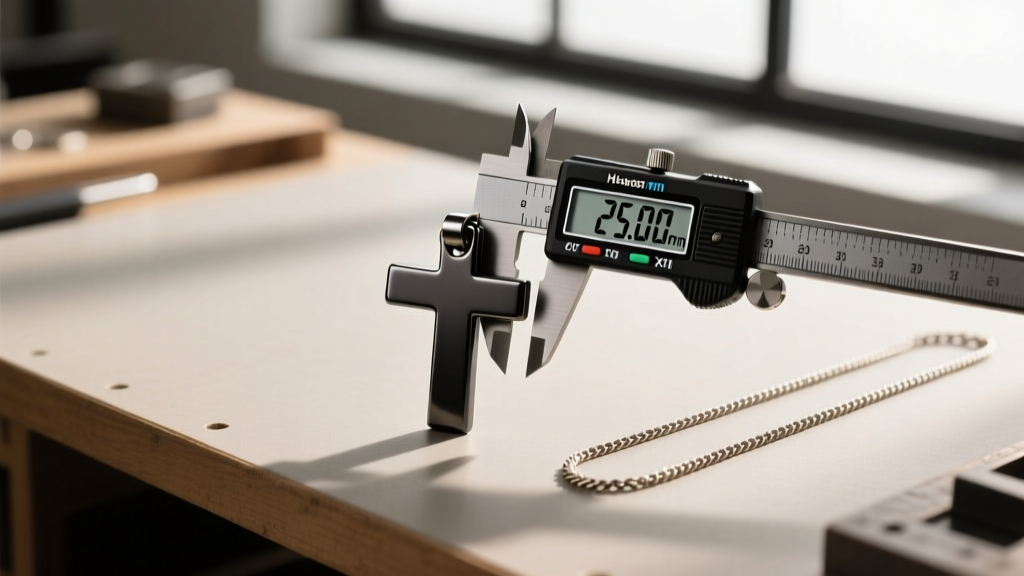
For a balanced, sophisticated look, the width of your cross pendant should be roughly 3 to 4 times the width of your chain. If you are wearing a 3mm chain, your cross should be between 9mm and 12mm wide. If you prefer a bolder, streetwear-inspired aesthetic, you can push the pendant width to 5 or 6 times the chain width, but never exceed an 8:1 ratio unless you are intentionally aiming for a novelty look.
Length and Drop
The length of the chain dictates where the cross rests on the chest, which drastically alters its visual weight.
- 18 Inches: Sits tightly at the base of the neck. Best for very small, minimalist crosses (10mm-15mm) worn under an unbuttoned collar.
- 20 Inches: The universal standard. Rests exactly on the collarbone. Ideal for medium crosses (20mm-25mm) worn over t-shirts or under open flannels.
- 22 to 24 Inches: Drops to the mid-chest or sternum. Reserved for larger, statement crosses (30mm-45mm) in streetwear or hip-hop contexts.
Brand Tiering and Markup Analysis
When assessing value, you must understand where your money is going. The jewelry industry operates on distinct tiers with vastly different markup structures.
"In 2026, the smartest buyers are bypassing legacy fashion brands that charge a 400% markup for gold-plated brass, and instead turning to direct-to-consumer fine jewelers who charge a 20-30% premium over the raw melt value of the gold." — Market Analysis, JCK Online
Tier 1: Fast Fashion & Mall Brands ($30 - $150)
These brands typically sell gold-plated brass or silver. The plating is usually less than 0.5 microns thick and will wear off within six months of daily use, exposing the base metal which will turn your skin green. Value: Poor.
Tier 2: Legacy Designer Brands ($500 - $2,000+)
You are paying for the logo engraved on the back of the bail. A 14k gold cross that weighs 4 grams (roughly $250 in raw gold value) will be sold for $1,200 purely based on brand heritage. Value: Low (unless brand prestige is your primary goal).
Tier 3: Independent & Direct-to-Consumer Jewelers ($250 - $800)
These artisans and online-first brands price based on gold weight plus a reasonable labor fee. You get solid 14k or 18k gold, precision laser welding, and high-quality casting without the retail mall overhead. Value: Excellent.
The 2026 Buyer's Checklist
Before finalizing your purchase, run the necklace through this rigorous value-assessment checklist to ensure you are getting exactly what you pay for:
- Verify the Stamp: Look for '925', '10k', '14k', or '18k' stamped directly on the bail of the pendant and the clasp of the chain. Avoid '925' stamps on items priced under $30 (likely fake).
- Check the Bail Construction: Ensure the bail is soldered closed. A split-ring bail that can be pried open with a fingernail will eventually drop your pendant.
- Weigh the Piece: If buying solid gold, ask for the exact gram weight. Multiply the gram weight by the current daily spot price of gold (adjusted for purity) to find the base melt value. If the retail price is more than 3x the melt value, negotiate or walk away.
- Test the Clasp Tension: Flick the lever of the lobster clasp. It should snap back with a sharp, aggressive click. A sluggish return indicates a weak internal spring that will fail.
By prioritizing metallurgical integrity and structural mechanics over brand hype, you can secure a men's cross necklace that not only fits your budget but serves as a durable, lifelong accessory.


