The Ultimate 3 Leaf Clover Necklace Buying Guide & Fit Tips
Discover how to choose the perfect 3 leaf clover necklace. Our expert buying guide covers metal grades, chain pairings, enamel types, and pricing tiers.

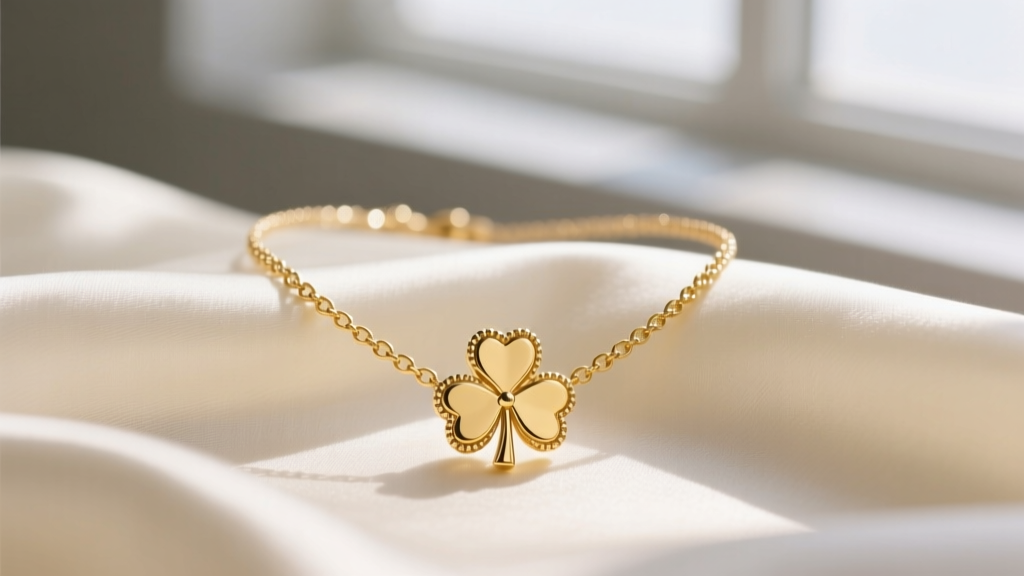
When shopping for a 3 leaf clover necklace, buyers often encounter a botanical and historical crossroads. While the four-leaf clover is universally sought after for its association with luck, the three-leaf clover—properly known as the shamrock—carries a much deeper historical, cultural, and spiritual weight. Representing the Holy Trinity in Irish tradition, or the triad of faith, hope, and love in secular jewelry design, the three-leaf motif offers a sophisticated, heritage-rich alternative to standard botanical pendants.
However, finding a high-quality piece requires navigating a minefield of misleading metal stamps, fragile inlays, and poorly proportioned chains. This comprehensive buying guide breaks down the exact specifications, material grades, and structural mechanics you need to evaluate before purchasing a three-leaf clover pendant in 2026.
The Symbolism: Shamrock vs. Lucky Clover
Before evaluating craftsmanship, it is vital to confirm the design geometry. Many mass-market jewelers mistakenly label four-leaf clover pendants (popularized by luxury houses like Van Cleef & Arpels) as "clovers" while marketing three-leaf designs as "shamrocks." If your specific intent is to acquire a 3 leaf clover necklace, you are looking for a trifoliate design. Authentic shamrock pendants typically feature a heart-shaped cleft at the top of each leaf, whereas generic "clover" designs often use perfectly rounded, symmetrical lobes. Always examine the macro-photography of the pendant's silhouette to ensure the artisan has captured the natural, slightly asymmetric cleft of the true Trifolium plant.
Metal Purity & Durability Matrix
The longevity of your necklace depends entirely on the base metal. Because clover pendants feature wide, flat surface areas, they are highly susceptible to micro-scratches and warping if cast in overly soft metals. Below is a breakdown of the most common alloys used in 2026 botanical jewelry.
| Metal Type | Composition | Durability & Tarnish | Best For |
|---|---|---|---|
| 14k Solid Gold | 58.5% Pure Gold | Highly durable, scratch-resistant, will not tarnish. | Everyday wear, heirloom pieces. |
| 18k Solid Gold | 75% Pure Gold | Softer, richer yellow hue, prone to surface marring. | Occasional wear, luxury inlay settings. |
| 925 Sterling Silver | 92.5% Silver, 7.5% Copper | Prone to oxidation/tarnish unless rhodium-plated. | Budget-friendly, high-contrast enamel designs. |
| Gold Vermeil | 925 Silver base + Gold plating | Wears off over time; requires strict FTC compliance. | Trend-driven, medium-term wear. |
Expert Insight on Vermeil: If you opt for gold vermeil to achieve the look of solid gold at a lower price point, ensure the retailer adheres to strict thickness standards. According to the Federal Trade Commission (FTC), true vermeil must feature a minimum of 2.5 microns of 10k or higher gold over a sterling silver base. Anything less is considered standard "gold plated" jewelry and will quickly wear through to the silver base on the high-friction edges of the clover leaves.
Inlay Materials: Beyond Solid Metal
A solid metal shamrock is a classic choice, but inlaid three-leaf clover necklaces offer striking visual contrast. The wide lobes of the three-leaf design provide an excellent canvas for gemstones and enamels. However, not all inlays are created equal regarding durability.
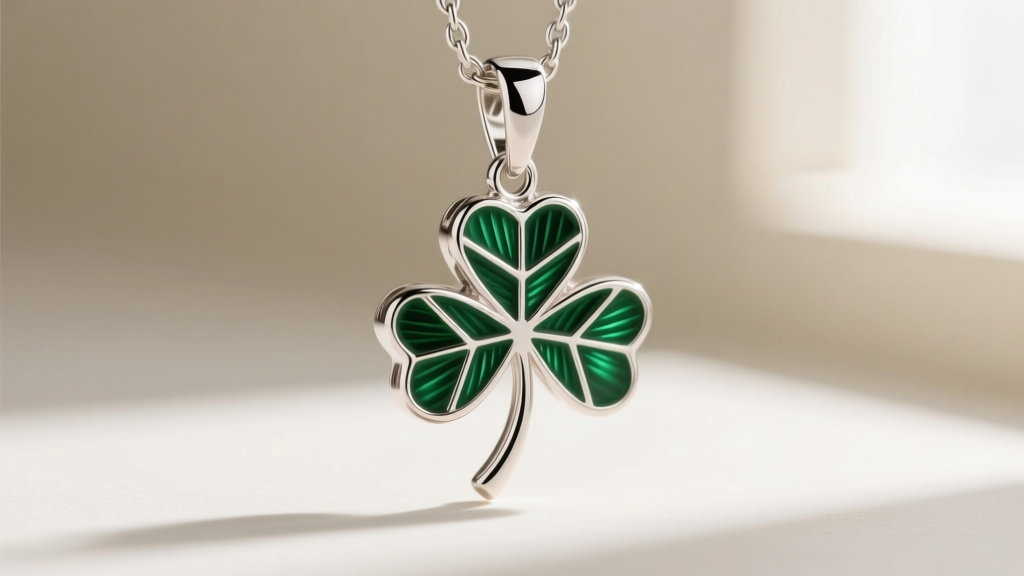
Vitreous vs. Cold Enamel
Enamel is the most popular inlay for clover jewelry, but you must verify the firing process:
- Cold Enamel (Epoxy Resin): Common in budget jewelry ($30–$80). It is essentially painted resin. It lacks depth, scratches easily (Mohs hardness ~2.0), and will yellow or chip within a few years of daily wear.
- Vitreous / Guilloché Enamel: Found in mid-to-high-end pieces ($250+). This is crushed glass fused to metal in a kiln at over 800°C. It yields a translucent, glass-like finish that resists scratching (Mohs ~5.5) and maintains its color indefinitely. Guilloché specifically involves engraving a geometric pattern into the metal base before applying translucent enamel, creating a mesmerizing 3D light effect.
Organic & Porous Gemstones
Malachite and Mother of Pearl (MOP) are frequently used to mimic the natural green and white hues of a real clover. The Gemological Institute of America (GIA) warns that both materials are highly porous and relatively soft. Malachite (Mohs 3.5–4.0) is highly sensitive to acids, heat, and even prolonged exposure to skin oils, which can cause the vibrant green bands to dull over time. If you choose a malachite-inlaid 3 leaf clover necklace, ensure the bezel setting is slightly raised above the stone to protect the edges from impact.
Chain Pairings: Matching the Pendant to the Right Chain
A common failure point in botanical jewelry is pairing a beautifully crafted pendant with an inadequate chain. The three-leaf clover pendant typically features a horizontal weight distribution, meaning it requires a chain that prevents flipping and provides adequate tensile support.
Bail Sizing and Chain Gauge
Before purchasing a chain, measure the inner diameter of the pendant's bail (the loop it hangs from). Most standard 3-leaf clover pendants (12mm to 18mm in width) feature a bail with an inner diameter of 3.0mm to 4.0mm.
- 0.8mm Cable Chain: Ideal for lightweight, solid-metal shamrock pendants weighing under 2.5 grams. It offers a delicate, minimalist profile but will snap if paired with heavy enameled pieces.
- 1.1mm Box Chain: The optimal choice for enameled or gemstone-inlaid clovers weighing between 3.0 and 6.0 grams. The square links lay flat against the collarbone, preventing the pendant from constantly flipping backward.
- 1.5mm Rope Chain: Generally too thick to pass through the bail of a standard three-leaf pendant. Avoid unless the pendant is oversized (25mm+).
Clasp Mechanics
Never settle for a spring-ring clasp on a piece of jewelry you intend to wear regularly. Spring rings are notoriously difficult to operate with one hand and feature a weak internal tension spring that frequently fails. Insist on a lobster clasp, which features a self-closing, spring-loaded lever that provides vastly superior security and ease of use.
2026 Market Pricing Tiers
Understanding the current market landscape will help you identify overpriced items and spot genuine value. Based on 2026 precious metal markets and artisan labor costs, here is what you should expect to pay for a quality 3 leaf clover necklace:
- Entry-Level ($40 – $90): 925 sterling silver with cold enamel or cubic zirconia accents. Expect spring-ring clasps and thinner 0.7mm chains.
- Mid-Range ($180 – $450): 14k solid gold (yellow, white, or rose) with a high-polish or brushed finish. May include vitreous enamel or small diamond melee (0.05 ctw). Includes secure lobster clasps and 1.0mm box chains.
- Luxury & Artisan ($600 – $1,500+): 18k gold featuring intricate guilloché enamel, precision-set natural malachite, or hand-carved milgrain detailing along the edges of the leaves. Often sold by independent heritage jewelers or specialized botanical designers.
Styling & Neckline Framework
The visual weight of a three-leaf clover pendant requires strategic styling to ensure it complements rather than competes with your wardrobe. Because the shamrock is horizontally oriented, it interacts uniquely with different necklines.
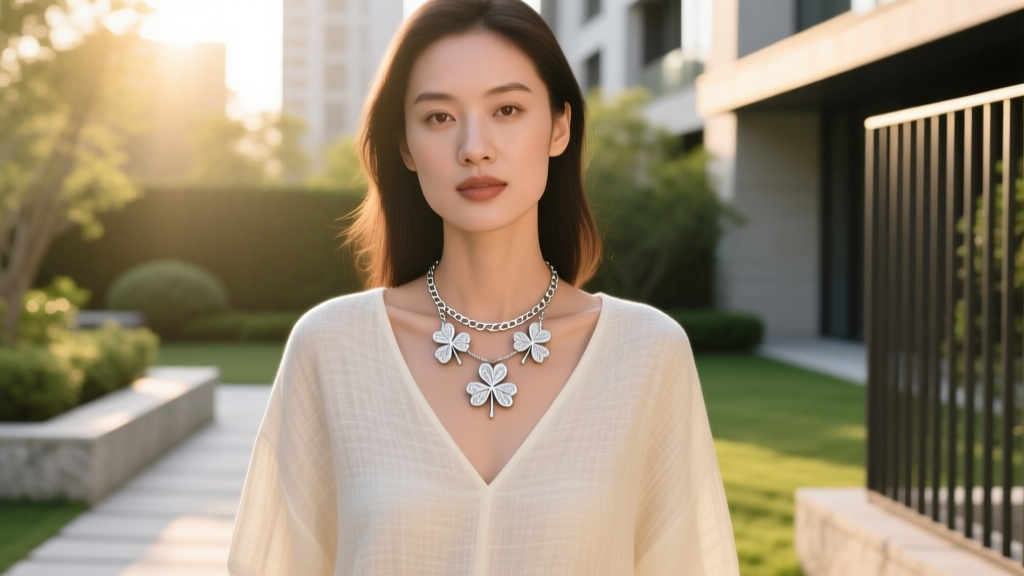
- The V-Neck & Scoop Neck: A 16-inch or 18-inch chain allows the three-leaf pendant to sit perfectly in the negative space of a V-neck or scoop neckline, mirroring the geometric angles of the garment.
- The Crew Neck: Avoid wearing a small (under 12mm) clover pendant flush against a tight crew neck, as it will look lost. Instead, opt for a 20-inch chain to let the pendant rest below the collar, or layer it with a longer, simple satellite chain.
- Collared Shirts & Blazers: A 14k gold shamrock pendant on a delicate 0.8mm cable chain adds a subtle, sophisticated touch of heritage when worn unbuttoned at the collar, providing a refined alternative to standard lapel pins.
By prioritizing structural integrity, verifying metal purity, and understanding the nuances of enamel and gemstone inlays, you can secure a 3 leaf clover necklace that serves as both a meaningful talisman and a durable, everyday staple in your jewelry collection.


