Preserving The Diamond Necklace Story: Expert Care & Cleaning Guide
Learn how to write a lasting diamond necklace story with expert care, maintenance, and cleaning tips for preserving brilliance and prong integrity.

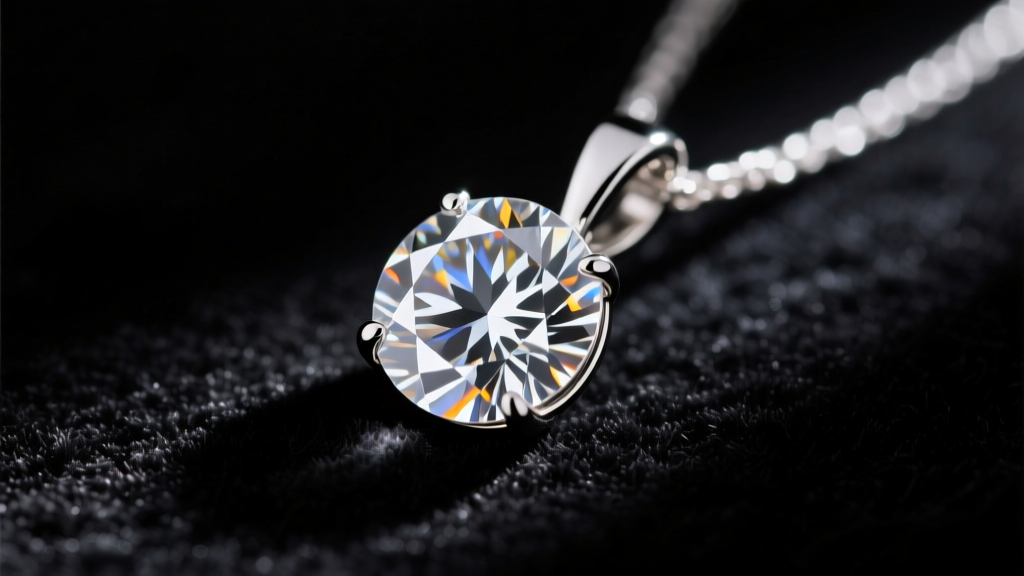
Every fine jewelry piece holds a narrative of milestones, inheritances, and personal triumphs. However, preserving the diamond necklace story for future generations requires far more than an occasional wipe with a cloth. Diamonds may sit at the absolute peak of the Mohs hardness scale at a perfect 10, but their settings, structural integrity, and optical performance are highly vulnerable to everyday environments. As a senior gemologist and style archivist, I have evaluated thousands of heirloom and contemporary pieces. The difference between a necklace that dazzles for a century and one that suffers catastrophic stone loss or permanent dullness lies entirely in a rigorous, science-backed maintenance protocol.
The Prologue: Understanding Your Diamond's Vulnerabilities
To properly care for your jewelry, you must first understand the physics and chemistry governing it. The narrative of your necklace is written in light return and metallurgical endurance.
The Physics of Light Return and Lipophilicity
Diamonds possess a remarkably high refractive index (RI) of 2.42, which is responsible for their legendary brilliance. However, diamonds are naturally lipophilic (oil-attracting) and hydrophobic (water-repelling). When microscopic layers of sebum, cosmetic emulsifiers, and environmental grease coat the pavilion (bottom) facets, they alter the critical angle of total internal reflection. Instead of light bouncing back through the crown to your eye, it leaks out the bottom of the stone, resulting in a flat, lifeless appearance. According to the Gemological Institute of America (GIA), even a microscopic film of oil can reduce a diamond's light return by up to 40%.
Metallurgy and Prong Fatigue
The diamond is only as secure as the metal holding it. The most common failure mode in antique and vintage necklaces is prong fatigue. If your necklace features 14k or 18k gold settings, the alloyed metals (copper, silver, zinc) are susceptible to stress corrosion cracking. Platinum 950, while denser and more durable, undergoes 'patina displacement' where the metal is pushed rather than worn away, requiring occasional re-polishing and rhodium flashing if alloyed with white gold.
Chapter One: The Daily Wear and Tear Narrative
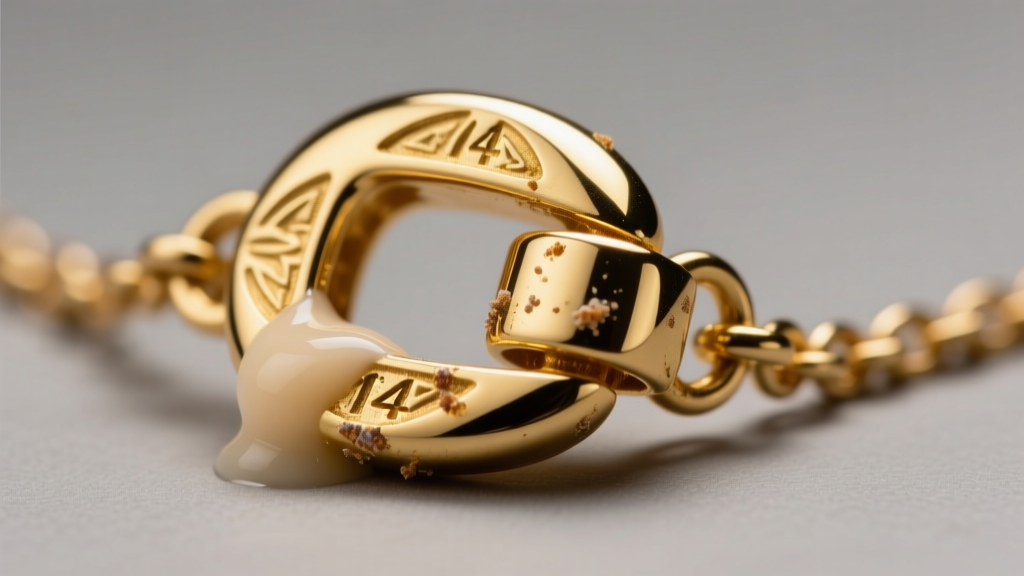
The environment in which you wear your diamond necklace dictates its aging process. The modern lifestyle introduces a gauntlet of chemical and physical hazards that can abruptly end your jewelry's legacy.
- The Chlorine Threat: Never wear gold-set diamond necklaces in swimming pools or hot tubs. Sodium hypochlorite and bromine aggressively attack the copper and zinc alloys in 14k and 18k gold. This causes micro-fractures in the prong gallery, leading to silent, catastrophic stone loss over time.
- Cosmetic Emulsifiers: Body lotions, sunscreens, and makeup contain titanium dioxide and zinc oxide. These compounds are notorious for creating a stubborn, opaque film on the underside of diamond pendants, completely blocking light refraction.
- Hard Knocks and Cleavage Planes: While a diamond cannot be scratched by anything other than another diamond, it possesses distinct octahedral cleavage planes. A sharp, direct impact against a granite countertop or a metal gym weight can cause the stone to cleave or chip at the girdle edge, fundamentally altering the necklace's value and story.
"A diamond's hardness is not synonymous with toughness. Proper care means protecting the stone's vulnerable girdle and the integrity of its metallic cage."
Chapter Two: The Professional Cleaning Protocol
While at-home care is vital, professional intervention is required to address deep-seated grime and structural audits. Jewelers of America recommends a professional inspection every six months to check for prong wear using a 10x triplet loupe.
| Cleaning Method | Best For | Risk Factors | Recommended Frequency |
|---|---|---|---|
| Ultrasonic (40kHz) | Un-treated diamonds, heavy platinum settings | Fracture-filled stones, loose prongs, emerald accents | Bi-annually (Professional) |
| Steam Cleaning | Heavy grease removal, high-RI restoration | Thermal shock to included crystals, treated diamonds | Professional only |
| Mild Soap Soak | All diamonds, safe for daily/weekly maintenance | Hard water spotting if not using distilled water | Weekly (At-home) |
The Danger of Fracture-Filled Diamonds
If your necklace features a Yehuda-treated (fracture-filled) diamond, never use an ultrasonic cleaner or steam. The high-frequency vibrations (typically 40,000 Hz) and extreme heat will melt or cloud the glass-like filler, permanently ruining the stone's clarity. Always know the exact treatment history of your diamond before submitting it to mechanical cleaning.
Chapter Three: The At-Home Maintenance Ritual
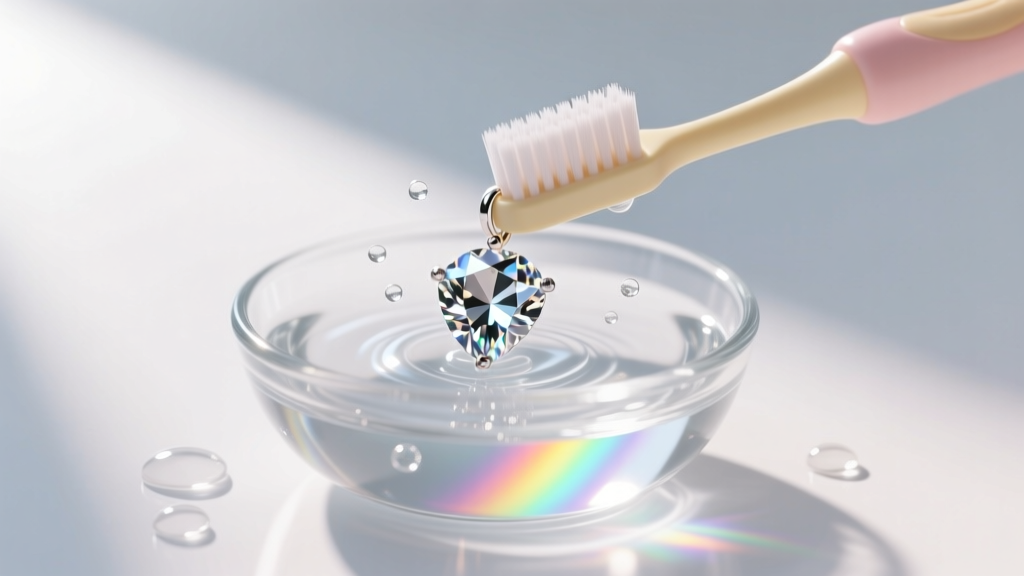
To maintain the brilliance of your necklace between professional visits, you must establish a safe, repeatable at-home ritual. Forget the abrasive internet hacks; toothpaste and baking soda are far too abrasive and will micro-scratch the precious metal settings, creating a dull, matte finish that traps more dirt.
The Gemologist's Cleaning Recipe
- The Solution: In a small glass bowl, mix warm distilled water (tap water contains calcium and magnesium that leave hard-water spots) with three drops of a mild, non-moisturizing dish soap (like original Dawn). Avoid soaps with added lotions or citrus degreasers.
- The Soak: Submerge the diamond necklace for 15 to 20 minutes. This allows the mild surfactants to break the surface tension of the oils clinging to the pavilion facets.
- The Agitation: Use a brand-new, extra-soft baby toothbrush (bristle diameter of 0.1mm or less). Gently brush the underside of the diamond, paying special attention to the gallery where the prongs meet the stone. Never use stiff-bristled brushes, which can bend delicate platinum or gold prongs outward.
- The Rinse and Dry: Rinse thoroughly under a gentle stream of lukewarm distilled water. Pat dry with a lint-free microfiber cloth. Avoid paper towels, as the wood pulp fibers can snag on microscopic prong burrs.
Epilogue: Storing the Legacy
The final chapter of the diamond necklace story is how it rests when not being worn. Tossing a diamond necklace into a communal jewelry box is a guaranteed way to damage both the diamond and surrounding pieces. Because diamonds can only be scratched by other diamonds, multiple necklaces tangled together will result in severe abrasion to the metal chains and potentially chip the girdles of the stones.
Store your necklace individually in a soft, anti-tarnish flannel pouch (such as Pacific Silvercloth) or a dedicated polyethylene zip-lock bag. Ensure the clasp is fastened to prevent the chain from knotting, and lay it flat in a humidity-controlled environment. For heirloom pieces of significant historical or monetary value, consider archival-quality storage boxes lined with acid-free, unbuffered tissue paper to prevent any chemical off-gassing that could degrade the metal over decades. By adhering to these rigorous standards, you ensure that your necklace's story remains one of enduring brilliance, ready to be passed down as a flawless legacy.


