Jade Beaded Necklace Troubleshooting: Fakes, Repairs & Care
Is your jade beaded necklace breaking or losing color? Learn expert troubleshooting for stringing repairs, clasp fixes, and spotting treated fake jade.

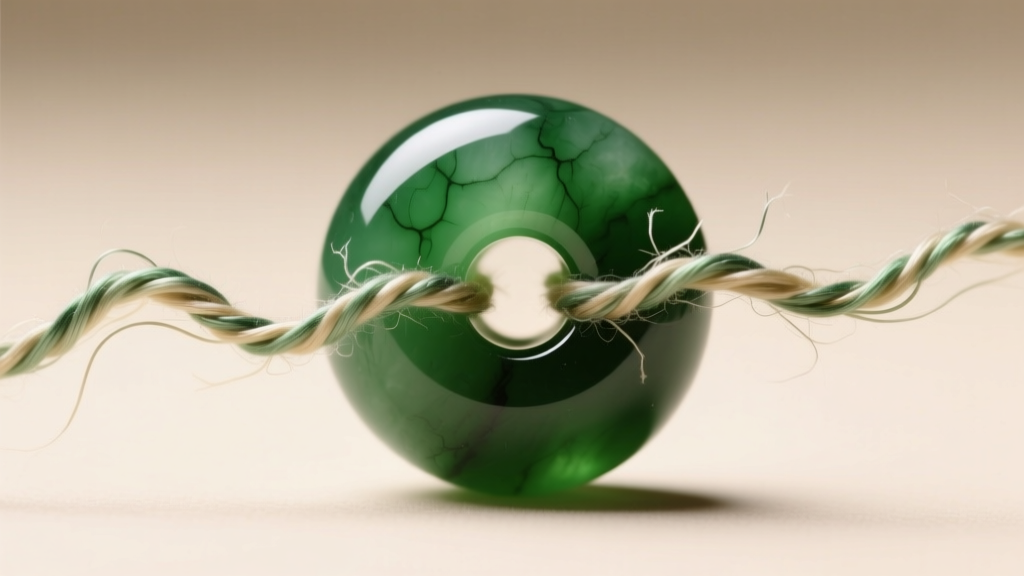
Owning a jade beaded necklace is an investment in both natural beauty and cultural heritage. However, jade strands present unique structural and gemological challenges that standard jewelry repair guides often overlook. Whether your strand is mysteriously snapping at the clasp, the beads are losing their vibrant luster, or you suspect your recent purchase is a polymer-impregnated imitation, troubleshooting these issues requires specialized knowledge. In this comprehensive guide, we break down the exact mechanical failures, authenticity tests, and restringing protocols necessary to maintain and restore high-density jadeite and nephrite strands.
The Anatomy of a Failing Jade Beaded Necklace
The most common catastrophic failure in a jade beaded necklace is not the clasp, but the internal abrasion of the stringing material. Jadeite ranks between 6.5 and 7 on the Mohs hardness scale, while nephrite sits around 6 to 6.5. When lapidaries drill holes through these dense silicate structures, the exit point often features microscopic, razor-sharp burrs. If the bead holes are not properly countersunk and polished, these edges act like a saw blade against traditional stringing materials.
This phenomenon, known among bench jewelers as the "cheese-wire effect," will sever standard silk thread in a matter of months. Furthermore, the sheer density of jadeite (specific gravity of 3.30 to 3.38) means a standard 10mm bead strand can easily exceed 60 grams. This kinetic weight places immense shear stress on the thread loops at the clasp connection points, leading to sudden, unannounced strand failures.
Spotting the Fakes: Type A vs. Type B and C Jade
Before repairing a necklace, you must verify its authenticity. Repairing a chemically treated strand with the wrong solvents or ultrasonic methods can destroy the piece entirely. According to the Gemological Institute of America (GIA), jadeite is categorized into three distinct treatment grades that dictate how the necklace must be handled and cleaned.
| Jade Grade | Treatment Process | Troubleshooting Signs & Tests | Structural Integrity |
|---|---|---|---|
| Type A | Untreated (except for surface waxing) | Inert under UV light; natural inclusions visible under 10x loupe; specific gravity ~3.33. | Highly durable; safe for ultrasonic cleaning. |
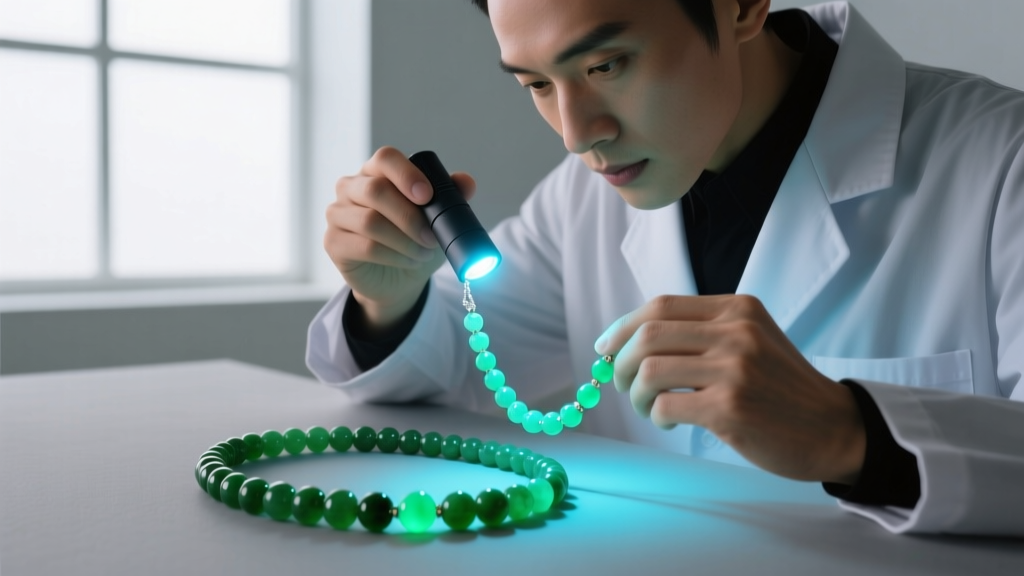
| Type B | Acid-bleached and polymer-impregnated | Chalky blue/green fluorescence under long-wave UV (365nm); pitted surface texture under magnification. | Brittle; polymer degrades with heat and alcohol. |
| Type C | Dyed (often combined with Type B treatments) | Dye concentrates in bead fractures and drill holes; Chelsea filter may show red/pink reaction in green beads. | Poor; color fades with UV exposure and chemicals. |
Pro-Tip: Always use a 365nm UV flashlight in a dark room to inspect the drill holes and surface fractures of your beads. If you see a chalky blue-white glow, the polymer resin used in Type B jade is fluorescing, confirming the necklace is not natural Type A jadeite.
Restringing Solutions: Silk vs. Nylon vs. Beading Wire
If your jade beaded necklace has snapped, do not simply restring it on the same material it came with. You must upgrade the tensile strength and abrasion resistance of the cord. Here is how professional stringers approach heavy jade beads:
1. Traditional Silk (Griffin Size F or G)
Silk is the historical standard for knotting jade, providing a beautiful drape and traditional aesthetic. However, silk has poor abrasion resistance. If you must use silk for an antique piece, you are required to use French wire (gimp) protectors at the clasp and ensure every single bead hole has been polished with a diamond-coated bead reamer. Without reaming the holes, the silk will inevitably fray and break.
2. Bonded Nylon (C-Lon Tex 400 or Power Pro)
For a knotted necklace that mimics the drape of silk but offers vastly superior shear strength, bonded nylon is the modern benchmark. C-Lon Tex 400 (0.30mm diameter) fits perfectly through standard 0.8mm to 1.0mm jade drill holes. It resists the cheese-wire effect significantly better than silk and will not degrade when exposed to skin oils or mild cosmetics.
3. Micro-Braided Stainless Steel Wire (49-Strand, 0.019")
For heavy, unknotted jadeite strands (12mm+ beads), flexible beading wire is the only safe option. A 49-strand, 0.019-inch diameter wire (such as those supplied by Rio Grande or Soft Flex) provides a tensile strength of up to 40 pounds. Because wire cannot be knotted, this method requires the use of sterling silver or gold-filled crimp tubes and wire guardians at the clasp.
Clasp Upgrades for High-Density Jade Strands
A heavy jade beaded necklace will easily destroy standard spring-ring or small lobster clasps. The dynamic force of a 70-gram jade strand swinging against the chest can generate momentary shear forces that bend thin clasp levers, causing the jump ring to slip out.
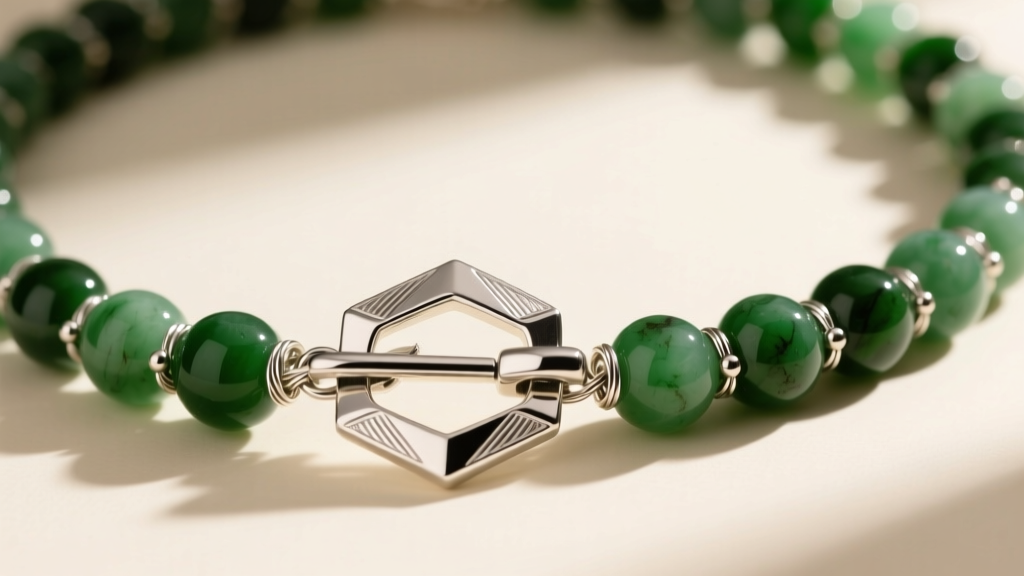
To troubleshoot clasp failures, upgrade to one of the following mechanisms:
- Solid Cast Toggle Clasp: The most secure option for heavy beads. The T-bar must be at least 15mm wide to prevent it from pulling through the receiving loop under tension.
- Magnetic Clasp with Figure-8 Safety: Neodymium magnetic clasps offer ease of use, but they must feature a secondary figure-8 safety wire. If the magnets separate due to a snag, the safety wire catches the weight of the jade.
- Box Clasp with Double Safety Catches: Ideal for multi-strand jade chokers, providing a mechanical lock that requires a deliberate pinch to release.
Chemical Damage and Color Fading Troubleshooting
If your jade beads are turning dull, yellowish, or losing their vibrant green hue, you are likely dealing with chemical degradation of the surface wax or internal polymer resins. Type A jade is typically finished with a light coating of beeswax or carnauba wax to enhance its luster. Exposing the necklace to hot water, harsh soaps, or alcohol-based perfumes will strip this wax, leaving the beads looking dry and chalky.
"Never use an ultrasonic cleaner or steam cleaner on a jade beaded necklace unless you have absolute, laboratory-verified certainty that it is Type A jadeite. The high-frequency vibrations can shatter beads with internal stress fractures, and the heat will melt the polymer resins in Type B jade, turning the beads opaque and brittle."
The Fix: For dull Type A jade, gently clean the beads with a soft microfiber cloth and a drop of mild, pH-neutral dish soap diluted in room-temperature water. Dry immediately. To restore the luster, professional jewelers will lightly re-wax the strand using a specialized gemstone wax, buffing it to a high shine. If your Type B or C jade is fading or turning cloudy, the damage is irreversible; the polymer has oxidized, and the necklace must be replaced.
By understanding the mechanical stresses and gemological vulnerabilities inherent to these stones, you can effectively troubleshoot, repair, and preserve your jade beaded necklace for generations to come.


