What Is The Setting Of The Story The Necklace? 1880s Paris Jewelry
Discover what is the setting of the story the necklace, exploring 1880s Parisian high society, diamond rivière styles, and the history of paste jewelry.

The Literary and Social Setting of 1880s Paris
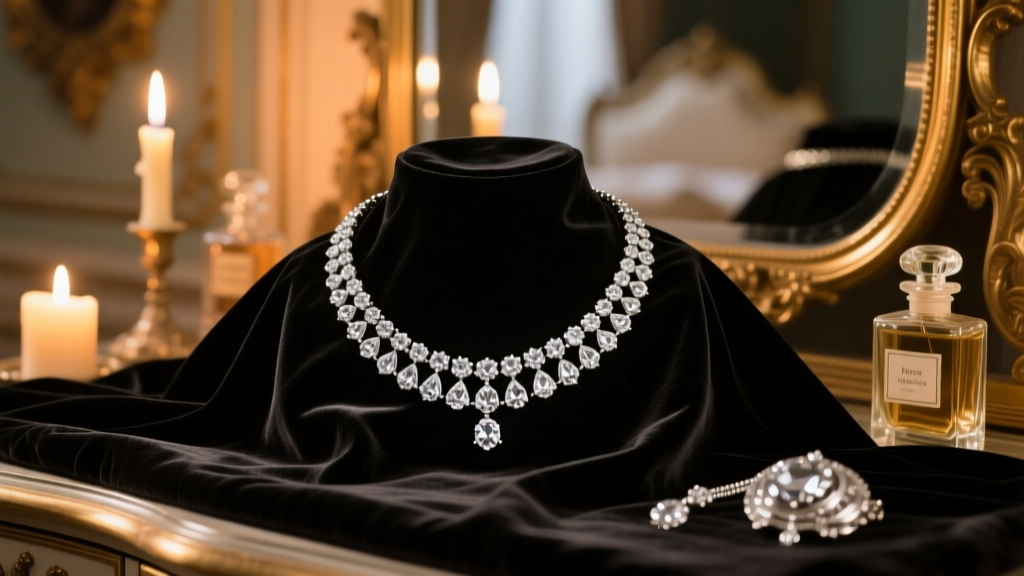
When students, historians, and jewelry enthusiasts ask, "what is the setting of the story the necklace?" the immediate literary answer is 1880s Paris, France, during the French Third Republic. Guy de Maupassant’s tragic 1884 short story, "La Parure" (The Necklace), unfolds against the backdrop of a deeply stratified Parisian society. The narrative physically shifts between the modest, drafty apartment of the Loisels on the Rue des Martyrs and the opulent, gas-lit ballrooms of the Ministry of Public Instruction.
However, from a style and trend analysis perspective, the true "setting" of the story is the 19th-century Parisian jewelry trade. To understand Mathilde Loisel’s fatal mistake, we must examine the historical, gemological, and socio-economic setting of the jewelry she borrowed—a piece that was fashionable, deceptive, and entirely emblematic of the Belle Époque era. According to Britannica's analysis of Guy de Maupassant's work, the story is a critique of bourgeois materialism, but for modern jewelers, it serves as a masterclass in the historical evolution of necklace construction and the dangerous allure of "paste" simulants.
The Gemological Setting: Anatomy of an 1880s Rivière
In jewelry terminology, a "setting" refers to the metal framework that secures a gemstone. In the 1880s, the necklace Mathilde borrowed from her wealthy friend Madame Forestier was almost certainly a diamond rivière—a continuous "river" of matched diamonds encircling the neck. Understanding the physical setting of these antique pieces explains why they were so valuable, and why a fake could be so devastating.
Silver-Topped Gold and the Old Mine Cut
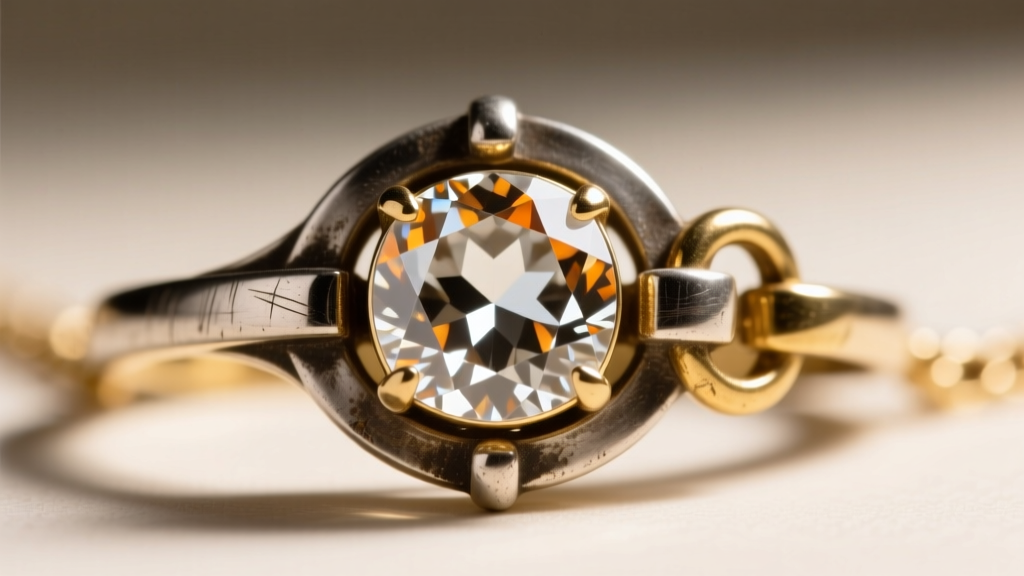
During the late 19th century, white gold and platinum had not yet been adopted for fine jewelry. To achieve a white metal appearance that would not dull the colorless sparkle of diamonds, Parisian jewelers utilized a technique called silver-topped gold. The structural base of the necklace was crafted from 18-karat yellow gold (to prevent skin discoloration and tarnish), while the front-facing bezels and prongs holding the diamonds were fused with sterling silver.
The diamonds themselves were Old Mine Cuts. Unlike modern round brilliants, these stones were hand-polished with high crowns, small tables, and large, chunky facets designed to capture the flickering, low-light illumination of candles and early gas lamps. The Victoria and Albert Museum's extensive jewelry archives note that these early settings often relied on closed-back bezels or early gallery prongs, which trapped dirt and oils over time, requiring meticulous care by the wearer.
The "Paste" Deception: Optical Physics in the 19th Century
The crux of Maupassant’s story hinges on a single, devastating reveal: the borrowed necklace was made of "paste" (leaded glass), worth a mere 500 francs, rather than the 36,000 francs Mathilde and her husband spent a decade paying off. But how could a high-society Parisian be fooled by glass?
The answer lies in the optical physics of 19th-century strass. Invented by Georges Frédéric Strass in the 1730s, this specific type of leaded glass possessed a remarkably high refractive index (RI). While a modern diamond has an RI of 2.42, high-quality 19th-century paste boasted an RI of roughly 1.7 to 1.9. When backed with delicate silver foil—a technique used to reflect light back through the stone—paste jewelry sparkled with a fire that rivaled genuine diamonds in dimly lit ballrooms.
The Gemologist's Tell: In 1884, distinguishing foil-backed paste from a closed-back diamond rivière without removing the stones from their settings was nearly impossible for the untrained eye. The silver-topped settings masked the glass's lack of thermal conductivity, and the foil backing mimicked diamond brilliance.
Comparative Data: 1884 Real vs. Paste vs. 2026 Revival
To contextualize the economic tragedy of the story for today's collectors and trend-watchers, we must compare the historical materials with modern equivalents. The table below breaks down the physical and financial realities of the necklace across three distinct eras.
| Feature | 1880s Natural Diamond Rivière | 1880s Paste (Leaded Glass) | 2026 Lab-Grown Revival |
|---|---|---|---|
| Primary Material | Old Mine Cut Natural Diamond | High-Lead Strass Glass + Silver Foil | Lab-Grown Cushion Cut (CVD) |
| Refractive Index | 2.42 | ~1.75 | 2.42 |
| Setting Metal | 18k Yellow Gold topped w/ Sterling Silver | Base Metal or Silver, heavily plated | Blackened Sterling Silver or Platinum |
| 1884 Cost | 36,000 Francs (~$108,000 USD today) | 500 Francs (~$1,500 USD today) | N/A (Modern Market: ~$4,500 USD) |
| Durability (Mohs) | 10 (Scratch resistant) | 5.5 (Prone to scratching & foil degradation) | 10 (Identical physical properties) |
As noted by the Gemological Institute of America (GIA) in their historical diamond research, the degradation of the silver foil backing is exactly how modern appraisers identify antique paste jewelry today. Once the foil oxidizes or tears, the glass goes "dead" and loses its fire—a fate that eventually awaited Madame Forestier’s original piece.
2026 Trend Analysis: The Belle Époque Revival
Fast forward to 2026, and the aesthetic "setting" of Maupassant’s Paris is experiencing a massive renaissance in high fashion and fine jewelry. The heavy, romantic, and slightly melancholic aesthetic of the 1880s is driving a new wave of necklace designs that borrow heavily from the silver-topped gold and rivière styles of the past.
Blackened Silver and Antique Cuts
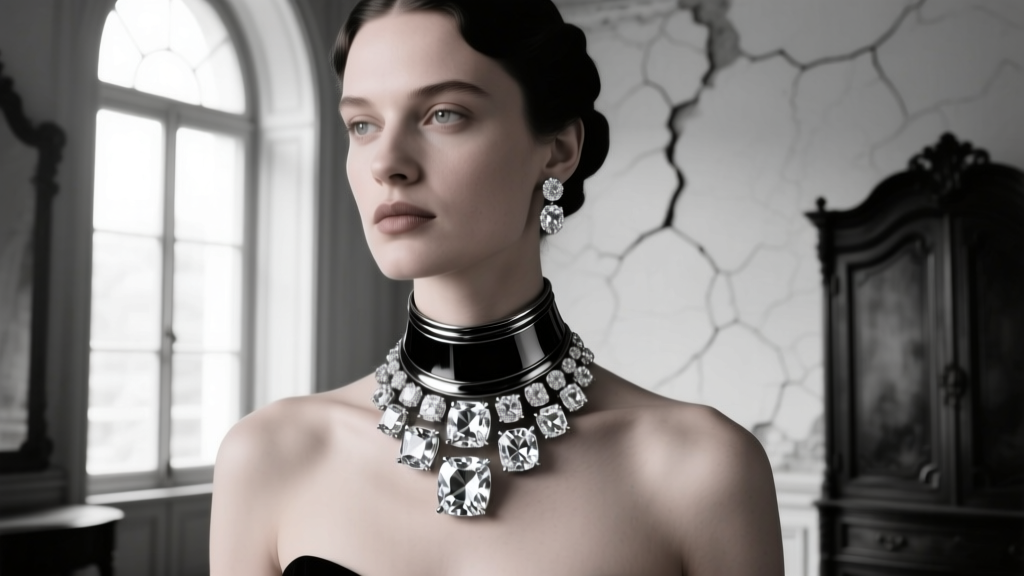
Modern designers are eschewing the ultra-bright, rhodium-plated white gold of the 2010s in favor of blackened silver and oxidized platinum. This intentional patina mimics the tarnished silver-topped gold of authentic 19th-century pieces, providing a moody, gothic contrast that makes lab-grown Old Mine and Cushion cut diamonds pop. Furthermore, the "choker" length (14 to 15 inches), which sat high on the collarbone in the 1880s, has returned as the dominant red-carpet silhouette in 2026, replacing the longer 18-inch princess lengths of the previous decade.
The Ethical "Paste" of the Modern Era
In a poetic twist on Maupassant’s themes of class and authenticity, the 2026 jewelry market has embraced lab-grown diamonds as the ultimate democratizer. Much like the paste jewelry of the 19th century allowed the bourgeoisie to mimic the aristocracy, modern CVD (Chemical Vapor Deposition) diamonds allow contemporary consumers to wear optically and physically identical diamonds to the elite, but at a fraction of the historical cost. The difference? Today’s wearers know exactly what they are buying, and the "fool's gold" tragedy of Mathilde Loisel remains safely confined to the pages of literary history.
Final Thoughts on the Necklace's Legacy
So, what is the setting of the story the necklace? It is 1880s Paris, yes. But more profoundly, it is the intersection of optical illusion, rigid class structures, and the masterful craftsmanship of 19th-century Parisian jewelers. By understanding the physical realities of silver-topped gold, Old Mine cuts, and the deceptive brilliance of leaded glass, we gain a much deeper appreciation for both Maupassant’s literary genius and the enduring, complex history of the diamond rivière.


