The Ultimate Orb Pendant Necklace Buying Guide: Metals & Sizing
Discover how to choose the perfect orb pendant necklace. Our expert buying guide covers metal grades, chain pairings, sizing, and styling tips.

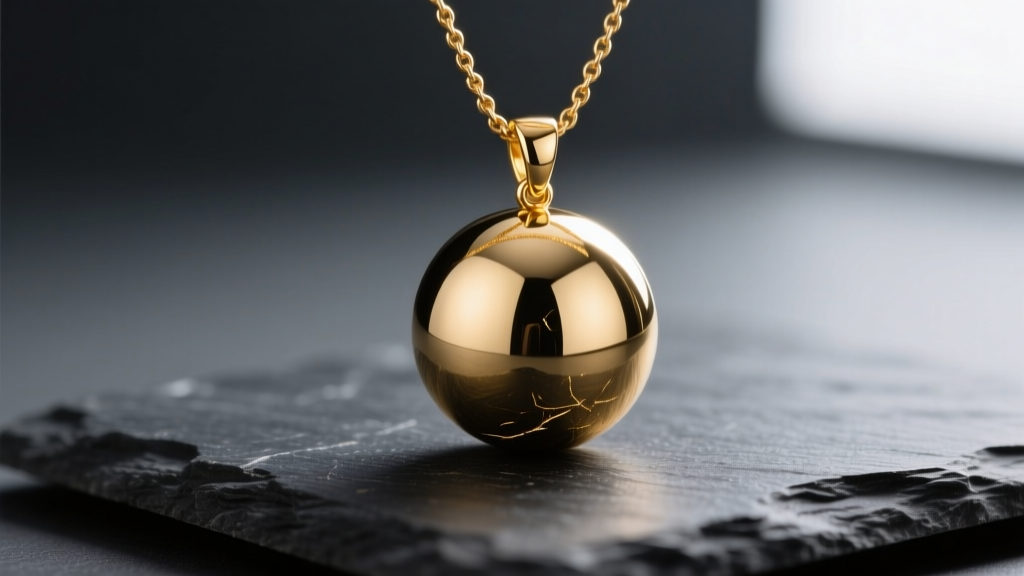
The orb pendant necklace is a masterclass in geometric minimalism. Representing spherical harmony and timelessness, the orb has been a staple in fine jewelry for centuries. However, buying a spherical pendant requires a vastly different approach than purchasing a flat stamping or a gemstone drop. Because a sphere interacts with light, gravity, and the body in unique ways, factors like metal density, bail mechanics, and chain gauge become critical to the piece's longevity and aesthetic appeal.
In this comprehensive buying guide, we break down the exact specifications, material grades, and structural considerations you need to evaluate before investing in an orb pendant necklace.
Decoding Metal Grades and Surface Finishes
When selecting an orb pendant, the metal grade dictates not just the color, but the scratch resistance and weight of the sphere. According to the Federal Trade Commission Jewelry Guides, understanding precious metal stamps is your first line of defense against misrepresentation.
Solid Gold: 14k vs. 18k
For a high-polish orb, 14k gold (58.5% pure gold) is often superior to 18k gold (75% pure gold). Because an orb rests against the sternum and is prone to friction, the higher alloy content in 14k gold provides a harder Vickers hardness rating, making it significantly more resistant to micro-scratches. If you prefer the richer, deeper yellow hue of 18k gold, consider a matte or brushed finish orb to camouflage inevitable surface wear.
Sterling Silver and Rhodium Plating
925 Sterling Silver is the most popular choice for orb pendants due to its affordability and brilliant reflectivity. However, bare silver tarnishes when exposed to sulfur in the air. Look for orbs that have been flash-plated with rhodium. This platinum-group metal not only prevents tarnish but also provides a mirror-like, scratch-resistant shell that enhances the spherical light reflection. The The Silver Institute notes that properly alloyed sterling silver must contain exactly 92.5% pure silver, so always verify the "925" stamp on the bail or the underside of the sphere.
The Physics of the Sphere: Solid vs. Electroformed Hollow Orbs
The most critical decision when buying an orb pendant necklace is choosing between a solid cast sphere and a hollow electroformed one. This choice dramatically impacts the weight, durability, and required chain strength.
Solid Cast Orbs: These are created by pouring molten metal into a spherical mold or machining from a solid billet. They are heavy, durable, and can withstand daily impacts. A solid 15mm sterling silver orb will weigh approximately 18 grams. This weight gives the necklace a luxurious, substantial drape, but requires a heavy-duty chain.
Electroformed Hollow Orbs: Electroforming involves depositing metal ions over a wax or resin spherical mandrel, which is later melted away. This results in a massive-looking orb (e.g., 20mm) that weighs a mere 3 to 5 grams. While visually striking and comfortable for all-day wear, hollow orbs are highly susceptible to denting. A single drop onto a tiled floor can permanently cave in the thin metal shell, making them unsuitable for active lifestyles.
Bail Mechanics: Supporting Spherical Weight
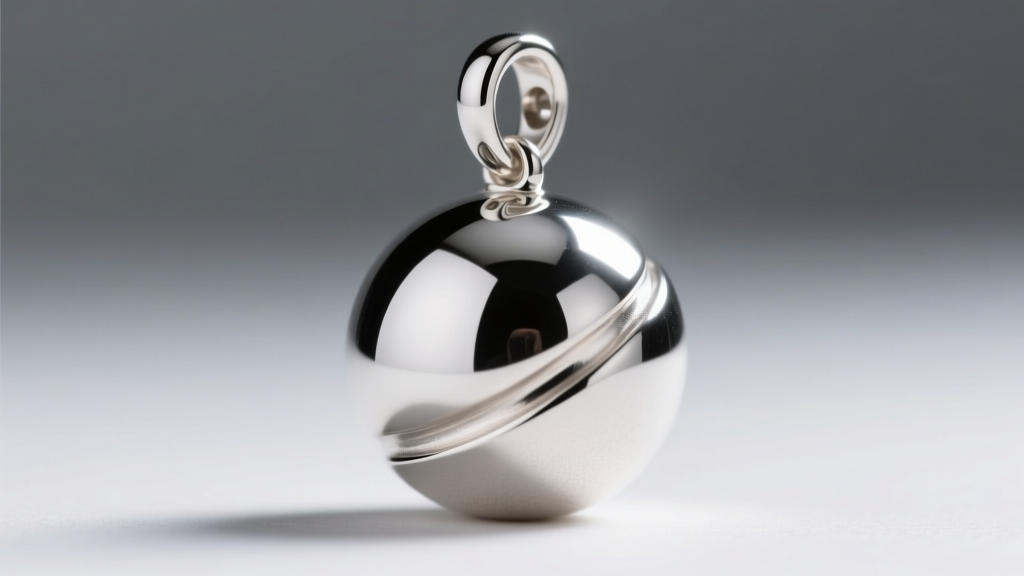
The bail is the loop that connects the orb to the chain. Because spheres are top-heavy and shift constantly, the bail must be engineered to handle multidirectional stress.
- Hidden Bail (Top-Drilled): The cleanest aesthetic. A hole is drilled directly into the top 3mm of the orb, and a threaded or press-fit loop is inserted. This lowers the center of gravity and prevents the pendant from looking "top-heavy."
- Tube Bail: A cylindrical tube soldered onto the top of the sphere. This raises the orb slightly, allowing it to swing more freely and preventing the chain from rubbing against the metal surface.
- Soldered Loop Bail: A simple wire loop soldered to the top. Ensure the solder joint is seamless and reinforced; a weak solder joint on a heavy solid orb will eventually snap under the pendulum effect of daily walking.
Diameter and Weight Specification Chart
| Orb Diameter | Visual Scale | Solid 925 Silver Weight | Recommended Chain Gauge |
|---|---|---|---|
| 6mm - 8mm | Delicate / Minimalist | 2.5g - 5g | 0.8mm - 1.0mm |
| 10mm - 12mm | Standard / Everyday | 8g - 12g | 1.2mm - 1.5mm |
| 14mm - 16mm | Statement / Bold | 15g - 22g | 1.5mm - 2.0mm |
| 18mm+ | Oversized / Avant-Garde | 30g+ | 2.5mm+ (or Hollow Orb) |
Chain Pairings: Matching Link Structure to Mass
An orb pendant necklace is only as strong as its chain. The spherical shape of the pendant causes it to roll and twist, which can bind and snap delicate links. Avoid standard cable chains for any orb exceeding 10mm in diameter, as the uniform round links offer little lateral support.
Box Chains: The ideal pairing for solid orbs. The square, interlocking links lie flat and distribute weight evenly across the collarbone. A 1.2mm to 1.5mm box chain provides excellent tensile strength while maintaining a modern, geometric synergy with the spherical pendant.
Wheat (Spiga) Chains: Featuring woven, oval links that point in the same direction, wheat chains offer a fluid, rope-like drape that handles the swinging motion of a heavy orb beautifully without kinking. Opt for a 1.5mm gauge for optimal durability.
Common Failure Modes and The Pendulum Effect
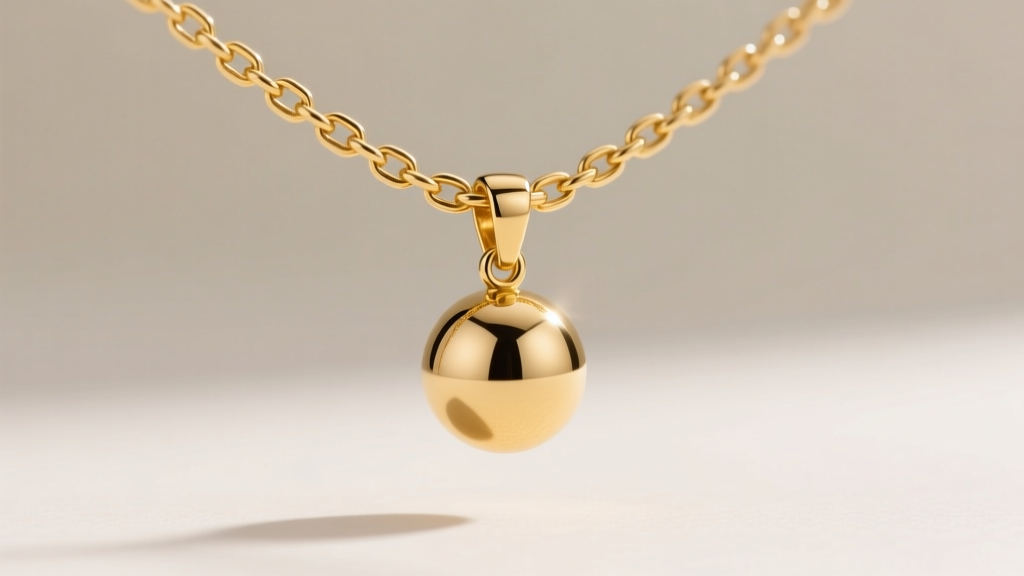
When wearing an orb pendant necklace, the sphere acts as a pendulum. Every step you take transfers kinetic energy through the chain to the clasp. Understanding these failure modes will help you inspect your jewelry correctly:
- Split Ring Prying: The constant swinging of a heavy orb will eventually pry open a standard split jump ring at the clasp. Always ensure the jump ring connecting the chain to the lobster clasp is soldered shut.
- Chain Stretch: Soft metals like 22k gold or pure silver will stretch under the continuous downward pull of a heavy solid orb. Stick to 14k gold or properly tempered sterling silver to maintain the chain's structural integrity.
- Bail Friction: If the inner diameter of the chain is larger than the wire of the bail, the chain will act like a saw, slowly cutting through the bail over several years. Ensure the chain thickness is proportional to the bail wire.
Styling the Orb: Necklines and Layering Frameworks
The beauty of the orb pendant lies in its versatility, but its three-dimensional nature requires specific styling considerations to prevent it from looking lost or overwhelming.
The Solitaire Approach: For a 12mm to 14mm high-polish orb, wear it as a solitaire on a 16-inch or 18-inch chain. This allows the sphere to rest precisely in the suprasternal notch (the hollow of the collarbone) or just below it, catching the light with every movement. This pairs flawlessly with V-necks, scoop necks, and open button-down shirts.
Layering with Geometrics: When layering an orb pendant necklace, contrast is key. Pair a small (8mm) matte-finish orb on a 16-inch chain with a longer (20-inch) chain featuring a flat, geometric pendant like a rectangular bar or a flat coin. The interplay between the 3D sphere and 2D flat elements creates a sophisticated, curated aesthetic without visual clutter.
By prioritizing metal hardness, structural bail mechanics, and appropriate chain gauges, your orb pendant necklace will remain a flawless, enduring centerpiece in your jewelry collection for decades to come.


